
DATA BASED MEDICINE

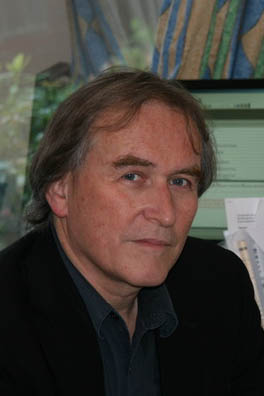
David Healy, M.D.  is an internationally known psychiatrist, psychopharmacologist, scientist, and author. A professor of Psychiatry in Wales, he studied medicine in Dublin, and at Cambridge University. He is a former Secretary of the British Association for Psychopharmacology, and has authored more than 150 peer-reviewed articles, 200 other pieces, and 20 books, including The Antidepressant Era and The Creation of Psychopharmacology from Harvard University Press, The Psychopharmacologists Volumes 1-3 and Let Them Eat Prozacfrom New York University Press, and Mania from Johns Hopkins University Press.

David’s main areas of research are clinical trials in psychopharmacology, the history of psychopharmacology, and the impact of both trials and psychotropic drugs on our culture.

He has been involved as an expert witness in homicide and suicide trials involving psychotropic drugs, and in bringing problems with these drugs to the attention of American and British regulators, as well raising awareness of how pharmaceutical companies sell drugs by marketing diseases and co-opting academic opinion-leaders, ghost-writing their articles. His latest book is Pharmageddon, which tells of how pharmaceutical companies have hijacked healthcare in America and the life-threatening results.

David is a founder and Chief Executive Officer of Data Based Medicine Limited, which operates through its website RxISK.org, and is dedicated to making medicines safer through online direct patient reporting of drug effects.

David Healy, M.D. Witty A: Report to the President

by

May 7, 2013

Faced with questions about the $3 Billion fine imposed on GSK – is it just the cost of doing business? – Andrew Witty snapped back: “Although corporate malfeasance cases end up looking very big, they often have their origin in just… one or two people who didn’t quite do the right thing. It’s not about the big piece. The 100,000 people who work for GSK are just like you, right? I’m sure everybody who reads the BMJ has friends who work for drug companies. They’re normal people… Many of them are doctors.
Full Article

Categorized in: Blogs, Featured Blogs, Foreign Correspondents

David Healy, M.D. Brand Fascism

by

April 30, 2013

The norm in science is that there is free access to the data underpinning experiments. If free access is denied; it’s not science. In the case of branded pharmaceuticals, we do not even know what trials have been done. What is put in the public domain is not data. The selected highlights of a football game and the comments of the pundits afterwards don’t change the score. The selected highlights of pharma studies and the comments of pundits routinely change the score.
Full Article

Categorized in: Antidepressants, Blogs, Featured Blogs, Foreign Correspondents, Industry, Psychiatric Drugs, Research

David Healy, M.D. The Empire of Humbug: Not So Bad Pharma

by

April 24, 2013

At the 50th American Psychosomatic Society meeting in New York, Michael Shepherd was speaking. His topic – The Placebo. When the lecture finished, Lou Lasagna said “this paper is now open for questions.” Nothing happened. Nobody said anything at all. Lasagna couldn’t refrain from commenting: “There are 3 possible explanations. First, you were all asleep and therefore you heard nothing. Secondly, it was so bad that since this speaker has come 3,000 miles you didn’t want to embarrass him. Third, it is genuinely so original and new that you don’t quite know what to make of it. I’ll leave you to decide which it was”.

What had Shepherd said?
Full Article

Categorized in: Antidepressants, Blogs, Featured Blogs, Foreign Correspondents, Psychiatric Drugs, Research

David Healy, M.D. The Empire of Humbug: Bad Pharma

by

April 16, 2013

Some psychiatric drugs are extraordinarily effective, for instance benzodiazepines for catatonia or SSRIs for premature ejaculation. These treatments are so effective that controlled trials are an irrelevance. Every trial conducted would show a positive result. The point here is not that it is impossible for a treatment to achieve effectiveness but rather that controlled trials have little useful to contribute to the issue of effectiveness. Randomized placebo controlled trials have not shown any drug within the mental health domain is effective. If a treatment were effective virtually every RCT undertaken would show a positive result.
Full Article

Categorized in: Blogs, Featured Blogs, Industry

David Healy, M.D. The Tragedy of Lou Lasagna

by

April 9, 2013

In 1956, Lou Lasagna was on his way to being the most famous doctor in the United States; an advocate for controlled clinical trials of both the safety and effectiveness of medication, as well as for a revision to the Hippocratic Oath to include a holistic and compassionate approach to medicine. Then, caught in the nexus of reason, regulation, and the pharmaceutical machine, his star fell.
Full Article

Categorized in: Blogs, Featured Blogs, Foreign Correspondents, Industry

David Healy, M.D. Not So Bad Pharma

by

March 28, 2013

The invitation from the London Review of Books to review Ben Goldacre’s Bad Pharma™ reads: “We were unsure, at first, what a review could add that isn’t already in the book – scrappy summaries and bits of praise are not for us. The book is of sufficient importance that the main thing is to get someone who knows what they’re talking about to present the material confidently… frame the discussion”. My head said it was inconceivable that the LRB wouldn’t take a review, even if it was at odds with the invitation to praise Bad Pharma. But my gut told me the inconceivable was about to take flesh.
Full Article

Categorized in: Blogs, Featured Blogs, Foreign Correspondents, Industry, Research

David Healy, M.D. Six Fired, One Dead, No Answers

by

March 21, 2013

This post was written by Alan Cassels and first appeared in Focus magazine online in early March. The full version is here. Alan was one of the creators of the Selling Sickness, or disease mongering idea. His recent book is …
Full Article

Categorized in: Foreign Correspondents

David Healy, M.D. Left Hanging: Suicide in Bridgend

by

March 12, 2013

In recent years however in both the US and UK there has been a rise in the number of hangings so that this mode of death now accounts for 50% of cases. A website, AntiDepAware, was recently set up to track deaths by suicide or misadventure that are related to antidepressants. It has logged over 1600 UK suicides involving antidepressants.
Full Article

Categorized in: Featured Blogs, Foreign Correspondents

David Healy, M.D. Prescription-only Homicide and Violence

by

February 25, 2013

When a pilot reports a near miss or a problem she is believed – things change on the basis of her report. When a doctor reports on a near miss or a problem this is regarded as an anecdote and is discarded. Nobody pays heed to what the doctor says because clinical trials have persuaded everyone that you cannot believe the evidence of patients’ or doctors’ eyes.
Full Article

Categorized in: Foreign Correspondents

David Healy, M.D. Not so Black: Ablixa and Homicidal Side Effects

by

February 13, 2013

So now we know Soderbergh’s movie Side Effects is not so Black/Noir after all – more Fifty Shades of Grey. Emily Hawkins (Rooney Mara) is put on Ablixa by her psychiatrist Jonathan Banks (Jude Law) and while on it kills her husband. She apparently murders him while sleep-walking triggered by Ablixa and sleep walking being a perfect defense against murder she is acquitted.
Full Article

Categorized in: Blogs, Featured Blogs, Foreign Correspondents, Popular

David Healy, M.D. Prozac and SSRIs: Twenty-fifth Anniversary

by

February 11, 2013

Twenty-five years before Prozac, 1 in 10,000 of us per year was admitted for severe depressive disorder – melancholia. Today at any one point in time 1 in 10 of us are supposedly depressed and between 1 in 2 and 1 in 5 of us will be depressed over a lifetime. Around 1 in 10 pregnant women are on an antidepressant.
Full Article

Categorized in: Antidepressants, Blogs, Featured Blogs, Foreign Correspondents, Psychiatric Drugs

David Healy, M.D. The Antidepressant Era: the Movie

by

February 1, 2013

“The Antidepressant Era” was written in 1995, and first published in 1997. A paperback came out in 1999. It was close to universally welcomed. It was favorably received by reviewers from the pharmaceutical industry, perhaps because it made clear that this branch of medical history had not been shaped by great men or great institutions but that other players, company people, had been at least as important.
Full Article

Categorized in: Blogs, Featured Blogs, Foreign Correspondents

David Healy, M.D. 101 Uses for a Dead Journal

by

January 3, 2013

There used to be a wonderful cartoon series called 101 Uses for a Dead Cat, which led me 25 years ago to give a talk at a British Association for Psychopharmacology meeting entitled 101 Uses for a Dead Psychiatrist. That was back in the days when Psychopharmacology meetings were places of debate and the British Journal of Psychiatry was guaranteed to have something of real interest in every issue.

Full Article

Categorized in: Antidepressants, Blogs, Featured Blogs, Foreign Correspondents, Psychiatric Drugs, Rethinking Psychiatry/Medical Model

David Healy, M.D. The Shipwreck of the Singular

by

December 23, 2012

Crusoe’s first appearance was in The Creation of Psychopharmacology, where in recognition of the tensions inherent in medicine between the numerous who enter clinical trials and the single person being treated by a doctor, the book opened with a quote from …
Full Article

Categorized in: Foreign Correspondents

David Healy, M.D. RxISK Stories: If You’re Going to Look After Patients, Man Up

by

December 21, 2012

Pharmalot has just posted a piece – ‘Controversial FDA official, Tom Laughren, retires.’ This is a must read for anyone with anything to do with mental health – both the post and the comments afterwards where some have posted that they still believe the Black Box warnings on antidepressants arose because of pressure from the Church of Scientology rather than in response to the data.The post will likely seem boring to many. But the comments won’t – they seethe with anger.
Full Article

Categorized in: Antidepressants, Featured Blogs, Foreign Correspondents, Psychiatric Drugs, Suicide, Uncategorized

David Healy, M.D. The Data Access Wars

by

December 16, 2012

Some decades ago a network was set up to investigate rare diseases. This later gave rise to Eurordis, an organization to speak on behalf of patients with rare diseases. An organization of patients and by patients and for patients sounds like a wonderful thing, but this is the patient group for whom pharmaceutical solutions are a lifeline. They are more committed to the interests of the pharmaceutical industry than are any of the employees of any of the pharmaceutical companies. They can be absolutely depended upon to read the runes right and come out with a strong industry position, making it possible for industry representatives to sound relatively accommodating to others in contrast.
Full Article

Categorized in: Featured Blogs, Foreign Correspondents

David Healy, M.D. Access to Clinical Trial Data: Privacy Rights, Property Rights and Phoney Rights

by

December 9, 2012

A medicine is a chemical that comes with information. What is consumed is a combination of chemical and information. The information is what distinguishes a medicine from a chemical. If we are taking a medicine based on false information we are being duped into taking something other than what we might consent to take. Worse again we suspend the natural caution we would have about taking chemicals.
Full Article

Categorized in: Featured Blogs, Foreign Correspondents

David Healy, M.D. RxISK STORIES: How Pharma Captures Bereaved Mothers

by

December 3, 2012

Julie Wood’s Encounter with American Foundation for Suicide Prevention: “…many of the people who give to support the AFSP are paying to support the drug company agenda that led to the death of their loved ones. They have the right to know this.”
Full Article

Categorized in: Featured Blogs, Foreign Correspondents

David Healy, M.D. Access to RxISK Data: Conflicts of Interest

by

November 27, 2012

Won’t Get Fooled Again outlined a stunning propaganda coup by GSK. On the back of a campaign for open access to clinical trial data that has drawn its inspiration from efforts by the Cochrane Tamiflu reviewers to get access to Roche’s clinical trial data, Andrew Witty came out and proclaimed that GSK were all in favor of access to clinical trial data. The BMJ threw its hat in the air and said whoopee. In fact GSK had only issued a press release. They don’t have a policy. They have at best an aspiration or perhaps more ominously a strategy. Getting such great publicity out of a press release shows considerable tactical skills at the very least.
Full Article

Categorized in: Featured Blogs, Foreign Correspondents

David Healy, M.D. Won’t Get Fooled Again? GlaxoSmithKline and Access to Data

by

November 20, 2012

Last May (May Fool’s Day) I joked that the only explanation for The Scientist getting things so badly wrong seemed to be that they were trying to perpetrate a hoax. The best response of course was to carry on in joke mode and in this vein I suggested Dr. Gibbons should be invited to chair an interview panel to recruit academics to whom companies would be prepared to make data available in the manner Lilly and Wyeth had done. The joke has turned extremely black. This is almost exactly the mechanism Andrew Witty has just proposed for GSK’s data – to warm applause from the BMJ.
Full Article

Categorized in: Featured Blogs, Foreign Correspondents