Neither the FDA nor Neurovalens have provided the results from the clinical trial of the device showing how well the device works or its risks.
The FDA has granted marketing authorization for a new device, Modius Spero, for treating PTSD in adults. Yet the FDA didn’t provide the public with the data from the study that is said to prove its effectiveness, and media coverage of the FDA decision simply repeats the company’s press release.
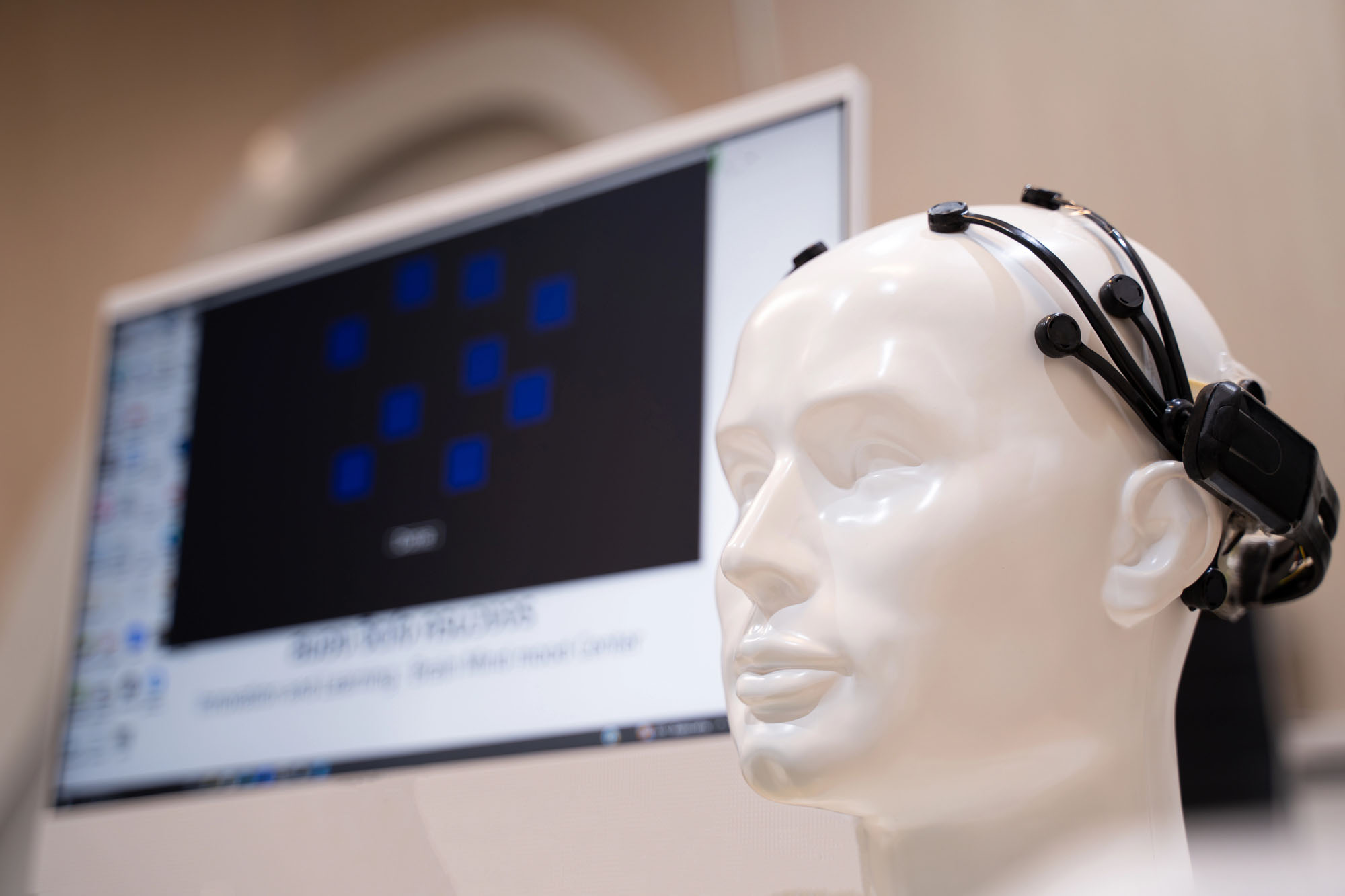
Modius Spero is a neuromodulation device (described by the FDA as a “transcranial nerve stimulation device”) designed to send electricity through the scalp to the brain, used at home for 30 minutes per day.
While the news coverage states that “two-thirds of participants using Modius Spero reported a clinically meaningful improvement in PTSD symptoms,” this is a “finding” taken from the press release. The results of the study—conducted by Neurovalens, the company marketing the device—have not appeared on ClinicalTrials.gov, despite the study apparently ending in 2024. Nor have the results been published anywhere else.
All we have is the claim that “two-thirds” (a rather approximate sounding number) improved in the active group. But we don’t know the basic outcomes of the trial: how many people improved in the active group versus the sham (placebo) group, and what side effects they experienced.
Now that the FDA has granted the device, it may be marketed to users. Modius Spero has been priced at over two thousand dollars and will be sold to veterans as early as July 2026. It seems bizarre that I have to ask this, but doesn’t the public deserve to know how well it works, and the potential side effects, before the FDA authorizes it to be sold to desperate trauma survivors?
In addition to the obviously important missing data mentioned above, there are many more data points that published results could provide so that doctors and patients know whether to trust that this device is “safe and effective.” How many people dropped out of the trial? Was the blind successful? How did they measure “clinically meaningful improvement”? Were there any confounding factors that could influence the results? What types of treatment were the participants already receiving? Does it impact sleep? Did anyone become more distressed or even suicidal? Did they bother to test it on any veterans?
We simply don’t know.
So here is the FDA, failing in its duty as a public institution to provide data so that doctors and patients can make clinical decisions with full knowledge of the risks and benefits. But the media has failed the public as well.
I couldn’t find a single news story that pointed out the lack of public access to the study data. I couldn’t find a single outlet that reported on the number or percentage of patients who improved (beyond the vague “two-thirds”). Nor did any news report provide the actual number or percentage who improved in the placebo group for comparison.
The news outlets, rather than simply rewrite a press release, could have asked the company and the FDA for this data, and if the company wouldn’t provide such data, they could then have made that part of their report. That is what you would expect a media outlet to do.
You can see this journalistic failure in the MedPage Today report. It is just a rewrite of Neurovalens’ news release, even though it is presented as a bylined article, as though the journalist had done original reporting. Moreover, the headline and text article state that the device received “FDA approval.” Yet this is wrong. “Approval” is a specific term used by the FDA when a high-risk device goes through a significant process to prove safety and efficacy. What Modius Spero actually received was marketing authorization through the de novo pathway as a class II device, described as “granted” by the FDA. It may seem like a small error, but it’s emblematic of the media’s failure to report on this “market authorization” with any sense of journalistic rigor.
Several months ago, I reported for Mad in America on the FDA clearance given to a medical device (Monarch eTNS) to treat ADHD in children. The most surprising thing to me as I interviewed researchers, former FDA reviewers, and others, was the unanimous understanding that FDA clearance does not necessarily mean the device worked. Katya Rubia, PhD, was lead investigator on a study that found the Monarch eTNS device ineffective. In her words, “The FDA attempts to approve devices based on safety, not efficacy. The main take-home message is that regulatory approval doesn’t mean a device works. It means it’s safe.”
Devices are granted “clearance” by the FDA based on flimsy studies—or, in some cases, no study at all but rather similarity to an existing device. Even if later studies show the device doesn’t actually work, it’s extremely unlikely that it would ever have its clearance retracted. “I harbor no illusions that the FDA would rescind approval,” said former FDA reviewer Erick Turner when asked about Monarch eTNS. “This is not the first time the FDA has approved an intervention with questionable efficacy.”
Until they release the data from the clinical trial of Modius Spero, how are doctors and patients to know the risks—or even whether the device really works?
Hi Peter,
When space travel spent many many millions of dollars (going back some time) on finding and engineering suitable fabrics to be worn by astronauts its flop was rebranded (some ingenious person, people) and marketed globally to the general public, general consumer, at high price points, and as gym wear, sports wear. The world went crazy per se, and spent like mad on this wonder material.
It would be reasonable to assume that original expenses were recouped, and then some!.
Science, research, engineers, innovations, manufacturing, seem to rehash, rebuild, redesign, repurpose, re-invent, relabel, and remarket anything that they can. “Innovation” (for profits) is the Zeitgeist.
TENS machines – TENS (Transcutaneous Electrical Nerve Stimulation) machine, have been around for a long time – 1970s.
CEFALY is a specific type of TENS (Transcutaneous Electrical Nerve Stimulation) unit, for migraine, around since approximately 2008.
Around since approximately 2019 – External Trigeminal Nerve Stimulation (eTNS) is a non-invasive neuromodulation therapy that is FDA-cleared for treating ADHD. While not yet officially approved specifically for Autism Spectrum Disorder (ASD), clinical trials are currently investigating eTNS and transcutaneous Vagus Nerve Stimulation (taVNS) to help manage co-occurring anxiety, sleep issues, and attention deficits in autistic individuals.
See what is happening. Money making under the guise of “drug free” treatment/s.
Not too long ago, War veterans were given computer games to play that offered relief and desensitisation from their PTSD. Again a “drug-free” (not addiction free) offering. This too came to light via the media, and little is known about the process.
Maybe FDA’s (and similar Regulatory Agencies and Bodies) focus is on money (growth) and litigation (minimisation). Although the public is led to believe otherwise. And the “safety” might not primarily be intended for one’s individual welfare and well-being. Same goes for “efficacy”. Hence the numerous class actions, and the unacceptable number of harms labelled as “unintended”, which are, whenever possible, swept away.
Greed and excessive greed is so prevalent that it has been normalsed, and is expected.
Children pre teenage years rarely get a say in who is doing what to them and why.
We consumers opt for quick, easy, expedient, low personal effort fixes. This may not be an inherent quality, and instead might be society, societal conditioning and priming.
It’s noble that you are concerned, especially for and about children.
Maybe you could gather viable, verifiable, authentic, legitimate Research that demonstrates measures such as – unsafe, ineffective, “no better than” placebo, known harms, and so on, and with your know-how and connections, publish those data and statistics and analyses. ?
Putting your upset to a good use, that you could feel good about, might be beneficial to you and so many others of all ages, demographics.
Report comment
“Until they release the data from the clinical trial of Modius Spero, how are doctors and patients to know the risks—or even whether the device really works?”
The product is marketed to relevant specialists per se, as an option and or addition to current treatments (drug or other).
A distribution site, centre is set up, like a legitimate business – calls in, enquiries taken, information given, free trial before purchase, no-obligation free returns, and so on.
The specialist suggests the product and provides the details.
Based on product use – numbers sent out, tried, purchsed, data is fabricated. Does the data contain faults with the product, dissatisfaction, returns from trial, returns from purchase, consumer feedback, …, ?
So the trial can actually be on real people in real environments in real situations with real presenting needs.
How and what feedback is received and what is done with the real feedback (if used at all), is an unknown.
Report comment
Looks like data was published in nature
Report comment