Much of U.S. Healthcare Is Broken: How to Fix It (Chapter 2, Part 7)
On antidepressants versus CBT, the buzz around ketamine, and drugs for postpartum depression.

Trauma and Resources Within Social Context
What is seen as pathology is a complex web of surviving strategies learned in aversive circumstances that can cause distress later.

As a Psychologist, I’ve Seen Many Children Misdiagnosed as Autistic—It’s a Clinical Catastrophe
The ASD diagnosis glosses over the many developmental specifics that might underlie a child’s challenges related to social communication.

The Social-Emotional Distress Field, or How I Divorced “Mental Health”
At this crisis point, I realised that resigning from my job was not enough. I needed to divorce from the Mental Health field as a whole.

Are “Trauma/Addiction Experts” and Psychiatrists Misleading Us?
“Experts” refer to an ill-defined concept of “trauma,” but unique traumatic experiences should not be generalized.

Much of U.S. Healthcare Is Broken: How to Fix It (Chapter 2, Part 6)
Les Ruthven addresses the research showing that psychiatric hospitalization increases suicidality.

RADAR and the Dignity of Risk-Taking
The goal may not be to eliminate risk, but to respect the risk that people are willing to take, and to help make tapering as safe as possible.

“Get Over It”? A Response to Empower Parents to Repair Instead of Victim Blame
An epidemic of children blaming their parents in therapy? In my 20 years as a psychologist, I've seen the opposite.

The Dangers of Precision Medicine: Mental Health Is Not a Battlefield
Rather than a war to be fought within individuals, we should envision mental health as a garden to be carefully nurtured.

“Impairment: Says Who?”: The Fundamental Question of Mental Health Treatment
The criterion of "impairment" is defined not by the person seeking treatment, but by other people: parents, clinicians, courts, employers, and so on.

Much of U.S. Healthcare Is Broken: How to Fix It (Chapter 2, Part 5)
Les Ruthven addresses increases in suicide and homicide caused by antidepressant drugs.

Toxic Interactions: Social Circumstances and Well-Being
Social circumstances are indisputably connected to psychological well-being, but this has gained no traction in policy and service provision.

Accounting for Mental Disorder: Time for a Paradigm Shift
Many people continue to be victimized by psychiatry’s adherence to a model that exists to satisfy guild interests, not science.

Much of U.S. Healthcare Is Broken: How to Fix It (Chapter 2, Part 4)
Les Ruthven addresses a ghostwritten study claiming effectiveness of antidepressants for children and adolescents.

Arrested Development: Britney Spears’ Memoir Is a Survivor’s Tale of Generational Trauma, Psychiatric Abuse,...
Miranda Spencer discusses Britney Spears' new memoir and the harms of conservatorship.

Giving Caregivers a Platform: Sherita, Mother of Tony
This is the story of Sherita and her son Tony, and her efforts to help him following years of psychiatric drugs and hospitalizations.
What Helped—and What Didn’t Help—My Recovery
In order to recover, it was necessary to give up the psychiatric treatment system, and the idea that I need something from that system, that I belong there.
It’s Health’s Illusions I Recall, I Really Don’t Know Health at All
There is a core concept shaping the ‘market’ in health, the concept of an assay, that few doctors or patients understand.

Much of U.S. Healthcare Is Broken: How to Fix It (Chapter 2, Part 3)
Les Ruthven addresses the lack of evidence for antidepressants being better than placebo, as well as a note about ECT.
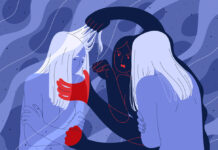
A Psychotic Experience can Help to Process Difficult Memories
The patient is talking, if sometimes more or less metaphorically, about real experiences. Hallucinations and delusions are not meaningless.

De-privatizing Our Relationships
I’m glad we’re chipping away at the cracks in psychiatry and psychology and de-privatizing our lives.

Much of U.S. Healthcare Is Broken: How to Fix It (Chapter 2, Part 2)
Les Ruthven addresses the scientific literature on antidepressant efficacy and FDA approval.
Mad in America’s 10 Most Popular Articles in 2023
A roundup of Mad in America's most read blogs and personal stories of 2023 as chosen by our readers.

Dr. Gordon Warme: The Curious Case of an Unconventional Psychiatrist
Dr. Warme bucked convention, examining the cultural role that shamans, witch doctors, and placebo cures played in medicine.

Conservatorship: The Racket That Ruined My Father’s Last Years
I have watched as my father’s pursuit of happiness was swept away by the court system in his senior years.