One could be forgiven for feeling wary rather than celebratory this October when Stanford University neuroscientist and psychiatrist Karl Deisseroth, along with two German scientists, received the Nobel Prize for inventing a new, invasive brain technology dubbed “optogenetics.”
After all, the last time a psychiatric treatment garnered a Nobel Prize for Physiology or Medicine was in 1949—for inventing the surgery that destroyed the frontal lobes in the brain. The award further boosted excitement among psychiatrists worldwide, who ultimately administered lobotomies to tens of thousands of people (often by, infamously, hammering an icepick through both eye sockets) as a “calming treatment” for hundreds of different mental and emotional conditions. Mainstream psychiatry later moved on from lobotomies with the emergence of new drugs. But protest campaigns led by family members of lobotomized patients continued for decades as they tried (in vain) to get the Nobel Foundation to rescind its award for a practice that had killed an estimated 5 percent of patients and left countless others permanently stripped of major emotional, mental, and functional capacities.
So, in 2026, is optogenetics biological psychiatry’s long-sought breakthrough for understanding and rectifying dysfunction in the mechanisms of the brain? Or is it another damaging, dangerous tool? Reading some of the leading researchers in the field reveals that it could be a bit of both.
Karl Deisseroth: From Poetic Emoting to Policing Emotion
To understand the roots and likely future of this “revolutionary” new brain technology, it helps to first understand a little about its founder and leading developer.
In his book, Projections: A Story of Human Emotions, and in a wide-ranging, three-hour interview with computer scientist Lex Fridman, Karl Deisseroth shows his appreciation for both scientific and artistic ways of viewing the human condition.
Alongside his neuroscientific research, Deisseroth works in both hospital inpatient and private outpatient psychiatric practice, and writes literary nonfiction. He believes in the value of talk therapy, is interested in extreme states of consciousness, frequently fuels his thinking with poets and novelists such as Jorge Luis Borges, Toni Morrison, and James Joyce and, when describing his conversations with his patients, uses words like “empathy” and “communion.”
Yet Deisseroth also writes that he was “trained to see brains as biological objects, as they indeed are.” He describes many of those same patients as having “diseases” or “disorders” of the brain, and not infrequently authorizes that they be involuntarily committed and forcibly drugged against their protests. And he appears to have no serious sociological or scientific critique of common psychiatric research and practices. For example, he regularly discusses the lack of reliable lab tests in psychiatry to verify any diagnoses or positive emotional impacts from treatments, yet he also describes electroconvulsive shock therapy (ECT) as “very effective” for depression—with no acknowledgement of the dearth of quality scientific evidence supporting such a view. He describes lithium as “highly effective for bipolar”—despite broad scientific questions about such claims. And he says studies in twins have proven that depression, bipolar, and other mental disorders have major genetic drivers—with no acknowledgement of the scientific gaps and biases common in twin and other behavioral genetics studies.
One of many stories from Deisseroth’s book that vividly illustrate these seemingly contradictory tendencies is that of a 67-year-old retired insurance executive he calls Alexander. After witnessing the 9/11 attacks on the World Trade Center, the man becomes swept up in a whirlwind of new interests and activities, hoping to find ways to help his country. Alexander’s family is worried about these dramatic changes and get into conflicts with him, but Alexander himself regards what’s happening as exciting, positive, a revitalizing surge of youthful energy, and a new, more meaningful lease on life. Deisseroth reflects on how a similar experience came over him after a rush to escape an armed robbery left him hyper-energized for weeks. Deisseroth also relates Alexander’s impassioned convictions and behaviors to those of literary figures, historical leaders, and mythical heroes of extraordinary achievements, and to an evolutionary need to respond intensely to threats and challenges that’s part of “a common heritage of humanity across cultures and continents” and “an elevated expression of what a human being can be.” He suggests Alexander is going through a deep, personal “metamorphosis.”
Unfortunately, Deisseroth then tells us, Alexander was “born in the wrong time and place” to harbor such intense energy. Deisseroth diagnoses Alexander as having “mania” and locks him up and drugs him against his will with tranquilizing antipsychotics. Alexander’s wife is relieved. But Deisseroth admits that this “normalizing” of Alexander was “not a clear-cut win”—even a year later, he writes, Alexander was no longer “manic,” but seemed “glum” in his inconsequential retired life and “still did not understand why we had acted as we did.”
In virtually every other story, Deisseroth’s empathy for his patients comes with a similar hard limit—his interest in them seems less a “communion” of equals than the fascination of a zookeeper for his caged animals. Could this be a cautionary metaphor for where the field of psychiatric optogenetics is headed?
What optogenetics is and how it works
For a breakthrough technique in brain research, the basics of optogenetics are nevertheless surprisingly easy to understand.
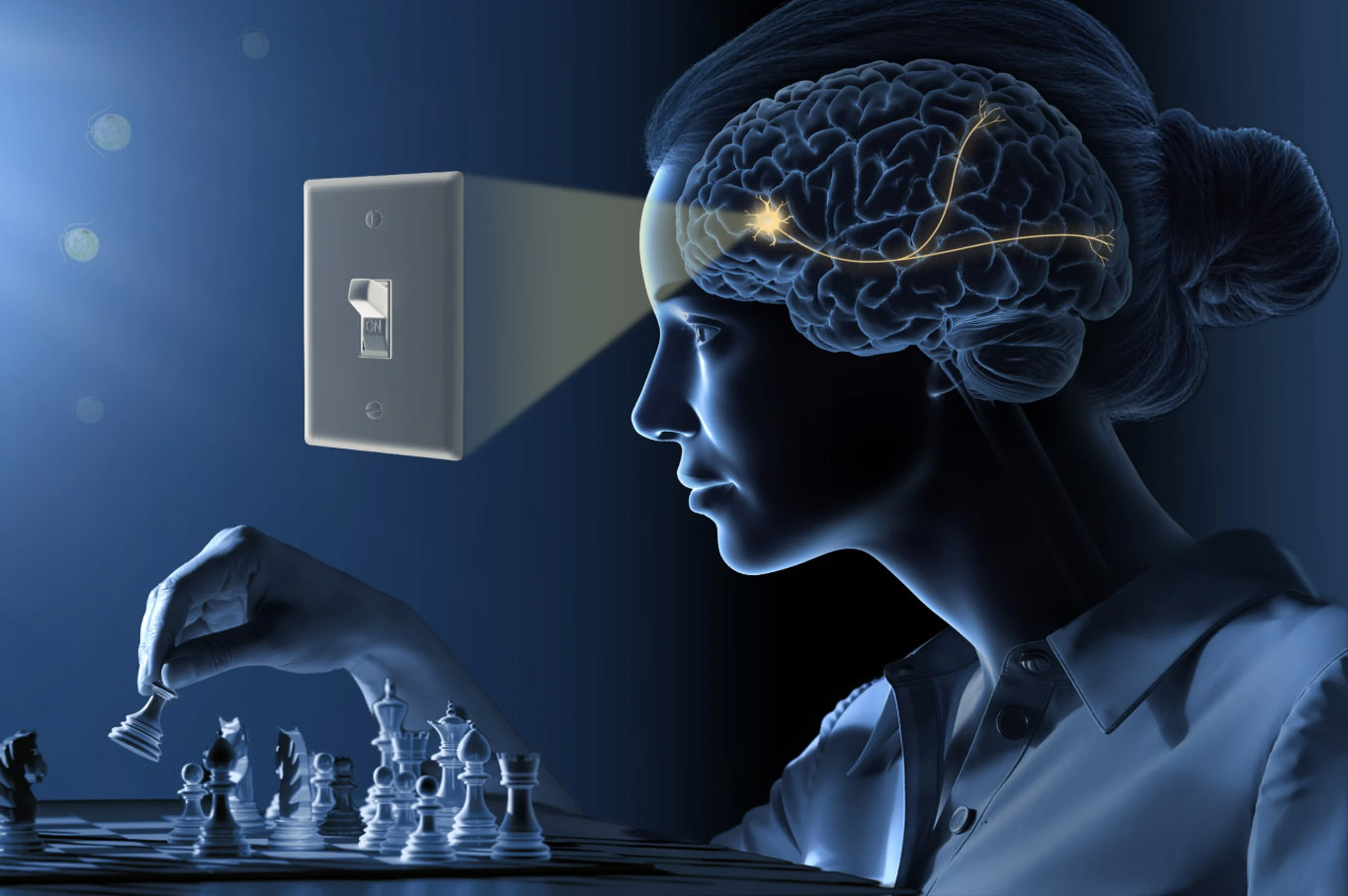
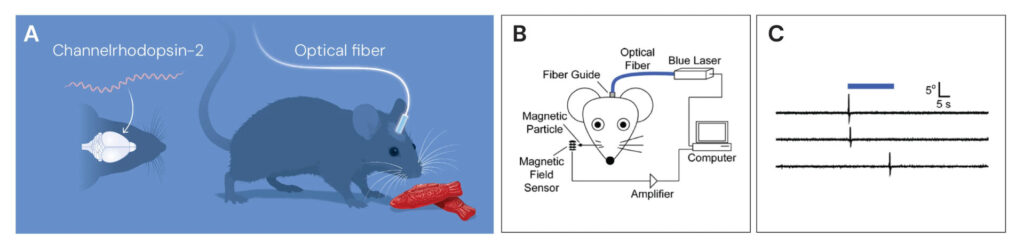
In a single-celled alga, German researchers isolated a protein, called channelrhodopsin, that made the alga move towards light. Deisseroth developed a technique whereby the gene that produces channelrhodopsin is carried by a virus (a “viral vector”) and functionally embedded into selected brain cells, after which the firing of those brain cells can be turned on or off by exposure to a light source implanted in the brain.
Developed in the early 2000s, optogenetics was a massive leap in precision beyond brain scans and electrical brain stimulation devices for studying and changing the activities of specific brain cells and cell networks and circuits. Optogenetics has exploded in popularity, by 2022 engaging thousands of research institutions in over 51 countries, while genes, methods, and techniques have multiplied.
So far, most of the brain research has taken place in living mice—but theoretically, there’s nothing stopping it from being implemented in human brains. And though linking mice behaviors to imagined human-like thoughts, feelings, and experiences is an inexact science at best, still, the discoveries have been striking.
Using optogenetics, researchers have been able to isolate and control mouse brain circuits that switch on and off fear and anxiety reactions, addiction behaviors, and social avoidance, implant false memories, block or enhance memory formation, and even break down into component brain circuits more complex behaviors such as how mice care for their young.
In his book, Deisseroth uses the word “eerie” to describe witnessing how mouse brain states and behaviors “could be added to or subtracted from” in these ways—such as making a mouse freeze with apparent fear over nothing, and then promptly become active again.
Researchers believe this ability to turn cells on and off may have many applications—such as for stopping tremors, controlling epilepsy, healing deafness, curbing neuropathic pain, restoring bladder or bowel dysfunction after spinal cord injury, and treating amyotrophic lateral sclerosis. Already in one case, a blind person, through optogenetics on his eye and the aid of specially engineered goggles, partially recovered vision.
All of those applications offer cell targets in more safely accessible parts of the human body—but it’s the possible brain applications that animate Deisseroth the most. In a paper specifically about using optogenetics in psychiatry, Deisseroth and other researchers state that the main goal of experiments on animals is to identify “neurobiological mechanisms” of mental disorders and then target these in humans with new “pills that non-invasively cure or ease the symptoms of mental illness with minimal undesirable side effects.”
They add, though, that the “heavy burden” of mental illnesses “demands” that entirely new treatment options also be developed besides drugs—including, possibly, “optical tuning” of the brain through direct application of optogenetics on humans. They suggest, for starters, using optogenetics to tackle aspects of drug addiction, depression, anxiety and PTSD.
In his book, Deisseroth writes with enthusiasm about using “cellular precision” in manipulating “brain circuits” to rectify “human frailty,” ease human suffering, and cure the “causation” of psychiatric disorders.
However, pressed by Fridman in his interview, Deisseroth becomes more circumspect. He explains that optogenetics scientists may be able to “turn up or down” specific behaviors linked to specific brain circuitry—such as a particular compulsive activity—but acknowledges that it remains mystifying how or why most behaviors truly arise. Even in mice, he says, the “choice” to take any particular action appears to mysteriously “start” in innumerable places “all across the brain… all at about the same time.” Consequently, optogenetics interventions won’t truly be addressing the root causes of people’s suffering any time soon but, like psychiatric drugs currently do, Deisseroth says they could be used to “treat symptoms.”
This admission raises a spectre: An optogenetics intervention might well be experienced—by humans and mice—as an irrational, altered reality, where a behavior feels uncontrolled and completely disconnected from what’s perceived through the senses and desired through the thoughts. What would this kind of disassociation between desire and action, between self and reality, repeating over and over again, do to a vulnerable mind?
And what of the potential biological risks and harms?
The risks of optogenetics
Optogenetic brain interventions involve both viral delivery, through injection, of a genetic alteration to selected brain cells, and an implant to deliver light directly inside the brain. This has never been tested on humans.
Viral gene therapy alone is hazardous—experiments on humans have sometimes triggered life-threatening responses, especially from immune system reactions, including deaths.
Certainly, some leaders in the field are openly grappling with the hazards, uncertainties, and ethics of optogenetics.
In one paper, a team of British researchers summarize concerns about possible adverse effects of optogenetics, and identify a host of “currently unanswered questions.”
The initial injection will have to carry a substantial load of the virus and gene, because repeated deep-brain injections are simply “not feasible,” the researchers state—and that makes potentially dangerous immune responses even more likely. Cellular toxification or damage and instigation of brain tumors are also all possible.
Patients will have to accept hosting a “non-human” gene and protein inside their brains, they write, and this, along with any associated impacts, will be permanent and irreversible.
The light-producing devices must be implanted deep enough in the brain to reach the target area. Even very slight amounts of heat generated by the light could be extremely harmful to surrounding cells. The implant can damage the underlying brain tissue during placement or subsequent movement, while also potentially making it more difficult to detect these damages due to common implant materials disrupting MRI scanning. And the long-term effects of light itself on the cells of an enclosed brain are utterly unknown.
In a 2025 Nature Science paper, Swiss and American researchers, including Deisseroth, note that additional unknown, long-term risks exist due to the comparatively short lifespans of the mice that have been so far tested, and the comparatively much lower threshold for the activation of immune responses in humans.
The human experimentation question
The Swiss and American researchers write that testing these potentially harmful techniques in more-similar non-human primates such as monkeys comes with “considerable regulatory and ethical burdens.”
The British researchers point out that new drugs are always clinically tested for safety in healthy human volunteers, but optogenetics is so hazardous that “it is ethically out of the question to deliver both a permanent gene therapy and to implant a novel device” into any healthy human.
Furthermore, because the brains of mice are hardly perfect analogues for much larger and more complex human brains, it’s questionable how much—if any—of the existing research learnings will translate to humans. Therefore, the British researchers note, “there can be no guarantee” that the first human groups submitting to optogenetics studies would get any clinical benefit at all.
In spite of this, neither team of researchers calls for banning experiments on humans. On the contrary: Noting that new medical devices (which aren’t as tightly regulated as drugs) are often used in trials on ill people with relatively little prior safety testing, the researchers lobby for jumping directly to experimenting on people who have severe physical or mental illnesses.
Enter the rationalizations
Both research teams acknowledge serious ethical concerns with such human experiments—albeit they do so in ways that can seem more worrying than reassuring.
The Swiss and American researchers write: “Direct optogenetics in the brain can alter cognitive processes such as mood, motivation and memory, as well as fundamental survival drives common to all mammals—including anxiety, fear, hunger, thirst, reward-seeking, aggression, mating, nurturing and parenting. Together, these capabilities underscore the profound ethical implications of optogenetics for altering human behavior, desires and decisions. The stakes are high…”
They propose “complete transparency” with patients, tight regulatory oversight, long-term monitoring of impacts, and “fostering a collaborative ethical discourse—encompassing scientists, ethicists, legal experts, patients, families and other public stakeholders.” They further pledge to “champion the principles of voluntariness” and safeguard “freedom of thought.”
Along the way, though, they invoke the somewhat Orwellian-seeming notion that even prospective patients with purportedly diseased, disordered, dysfunctional minds must nevertheless by all means be granted the “cognitive liberty” to submit to psychiatrists’ potentially deadly experiments in thought control.
The British researchers follow a similarly contorted line of reasoning to push for experiments on humans.
They note that, for example, a “schizophrenia patient suffering severe side effects to their medication” might likely welcome an optogenetic intervention as an alternative. However, because optogenetics is so nascent, they write, “there cannot be any suggestion of benefit put forward” to these patients—even though, of course, they themselves have already enticingly suggested optogenetics could produce fewer side effects than medications.
Establishing with a patient a correct “understanding” of the “risk/benefit balance,” they write, allows for the vital “informed consent” that will move ethical human trials forward—even though, again, they themselves acknowledge that the true risk/benefit balance is impossible to know and the “vulnerable” patients most willing to try optogenetics “may have an impaired ability to give informed consent.”
No mentions of coercion or power
And the most frightening part of these ethics discussions is what’s going unsaid. These researchers’ apparent collective naivete about the actual economic and socio-political context of their profession—whether from ivory-tower ignorance, willful delusion, or deliberate obfuscation—is profoundly disturbing.
For example, yes, many medical devices often are introduced into markets and used on ill humans without important kinds of safety and effectiveness testing first—however, as a recent Government Accountability Office report summarized, this practice has contributed to millions of injuries and tens of thousands of deaths in the U.S. alone in just ten years. Indeed, electroconvulsive shock therapy (ECT) devices are arguably one of these—they’ve never been tested by regulators for safety or effectiveness despite widespread reports of permanent memory loss, heart attacks, and other serious adverse impacts.
Countless psychiatric patients were promised long-term support for submitting to treatments with experimental Deep Brain Stimulation (DBS) devices but, across two decades, such patients have been repeatedly left with dangerously malfunctioning and degenerating implants in their heads and no support from government regulators, health insurers, research institutions, or doctors. And the excitement and fervor among optogenetics researchers that’s tangible in their writings—now amplified by the Nobel Prize—suggest optogenetics has the potential to have impacts at exponentially larger scales than DBS.
Meanwhile, none of these papers discuss the heightened risks for patients created by the profit-driven motives that are widespread in psychiatric research, even as hundreds of commercial optogenetics patents have already been filed.
They don’t discuss the misleading coerciveness about the alleged effectiveness of psychiatric treatments that’s endemic in public communications from industry advertisers and physicians, health websites, and even health regulators.
They don’t discuss the high and rising rates of uses of force against psychiatric patients, nor the fact that it’s not uncommon for extremely vulnerable psychiatric patients to be coerced into risky studies.
Either all of these researchers are unaware of these problems in their own profession, or, even in the context of specifically discussing psychiatric ethics, they simply don’t consider the ongoing, systemic, mass-scale harms of modern psychiatric power and coercion—nor the victims of them—to be worthy of mention.
In the end, it’s unclear which is worse—but it proves our society has nothing close to a safe environment for optogenetics trials on humans.
***
MIA Reports are supported by a grant from Open Excellence and by donations from MIA readers. To donate, visit: https://www.
***
Top image © The Nobel Committee for Physiology or Medicine. Ill. Mattias Karlén
This is a fascinating article, Rob – thanks.
I wasn’t clear whether Deisseroth was awarded the prize on the basis of its potential for biological conditions such as epilepsy and blindness – which sounds interesting – or for psychiatric problems – which as you say are a very different issue – or perhaps both. It sounds as if in the latter case, it would ‘work’ very much in the way that all psychiatric drugs ‘work’ – by blunting access to someone’s feelings, without any investigation into the reasons for these feelings, and with no possibility of specifying which kinds of (for eg) anxiety or low mood should be targeted and which should be retained.
Report comment
Hi Lucy, you can follow the link to the Nobel website to read their rationale for the award, but basically it’s for ‘all of the above.’ At heart it’s the technique itself getting the award for the breakthrough it represents in turning on and off activity at the cell and cell-circuit level, and for the enormous potential of that. That said, it’s clear the majority of research so far has occurred in brain experimentation on living creatures, and that’s a huge part of what they elevate.
Report comment
So you experiment on mice, in a way which may or may not have implications for the treatment of humans and, if it does, may be beneficial or harmful at least as far as psychiatry is concerned, and you get a Nobel prize. They haven’t learnt much from Moniz.
Thank you for the article Rob.
Second paragraph: “After all, the last time a psychiatric treatment garnered a Nobel Prize for Physiology or Medicine was in 1949—for the lobotomy technique of severing the arteries into the brain’s frontal lobes.” The technique severed nerve pathways not arteries. Arteries were sometimes accidentally severed, which accounted for some of the 5 per cent death rate.
Surgery to destroy brain tissue in psychiatric patients is still used, although not in such large numbers, and it has a different name – psychosurgery or neurosurgery for mental disorder. And deep brain stimulation is still used.
Report comment
Thank you for that correction, Susan. I learned that idea of the severing of arteries when I first heard about lobotomies decades ago, and it stayed as a bleak metaphor heavily embedded in my head… Maybe it’s sadly more spiritually and artistically accurate, if not as scientifically so? ugh.
Report comment
Why would anyone want to turn off fear?
What if the implanted switch malfunctions?
It’s a foreign body. Think immune reactions, inflammatory reactions, and more.
This is nothing more than the Emperor’s New Clothes.
What potentials?
Far worse than current treatments.
Since the mind functions on learnt and conditioned experiences what exactly is going to be achieved?
It’s shocking enough that drugs and treatments are being cultivated to deliberately breakdown the blood brain barrier and bypass this essential mechanism.
It’s debilitating enough to be given psych and related meds and treatments for something that is unidentifiable.
Some of these innovations are bordering on criminal activities, that will no doubt have Laws and Regulations rewritten in their favour.
Report comment
Terrifying, thanks for this report Rob!
Report comment
I agree.
Report comment
Hmmmm. Why not skip all this interim nonsense of fiddling with brains, and just kill anyone who doesn’t agree with capitalism, imperialism, zionism, psychiatry, or any of the other means of keeping us in our place (i.e., under the jackboot of the Epstein class)?
Report comment
Obviously anyone who has trouble living in a dysfunctional, unsustainable, unfair, dystopian society must be “disordered” and they need to be “corrected” somehow for the sake of the “greater good”.
Report comment
They are already killing millions by very slowly and stealthily robbing people of their normal every-day lives.
The ongoing latest fad, trend that continues to flow freely is to admit struggles, tell all, tell anyone and everyone – friends, teachers, peers, bosses, HR, et al., under the very false premise and guise that this is the most helpful path to follow. It’s a trick. A con. An unevidenced unproven unvalidated social and economic construct that has no proven positive outcomes. It leads to being medicated and other psych treatments, and provides no grounding supports.
Just because a person says they feel suicidal, – how does this translate to a suicide prevented? It cannot be evidenced in any way.
Short Therapy: Maybe running late to work as a habitual pattern would benefit. An unexpected job loss. An annoying in-law who has over-stayed their welcome. But anything more emotionally deeper will probably not. And such grievances don’t need drugs. They need reliable safe human support.
Find private and confidential resource people to talk to. A child with abusive parents doesn’t need their whole school to know. Imagine having to function in an environment where hundreds of people of all ages know about your private life. A wife with an unfaithful spouse, does not need to publicly share this information. A surgeon with a drinking problem needs to stop operating and seek guidance from their Association. Same goes for the doctor who likes their cocaine habit. And the psychiatrist who dates their client.
None of them will “feel better” for having loosened their tongues to anyone who would listen. A temporary tension release at best.
Mental issues ought to be private and confidential. Handled appropriately without the grand publicity that leads to multiple narratives and causes more debilitating harms.
Who’s to say that suicides do not occur not because of mood, but because of regret of over-sharing.?
[We] need to be helped to be stable. Psychiatry and its various arms, make us unstable, destabilized.
The greater good, utilitarian approach – favours the elite. Full stop. The greater good is not definable. The greater good in a hospital setting is to ensure that employees at the upper end of the system are kept well fed, and well paid, and well resourced. The greater good in the psychiatrist’s office is the psychiatrist’s well-being and wealth. The greater good in a school setting is the Principal and leadership team and their wellness and financial certainty. And so on.
Money is making the world as it is. Collective greed. Individual greed. Foundations and Charities that collect millions in revenue for their own longevity while contributing very minimally back to society – as if advocacy services are actually helpful and functionally beneficial to the person in need.
Indigenous peoples can go to an advocacy service and collect brochures which might lead to other services which might be what they are looking for or need. Or maybe not.
Wealth is the best possible path for health – physical, psychological, and even mental and emotional.
Has anyone noticed that treatment is given by time and not by required needs. Private health insurance will maximise benefits to the service and when the limit is reached the person is miraculously well enough to be discharged. Publicly funded settings will provide the bare services to make things appear to be done right.
Is this in the imagination? No. It is reality.
If change for the better is wanted, stay away from labels. Get evidence for what is being proposed. Blood tests. Scans. If going for a second opinion, make it totally independent from the first, and do not repeat anything that other practitioners have said – start afresh.
These are not recommendations. Medications need proper supervision.
Report comment
Hi Vic,
I appreciate your comments here on MIA. I’ve come to the same conclusions as you.
How do you stay regulated and connected to the heart, keeping your head high and free, in this day and age? I struggle a lot, and I’m having hard time finding a reason to stay alive in this dystopian world. 15 years of therapy and many entheogen session weren’t enough it seems. Thank you.
Report comment
Verra, my heart goes out to you. I’m the same way, though life has thrown me just enough “bones” to keep going.
Once one recognizes the dystopian mess for what it is, it’s ever so difficult to escape it and to avoid participating in it. It really is a huge shit sandwich and not everyone wants to eat shit for a lifetime in order to “enjoy” life.
Of course, those who fail to be productive members of society, regardless of how dystopian it might be, are nevertheless “abnormal”, perhaps “disordered”—broken somehow. And so they need to be fixed to become happy, productive members of (a dystopian) society—like everyone else.
To me, it seems our systems of concentrated power are the primary culprits. But I beat that drum all the time.
Those who suffer in this world—those of us who can barely stand it here—are still treated as being the problem. The ones who need to be fixed.
Rather, those who suffer are like canaries in a coal mine. While others may not be immediately affected by the toxic air everyone is breathing, the toxicity is enough to make some people sick.
Rather than recognizing the source of their sickness as being the toxic air we breathe, those who breathe it just fine—those to whom it might even smell sweet—conclude there must be something wrong with those who can’t stand the stench.
Treating a person who can hardly stand it here as being the source of their troubles itself causes distress, compounding the existing distress of living in a dystopian society. So, “obviously” a person experiencing chronic problems with living here needs to be “helped”.
If the canary in a coal mine dropped dead, is the proper response to fit the next canary with a gas mask—to ensure it can endure as we press forward in a toxic environment? We treat the warning as a problem with the canary instead of a problem with the toxicity of the air we breathe.
How’s that working out for us?
Report comment
My heart goes out to all of us canaries and as well to all those that don’t seem to notice this toxic soup we everyone is swimming in. The canaries do notice it more, are singled out & silenced more for noticing it but no one is escaping to disease the toxic soup creates. Humanity itself is diseased by it. Humanity created it though. Which means we CAN create a different soup. We CAN. Maybe the canary’s purpose is to drive that change? And maybe the harmed psychiatric patient movement, through MIA among other avenues is one way we canaries are already driving towards creating a more nourishing , flourishing loving wholesome soup! Hang in there canaries! We are still cooking!!
Report comment
Hi Lori Daniels,
Thank you for your kind comment.
It was caring and not lacking hope, and humour, especially at the end. “Hang in there canaries!”.
I don’t carry as much hope as you do, sadly. Maybe the canary’s purpose is to drive that change, although it seems a bit sacrificial to me.
I’m sick of being “sacrified”, a scapegoat, for my family first and now the society. I’m not even involved anymore in any social activism, as I’m too depressed and tired to do this kind of things. So I don’t think my case is particularly helping the society change, but who knows, maybe on a quantum scale, it is. We’re all part of the big fractal of life.
I don’t envy “normal”, “privileged” people anymore, but I just wish I’d have more capacity, more empowerment and not as much broken-ness.
Report comment
Thank you once again for your outstanding investigative journalism here. Very disturbing. I weep for what’s happening once again to vulnerable humans by fellow human beings who have paid to be in a guild who has manipulated itself into elevated power & prestige. Shameful.
Thank you for having the integrity and courage to report this, fairly with as little bias as possible. But it’s clear to me: The mad really are [still] in charge of the asylum.
Report comment
Conozco la obra de Borges. Me preocupa que se inspire en Jorge Luis Borges, debido a que éste rechazaba todo lo que fuera irracional, impulsivo y anormal. Me preocupa, además que no se relacione el trabajo de este “cientifico premiado” con las ideas delmovimiento eugenesico el de otros cientificos en la historia como Philipp Bouhler, Karl Brandt o Werner Heyde referentes del programa Aktion T4, durante el nazismo.
Uno de los problemas que tenemos las personas locas, es que aun no nos vemos como una ocmunidad, como un pueblo, con una identidad común que hace siglos pretende ser exterminado de la faz de la tierra.
Report comment
The human body doesn’t easily accept any interference other than it’s requirements to function. When you’re really ill that’s tough to accept and our desperation gets poison exploited.
Could this be disastrous on the scale of lobotomy with ever more juicy sounding BS to exploit our desperation and saliva dripping lawyers on both sides waiting to go in for a killing. We will see.
There is a video on YouTube of John Virapen admitting that he bribed the Swedish Govt to obtain the license for Prozac stating that Sweden was the goal being as it’s the home of the Nobel Peace Prize. He already knew the drug caused suicide attempts having set up a small hospital trial. All there on YouTube.
Report comment
Chris, I was personally involved in the Virapen story in Sweden. I accompanied him to the public prosecutor’s office with documents concerning a psychiatrist whom Virapen had bribed to speed up the clinical trials and approval process. The psychiatrist had been selected by the Swedish Medical Products Agency (our equivalent of the FDA) to conduct the testing before the drug could be approved.
It was not the Swedish government, and Sweden is not the home of the Nobel Peace Prize. That’s Norway.
Virapen never told me that part of the story, even though I worked closely with him for quite some time.
Virapen was furious after being fired and subsequently became a whistleblower. He had been the CEO of Eli Lilly’s Swedish subsidiary.
And there is much more to this story that has never been told. Virapen was not a particularly trustworthy person, although I believe he eventually realized that, despite everything, he had actually done some good.
Report comment
I’m again disappointed by Mad in America… You claim that patients with DBS devices have been repeatedly left with dangerous and malfunctioning devices in their head… Yet the link (to a news article, which you surely must know is not a credible source… you are aware journalists are not known for their integrity, let alone critical analyses skills?) refers to 2 patients who have had dramatic successes with their devices! and who have each had one instance of not having had their successful treatment continued to be supplied free-to-the-patient by big pharma. Hardly something that has happened “repeatedly”.
The patients are claiming that their devices are amazingly successful – the opposite to your claim that they are dangerous and malfunctioning.
The issue you linked to, is that health insurance (or the pharma trial company) won’t pay for continuing treatment (aka procedures to change the batteries)… a bit like they don’t commit to provide ongoing drugs to patients in drug trials forever no matter how spectacularly they responded… Not that the devices are repeatedly dangerous and malfunctioning.
The patients described are not claiming that their devices are dangerous – they want more treatment not less! – nor have they malfunctioned; do you seriously consider a battery coming to the end of its expected life a “malfunction”??? A pacemaker with a battery that lasts 10 years has not malfunctioned at the end of the ten years, it’s worked exactly as intended.
The moot issue is that drug companies don’t provide ongoing free supplies of successful treatment to trial participants, sure it’s sad that they don’t, but it’s an effect of a dysfunctional healthcare system and screwed incentives – nowhere are the psych patients claiming their devices are dangerous or malfunctioning!!!!! They don’t want to get rid of them, they want more of the same!
This is my disillusionment with MIA. You lack the ability to see beyond your own biases, you are as blinded by your own politics as the psychiatry you criticize. A battery coming to the end of its natural life is, according to MIA, a “malfunction”; a spectacularly effective treatment is self-evidently “dangerous” – apparently deep brain stimulation evokes enough horror in the journalist that he doesn’t need to provide any evidence of its dangerousness! (It’s a well respected last-ditch Parkinson’s disease treatment, and the PD community doesn’t view it with the kind of horror as your journalist).
This is my frustration with MIA, your bias is just as blatant as big pharma’s, just in a different direction. I can’t trust you to have the kind of basic integrity I’d expect from a highschool student. Your bias skews your analysis just as effectively as does big pharma’s, you both lack any evidence of critical analysis, which shows you’re equally lacking in credibility.
I’d love to be able to treat you as a credible source, but when the first thing I fact-check is a blatant misrepresentation, it’s obvious you have no more respect for the truth than does big pharma.
Genuine inquiry means assembling the strongest, most compelling argument for each competing perspective, and navigating between them with integrity, carefully tracing the response and counter response. It means treating your own “side” with just as much scepticism as your enemy’s. It means attempting to maintain an open mind; to be open to the fact that you could be wrong (no matter how unlikely this appears to you).
Sadly, MIA has disintegrated into antipsychiatry advocacy, grounded in activism rather than a search for truth.
Report comment
Aussie Medical Student:
Is it your contention that critics of the biomedical paradigm of mainstream psychiatry, including researchers, academics, and investigative journalists with decades of experience such as Thomas Szasz, Joanna Moncrieff, Peter Goetzsche, Bruce E. Levine, Peter Breggin, Jeffrey Masson, Phil Hickey, Robert Whitaker, and James Davies, can all be summarily dismissed as zealots whose arguments are “grounded in activism” and thus unworthy of respect?
You have made a very serious accusation, and I would expect you to substantiate it with strong evidence that demonstrates their bias, incompetence, and lack of objectivity. I don’t claim that their views on the validity of the DSM and the myth of mental illness are infallible, but impugning their commitment to determining the truth strikes me as unfair and unwarranted.
What sources of information do you rely upon in forming your opinion on these matters, and why do you consider them credible?
Report comment
Hi Aussie Medical Student,
First, I am not “MIA”, I am a freelance journalist, so I can only speak to my own writing.
I do not state in the story that no one has ever felt they got some benefit from DBS.
You take a much, much rosier view than I do of what that particular article and those patients are saying about DBS and the risks they are running. I would invite any readers to read that linked story and they can decide for themselves.
You don’t mention the other linked article about DBS at all (it was done by a journalist whose work I know well, and that Mad in America editors themselves worked on).
Although my article was mainly about Deisseroth and optogenetics, I have a concluding section where I briefly mention DBS. I don’t pretend to, in one sentence, provide a comprehensive review of DBS safety issues, but I offer two links for people with interest to begin further research. Since you seem interested, I’ll offer another point for beginning to delve into these questions:
Okun MS, Tagliati M, Pourfar M, et al. Management of Referred Deep Brain Stimulation Failures: A Retrospective Analysis From 2 Movement Disorders Centers. Arch Neurol. 2005;62(8):1250–1255. doi:10.1001/archneur.62.8.noc40425
That article is important because it was one of the earlier recognitions of problems surrounding long-term DBS “failures” (not only for psych reasons), and led to a specialized facility that appears to still exist:
https://movementdisorders.ufhealth.org/surgery/dbs-troubleshooting-and-dbs-failures-clinic/
Again, I’m simply suggesting that we do not have a comprehensive, reliable system for helping people with problematic DBS implants–if some are getting help, that’s great. But my concerns are also presented in the context of the GAO report on medical devices more generally–which is one of a number of reports on medical devices in the US that you might find interesting reading.
Report comment
“Sadly, MIA has disintegrated into antipsychiatry advocacy, grounded in activism rather than a search for truth.”
i agree with you – it is all part of the Binary Anti / Critical / Pro / Alternative War / Polemics.
Report comment
Call it what you like, but someone has to expose what I consider one of the greatest deceptions perpetrated on humanity. For decades, psychiatry has dressed speculation up as science, pathologised human suffering, promoted unsubstantiated explanations of its causes and sold the public the illusion that it understands and can medically correct what is supposedly wrong with them. Millions have been subjected to its “treatment”, often without being adequately informed of the uncertainties, limitations and harms involved. All this while psychiatry has enjoyed extraordinary institutional authority and influence over people’s lives. And when these claims are challenged, critics are dismissed as activists or ideologues. The real outrage is that a profession has been allowed to make such extraordinary claims, with such profound human consequences, without being held to the same standards of evidence and accountability it demands of everyone else. If exposing this is activism, then we need a great deal more of it.
Report comment
Well said Gerard! Thank you
Report comment
I agree
Report comment
Well said Gerard.
Report comment
Marc,
That is your opinion. Hopefully you will change it when in a more calm state of mind. If a device needs to be replaced who pays? If a device is faulty and breaks down and needs to be replaced, who pays? If a device is causing problems and needs to be replaced or removed, who pays?
The person whose body, brain, mind, is being put under strain, is the one who pays.
Report comment
Do you believe that the mind is located in the brain, and thus treatments that involve the brain are valid mental treatments?
Report comment
Aussie Medical Student
1. You have not provided evidence for anything that you have stated
1. Are you an Overseas Aussie Medical Student?
1. Batteries run out. Batteries have an expiry date. Batteries disintegrate.
1. And yes “do you seriously consider a battery coming to the end of its expected life a “malfunction”???” batteries can be faulty and malfunction.
MIA is about lessening harms, doing no further harms, and people’s experiences.
Dear Aussie Medical Student, Slow Down so that clarity of thought precedes whatever you choose to say and do next. Your horse is galloping away too fast.
Best wishes always
Report comment
Tremendous Critique! Articulates my own thought and questions that arose during the interview with Lex Freidman.
Report comment
At roughly the same time, another psychiatrist is set to become the first person to be executed by US Military firing squad since WW2 – Dr Nidal Hasan
Report comment
Thanks for reminding us. We’re only himan, after all. Horrifying to contemplate. Humbling, to say the least.
Report comment
I have not heard of this registerforthdssite. Has anyone else heard that a Dr Hasan is to be executed?
And just because his profession is psychiatry doesn’t mean he was on trial or convicted for psychiatry. In fact that’s impossible since practicing psychiatry isn’t illegal. As much as I personally fantasize it was out of favor I’d never advocate for it to be made illegal & certainly not punishable by death. I also don’t know if any serious journalist nor scientist who does but let’s ask Rob Wipond if that’s what he’s trying to say in this article. Your statement, registerforthdssite isn’t worthy of you or of consideration, which makes me wonder if you’re a troll.
Report comment
He’s being executed for murder. I’m not sure if he was under the influence of psych drugs at the time. There were two Fort Hood shooters, but I think it was the other one where psych drugs were implicated.
Report comment
The ethically challenged are in charge of the asylum,as ever was and ever shall be.
Time to hone our ducking and dodging skills.
or hows about a global money raising campaign,the funds thereof to be used to take on the grifting drug-peddling corrupt psychiatric establishment?
Report comment
Entirely valid to study & address the biological / biomedical / psychopathological / neurological elements of mental illness.
Report comment
I agree Marc. It is valid to study those things. But Rob Wipond isn’t writing article saying biological / biomedical / psychopathological / neurological elements of mental illness is not valid to study.
He’s pointing out reasons it may not deserve a Nobel prize and I think he is saying it’s dangerous to give it a Nobel prize. When lobotomy scientists were given that prize it may have prompted thousands of people getting lobotomies. We now collectively agree as a society lobotomies were a mistake and psychiatrists haven’t used lobotomy the way they did for the reasons that Nobel prize study promoted for decades.
And after reading these articles, I personally don’t think it’s valid to give that particular study a Nobel prize. I am entitled to make that opinion as are you to believe the study does deserve a Nobel prize, if you do.
I wouldn’t know because your comment is completely irrelevant to it.
Report comment
You’re an advocate for this “integrated” approach, whatever that is supposed to mean, right?
But it seems you have no real moral standard or technical knowledge and believe in a sort of free-for-all approach to this subject.
I would prefer to see people actually getting better in their own estimations.
Report comment
Yes. Such validity pays for cars, homes, holidays, tuition fees, private education, university and tertiary studies, fine dining, fancy clothes, and even offers status and prestige. All valid.
Report comment
Psychiatry is pseudoscience.thomas szasz is saying this.ECT is torture beacuse ECT ban the healthy Brain tissue for hypothesis.psychiatries are lie everything
Report comment
Thanks for reminding us of the horrors (lobotomies, ECT) of psychiatry. This professional community has so much to answer for. And, most of all, what are they doing to repair the World? So often, while ministering to patientsin my role as a RN, the most I could do was ‘sit’ with them and provide a compassionate presence. Time doesn’t heal all wounds. but having knowledgeable, supportive care helps people while in process to wherever life takes them next. Removing their Agency removes their life force. This is unconscionable. More true humanitarians are needed to lead in this area of science.
Report comment
My book, published last year and available on Amazon, and based largely on my PhD, provides a humanistic and phenomenological perspective on diagnosed mental illness and madness. I deconstruct the Western Enlightenment tradition which underpins the rationalist scientific basis of biomedical knowledge on which psychiatry is based. My book is titled:
Understanding Madness – A New Psychosocial Model Of Mental Health In Practice And Theory, With An Analysis Of Charlotte Perkins Gilman’s The Yellow Wall-Paper As A personal And Representative Narrative Of Diagnosed Mental Illness
My book highlights the normality of madness as a human condition which we can all experience if emotional and psychological circumstances undermine our identity, self-esteem, and confidence to such an extent that we lose our carefully constructed mind of our own, which we then need to reshape and recover.
My book is rooted in my lifetime of personal and dedicated professional experience in mental health.
Report comment
Who said that psychiatry is based on biomedical knowledge with some sort of scientific basis?
Report comment
I had no idea this Nobel prize involved psychiatry! The mainstream coverage totally hid this fact.
Psychiatry is supposed to address the psyche, not the brain. As such, it should not even be a part of Medicine. It has been totally misled and so has become totally misleading. Anyone who takes Psychiatry seriously is mistaking illusion for reality.
All this path of neurobiology leads us to is “mind control.” And though it doesn’t really result in controlling the mind, but interferes with the neural system so violently that the mind is forced out of control. Though “interesting,” in the hands of most “professionals” it is nothing but dangerous or damaging.
Report comment
Ad hominem attacks are beneficial how?
A light switch placed deep into the brain is a good idea how?
Since the full functions of the brain are unknown and likely will never be fully known, roughly guessing where to put that light switch is basically a game of chance – if successful genius kudos to inventors, surgeons. If a fail, it will be the person’s faulty brain that will be blamed.
The number of living human people on the face of this planet equals the number of different brains AND MINDS.
Aside from the proven benefits of shunts that relieve pressure, or anuerysm clips that stop bleeding, why would an unnecessary light switch object be placed in the brain? What is it switching on and or off? The mind???
Psych drugs alter normal functions of the brain. Brain stimulation and ECT alter brain functions that likely do not need altering. The changes produced within the whole brain are unknown. The changes produced in the rest of the body are largely unknown.
What is going on?
Report comment
Vic, you ask what is going on.
First, lots of people actually want to “switch off” their mind by various means, including heroin and cocaine, alcohol, compulsive behaviors, endless hours spent on social media platforms, and of course neurotoxins deceptively marketed as “medications.”
There is certainly no lack of psychiatrists in collusion with pharmaceutical hucksters who profit from this widespread desire for a self-induced mental and emotional shutdown.
Report comment