Hello, this is James and welcome to the Mad in America podcast. This week, we are asking why people with mental health conditions die 15-20 years earlier than people without. Why does the UK spend £100 million every year placing patients far from home? How did the question, ‘What matters to you?’ transform mental health care in Norway? Can mental healthcare be more compassionate?
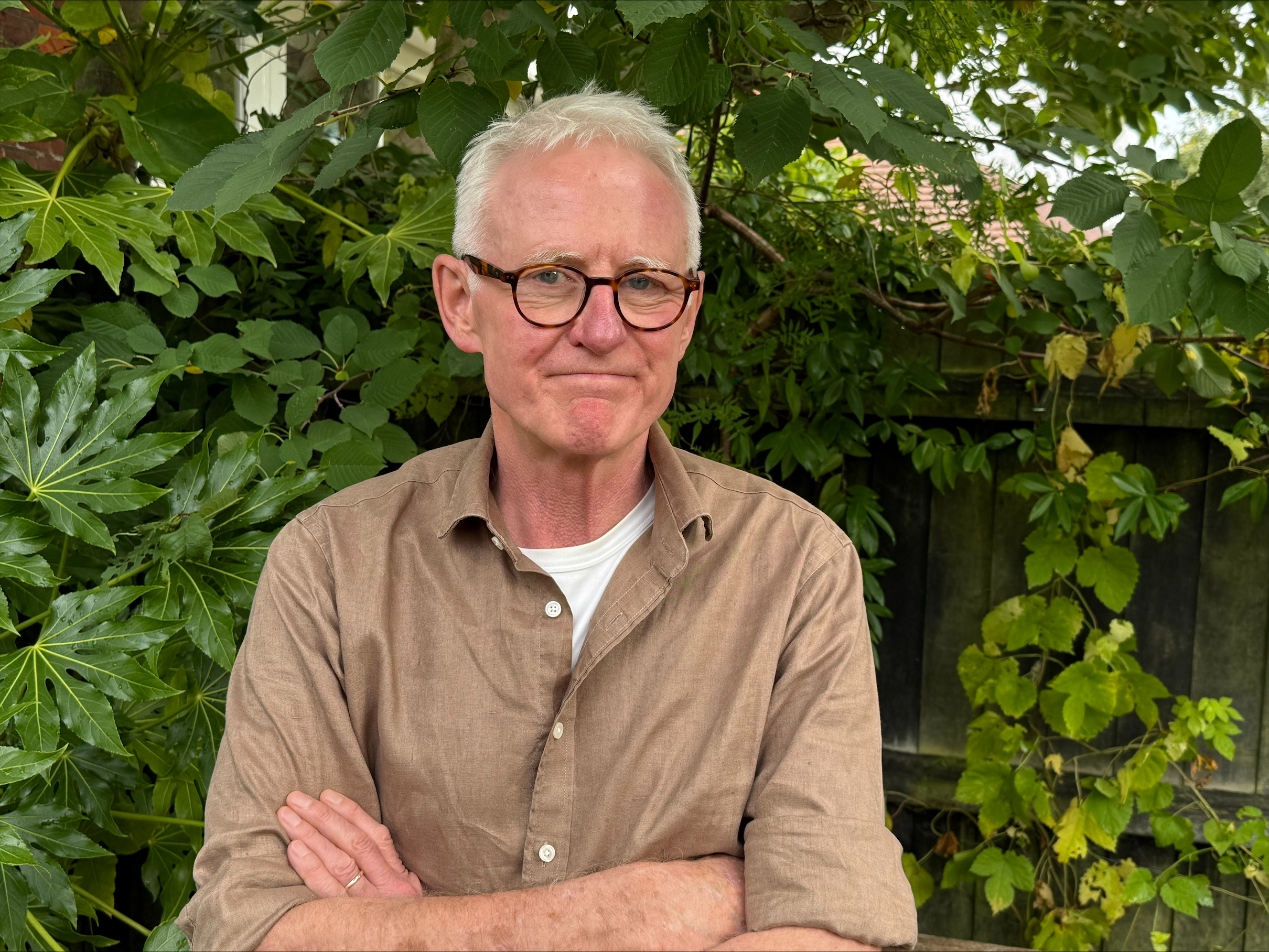
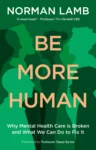 Sir Norman Lamb asks these questions, and more, in his book Be More Human, published by Jessica Kingsley Publishers. Sir Norman is a former Health Minister, an NHS trust chair, and a dedicated mental health campaigner who was knighted in 2019 for his public and political service. He has seen the cracks in the system up close. In his book, he sets out to answer these questions, and many others, uncovering the reasons why our mental health services are failing. He shares eye-opening stories from patients who have been let down, but also inspiring tales from trailblazers who are shaking things up with creative, community-first solutions.
In this interview, we talk about how his personal and professional experiences led to him wanting to lift the lid on the UK’s mental health system. We also discuss how personal accounts of mistreatment and abuse motivated him to think differently about the human element so often missing from mental healthcare. Finally, we discuss novel, community-based alternatives that offer dignity, compassion and hope.
The transcript below has been edited for length and clarity. Listen to the audio of the interview here.
James Moore: Sir Norman, welcome. Thank you so much for joining me for the Mad in America podcast. It’s an honour to get to talk to you and to delve into your recently published book, Be More Human, published by Jessica Kingsley Publishers in August this year.
Before we kick off, I have to say that upon reading the book, I found that it’s one of those books that stays with you long after you finish it. We’ll come on to talk about some of the details, but the personal stories shared, the lived experience accounts, particularly resonate. Welcome, first of all.
Norman Lamb: Thank you, James. You can drop the Sir bit. I’m happy just to be Norman, but it’s really good to talk to you; great that we’ve got this opportunity.
Moore: First, I’d like to talk a little bit about you and your entry into this world. You’re someone with wide-ranging experience across government. You’ve been a Liberal Democrat member of parliament for Norfolk. You’ve held positions in science and technology and business and skills departments. More recently, you’ve spent time in the Department of Health and Social Care and also, perhaps very importantly, been Chair of mental health services at South London and Maudsley NHS Foundation Trust.
How was it that those experiences came together to you wanting to put a spotlight on mental health services and how they can be made more compassionate?
Lamb: Yes, it’s been an interesting journey, James, because if you scroll back to the late ’90s, early 2000s, I hadn’t really focused much on mental health. It hadn’t touched me in any particular way. Then I was elected to parliament in 2001, and as a member of parliament in North Norfolk, I wanted to be available to constituents to take up their concerns. I became aware of a lot of people coming to see me with their own stories about the mental health system and how, in their terms, they felt it was failing them in various ways: awful waiting lists, awful use of coercion and institutionalisation. Those stories leave a mark on you.
Then we were hit personally in our own family. Our oldest son, Archie, when he was 15, was diagnosed with obsessive-compulsive disorder. We managed to get a referral to the Mental Health Trust at a moment when we were fairly desperate. He was in quite a bad way, and we were told that we would have to wait up to six months for anything to happen.
When you’re a family in despair and really anxious about a child, being told you’ve got to wait up to six months is sort of hopeless, really. I’m acutely conscious that for many people nowadays, it could be a year waiting. We did what any family would do if they’re able to. We paid for care, and in a way, there’s the injustice because most people can’t do that. They are literally just left waiting.
I sort of concluded that a service that leaves people waiting so long when they’re desperate is not really a service at all in any meaningful sense, and everyone preaches the importance of early intervention in mental health. Yet the system seemed to be delivering intervention at the latest possible moment, often when people were already in crisis.
Then scroll forward to 2012: I became a minister in the Department of Health, and you get a whole lot more stories, people coming to talk to you, wanting to influence you, and it’s a profound privilege for people to be willing to tell you their very personal stories. Sometimes about dreadful loss through suicide, but often just other failings of a system that is under acute strain, but failing too many people.
I left the department in 2015, after the General Election that year, and a couple of months after that, my elder sister, Catherine, who’d been in a state of acute depression after the death of our mother, made one or two attempts on her life and was admitted to a fairly dismal unit up in the north of England. She was in there for about 10 weeks. She was a voluntary patient. But despite being a voluntary patient, she was locked up with everybody else.
After her period in there, she was discharged back home. But some months later, she ended up taking her own life, and so our family had to cope with that tragedy, leaving two adult children who’d already lost their dad to bowel cancer. I suppose it left me thinking that a lot of money was spent on her. Those 10 weeks in an inpatient unit will have cost a lot of money. It’s effectively incarceration. But what good did it do? If someone loses their life after being discharged, and that’s an acutely risky period, we know that from data across the system, was there not a better way of using money to be more ambitious for someone?
In a way, it led me on a voyage of discovery to find more effective approaches that were more humane, kinder, more generous, more ambitious for people. That was in a period before I became Chair of the South London and Maudsley, which was in 2020. But the five years I had there sort of reinforced all of my views about a system that was under acute strain, despite enormous numbers of people doing their very best and often achieving amazing things, despite the system, not because of it.
So, this is not a criticism of people working in mental health. It’s a criticism of a systemic problem that I think has to be confronted. It’s sort of like a relic from a Victorian era that is too often cruel and inhuman, and should not be tolerated. We sort of end up tolerating the intolerable.
So, it’s a rather long answer, James, but that’s the story that led to me wanting to write a book to make my case, as it were, for change. I wanted it ultimately to be an optimistic, ambitious book. I offer a critique of a system that I think is failing. I enable people to tell their stories in the book about their experiences of the system, often harrowing and shocking. But then in part two of the book, I put the spotlight on a whole load of enlightened examples of beautiful practices and approaches that are humane, generous, kind, but also more effective at keeping people safe, and giving people the chance of a good life that the rest of us perhaps take for granted.
Moore: Norman, I’m so sorry to hear about Catherine.
Lamb: Well, the book is in memory of Catherine, James, and I wanted it, in a way, to be a legacy for her. I want something good to come out of that tragic loss.
Moore: And I hope that Archie is doing better too now.
Lamb: Archie’s doing great, and that’s another important point I want to make, James, because I think often when young people experience mental distress or ill health, it’s easy for them to believe that this is almost like a life sentence, that their life will be defined by this. But actually, so often, there is an opportunity to get to a better place, to achieve some sort of recovery, to be able to enjoy life.
Archie is a good example of that. He’s now running a record label. He still experiences some anxiety, but he’s thriving as a human being, married with children. It’s a sort of success story, and there could be so many success stories. I suppose I want everybody involved in mental health, in whatever respect, whether it’s working in a service or whether it’s a family member, to actually have some hope and some optimism that not always, but so often, there are opportunities to enable people to get to a better place.
Moore: The book certainly does that, and particularly the latter half where you talk about so many fantastic examples from around the world of how we can approach distress in a more compassionate way. The book covers a lot of ground, and you ask some very fundamental questions about how we approach distress.
One thing that stood out to me was how diagnoses are made and the impact they can have. The book isn’t just about diagnosis; it’s much wider than that, but diagnosis is perhaps the entry point for many people into this system.
I was particularly struck by Birgit Valla’s chapter. She describes a Norwegian service where diagnosis is optional rather than a prerequisite for treatment. For those who don’t know, Mad in America has several global affiliated sites. One of those is Mad in Norway, and Birgit is one of the founders.
It was pretty clear from reading that chapter that a diagnosis can help some people make sense of their experiences, but other people can find it limiting or even harmful. Almost every day at Mad in America and across our network of sites, we publish stories of people who have felt that their diagnosis made their difficulties seem insurmountable or lifelong.
Given that psychiatric diagnoses are often based upon symptoms rather than established biological causes, how can we strike a balance between offering a diagnosis as a useful tool while recognising it’s not always an explanation and can sometimes constrain treatment choices and options?
Lamb: I think it’s such an important point you make. I mean, before I get on to Birgit and the way she ran her service in Norway, I learned so much, doing the research for this book, discovering wonderful approaches like hers in Norway. But one thing that struck me when interviewing people who had their own experience of the mental health system was how people would describe how they’d been given one different diagnosis after another, and how disorienting and confusing that must be.
One amazing woman, Rai Waddingham, describes in her story this succession of different diagnoses. I asked her what that meant to her, and she said, well, it’s just the lens through which different people see me. But for the person concerned to be told one thing and then told another and then be given the label, perhaps of borderline personality disorder. They might suddenly discover that when you’ve got that label, the way you’re treated in the system gets worse because somehow you’re seen as a difficult person and somehow responsible yourself for your own actions, putting to one side or ignoring a life story which might get you to that place. You start to think this system is doing people damage, not helping them heal.
Now, it’s important to offer the caveat, as you did with diagnosis, that some people talk to me and they tell me that they’ve been really helped by the mental health system, often because they’ve been linked up with someone who really cares, who builds a relationship with them, and who aids their journey of healing. But for too many people, the story is one of trauma, and diagnosis is sometimes part of that experience.
Then you interview someone like Birgit Valla in Norway, and you hear that Birgit, from the inside, concludes early on in her career that the system isn’t working for the people she’s trying to help and that a different approach is needed. We really need to listen to those people who, from the inside, as a professional, are realising that something is not working. She sets up this service where she’s determined not to rush to diagnosis, not to rush to medication, but just to say, look, we’re here to help. Open the doors, ask people what matters to them, and build a relationship with people and jointly problem-solve.
I suppose what I’d say to you is if you can help resolve someone’s issues that are causing them acute distress and enable them to move on in their life without resorting to a diagnosis which can end up defining you, then surely, we can all agree that helping someone move on and rebuild their life after some joint work addressing the issues that are in their head or the causes of those issues that are in their head, surely that’s just a good thing. Can’t we all agree on that? Then when you hear from Birgit that in 10 years leading this service, she didn’t diagnose anyone. It’s just a wonderful example of how we can rethink how we do things.
And she had no waiting lists; we’ve become sort of conditioned in this country to believe that waiting lists are just an unfortunate necessity. They just are part of a system that’s overloaded with need. You then discover when you talk to people like Birgit, or you go to Trieste and you talk to the amazing Roberto Mezzina, that actually waiting lists are not necessary.
You can rethink things in a way that just enables people with open access to see someone immediately when they need help, not putting them on an awful, impersonal waiting list ignored for six months or a year or whatever it might be with potentially awful catastrophic consequences.
Moore: Birgit’s service was incredibly successful, but it was also seen as quite risky by the authorities, wasn’t it? It was investigated, and the authorities struggled with the concept that anybody could do anything differently than diagnose and provide drugs.
Lamb: The extraordinary thing, James, is that the Norwegian system gave people a right to a diagnosis. Now, I’m sure those people, those legislators who originally introduced that, were doing it for what they felt was a really good reason to ensure that people got help when they needed it and so forth. But, of course, that right to a diagnosis ended up with Birgit’s service facing potential closure because they weren’t routinely giving people a diagnosis.
She was faced with the loss of that amazing service until various parliamentarians stepped in late to save it, and new guidance was issued to allow it to continue, and now it’s spread to lots of places in Norway.
James, you’ll forgive me for trying to encourage people to get the book, but just reading the story about this, I mean, she calls it a help centre. That’s what they’ve become known as in Norway. I think people will find it absolutely fascinating, along with all of these other examples.
There’s a common thread that runs through almost all of the examples I give in part two, and that is the importance of relationships. If we stand back and think about it, this is not rocket science. We all, as human beings, are what our relationships are like. We are social beings, but we are ignoring the importance of relationships or treating someone as an island, separate from society, as psychiatry too often traditionally has done. I say that, being very clear that lots of psychiatrists have been very influential to me, people who completely get it and who recognise that their role is part of a much bigger picture.
Roberto Mezzina is a psychiatrist. He’s a wonderful human being who I have enormous respect for, a principled man. But the old-fashioned view of treating someone in isolation from the people that they have relationships with seems to me to be a flawed approach, and also treating them in a way where the professional keeps a professional distance from people. This is another thing that I found acutely fascinating. This principle spreads much further than mental health services.
There is a culture in a lot of public services that people working in the service have been sort of conditioned to believe that sometimes, for their own protection, they must keep a professional distance. Purposefully not establishing any sort of relationship with the person that they’re trying to help, keeping professional distance, not engaging, not getting to understand and know the person, not offering any vulnerability yourself. Actually, the very opposite of that is so much more helpful to the person seeking help, but actually also so much more rewarding for the professional.
Moore: I certainly would echo, Norman, that people should go out and read the book because there are so many fabulous examples. We’ve mentioned that part one is a kind of a diagnosis of the problems, and then part two is about how other people do things differently.
I got a distinct sense from reading that in part one, almost every example given, almost every personal story, was us trying to fit a person into a system that had very little to offer them outside standard approaches. But in part two, where you talk about alternatives, it’s about fitting a service to the person coming in, meeting them where they are, finding out where they’re from, finding out their social and cultural context, perhaps. It was incredibly refreshing to read.
Lamb: I’m glad you saw it in that light, and I think you’re totally right. The current system that I describe in part one is inflexible and not person-centred. I mean, we often use that expression, but it’s too often pretty meaningless.
I think another interesting aspect of the system, and this comes out in Liam’s story in the book—it’s an extraordinary story of someone who’d had a difficult childhood with a mother who experienced really significant mental ill health. Liam ends up in the mental health system, has such an awful traumatic experience that he literally escapes and gets abroad, gets away from the U.K. to escape the mental health system and lives an itinerant life in continental Europe for two or three years just to keep away from the system.
He returns because he’s heard, wrongly, I think probably you and I would agree, that a new generation of antidepressants may be more effective, and he wants to get hold of them to help him. He goes to see his GP, and he describes how he purposefully didn’t reveal to the GP what was going on in his head because he knew that if he did that he would be back into the system again, locked up in a dismal unit. What do we learn from that? We learn that we create incentives not to disclose, not to open up. Indeed, incentives to keep away from the system.
When you look at the disproportionate use of coercion in terms of the black community, you look at some of the horrific stories of lost life and damage to people in the Black community who’ve experienced the mental health system. The story told by Aji Lewis, who lost her son, Seni Lewis, a young Black student who lost his life after being admitted as a voluntary patient when he was in a bad place. He ends up with police being called to the unit on the first night there, restrained face down on the ground for half an hour by several police officers. There are echoes here of George Floyd. It happened before George Floyd, but he ends up a week later with a life support machine being switched off.
Now, when a community gets to hear of stories like that, what’s the incentive to engage with mental health services? Then we look at the data, and we know that Black teenagers are less likely to seek early help than their white counterparts. Well, is that surprising? I don’t think so. You then have a sort of loss of trust between the community and a mental health service, which is deeply unhelpful.
Then you compare it with Trieste in Northern Italy, where there’s a community mental health centre. Everyone knows where it is. The doors are open, long hours. There are six beds for anybody who’s worried about falling into a crisis. They can go there for a few days just to stabilise themselves in a kind therapeutic environment. But it’s the same people there, and there is continuity of support. There’s a friendly welcome, and anyone can go. You don’t need a referral from your GP. The contrast is enormous. What I found quite troubling was how a number of senior psychiatrists, including academic psychiatrists, would say to me, “Oh, Trieste works in Trieste, but it doesn’t work here.” Why is that? Have you been there? No.
A very different approach dismissed without properly examining it, without ever visiting or talking to the people there. I’ve been there three times now, and that sort of dismissive attitude is so much greater in London: we can’t do that here. Well, I would say in riposte that a young Black man in Lewisham has just the same right to be treated with dignity and respect as any person in Trieste in Italy. There are some universal principles at stake here about the way we treat human beings, which don’t depend on ethnicity or on location or on circumstance, but are universal, and we’ve lost sight of that. People who would often, I think, describe themselves as being progressive individuals end up in a position where they are refusing to contemplate change in a way that feels reactionary.
But what I found immensely positive at the Maudsley was that there were so many people who saw the need for change and then who embraced the opportunity to trial a new model of care based on the principles from Trieste and then found that attendances at A&E started to go down. Admissions to hospitals started to go down because this more humane approach was more effective for people.
Moore: It’s a good time then to move on to how do we achieve change and what are some of the obstacles? As we’ve said, anyone who wants to change the mental health system is inevitably met with a response like “We’d love to do better, but there’s no alternative to diagnosis and drugs.” But as your book so clearly shows, there are plenty of successful alternatives, many of them built on very simple principles of dialogue and community. Many of them are much less expensive to administer than a medical setting. Perhaps it’s partly just about having the courage to admit that maybe a biomedical focus is just too narrow.
The way that we take people in distress away from their communities, hundreds of miles away, we take them away from any support system and then are surprised somehow when they become even more distressed, which leads to more diagnosis and more drugs and so on.
I wanted to ask for your thoughts on why change is so hard to achieve and how we can start to open up to the idea that we need a more compassionate, perhaps less biology-led response to distress and trauma.
Lamb: Well, I hope that this book will encourage people at the top in government. I’ve given a copy to the Minister responsible for mental health. I’ve given a copy to the Prime Minister. I would love government to lead the case for change. The centre of government in the U.K. can’t dictate a change of culture, but they can lead the conversation and encourage a change of culture within services and promote alternatives that might demonstrate much better outcomes. But at the same time they can encourage government to think afresh, and incidentally, James, to recognise that a different, more humane approach doesn’t cost more. If anything, it costs less than if you have a system that’s based very much on heavy medication and institutionalisation, and a lot of these inpatient wards are akin to being in prison. People have often described it to me as being like in prison or being incarcerated.
That costs a lot of money. We spend about 50% of our clinical budget in the NHS on inpatient care. That’s what it’s called, inpatient care. But in many respects, it’s akin to incarceration. Everybody in England is locked up, whether they’re voluntary patients or detained under the Mental Health Act. That in itself is really shocking, it seems to me.
The use of restraints remains endemic in the system, and you’re more likely, if you’re Black, to experience this sort of coercion. I want government to lead the charge on making the change, and they would see that they could achieve better outcomes for no more expenditure. You may have to spend some money on affecting the change, moving from one approach to another, investing in things like 24/7 community mental health centres. But you could do public-private collaborations and so on. But I also want a grassroots revolution. I want to get the message out to anybody who’s interested in mental health, as indeed we all ought to be, because every family is touched by it in some way or other.
I want to get the message out that we can all have an impact in our communities and in the organisations that we work in. We can all play a part in helping to prevent distress in the first place, because that’s one of the key themes in my book: that we pay so little attention to preventing distress. We allow people to fall into crisis, and then the system is overwhelmed. What a ridiculous way to behave. So much better, surely, to invest in preventing people from falling into distress in the first place. But I think every person working in a public service, not just in mental health services, who reads this book might reflect that they could do things differently.
I’m not claiming personal credit for this, because it was the editor who came up with the title of the book. I described my argument to him, and he said, “What about being more human?” I thought that encapsulated it perfectly. But you could almost describe it as a sort of call to our age, because in so many ways, we have an angry public space now and an enormous risk of an accelerating loss of humanity, and a reminder to everyone that we need to be more human to recognise the vital importance of human relationships and building trust between us in communities and in organisations. Then a grassroots revolution could change things fundamentally. I want change from the top down, but also from the bottom up.
Moore: The way I feel about this is that I think there’s a demystification of mental health that needs to happen. I think while it remains in the medical realm and you need to see a very expensive specialist who knows about broken brains and chemical imbalances and so on, that just puts people at arm’s length from the help they need, quite often. Having mental health challenges is one of the most normal things that can happen to a person, to a greater or lesser extent.
There are clearly some severely ill people who need specialist help, but there are also many people who can benefit from community-led interventions rather than being taken out of their community.
Just to give you an example, Norman, where I live in South Wales, we have a local community café. I have to give them a shout-out because they do brilliant work. It’s called Rogiet Community Junction, and it’s a mental health intervention. It was never set up that way; no one really views it that way. But every time you walk past it, the local community, especially older people, are in there chatting, meeting new people, making connections. That is demonstrably good for their mental health. I do think we need to try and wrest control back from biology and connect with this on a human level, and your book does that so well.
Lamb: Well, thank you. I’ll join you in that shout-out to that community café, and what we need to remember is that there are thousands of those wonderful community-based groups all over the place doing this work. If the statutory formal service could learn from what is all around them, but so often ignored, then things could change radically.
Your description of the help that people get from engaging in those sorts of things reminds me also of Rai Waddingham. I’ve mentioned her before, but she describes this harrowing journey through the mental health system.
She’s someone who had very difficult experiences in childhood and teenage years, including abuse, and none of the things that happened to her in the mental health system really helped her. What actually helped her was this amazing thing called the Hearing Voices Network, where people who hear voices come together to engage with each other and to normalise the hearing of voices. They discover that you don’t necessarily have to eradicate the voice to move on and to start to enjoy life again. You can take back control, to coin a phrase from our political past in this country. The power of how she benefited from others with lived experience, after all of that specialist intervention, which had labelled her in different ways so unhelpfully, I thought that was incredibly powerful.
The only other aspect which we haven’t touched on is the fact that a lot of the same issues apply to people with a learning disability and people who have been diagnosed as autistic. Alexis’ story in the book is probably the most shocking of all.
As a minister between 2012 and 2015, I had to deal with the aftermath of a very shocking expose of abuse in a private hospital called Winterbourne View. The government response to that was to say that there are far too many people with a learning disability or who are autistic, or both, who are in institutional care. Some of these people are literally kept in solitary confinement, which surely is a human rights abuse. Some of them are fed through hatches in doorways.
We set a clear ambition that we should substantially reduce the number of people in institutional care. The shocking thing is that the numbers have come down, but they haven’t come down nearly far enough. Again, what we’ve recognised is that institutional care costs a lot of money, and we could be giving these people the chance of a good life in the community with support if we only had brave leadership.
I think it’s really important to recognise that a lot of the characteristics of our mental health system also end up having awful impacts on people with a learning disability and autistic people. Autistic people are often misunderstood in inpatient services, and Alexis’ story in part one of the book describes how the one thing that keeps her sane is running miles every day. She has to do this. Then she’s locked up in an inpatient unit. She can’t run because there’s no outside space, and this idea that the people who are acutely unwell for whatever reason are denied access to fresh air, to open space, to beauty and nature, I find just extraordinary. It’s a very stupid thing to do, and yet we routinely do it.
Even the old asylums that we rightly got rid of had access to open space. Today, we deny people even that in these units. It’s really important to recognise that this assault on people’s human rights applies also to people with a learning disability and to autistic people.
Moore: Again, you just get a distinct sense of people being forced into a system that isn’t flexible enough to cope with differing needs of different groups of people. You also get a sense of almost fear, I guess, to let in this different thinking, these new ideas. If psychiatry and the system let in more of these people, if the learning was from the people with lived experience more, the learning needs to be as much in the other direction, I think.
Lamb: Exactly right.
Moore: Well, Norman, I have to say, the book is such an important read. I’d encourage everyone to go out and get a copy. The personal stories in particular are so powerful and leave such an impact. We know that after many years of providing a voice for people with lived experience on Mad in America, it’s the personal stories that tell us whether we’re doing a good job or not, and it’s clear that we’re not doing a good job.
Lamb: Absolutely.
Moore: As we said at the start, we have to recognise there are many compassionate and caring people working within a system, but the system itself constrains and limits so much what they can and can’t do. But it’s so refreshing to read in your book that there are so many good alternatives out there that we could learn from. We need to be brave enough to perhaps shut up and listen a bit more.
Lamb: Absolutely right, James. Thank you for everything you do on this podcast and more broadly on Mad in America and other countries’ equivalent systems. You’re giving a voice to people who are often not heard, and you’re exposing evidence that often is not seen or heard. You’re doing really important work, and I’m very grateful for it.
***
MIA Reports are supported by a grant from Open Excellence and by donations from MIA readers. To donate, visit: https://www.