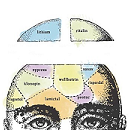
The use of coercive practices in psychiatry has been tied to worse recovery and critiqued for lacking ethical and legal justification.
A new study, published in the Community Mental Health Journal, shows that coercive practices worsen psychosocial disability, depression, resilience, and well-being in people with suicide attempts, and are often experienced as dehumanizing.
The authors were an interdisciplinary group of individuals located across Colombia, led by Felipe Agudelo Hernández of the University of Manizales. They write:
“This mixed-methods study demonstrated that coercive practices—both overt and subtle—remain common in clinical care for people who have attempted suicide in Colombia. These practices are associated with higher levels of psychosocial disability, lower subjective well-being, and reduced resilience, and are experienced as deeply painful, dehumanizing, and exclusionary.
Integrating quantitative and qualitative data revealed that coercion is not an isolated phenomenon but an expression of institutional, educational, and cultural structures that prioritize control over collaboration and obedience over autonomy. This reality contravenes fundamental human-rights principles and obstructs recovery processes.”
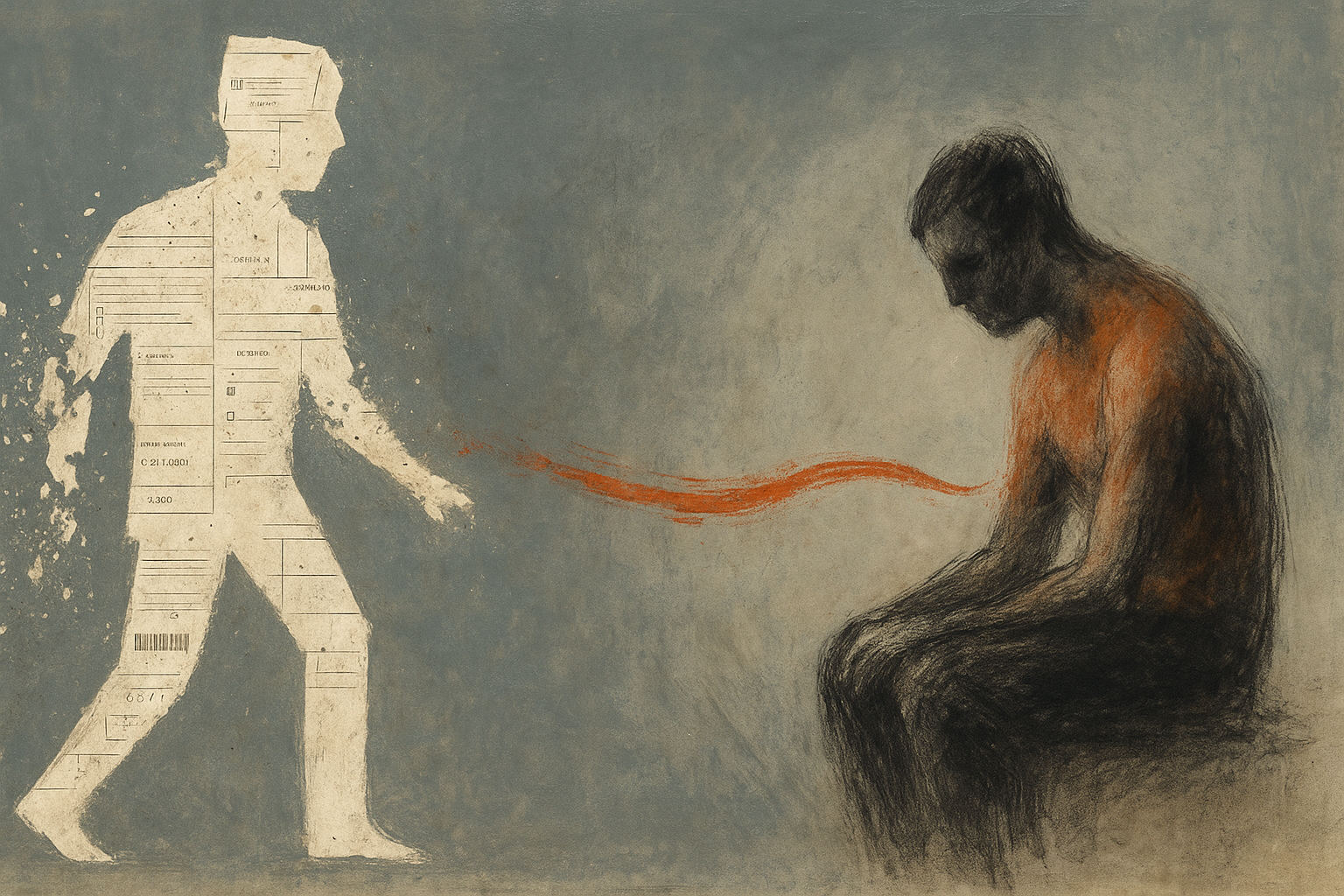











I think hell will freeze over before psychologists and psychiatrists realize that the problem is the very idea of these psych-disciplines to start with.
How many lives had to be ruined through lobotomy before people finally got their heads out of their asses and saw that the practice itself is so fundamentally cruel and inhumane that it’s straight-up evil to demand research and “science” to prove it’s actually REALLY as harmful as it obviously fucking is if you have even half a soul (speaking as a dead soul myself).
They’re stuck in a pseudoscience cult and still think it’s science and that the way to defeat it is more science, except that they’ve never done any actual science in their lives because PSYCH MEANS SOUL, not brain. They think they’re “scientists” on the soul, and they think they’ve absolved themselves of the lies and pseudoscience.
These fields are fundamentally unscientific. Do we have a decades-long negotiation with Big Homeopath to demonstrate that their treatments are no better than placebo, while still talking about how we need to reform homeopathy because it’s just too hard to find alternatives? Do we treat it as a flawed medical field, or do we treat it as pseudoscience?
“Psychologist” and “scientist” are mutually exclusive.
I have been an atheist my whole life (still am sort of) but it was the tortures of psychiatry that made me realize that the human soul is very real, and that the harms of the psych fields all boil down to a “scientific” rejection of it.
I am very pro-science, enough to ask WHEN ARE WE GOING TO STOP PRETENDING ANY OF THIS IS SCIENCE?
Report comment
Totally agree with you
Report comment
It’s a very obvious problem. If a person’s consent is not required, then the clinician is empowered to disregard their input. This removes feedback mechanism against harmful treatment.
Report comment
Thomas Joiner identified a sense of burdensomeness and a sense of isolation as the two interpersonal risk factors that give rise to a desire to die. It seems that psychiatric practices might intervene against someone’s ability to *act* on that desire but reinforce, rather than diminish, the desire itself.
I was treated for an eating disorder over a decade ago and it was much the same—coercive and shaming.
Report comment
Having been a “victim” of coercive “incarceration” in a mental hospital following a suicide attempt, this comes as NO surprise to me. The practices there were totally dehumanizing–nothing I said, felt, experienced was taken into consideration. My attempt followed the death of my younger son due to an accidental overdose of prescription medication. I explained that when I told them why I didn’t want to take so many pills and was ignored. Following my release into an outpatient day program, I discovered my record said my son had died in a car accident. Just a small instance of how the patient is basically ignored.
Report comment