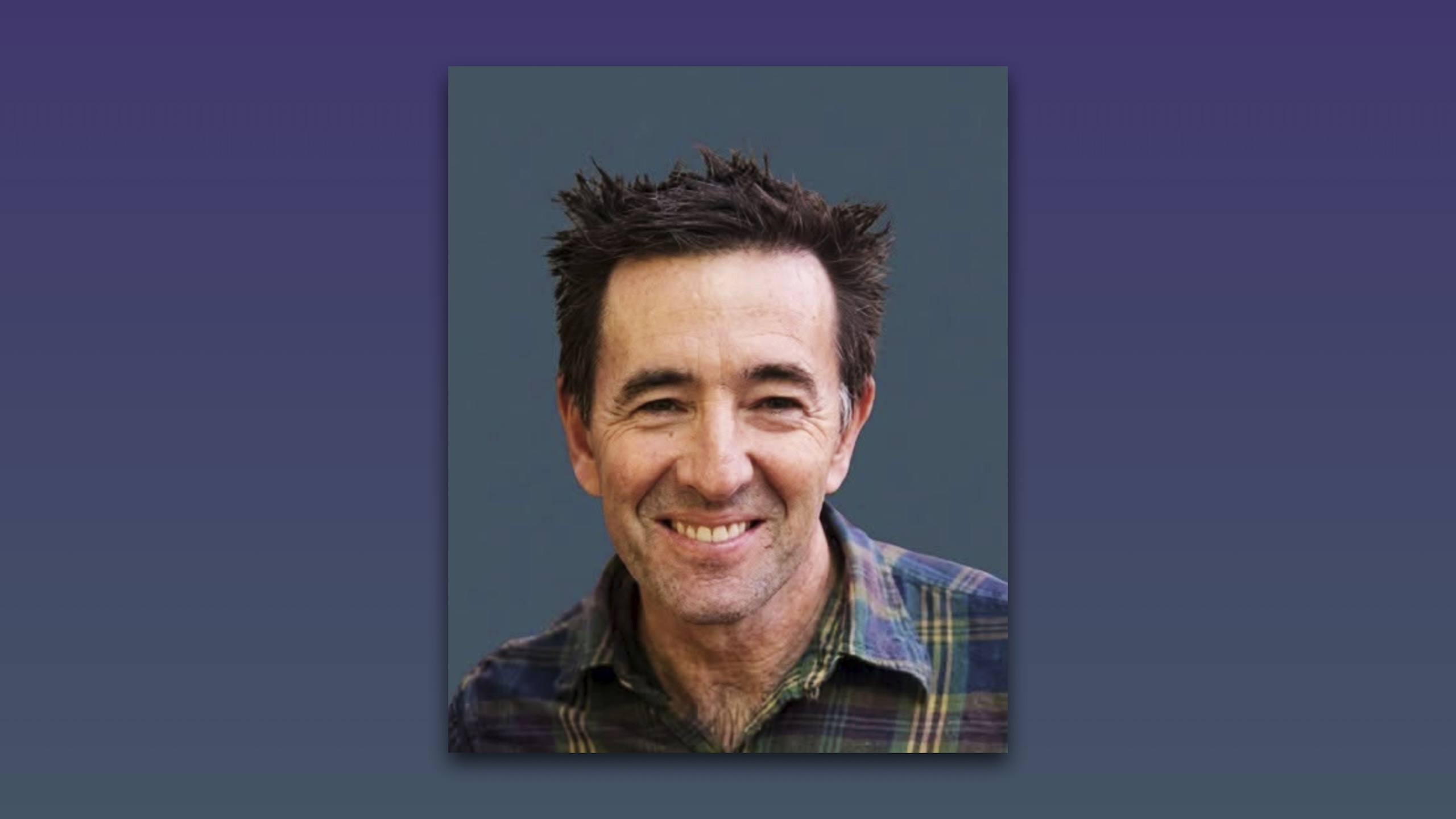
Hello, my name is Robert Whitaker, and today I have the great pleasure of having as my guest on Mad in America Radio Sascha DuBrul. Sascha will be well-known to most Mad in America listeners. He’s been a leading activist in psychiatric circles for more than two decades now.
He co-founded The Icarus Project and worked closely with the Institute for the Development of Human Arts. His interests lie at the intersection of the public mental health system and the Mad Underground.
The transcript below has been edited for length and clarity. Listen to the audio of the interview here.
Robert Whitaker: Sascha, welcome to Mad in America Radio.
Sascha DuBrul: I’m so happy to be here, Bob.
Whitaker: I’d like to tell a little story about how I first discovered you and the Icarus Project. I had come out with a book, Mad in America, in 2002, and at that time, I wrote about MindFreedom, David Oaks, and the psychiatric survivor movement. Then all of a sudden, the Icarus Project popped up on my screen, and I could see that it was different in its orientation from the psychiatric survivor movement, and yet it was user-led. Sascha, can you tell us what led you to co-found the Icarus Project?
DuBrul: First of all, it’s great to have this conversation with you after all these years, because one thing that just occurs to me is when you started the Mad in America website, I was one of the first people blogging on it.
When we started the Icarus Project, there was the psychiatric survivor movement that you were talking about, and then there was biological psychiatry. There were the NAMI meetings that my mom had gone to when I had been hospitalized and diagnosed with bipolar disorder, but there was nothing really in between. There was no space to say, Hey, you know what? These things that we’re talking about, mental illness if we want to call it that, or the extreme states that we’re experiencing, or these hard times that we’re going through, we don’t have language to talk about it.
The psychiatric survivor language never really resonated with me or with the other people that were originally part of Icarus, and part of that was a generational thing. The psychiatric survivor movement came of age in a time when people were getting locked up in institutions for long periods of time. We were the biomedical generation, where we were getting diagnosed and put on drugs, but not having these long, extended stays in the hospital.
Icarus started because I wrote an article in the San Francisco Bay Guardian. I was 27 years old, and I was asking questions like, I don’t trust the pharmaceutical industry, but the drugs that they’re giving me seem to actually be helping me. I’m looking for other people out there that are just trying to figure this stuff out. That’s the context in which Icarus started.
Whitaker: The Icarus Project is often referred to as a radical group. Yet on the one hand, you’re finding the drugs helpful; many members did. I presume you were in a position of choice, right? People like the drugs, that’s great. If they don’t like the drugs, that’s good too.
DuBrul: When we started, we said very clearly, if you take the psychiatric drugs or you think they’re poison, you’re welcome to be a part of the Icarus Project. If you use diagnostic categories, like bipolar disorder or schizophrenia, or you think all those categories are ridiculous, you’re welcome to be a part of the Icarus Project. We opened up a lot of space for people who wouldn’t necessarily agree with each other to be in the same room.
Whitaker: But you shared the experience of having been diagnosed, of having some exposure to the psychiatric system, and in some ways finding it unhelpful. Isn’t that correct?
DuBrul: For sure, but I think what that actually means is for people to say, yeah, that was really horrible the way those doctors treated me. They treated me like I couldn’t even make decisions for myself. But what is that language they use? The language of harm to self or harm to others. Maybe I actually was going to hurt myself if they didn’t put me in the hospital. Maybe I was actually going to hurt somebody else if I wasn’t put in the hospital.
We opened up space for all kinds of questions like that, that I think the traditional psychiatric survivor movement really didn’t have language or space for in the way they were thinking.
Whitaker: Tell me, Sascha, what did you do when you started? Did you have meetings in person? What exactly did you do?
DuBrul: It all started with our website in 2002. Jacks McNamara was one of the original people that I met when I wrote that Bay Guardian article. We’re the two people who came up with this idea to start the Icarus Project. The language we used back then, which I still think all these years later, is very powerful. Rather than seeing ourselves as diseased and disordered, we see ourselves as having dangerous gifts, like the wings of Icarus.
We started with the website, and we had discussion forums. We had one that was called Alternate Dimensions or Psychotic Delusions, where people could post about their experiences that they were having and find other people who had a similar kind of stuff. There was one called Give Me Lithium or Give Me Meth, which was about illegal drug use and how people use drugs to take care of themselves or to harm themselves. This was l a precursor to the Harm Reduction Guide to Coming off of Psychiatric Drugs, which we put out some years later.
Whitaker: Why did you pick the Icarus name? In what way was it symbolic of the language you were looking to embrace?
DuBrul: About nine months before we started the Icarus Project, one of my best friends jumped off a bridge and killed herself. She was 23 years old. She burned super bright and also would go to these really dark places.
When I was mourning for her and trying to make sense of it, I was a writer; I’ve been writing stories for a long time. Before I ever wrote more publicly, I had a quarterly column in this punk rock magazine called Slug and Lettuce that was mostly read by teenagers. But when Sarah killed herself, I was about a year out of the hospital myself and diagnosed with bipolar and trying to reckon with what that all meant. I started taking this drug called lithium carbonate, and it seemed to be actually helping me and keeping me stable. But in my community of people, that was really frowned upon. There was a lot of stigma against people taking psych drugs. I used the Icarus metaphor when I was talking about Sarah.
Then I shared that story with Jacks McNamara, and Jacks really liked it. I think it was Jacks who was like, hey, what if we call it the Icarus Project? That is the origin of that myth. Now that was a long time ago, and over the years there have definitely been times where I was like, why did I name an organization after a boy who flies too close to the sun and crashes in the ocean?
Whitaker: There is that element, but it’s also this element of soaring, of looking to achieve, to have hopes and ambition and that sort of thing. That runs counter to where the message is: once you get a diagnosis, your life is going to be more constrained. You’re not going to have a full life. I thought it captured both elements brilliantly: that there’s peril here, there’s suffering here, but there’s also this chance of reaching for the stars, and having ambition. In that way, I thought it was a brilliant name.
What do you think you accomplished with the Icarus Project? Did you change the discourse for many people in society at large, or just for a group that came to you? What’s your thought?
DuBrul: I kind of came out of the punk rock underground world of the New York City squatter anarchist community. That’s where I came of age. I think what comes with that? A distrust of authority, a sense that normalcy is not something to strive for. That it’s all right to be weird. You and your friends can act weird, and that’s all right. But also the sense that there’s an underground and there’s a mainstream. That there are a lot of things that stay in the cultural underground.
I ended up working on Icarus for 13 years and I left. I left it in the hands of other folks. It actually ended up turning into another organization called the Fireweed Collective. But it was foundational for me. It’s what allowed me to then go to social work school and to be able to engage in doing the things you do to become a clinician, but with this rich background.
Whitaker: Sascha, that’s a story of transformation, of people coming into a very difficult place, where you’re unsure of your place in this insane world and then coming out of it. You talk about people becoming social workers or clinicians. It became a passageway, this self-conception, to something other than just being a mental patient.
DuBrul: For sure. What it did for me, very practically, is that by the time I went to social work school, and I was taking my clinical classes and doing my clinical internships, I already had more than a decade of engaging with many hundreds of people who had all different kinds of experiences.
Think about the power of engaging with people for whom taking psychiatric drugs was a really helpful thing, and for some it was incredibly toxic. For some people, using the diagnostic language made sense. For some people, that was the worst thing that could happen is to use these labels.
In my life now, I encounter folks who don’t come on Mad in America, like the treatment advocacy center people. They use language like anosognosia. Are you familiar with that term?
Whitaker: Sure, lack of insight.
DuBrul: Every time I see that term, I’m like, you people are ridiculous. How are you going to reify this biological model and say if you don’t believe in this, then you don’t have insight into yourself, and therefore you’re sick? It takes a person who’s really desperate to come up with a formulation like that.
Whitaker: That was one of the reasons that I got interested in writing Mad in America. I was doing a series for the Boston Globe, and I was talking to psychiatrists, and I said, well, what about the people who don’t like to take antipsychotics? They said, oh, that’s because they don’t understand they’re ill. They lack insight into the illness.
I thought then, it’s like you’re denying certain human beings the right to be the author of their own lives. That’s really a form of oppression. That was one of the reasons I felt so resistant right from the beginning to that biological model because it said, oh, we know what is good for you; you don’t know what is good for yourself.
Going on to the Harm Reduction Guide to Psychiatric Drugs, I was surprised that came out of the Icarus Project for that very reason, because you didn’t really have a position on drugs other than whatever works for you, right? It was an open-minded position. Why did you end up ending up creating the first real good guide to coming off psychiatric drugs?
DuBrul: The beauty of what we had going on with the Icarus Project was that there were people with really different perspectives. There was Jacks and me; we were both taking the drugs, and it was working for us. Then there was Will Hall, who had a completely different experience. There was Madigan Shive, who had had a completely different kind of experience related to the drugs.
The fact is, if we’re going to think about building community and support, because at that time, by the time the Harm Reduction Guide to Psych Meds came out, we had Icarus Project groups all over the country, and in a bunch of other countries. People downloaded a guide we made and started local groups all over the place. Drugs were an issue that a lot of people were struggling with.
I’d like to say what Will Hall often would say when he’d talk about the guide. At the time that it came out, there was so much information about going on to psychiatric drugs. Like every fucking television program that you would watch would have these ads telling you to take antipsychotic drugs or whatever, and there was so little information about coming off of the drugs. That made it like an obvious thing to do. It was about empowerment.
Whitaker: Certainly fits in with empowerment and informed choice, and being the author of your own life. When you say that you had groups all over the country and internationally, these were now meeting in person?
DuBrul: Yeah, people were meeting in person. It was a different era. It was a little easier to convince people to get together in person.
Whitaker: Were a lot of them rooted in universities?
DuBrul: We tried. I mean, the grant that we got was to organize on college campuses, but we ended up doing a lot more grassroots organizing off of college campuses; it was kind of amazing at that time. It was like 2005-06, somewhere around there.
One thing I’ve learned from that chapter of my life is that it’s very hard to teach people how to facilitate meetings by reading a little manual. It doesn’t work like that. You could give them meeting agreements, and you can say, like, you’re in solidarity with these other groups that are around. But there were some aspects of what we were doing that had the seeds of self-destruction sewn into them from the beginning.
Whitaker: Can you talk about what happened to the Icarus Project? Why isn’t it alive today?
DuBrul: I remember sitting with Will Hall at some point. He had written the meeting agreements for the Icarus Project, and one of them was that we would not be racist or sexist . . . it was a list of all the things we couldn’t be. We had this idea that we were making our space safer. That was the language people used at the time, talking about safe spaces, and we were like, we won’t tolerate oppressive language of this kind or that kind. The tension is that you get a bunch of mad people together and try to give them space to talk, but then you’re saying, don’t talk like this, or don’t talk like that.
I think Icarus suffered from something that a lot of organizations on the radical left suffered from at the time, which was really intense identity politics. Identity is really important. It’s very important to know your social location and be able to say, okay, I’m a cis white male with educational privilege, and that means I see things a certain way. You have a different perspective. That’s all good. But what ended up happening with Icarus was that identity became this incredibly powerful force.
I guess I have to back up and say that part of this is my fault. It’s my fault because I come out of the punk rock world, which also had these leftist politics, and there was a sense that when you’re part of the dominant culture, you have to defer to people who are more oppressed than you. That’s what we tried to do in Icarus.
Fireweed was something like a splinter group of Icarus, but really, the changes in Icarus came directly from Jacks and me. We were like, the Icarus Project is too white. We think it needs to be led by queer and trans people of color, and the most radical thing we can do is reformulate the Icarus Project into a group that centers the most marginalized people in society. We went about hiring different people and trying to change the organization, and in the process I got kicked out, and Icarus went on its way and did its thing.
But it wasn’t a faction. It came from the inside. I was at the meeting the day the decision was made to dismantle the national group infrastructure, because there was a fear that racism was being perpetuated in our local groups around the country and that we couldn’t do anything about it.
We made some big mistakes. We didn’t have to go in that direction. But the confluence of people who feel things really intensely and have extreme states, and people with identitarian politics who are saying this group of people is more important than that group of people, was a fucking disaster.
Whitaker: It’s a combustible mix that’s for sure. There’s no Icarus Projects that exist today, right?
DuBrul: No, a couple of years ago, I got a grant from one of the same folks that funded us back in the day for an Icarus Project archive. If you look online, all of our old materials and all of our old stuff are on a website: icarusprojectarchive.org. I think of it as like a foundation. What are the lessons we could learn from this so we could do it better in the future?
Whitaker: For me, the most important thing that the Icarus Project did is that it rejected that negative, “oh, my life is constrained now,” and it said, no, you can move through the world; you have talents, you have worth. I think that is so transforming, because so many people, when they get that diagnosis, they feel, “Oh, my life is now constrained.” Maybe you don’t agree with that, but that’s one of the things I think is lasting.
DuBrul: You know what, Bob? That’s a piece of it, and that’s an important piece of it, but what I think held the philosophy of the Icarus Project together wasn’t just, hey, you can be something other than what they say that you can be. It also was this foundational understanding that the society that we live in is really sick, and so to be told you’re the one that’s sick doesn’t work. Therefore, we have to go about actually trying to change things and make things better.
In order to be a part of the Icarus Project, you didn’t necessarily have to have a diagnosis; you didn’t have to be taking psych drugs or whatever. We would get people together, and it was like you couldn’t tell in a room who’s the crazy person, who’s the mad person and who’s just like the quirky artist person? We were actively trying to change the language and culture of mental health and mental illness.
Whitaker: Let’s talk about your own life journey after this. You went to social work school, and then you got involved with the Parachute Project as a clinician, is that right?
DuBrul: I did an internship at the Parachute Project when I was in social work school. Man, that changed my life. I spent a year of my life doing Open Dialogue work with families on the island of Manhattan. We would go around and go to people’s homes where one person in the home had recently come out of a psychiatric hospital and was diagnosed with a psychotic disorder. We would just sit with the families, and let them talk and create a container where they could create that beautiful polyphony where they were all saying different things, but it was helping them understand each other better.
Whitaker: The Parachute Project was a highly visible project about our effort to import Open Dialogue principles into the United States and New York City. First of all, what was your experience in those living rooms? Did you experience the potential of Open Dialogue in your meetings with families?
DuBrul: Oh my God, it wasn’t even potential. I experienced the power of it. I mean, first of all, I’m someone who got diagnosed with a psychotic disorder when I was 18 years old, and my mom was going to NAMI meetings, and so she had this language. My mom is a very loving, wonderful woman, but she was kind of inoculated with this language of biological brain disease. It’s a disease like any other. It’s not your fault. There are drugs for it. For me, it was incredibly healing to sit in these rooms and realize that you could have multiple perspectives and that those perspectives didn’t necessarily have to cancel each other out.
It was the same principle as the Icarus Project back in the day, where you didn’t have to agree with each other about the drugs; you could just listen to each other, and something new would emerge. Then, for me, personally, I was on this Parachute team where half the people on the team were clinicians; there were a psychiatrist and a social worker and a marriage and family therapist, and then the other half of the team were peer workers. That was my introduction to the peer workforce in the public mental health system, and there I was sitting there as a clinical intern, and I was like, am I a peer? Am I a clinician? I’m really comfortable disclosing personal stories about myself, and I think that I find myself doing that in those rooms. That’s a very peer thing to do. But then I can think systemically.
Open Dialogue ended up opening a whole new chapter of my life for me because I realized there were these incredibly rich roots that went back to the 1960s and ’70s. When I went back and learned that history, it helped me understand; it situated me, and as a person I’m like, well, this is what I want to do with myself.
Whitaker: Systemic family ideas were central to Open Dialogue, as it was developed, as you know, in Tornio. I mean, that was the key thing: getting the family together and listening to each other. It came out of those same roots that you’re talking about. What happened to the Parachute Project?
DuBrul: It got defunded. I can’t tell you what happened to the Parachute Project really, but I can tell you what happened to me, which is that in my final semester of social work school, I wrote a 68-page paper about the working relationships between peer workers and clinicians on the Parachute team. And then I got hired by the New York State Psychiatric Institute at a place called the Center for Practice Innovations, which ran out of Columbia. I was put in charge of developing the peer specialist role for first-episode psychosis teams, and that’s what I did for three years.
I developed the peer role, and then my second job was that I was the lead trainer for all the peer specialists on ACT teams in New York State. Then I would train the ACT team peers, and I would train their team leaders. I learned a lot.
Whitaker: You wrote a 68-page paper about the relationships between the professionals and the peer workers. What was your theme there, because oftentimes you hear about a lot of conflict between these two groups?
DuBrul: What I said was that there is a synergistic relationship between the peer workers and the clinicians if you create the right situation where everyone is respected. They understand that they have different roles: the peers can do these things, clinicians can do these things. The reality of the peer specialist workforce in North America is that, for all the good intentions, and for all the kind of roots in the Psychiatric Survivors Movement and all that, it’s a neoliberal economic model that trains an unskilled labor force to do things that a more skilled labor force could do, and then just pays us less money.
In other words, peers end up doing the same shit that clinicians do, and they get paid a fraction of what they get paid, so everything gets undermined, and it’s all some fucking bullshit. At the end of three years, I was so fucking sick of it that I left, and I moved to California.
Whitaker: Sascha, when I’m listening to you, I have to hold two thoughts in my head at the same time. When you first talked about going to the Institute, it seemed like, wow, this is the realization of a lot of dreams, a humanistic way of approaching things and bringing in Open Dialogue principles, so that’s a good thing. That’s a story of change within an institution.
Then you just jumped to what I often see happening to the peer movement, which is exactly what you said. They get employed to do a lot of things for much less money than the professionals do.
DuBrul: What I said the whole time, and I will continue to say it even though this was a number of years ago, is that in order for a peer workforce to have an effective role in the public mental health system, there has to be a grassroots movement that they’re connected to. There has to be something on the outside that they’re connected to. But that’s not the nature of the game.
I mean, it can be in some ways. When I was at the Psychiatric Institute, that was when we started IDHA, the Institute for the Development of Human Arts. That was some of the original ideas of IDHA was that we were going to be lay this groundwork for the national peer workforce.
But we all got to make a living. I mean, the next chapter in my story is I come out to California. The pandemic happens. I meet this very nice woman. She gets pregnant with twins. And it’s like six years later, and I’m a dad.
Whitaker: You have two boys, right?
DuBrul: No, a boy and a girl.
Whitaker: A boy and a girl. Even though they’re twins, they’re fraternal twins.
DuBrul: Yes, they’re fraternal twins.
Whitaker: Tell me about your being a clinician. What do you do as a clinician now?
DuBrul: I work with people who, for the most part, have had negative experiences in the mental health system and are struggling to figure out how to take care of themselves and thrive in this world. What ended up happening was part of me leaving the psychiatric system and getting confident and knowing I could do something else.
I went and got trained in a model called Internal Family Systems therapy (IFS). I’m a big proponent of IFS. It has the same roots as Open Dialogue and systemic family therapy. But instead of working with an entire family, you work with an individual. It starts from this place that everybody has multiple parts and that their parts have relationships with each other.
The foundational piece of IFS is that everybody has a self that is fundamentally curious and compassionate and creative and courageous and calm. That’s your natural leader. That’s the part that you want to be running the system. If I were going to, like, sum it up, I do IFS for people who are diagnosed with psychotic disorders.
Whitaker: With psychotic disorders. That’s fantastic. Do you do this in person?
DuBrul: It’s almost all online.
Whitaker: Did you get trained in this?
DuBrul: I did a level one IFS training. Technically, I’m like a wellness coach because I don’t have the LCSW. But what that means is that I don’t have to worry. There’s a whole swath of stuff I don’t have to worry about, and I can just work with people.
Whitaker: Sascha, you’ve had such a story of a life of making things happen. I know you were in political movements before you started the Icarus Project. But look at what you’ve done. You had that time of activism. Then you started the Icarus Project, which became an international thing. Then you became part of the Parachute Project, which was the most notable effort to adopt Open Dialogue principles in the United States. Then you started IDHA, which is a fantastic effort to expose professionals to this world of thinking. Now you’ve got your IFS world. It’s really pretty remarkable. You’ve made things happen.
Real quickly, politics, left-right politics. If you go back to the psychiatric survivor movement, it was a leftist-type movement where you saw the state as an oppressive organization, the power that was in coercion, that sort of thing. Obviously, the Icarus Project was rooted in leftist ideas. Now we have the MAHA movement, and obviously, the MAHA movement is associated with a very right-wing government. How do you make sense of the politics of now?
DuBrul: Well, go back to the beginning of this conversation where I’m talking about the foundations of the Icarus Project. We were like, if you believe this, you can belong; if you believe that, you can belong. Those are the kind of movements that I want to be a part of, because they’re open enough to embrace a lot of different kinds of people.
Flash forward, it’s the pandemic, right? And suddenly everyone’s freaking out for a bunch of different reasons, like this confluence of bullshit that’s happening all at the same time. I feel like what happened was there was something that happened where all of a sudden people started freaking out about vaccines.
Now I wasn’t paying attention, but then I l blink my eyes, and then all of a sudden RFK Jr. is running on this platform where he was talking about de-prescribing psychiatric drugs. Suddenly we have people who are in the highest seats in government who are talking about helping people get off psychiatric drugs and what a horrible thing it is that people are taking psych drugs. I don’t hear him talking that much about antipsychotics, but about antidepressants.
Whitaker: It’s antidepressants. It’s not antipsychotics.
DuBrul: Anyway, I don’t know what you think about it, but I look at RFK Jr., and all that nonsense, and I do mean nonsense. Like, literally in my inbox this morning there was this thing that says: Heading into the holiday weekend, RFK Jr. terminated almost all grants dedicated to the Office of Minority Health. Now, $38 million over four years will be redirected from postpartum screenings and assistance for Black and Native American families to “research” on erectile dysfunction, testosterone, and sperm counts.
I know we’re all reading different news, but that’s some crazy bullshit, man. Those people are fucking fascists, and I want nothing to do with any of that. The only thing that I want to do with any of that is to say how fucking ridiculous those people are and that we should not be aligned with them, supporting them, anything, even if they’re using the language that we created. Maybe it’s just going to keep going the way it is, but if it bounces back the other way in a couple years, anyone who’s associated with MAHA and RFK Jr. is going to be looked at, like, “what the hell are you doing?” What do you think?
Whitaker: As for MAHA and the de-prescribing effort that has emerged under Bobby Kennedy’s leadership at health and human services, I of course know many of the people involved in that effort, and I respect them and admire them. I know that they are doing so because they see an opportunity here. They saw an opportunity here to bring to the public an issue that we’ve all been talking about for a long time. I respect that.
However, from my perspective, and I do come at this as a journalist, it’s a mistake. It’s a mistake for two reasons. The first is the vaccine connection. Now, one of the things about the critique that I’ve been involved in and the critique that Mad in America has been involved in for a long time, is that we have tried to say, listen, this is the real science. We’re good recorders of the science, and it’s actually psychiatry as an institution which hasn’t been a narrator faithful to its own research. I’ve really been intent on keeping that pristine sense of scientific critique. Of course, the minute you get associated with an anti-vaccine critique, it allows the defenders of psychiatry to say, oh, see that, that critique is a non-scientific one. It’s associated with conspiracy theory, that sort of thing.
The second thing is this. This isn’t about getting involved with a “conservative administration” or even if you want to call it a right-wing administration, because that could be fine if it was still folded within a democratic context. But the Trump administration, of course, exists outside of that box. It’s an administration that’s anti-democratic. Obviously, Trump tried to prevent the peaceful transfer of power, and it’s a corrupt organization.
You mentioned the word fascist. That’s how I see it as well, because it is anti-democratic. It pushes wealth towards the already wealthy, and it is anti-scientific in its thinking and its presentation. Most important of all, it’s a vendor of lies. It’s cruel. It’s specifically cruel to non-white parts of our population. Of course, if you want to look at those who get diagnosed with mental disorders, they are the “other,” and the Trump administration is very cruel towards the other.
You mentioned, what are we going to say two years from now? I don’t know where we’re going to be, but it may be that having collaborated with the Trump administration will be seen as a real mistake, and collaboration is the word with the obvious historical connotation.
DuBrul: What I think it’s going to mean is that we have to get really clear about what it is that we believe and what it is we don’t believe. If there’s one thing that I’ve learned, it’s that having really rigid politics is a bad fucking idea.
At some point, I realized oh, the AA people, whatever you think of the 12-Step movement, they’re really good at getting groups of people together, and they don’t talk about politics. Well, I think there needs to be spaces where we just support each other.
Whitaker: Sascha, that’s a great way to end. We do need spaces where we support each other and where you can listen to each other. We can hopefully do it outside of any environment that is politically negative towards many human beings.
***
MIA Reports are supported by a grant from Open Excellence and by donations from MIA readers. To donate, visit: https://www.