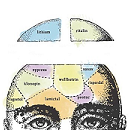
A new chapter argues that psychology and psychiatry begin with a narrow, largely unexamined idea of what a mind is—one that, some scholars contend, gets something fundamental wrong about how minds actually work.
Miguel Segundo-Ortin and Paco Calvo of the University of Murcia, together with Louise Barrett of the University of Lethbridge, set out to show “how the principles of ecological psychology—an influential alternative to traditional cognitivist (and neurocentric) theories of perception, action and perceptual learning—can be applied within comparative cognitive science.” Their chapter appears in the Routledge Handbook of Ecological Psychology.
As critical scholars have pointed out, if we imagine mental life as something sealed inside the skull, we risk ignoring the body, the environment, and the diversity of ways that different species perceive and act. An ecological view of mind challenges psychology and psychiatry’s brain‑bound assumptions and offers “a robust alternative to the dominant brain‑centric, computational models.”
“Most researchers adopt a computational‑representational approach, which entails that cognition is brain‑based information processing,” the authors explain. “This commitment, far from being innocuous, has profound effects on what they study… how they study it, and even which organisms they submit to study.”
The authors note that the metaphors used in science can shape more than just experiments. A machine-like view of the mind influences how people talk about themselves, how they interpret distress, and the kinds of solutions they consider possible. In everyday conversation, mental life can be reduced to the language of “processing” and “wiring,” framing problems as technical faults rather than as experiences rooted in the body, relationships, or environment.












“How an Ecological View of Mind Could Rewrite Psychology and Psychiatry”? Ecology is not life but theoretical models based on empirical measurements of life. And so if the false re-writes the false it’s still the false. You are life, the truth, the fact, the actual. Everything you say in this article on the other hand is a brain disease called thinking. Forget it all and then you may begin to see clearly again. Until then we will all get shuffled off into orange funeral homes.
Report comment
While they are correct that psychology has it wrong, their “new” idea seems equally useless.
There are alternative theories of mind that are IN USE and show workability every day. Why can’t the scholars of this world discover them?
Report comment
“There are alternative theories of mind that are IN USE and show workability every day.”
Can you name these?
Report comment
Dianetics and Scientology.
Report comment