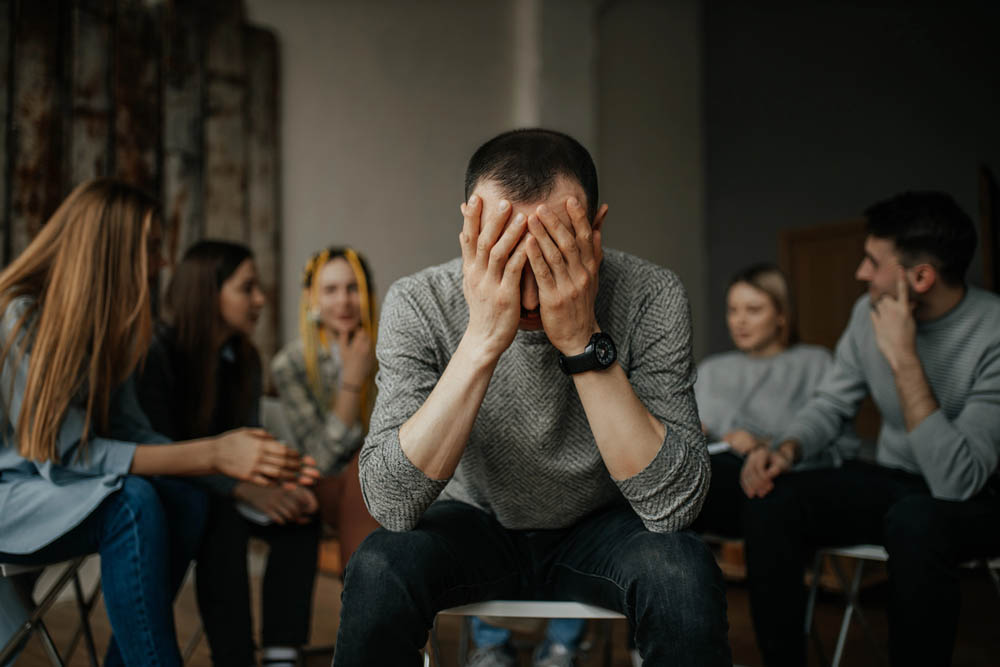
The chairs were arranged in a loose circle for my weekly nursing group.
We were discussing buprenorphine and how it works.
Then one client said, “I’m still taking Suboxone…and I still want to use.”
The room went quiet.
In that silence, it felt as if I could read their thoughts in slow motion. I knew what they were feeling and what everyone in the room was thinking: if the medication is working, why is the urge still there?
Outside of treatment centers, people tend to talk about medication-assisted-treatment (MAT) in extremes, and a lot of it misses what actually happens in real life. It is often framed as either a miracle solution or as simply replacing one addiction for another. But inside treatment programs, the reality looks very different.
From a nursing perspective, medication-assisted treatment is not a miracle and is not a failure. It is stabilization. It reduces withdrawal. It lowers overdose risk. It gives the brain and body a chance to settle.
Stabilization is not the same thing as transformation. Medication can help soothe the nervous system and quiet the mind. However, years of trauma, conditioning, and learned behavior do not disappear overnight. Recovery involves rebuilding patterns, relationships, and ways of coping that developed over years.
In practice, the early weeks of recovery often involve learning how to sit with discomfort that medication alone cannot eliminate. Clients may still feel anxiety, sadness, restlessness, or frustration as their bodies and minds adjust. For many, this is unfamiliar territory. During active addiction, uncomfortable emotions were often managed quickly with substances. In recovery, those feelings have to be faced and worked through in new ways.
This is where the broader recovery process becomes essential. Counseling, peer support, structure, and time all play important roles alongside medication. Medication-assisted treatment can create the stability needed to begin this work, but it cannot replace it. Recovery is built gradually through new habits, relationships, and ways of responding to stress.
On the unit, this reality becomes clear very quickly. Clients often stabilize physically within a relatively short period of time, but the deeper work of real recovery is only in its early stages. Many are surprised to discover that cravings can still appear, even when they are taking their medication exactly as prescribed.
In the early weeks of recovery, this can be confusing for many clients. Their bodies may feel more stable than they have in a long time, yet emotionally they may still feel unsettled. Anxiety, restlessness, or sadness can surface as the brain begins adjusting to life without constant substance use. For someone who has relied on substances to quickly change how they feel, this adjustment can be uncomfortable and unfamiliar. Medication can help reduce the intensity of withdrawal and cravings, but it cannot instantly teach someone how to manage stress, disappointment, or difficult emotions. Those skills take time to develop and often require support through counseling, peer groups, and daily practice.
This is where the broader recovery process becomes essential. Medication-assisted treatment can provide a critical foundation, but recovery is built through many different pieces working together. Structure, therapy, community support, and time all play important roles in helping people create a more stable life in recovery. From a nursing perspective, these changes are often gradual. Clients begin to recognize triggers, learn healthier coping strategies, and slowly rebuild trust in themselves and others. Medication can create the stability needed for this work to begin, but it cannot replace the process itself.
In the early stages of recovery, this adjustment period often becomes very apparent. Even as the body begins to stabilize, emotions can feel unpredictable and intense. Feelings that were once quickly numbed with substances may now surface without warning. Clients may experience frustration, discomfort, or doubt as they begin learning how to manage these emotions without returning to substance use. This does not necessarily mean the medication has failed. Instead, it often reflects the natural process of the body and brain recalibrating after prolonged substance use.
Moments like the one in that group are not unusual. When clients say the medication isn’t working, what they often mean is that the urge has not disappeared completely. The expectation is that medication should remove the desire to use altogether. But many people entering early recovery are still thinking through the lens of addiction itself, where relief often comes quickly and externally. It can be easy to believe that another medication should provide the same kind of immediate quick fix. In reality, medication-assisted treatment was never designed to erase every urge. Its purpose is to stabilize the body and reduce risk so that the deeper work of recovery can begin.
Outside of treatment settings, another common criticism is that medications like buprenorphine (often known by the brand name Suboxone) are simply replacing one addiction for another. This assumption overlooks an important distinction between active addiction and treatment aimed at stabilizing the brain and body. Addiction is marked by loss of control and escalating harm, while medication-assisted treatment is designed to reduce risk and restore stability. Unfortunately, this misunderstanding is not limited to the general public. Some individuals in recovery communities still question whether someone using medication-assisted treatment is truly “clean,” which can create additional shame for people trying to rebuild their lives.
Part of the misunderstanding surrounding medications like buprenorphine comes from a lack of awareness about how opioid use affects the brain over time. Prolonged opioid use alters the brain’s reward systems, making it extremely difficult for individuals to simply stop using substances through willpower alone. Medication-assisted treatment works by partially activating those same receptors while preventing the intense highs and dangerous cycles associated with full opioid use. By stabilizing these systems, medications like buprenorphine can significantly reduce withdrawal symptoms and cravings, allowing individuals to focus on the psychological and behavioral aspects of recovery. Rather than replacing one addiction with another, the medication creates a safer and more stable foundation from which recovery can begin.
In these conversations, education becomes incredibly important. Clients are often relieved to learn that medication is not meant to eliminate every urge or emotion they experience. Instead, it is meant to create enough stability for people to begin learning how to cope with those urges in healthier ways. These everyday clinical realities rarely make their way into public conversations about addiction treatment.
In the United States, addiction treatment policy has increasingly focused on the role of medications like buprenorphine in addressing the opioid crisis. Policymakers, regulators, and treatment systems continue to debate whether recovery should be defined by complete abstinence from all substances or whether medications like buprenorphine should be considered a legitimate part of long-term recovery. While some treatment models still frame sobriety as the absence of any medication, many clinicians and public health experts argue that medications can play a critical role in preventing relapse and overdose.
Other policy discussions focus on how long patients should remain on medications like buprenorphine and concerns about diversion. Some policies encourage short tapers or strict limits on treatment duration, while clinicians working directly with patients often see that recovery timelines vary widely from person to person. What may appear straightforward in policy conversations is often far more complex in the day-to-day treatment realities.
Experiences like this inside treatment programs rarely appear in policy debates about medication-assisted treatment, yet they reveal something essential about how recovery actually unfolds.
Part of the challenge may also lie in how treatment expectations are communicated. When medication-assisted treatment is discussed publicly, the focus is often on its ability to reduce cravings and prevent relapse. While those benefits are important, they can sometimes create the impression that medication should eliminate the desire for use altogether. For people early in recovery, this expectation can lead to confusion or discouragement when urges or emotional discomfort still appear. In practice, clinicians spend a great deal of time helping clients understand that medication stabilizes the body and reduces risk, but the deeper work of recovery unfolds gradually through therapy, support, and daily effort.
When I explained this to the group that day, the tension in the room seemed to ease. What had initially sounded like failure began to look more like the recovery process. Understanding what medication can and cannot do allows people to approach recovery with more realistic expectations and, perhaps more importantly, less shame. In many ways, that shift in understanding is where recovery truly begins.










This really resonates. Medication can help stabilize the body, but recovery is still deeper than that. As someone in recovery who also works with others, I’ve seen how important it is for people to understand that urges, discomfort, and emotion do not mean failure. They often mean the real work has begun.
Report comment
Exactly-stabilization is just the starting point, and those urges and emotions are often signs that deeper recovery work is actually happening.
Report comment
Thank you Susanna – I think the same is true when coming off prescribed psych drugs like antidepressants – it doesn’t solve your problems instantaneously (even if you’re lucky enough to escape the worst of withdrawal) – you still have to learn to live with the emotions, urges, impulses which were dampened down or in my case ‘wrapped up’ inside for years. Learning new or different ways to cope, as well as addressing past problems/trauma/difficulties all takes time – while living in a world which has tried to indoctrinate us with the mythical ‘quick fix’!
Report comment
Thank you for sharing this, there’s so much truth in what you said. Whether it’s coming off substances or medications, the work of learning to tolerate emotions and build new ways of coping takes time, and it’s often not the quick fix people hope for.
Report comment
Yes! I hope these ideas become more mainstream in the popular discussions about treatment. Healthy people are those who choose to engage in a lifetime of adjustment to growth and change in our bodies and in our environment. It often does feel overwhelming. Remembering to “just breathe through the moment” helps me often. Keeping things simple does help: less commitments, fewer purchases, regular sleep most nights, etc. Thanks for such an important contribution. So heartened to read this
Report comment
Absolutely.
Report comment
This is such an important and critical talking point
Report comment
Thank you, that truly means a lot to me. This is a conversation that needs to be had
Report comment
As someone who takes medication to assist with weight management, I also found this very relatable. So much of it is beyond the medication and the support and therapeutic measures needed as a whole to treat using food as a coping mechanism to other problems. Thank you for making me think about that a bit more. Great read!
Report comment
Thank you for sharing this—it really means a lot. You captured it perfectly, that so much of the work goes beyond medication and into the deeper patterns we’re learning to change.
Report comment
I’d like to hear some viewpoints from Narconon.
Their program is not medication-assisted.
There is a spiritual aspect to addiction that must get addressed.
Report comment
Thank you for bringing that up—I’m not specifically familiar with that program, so I can’t speak to it directly. My focus is more on what I’m seeing clinically in addiction treatment, particularly how patients navigate urges, emotions, and long-term recovery beyond initial stabilization.
Report comment
There’s a whole new world of addiction treatment out there, and it’s being ignored by even those seeking better alternatives. It will catch up with us the longer we wait to get more effective. Addiction in its many forms is gradually taking over the entire planet.
Report comment
Are you actually referring to Narconon, which is affiliated with the Church of Scientology, or to Narcotics Anonymous which is a 12 step model very similar to AA? Both are highly spiritual but they are very different.
Report comment
I refer to Narconon. They use Hubbard’s treatment methods.
Report comment
Very well-written and informative! Thank you for your dedication!
Report comment
Having worked in addiction treatment for many years, including those areas where there is high opiate addiction, I will share a few lessons I learned:
1) For profit clinics (more often than not) do NOT adequately train their clinicians to help addicts achieve complete abstinence. There is a financial incentive to keep emphasizing the dangers of relapse in order to keep them in FOREVER treatment on suboxone type drugs. This is a very profitable business.
2) Many clients will end up using suboxone prescribed type drugs in basically the same manner in which they used opiates – that is, as way to modulate uncomfortable feelings in dealing with life (or body discomfort) stressors.
3) Instead of taking suboxone exactly as prescribed, and then very gradually tapering as they stabilize their life and begin to learn new coping skills – the “path of least resistance” for addicts is very often to change up their prescribed protocols and use the drug in such a way as to adjust their feelings within the moment.
4) For example, many suboxone clients prefer to have the pill form of the drug in order to crush them up and snort them throughout the day based on how they feel in the moment. This way they NEVER learn to challenge and strengthen their “frustration tolerance” levels within their mind and body. These clients are bound to relapse unless this addictive pattern of behavior is somehow challenged in therapy.
5) Many drug clinics still promote the “disease” concept of addiction and liken suboxone and methadone treatment similar to a diabetic taking insulin. They discourage belief in forever abstinence. They promote pseudo-science that describes so-called permanent changes in brain (from addiction behavior patterns and/or defective genes) that render addicts as permanently damaged and always a heartbeat away from relapse.
Richard
Report comment
The “disease model” as taught by 12 step groups, wherein addicts have a disease of character, is indeed highly flawed and encourages people to view themselves as incapable of total, lasting recovery- hence the idea that one must always be “recovering” and never “recovered.” It is also true that it is damaging to view oneself as permanently “a step away from relapse” as you say. That said, the research is clear that stopping medications for opioid use disorder is indeed a high risk time for relapse as well as overdose death; part of the problem here is that there is precious little long term effective treatment available for the complex social, cognitive, and emotional problems that many long term addicts have. 30 days of inpatient followed by 6 weeks of IOP won’t cut it for the vast majority which is why the relapse rate is so dismal for most intensive treatment programs. For many of us, effective treatment requires years of frequent contact with a consistent highly skilled clinician or sometimes a sponsor/peer mentor. But that person MUST be a good for for the individual addict and willing and able to manage intensive (often near-daily) support for a period of years, and that combination is unfortunately rare. Thus, people remain trapped in a treatment system that strives only for stabilization as opposed to true recovery- something that is true across the mental health system and not just in addiction treatment.
However, the emphasis on “complete abstinence” as the cure for everyone with a substance problem is similarly outdated. Addiction is not a monolith. There is an expanding body of research indicating that most people who meet criteria for a substance use disorder actually enter remission spontaneously as they grow and mature, and many of those actually end up successfully moderating their substance use, either of substances other than the drug of choice or sometimes even the drug of choice itself, particularly for those with alcohol use disorder. The emphasis on abstinence as the Holy Grail of recovery is misplaced for some people; while it’s certainly true that recovery requires learning to manage emotions and stress without substances, it is also true that limited use of various “mind altering drugs” can be part of successful recovery in some cases.
Report comment
“Aging out” of addiction is one of several phenomena that give us hope. Some effective methods are expensive to deliver, and so will not be available to many addicts.
Report comment
What’s happened to my comment?
Report comment
I found it in the Spam folder.
In the future, it’s best to email me if your comment doesn’t appear. If I moderated it, I’d usually send you a message. If you got no message, it’s probably a technical glitch.
Report comment
Okay, but I don’t presently have your email saved. Would you send it? And yes, it did seem like a technical glitch, as it simply disappeared after hitting “Post Comment.” Thanks.
Report comment
[email protected]
Report comment
Right at the start, like a premise from which all else follows, a distinction is drawn between the outside and inside of treatment centers, the latter connected with real life/ reality, curiously enough. The line of division falls between the general public and professional expertise. From there, it’s a short step to having insiders, like the author, explain further distinctions and subtleties to outsiders, who tend to think and speak in extremes.
However, the trade secrets aren’t hidden behind closed doors but openly public. Pharmaceutical drugs are the most dangerous of all, annually leading causes of injury and death to (vastly undercounted) hundreds of thousands of people, whose fatal mistake, right at the start, may very well have been to trust the experts. Yet year after year, lawsuit after lawsuit, a history of organized crime against humanity by the Pharmafia maintains its monopoly over Health Care, Inc. by legitimating its fraudulence and harm with Science (aka gaslighting).
Medicine is big business, the biggest in the economy, and it’s protected by state power ‘regulating’ or rubber-stamping poisons for profit at the expense of the public (aka lab rats). If the experimental snake oils end up ‘working’, as with stabilizing symptoms, they’ve got a winner (ka-ching!). If the hidden cost – for the captive patient, typically left in the dark, outside informed consent, by the experts – is ‘side effects’ that prove worse than the original problem, that’s just the cost of doing business, counting on acceptable losses within profit margins. And it’s a sweet and not so subtle set-up for a never-ending problem-solution racket that allows more of the same marketing to follow up on effects of prior products of the professional drug pushers. Suffering addiction on those pills you were prescribed? Here, try this brand new (non-addictive) treatment to “reduce risk and restore stability” from getting strung out on those.
About the last authority to trust is any trained professional of Pharmafia medicine. What’s extreme is the norm of bizzness as usual, and not being skeptical and critical of the addiction to money by profiteers who prey upon people with products proven dangerous to health for all too long.
Report comment
A lot of this is true, although from my perspective, as someone in long term recovery on methadone, it’s common knowledge among addicts that medication is not the cure but a path to stabilization. This was made clear by the clinic as well. I have actually encountered some of the most black and white thinking amongst the inexperienced public but also amongst medical and therapy professionals who do not have deep skill and experience working long term with addicts in all stages of recovery.
Another point that this article seems to skip: for some of us, a clean break with substances is simply not possible even with medications. Myself and many others I know slowly tapered our illicit use over months or years while taking medications. Many clinics kick people out after 1-3 consecutive positive drug tests and therefore miss the opportunity to help people like me who cannot adjust mentally and physically to sober life all at once. After years of frustration and shame with the clean- relapse- clean- relapse cycle, I finally found lasting success with a much slower process. It happened naturally once I was stable on an adequate dose of methadone, I didn’t set out to try to taper nor did I follow a set schedule. I simply reduced as much as I could at a given time based on how my body and mind felt. No one was more surprised than I that this worked! I had been under the impression I was hopeless, and that impression was solidified by treatment programs that draw a solid line between sobriety/ recovery, and using. For many of us, that line is more of a gradient.
Report comment
Thank you so much for your perspective. Everyone’s recovery journey is different and I’m glad that you were able to find what worked for you. I am also a person in long-term recovery so I understand both sides. I am very much a believer that if you start people at higher doses for longer periods of time the research shows a lot of success
Report comment
Thank you for sharing this information I am a recovering addict who has had different views on this topic but know feel that I have a more educated opinion about medication used for addiction after reading this article. That you for your service Love and Respect
Report comment