
Welcome to the Mad in America podcast. My name is Brooke Siem, and I am the author of the award-winning memoir on antidepressant withdrawal, May Cause Side Effects. Today I am with Selma Eikelenboom. She is a forensic scientist at the Independent Forensic Services in Santa Fe, New Mexico.
Selma earned her degree from the College for Social Work in Amsterdam, Netherlands, in 1976, followed by 10 years of experience in psychotherapeutic treatment. She graduated from medical school at the Free University in Amsterdam in 1992 and worked eight years as a resident in surgery, emergency medicine, obstetrics, and internal medicine. From 2000 onward, she focused on medical forensics as the coroner for the city of Amsterdam and in the biology department at the Netherlands Forensic Institute, the state forensic laboratory.
In 2003, she started IFS with her husband, who is also a forensic DNA expert. In 2011, they moved to Colorado and opened a second laboratory. Through her forensic medical work, she became interested in the possible association between DNA variants, psychoactive medication, and violence. That became the emphasis of her work, leading to a research project with the University of Denver and a PhD in March of 2021.
In January 2021, she and her husband moved to Santa Fe, New Mexico. Currently, she is working as a forensic medical examiner investigating cases involving psychoactive medication and acts of violence.
The transcript below has been edited for length and clarity. Listen to the audio of the interview here.
Brooke Siem: Selma, thank you so much for taking the time to talk with us.
Selma Eikelenboom: It’s my pleasure. Thank you for inviting me.
Siem: If people want to do a little search on Mad in America, they will find an article you wrote years ago, sounding the alarm about genetic metabolism of psychiatric drugs and violence. In the United States, this has been a topic that feels like it comes up cyclically because there’ll be a mass shooting or, currently, in the case of Lindsay Clancy, who is on trial for taking the lives of her three children and injuring herself. She claimed that it was due to psychosis caused by psychiatric drugs.
That was why I wanted to talk to you today. But before we get into that, I want a little bit of background on you. How did you first become interested in working at the intersection between psychiatric drugs and violence?
Eikelenboom: Well, it is already more than 13 years ago when we were living in Colorado, and I was approached by a defense lawyer who had a case of a wife who had beaten her husband to death with a baseball bat, and she was on psychoactive medication.
He asked us if we could look at her DNA because we had a forensic DNA lab. But the DNA that he was talking about that was important in that case was not the kind of DNA analysis that we were doing. We were doing DNA that identifies people, not DNA that looks at specific bodily functions.
That was a whole new area for me, so I started to do some research, and I found out that medication is metabolized by certain enzymes, certain substances produced by the body and everything in the body is produced by DNA. That was the intersection with DNA.
I found out that people can have variants in their DNA that inhibit or interfere with the function of that enzyme. One of the functions is metabolizing medication, and if that’s interfered with, it’s reducing the function. Then you can have all kinds of problems with too much medication or low medication levels in the blood, so that’s how I got involved.
Siem: What exactly happens when someone takes a drug, any kind of drug? What goes on in the body?
Eikelenboom: I will try to do it in layman’s terms. It’s not completely scientific, but people have to understand it. That’s the most important.
Your bodily functions are regulated by over 60 neurotransmitters. Those are in the brain, and they send signals throughout the body; they keep the body moving and regulate functions. If you start taking medication, it will interfere with those functions on all kinds of levels, not only in the brain level, but also in the liver and in the stomach.
Siem: Because we have neurotransmitters throughout our whole body, right? People think it’s only up here in the brain, but it’s everywhere.
Eikelenboom: Yes, everywhere, but they’re regulated by the brain. If you take medication, it will interfere with those bodily functions, and then you have to realize that every medication, to have an effect, will have a side effect. As a physician, you have to weigh the pros and the cons with regard to the medication. You always have to be aware of what the medication does to the body and what the body does to the medication. That’s the equilibrium you’re looking at.
Siem: Okay, so what happens when someone wakes up in the morning, and they take their Prozac? Can you explain to us in layman’s terms where the drug goes in the body and how it ultimately exits the body?
Eikelenboom: Well, if you take it orally, it will go to your stomach, and from your stomach it will go to your bowel. It will be taken up in the bowels, and then it will go through the blood. It will go through the liver. It will go through the kidneys. In the liver, there are a lot of brave little soldiers who are working with the medication, and they can convert medication that’s not working in that form.
For instance, they take off a few pieces so that it can work in the body, that’s called a prodrug. Or it will completely demolish the molecule, the medication, so that it will be soluble in water. Then it goes through the kidneys and you either pee it out or you poop it out.
If it’s in the blood, it goes through the whole body, including the brain. In the brain, you have a blood-brain barrier, where there’s an effort to keep as much substances out of the brain that don’t belong there. If the drug has to get into the brain, it has to go through that barrier. Then in the brain, you have the same sort of enzymes that will work with the medication and try to get it out again.
Siem: Once the drug is absorbed into the system, it starts to get metabolized. I think a lot of people think of metabolism from a caloric standpoint. Can you explain to us a little bit more what metabolism means from the standpoint of drugs?
Eikelenboom: Yes, and it’s not correct that every medication is metabolized. There are a lot of medications that enter the system, do something and are expelled the same way. Metabolism, in the sense of medication, is when it comes into the body and it has to come out of the body. Some medication is resistant and will accumulate, for instance, in the fat cells. Other medication needs to be broken down to such a consistency that it can be transported to the kidneys, so that it will be soluble in the urine and can be expelled. That’s metabolism. The medication gets into the body, and we have to get it out of the body, and to make that possible, we have to change the form of the medication. That’s basically what it’s about.
Siem: Got it. So what is the system that changes the form of the medication?
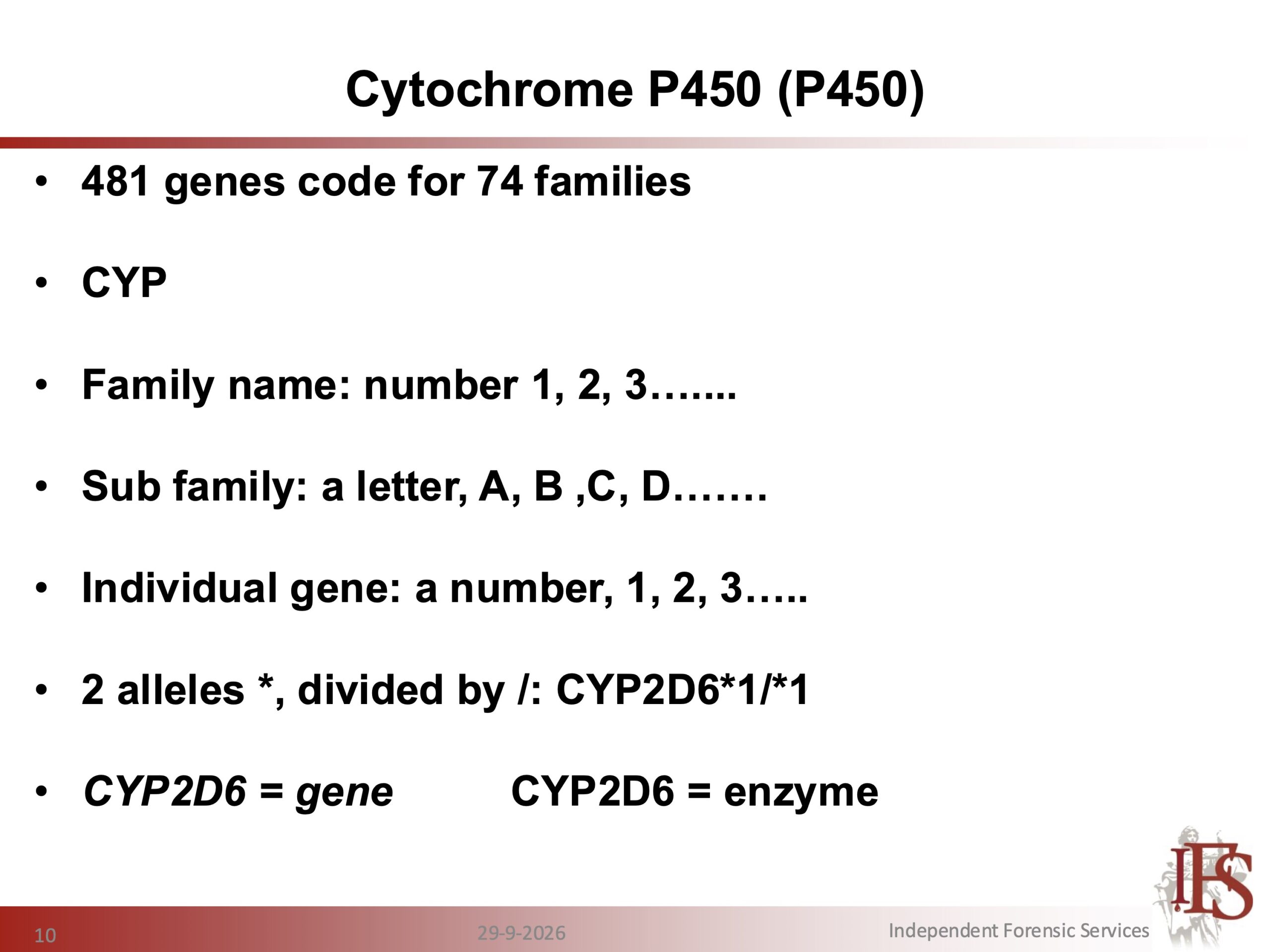 Eikelenboom: The Cytochrome P450 system, and it’s abbreviated to CYP450. There are hundreds of CYP450s, and CYP450 is just one system, but it’s the biggest system. It’s evolved through the ages, if you believe in evolution. It took millions of years for little worms to develop a system that gets rid of substances from outside that are damaging the system, and from then on it became bigger and bigger. Now the CYP450s, they take care of medication substances from outside the body, but also inside the body, substances that need to be expelled, hormones, substances like that.
Siem: Let’s transition to the Lindsay Clancy case because it’s a perfect example of somebody who had no prior history of psychiatric issues.
From my research, she hadn’t had any prior history of being on psychiatric drugs. She was a nurse. She was in the medical system. She lived a nice, cushy life in Massachusetts. Then things took a very bad turn when she started to be prescribed drugs in the wake of having her third child. Can I just ask for your opinion on what’s going on with the Lindsay Clancy case?
Eikelenboom: Well, I didn’t study the case extensively. It’s so depressing. I’ve done so many of these cases, and it’s all the same; the similarities are striking. She was put on medication. The whole mental system is ruined by those medications, and it goes from bad to even worse, and she said so. She said the medication is making it worse. What do we do if the medication is making it worse? Brooke, what do we do as doctors?
Siem: I mean, I’m not a doctor, but I would think that you would think, maybe this is not what we should be doing, and taper them down. I can’t see what rationale makes you want to add more. But that’s what happens.
Eikelenboom: Exactly, that’s what happens. Let’s give them more, and that’s what happened with her. I’m not in favor of nurses, nurse practitioners or psychologists prescribing medications. I mean, a lot of doctors don’t even know what they’re doing.
Siem: I’ve often thought that psychiatrists, doctors, anyone who’s prescribing psych drugs should have to try their own supply before they prescribe. I think things would start changing a little bit if that happens.
Eikelenboom: I totally agree. It’s the same with akathisia; they don’t recognize it. People don’t become aggressive or dangerous from one moment to another. There are signs. It builds up.
Siem: What are the signs?
Eikelenboom: Well, inner unrest, restlessness, strange movements, the sense of discomfort, like they become paranoid. They start seeing things. These are signs that people are developing akathisia, and that’s what happened with Lindsay, I think. This sense that there’s going to be a terrific disaster and we’re all going to die horribly, and the only thing I can protect my children or my family is by killing them, because they’re going to suffer horribly. Prescribers don’t recognize that. They think, oh, so let’s now add an antipsychotic.
If you realize that people in those stages where they get this feeling like, doctor, I’m not getting better. I’m getting worse. Often they are scared to talk about it because they don’t recognize it themselves.
Siem: There are two things I want to bring up here. The first one is that I think this is a very important discussion to have, because in my opinion, these extreme cases, they’re canaries in the coal mine. Not everybody is going to drive the bus off the highway. But there are lesser reactions that people can have when they’re on these drugs that are influencing their day-to-day lives, that are influencing the people around them, that are influencing society as a whole. If we understood the concept of bell curves, which I don’t think most people do, then maybe we could open our minds to that.
But where I really want to focus with you is to talk about the actual science that you have been working on, because this really grounds it in research, right? I’m referring to the research from one of your papers with the CYP system, where it has to do with the violent acts most likely occurring when a medication is stopped or started. When there are multiple allele variants, which you’re going to need to explain, and polypharmacy. Those are the three conditions.
Can you just give us a little bit of the layman’s explanation for what an allele is and what a variant is?
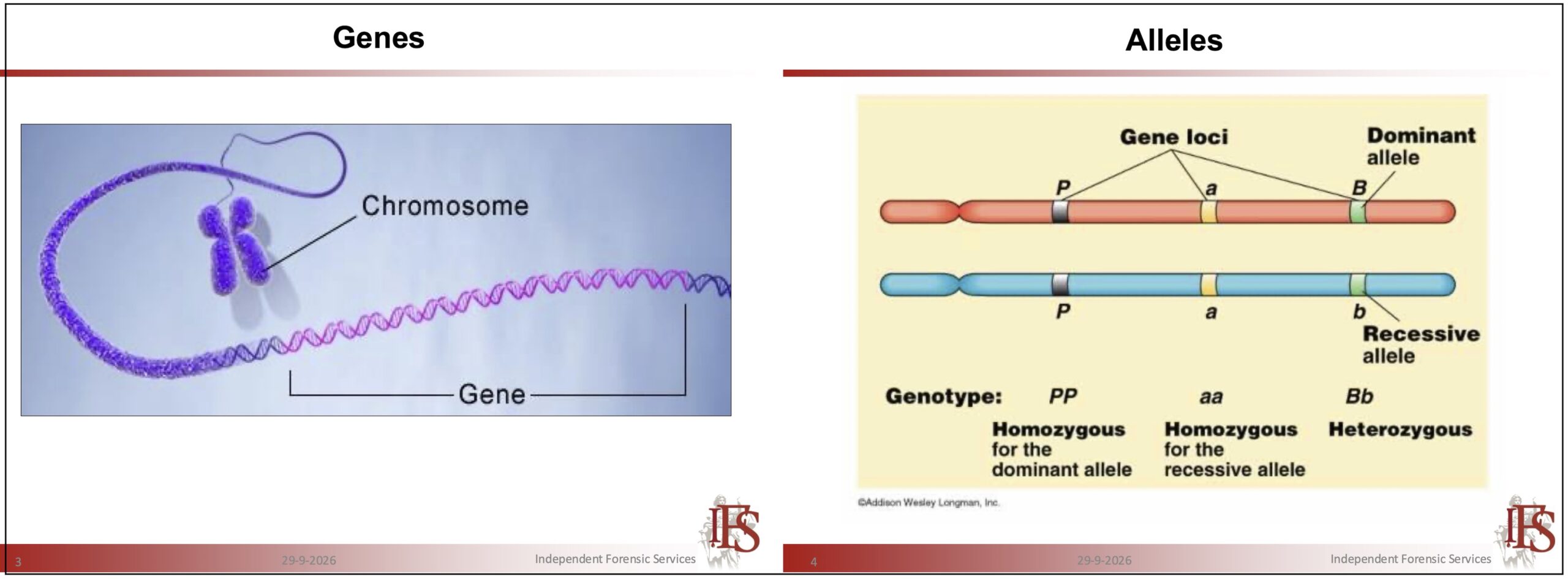
Eikelenboom: A gene is the building block for the body. The whole body is produced, you could say, by genes, and genes are the building blocks of DNA. You get one gene from your father and one gene from your mother, so you always have a double dose of them. On each gene, you have multiple places where information is stored—genetic information—and that’s what we call an allele, a location on that gene.
You have 46 chromosomes, and the chromosomes are built up with genes, and the genes are built up with alleles. You get one chromosome from your father and one chromosome from your mother, 46 in total. In the chromosomes, you have millions of genes, and in the genes you have special areas where the information is stored, and those are the alleles.
Siem: Okay, and so what is a variant allele?
Eikelenboom: You have dark hair. I have dark hair. People have blonde hair, and that is determined by those alleles. Not everybody is the same; we all have variant pieces of DNA. Those variants determine the function of the gene. If you have an allele that is programmed for dark hair from your father and you have an allele that’s programmed for blonde hair from your mother, then they are going to interact like, okay, who’s going to win here? Now, okay, the darker hair genes are more dominant than the blonde genes. So you’re going to turn out with dark hair.
Siem: I think one of the easiest ways to help people understand this when it comes to the metabolism of psychiatric drugs is to think about something like caffeine. Some people can drink a pot of coffee and go to bed, and some people have one espresso, and they’re bouncing off the walls, wildly anxious, and that could last for hours. That has to do with how their body can metabolize caffeine, which is a drug, the most legally and socially accepted one we have.
Eikelenboom: Well, if you look at, for instance, CYP3A4, you can have an allele; we designate them with stars. Star one is an allele, star two is an allele, star three is an allele; you have different pieces of DNA in each one. If we look at the general population, if 50% have star one, then we call that the wild type. Anybody who has anything else but star one has a variant allele. You have to figure out, for each allele, what its function is. How does it influence the metabolism of a person? How does it get rid of the caffeine, for example?
That’s exactly the problem, because with all the increasing knowledge, it’s not feasible for every allele to be tested in vivo, in a person, to see what it does. You have to basically test every allele with every medication in a person. We only do it very broadly.
But on the other hand, if you have a person who is up the walls with one espresso, it is safe to say that it’s likely he has some variant there. Let’s do the testing and see if he has this variant, because it could provide an explanation for why he’s all over the place, and he should stick to decaf.
Siem: The same thing could be said for psychiatric drugs.
Eikelenboom: Absolutely.
Siem: Before we come back to how the psych drugs work, can you explain to us what it means to be a non-metabolizer, an ultra-rapid metabolizer, and an intermediate metabolizer?
Eikelenboom: If you have a variant allele that’s not working properly, it’s not able to metabolize the medication. You can say that if you have a bicycle and it lacks the wheels, you’re not going to go anywhere, and that’s a poor metabolizer. Now, if you have two wheels, but a…
Siem: Flat tire?
Eikelenboom: Yes, and you don’t go so fast. You go somewhere, but you don’t go comfortably, and so then we call it an intermediate metabolizer. Or if your brakes don’t work, and once you start it, you cannot slow down, then you’re a rapid or an ultra-rapid metabolizer.
Siem: Basically, you have four different speeds of metabolizing, and that can change how the body processes the drug when we take it, correct?
Eikelenboom: Exactly.
Siem: Okay. I’m just going to explain it in my understanding, and you can correct me if I’m wrong here, but let’s say someone takes Zoloft and they’re a non-metabolizer. That could mean that the drug doesn’t ever exit the system or it doesn’t exit well, and so it builds up.
Eikelenboom: It’s not the case that a medication can only be metabolized by one CYP. For instance, CYP3A4, that’s the gutter gene. It takes everything that another CYP doesn’t take, so it will exit the body, but at a much slower rate.
Siem: Then on the other side, if you were a very fast metabolizer, it’s almost like nothing would happen at all. It would just, like a water slide, go right through your system. Then as an intermediate metabolizer, it seems like over time you might end up having similar effects as a slow metabolizer or a non-metabolizer, but it takes longer to get there.
Eikelenboom: Yes. That’s the risk. Those people are strangely at very high risk. Many people, in the cases I’ve done, are intermediate metabolizers because it creeps up on them. It takes a while before they notice that something’s wrong. So it takes a while.
Siem: I’m just going to ask this question straight out, and I’m hoping you can answer it in the context of the CYP mechanisms. How can it happen that psychiatric drugs could cause psychosis?
Eikelenboom: The problem is basically we don’t know. I’m going to be honest: we have no idea. Let nobody tell you otherwise. We have no idea how behavior comes about. We can say, like, okay, somebody is a poor metabolizer. The drug is building up in the system it’s influencing. I can come up with all kinds of stories, like the serotonin level is too high. They get serotonin intoxication, and it deranges the neurotransmitter, blah, blah, blah. We don’t know. We don’t know exactly what it does.
You can see how somebody acts, and you can say, “Okay, he has a lot of medication in his blood, a lot of toxic medication”. Somehow it dysregulates normal brain function, but even then, how that translates to behavior, we have no idea how that works, and people have to be honest in that. That means that you’re always judging indirectly what happens to people. You can say, okay, even if they don’t have toxic levels, they still can become psychotic. They still can create these malfunctions of the brain. If you start messing around in that, they make all kinds of strange connections that are not supposed to be. That effect, we call psychosis.
There’s a difference between somebody who is psychotic due to a mental illness, or somebody who is psychotic due to akathisia or intoxication from medication. Somebody in akathisia knows, this cannot be what I see. This cannot be. But still, they are overwhelmed by their emotions. That makes it so difficult in court cases because these District Attorneys keep saying, “Well, he did know that it was wrong what he did. He knew that you shouldn’t kill.”
But they are not aware of the incredible force behind those emotions that command them, that overwhelm them. They don’t understand that. But we don’t understand it either. We don’t know how dysregulation in the neurons leads to behavior.
Siem: You had mentioned something about toxic levels of these drugs that are influencing different states of mind. As a forensic person, you’re doing tests after somebody has already expired. But is there a way that we could test if somebody’s in a medication-induced psychiatric state or psychotic state? Could we see that through a blood test? If someone could catch this as it’s happening, could we see it in the blood?
Eikelenboom: That’s very difficult. You can say that somebody has toxic levels, so you take a blood sample, and you determine the level of medication. If you look at toxic levels, you will see that they’re huge.
Siem: Because it depends on the person.
Eikelenboom: Yes, and some medications have a small spectrum; they become very toxic very fast. But most of the time in the tables, you see between 400 nanograms per millilitre and 1000 nanograms per millilitre. I always thought, that’s strange; it’s either toxic or it’s not toxic. Why should you have this big interval? That’s because it doesn’t really mean much.
Somebody can have high levels and not show any sign of toxicity, and people can have low levels and have toxic behavior. You can say if the levels are toxically high, well, okay, that is an explanation, but even then there are people who are not bothered by it. I have had people who had low levels and still are psychotic. That’s also the reason that if somebody is in withdrawal, and all the medication is out of the system, they are still showing toxic behavior. What does it basically mean if you have the blood levels?
Siem: How does withdrawal factor in here? My Effexor was technically out of my body according to the half-life when my intrusive thoughts hit and hit hard. What is your opinion or understanding of what’s happening there?
Eikelenboom: Well, what happens is you have this delicate equilibrium of neurotransmitters in your brain. Then we administer neurotransmitters from outside of the body. Well, what does your brain think? Oh, I’m working overtime; I have to switch down. The brain doesn’t produce its own neurotransmitters anymore, so it switches down. Then you take it away. What happens?
Siem: You fall off a cliff because there’s nothing there.
Eikelenboom: Yes, your brain is not able to recuperate that loss immediately. Sometimes it never does again. You stay low, and then you get in this horrible withdrawal state that will not return to normal again, or it will take years because the brain is switched off. You cannot always switch it on again so that it will start producing the neurotransmitters that it needs for normal behavior, for normal feelings and emotions.
Siem: I would love to hear how polypharmacy changes the game because I’m a chef by trade, so I’ve spent most of my career in a kitchen. If I’m making a big, beautiful soup that has six primary ingredients in it, and all of a sudden I take all the carrots out, that soup is not the same. This is not a great metaphor, but in my head there’s something about would the better strategy would have been to just cut all of the ingredients in the soup down by 10%.
Because we pulled my Effexor out, then all of a sudden I had a higher percentage of Wellbutrin in my body, right? How does that all work together when people are moving these drugs around from the standpoint of the CYP system?
Eikelenboom: If you do the CYP testing, you get an idea about how people might metabolize the medication.
Siem: This is through things like GeneSight; it’s a common one.
Eikelenboom: It’s very simple and not too expensive anymore. The interpretation is difficult. I’ve had so many cases and if you read the reports, they’re BS. They are incomprehensible and often not consistent with what I see in practice. They have little green dots indicating you can take this medication safely. I mean, it’s totally ridiculous.
Siem: It’s marketing at the end of the day.
Eikelenboom: Exactly. That’s one side. The other side is, well, if we go back to the four points that I noticed in my research: four variant alleles, so I had eight CYP450s that I typed out. The star one is the wild type, what’s in the general population. I counted how many people had variant alleles across those eight CYP450s. Now I had a whole database of 60 cases where people had violent behavior.
When I looked at those cases, if people had more than four variant alleles, there was an increased risk that they would develop violent behavior. That was one thing. The second is if they had more than three medications, and that’s the second part, because if your enzymes do not work properly, you can have the same effects with polypharmacy with more than one medication.
If we go back to the bicycle, if you have one medication that’s being metabolized by a certain enzyme, but another medication is interfering with that metabolism, for instance, it’s putting on the brakes of that CYP450, then the medication doesn’t get metabolized very quickly. It’s interfering with that, or it can stimulate it.
But there are all kinds of interactions between different medications. It’s in the product information; it always says you should not combine more than two psychoactive medications that work on the central nervous system. Even the antihistamines say it. The warning is in there, but nobody takes it seriously; they should, because these medications interact, and that’s just as dangerous, and it has the same effects as if your enzymes do not work properly. That’s why we can’t distinguish between the two of them.
For me, it doesn’t matter if it’s polypharmacy or if they have variant alleles that do not work properly; the effect is the same. They exhibit this incredibly violent behaviour, and it’s the level of violence that’s the giveaway. You know this is intoxication; this is not a normal psychiatric illness, because people with severe psychiatric illnesses, they’re prone to become victims of violence. It’s seldom that they become violent. It’s when you put them on medication that they become extremely violent.
For me, that’s always a giveaway. If I have a case like that, it’s either polypharmacy, or they have genes that do not work properly, or a combination. You can see indirectly from the sort of behavior if it’s an intoxication or if it’s the underlying disease. You can make that distinction.
Siem: That’s what the gene test won’t tell you.
Eikelenboom: No.
Siem: They only test one drug against one gene, and so the second you’re on multiple drugs, which most people are, all that stuff goes out the window.
Eikelenboom: Yes, you completely understand it. The fourth problem is the fluctuating blood levels, and that’s the dose adaptation, so people start, people stop, get another medication in because that will influence the level. Those are the four risk factors, and it’s clear as day, and you can predict it.
Siem: I know that this is a fairly complicated idea, but I hope that we’re showing, in some ways, how simple it is too, right? The more variables we add into the body, the more the body has to manage. We’re not designed to manage this much with these powerful drugs, and so when you start taking things away or adding things, or you have, in Clancy’s case, multiple prescribers doing all sorts of things independently, it shouldn’t be a surprise that people don’t handle this well.
I’m wondering, we didn’t really talk about some of the more high-profile cases you’ve worked on. If you could just give us a little overview of the cases you have worked on that people might know about.
Eikelenboom: Well, it’s always difficult because I have to maintain patient confidentiality, but I worked on the Aurora Theater shooting. If you compare that to Clancy’s case, there is sympathy for Clancy because she killed her own children. There’s no sympathy for the Aurora Theater shooter, James Holmes, and he’s just as much a victim as the people he killed, which of course is horrible. The defense didn’t want to use the medication angle, because it gives the illusion that he doesn’t want to take responsibility for what he did. That’s why I’m not allowed to talk about it too much, because it’s still a very sensitive subject. I’m not trying to talk down the suffering of the victims, but I think we should hold the prescribers responsible.
It’s just as with the opioid cases. It’s ridiculous that these people get away with fines. They should be thrown in prison. If you are giving this kind of medication and you do not abide by the product information, which is already very soft and written for the pharmaceutical companies, then you should take responsibility and say, “Okay, I did this wrong”. But no, they blamed the patients, and not themselves, for not being aware that this medication can cause this.
I worked on the case of the bus driver in Switzerland. That was really horrible. I would have loved to do the blood test on the bus driver. Our Prime Minister, who’s now the Secretary-General of NATO, Mark Rutte, tried to talk to the Swiss government to provide me with the blood samples, and they refused because Switzerland has big pharmaceutical companies, so they weren’t planning to go there.
Siem: You are a medical doctor, and I’ve heard you speak about true informed consent before when it comes to these drugs. In your view, what would true informed consent look like if someone like Lindsay Clancy had come in to your office before she was prescribed? What do you think should have been said to her?
Eikelenboom: I think they should have made her aware of the risks that she would become homicidal. The people who have been on these drugs, they know what it does to you. If they had said to her, I know you’re in trouble, that you’re suffering greatly, and you have all these horrible feelings, especially the postnatal depression. But if they had just said, “Look, we can admit you and your child, we’ll give you 24/7 care. There always will be somebody there with you. We will talk you through this; we will help you connect to your baby. But if you prefer medication, you could end up doing horrible things to your baby or to yourself; it’s your choice”. That’s informed consent.
I have a case where a mother, a young woman, was medicated. She was not doing well, and she tried to talk to a psychiatrist. She tried to talk to the nurse. The day she committed her crime, she was in the elevator with her psychiatrist, telling him she wasn’t doing well. He just said, “Hey, girl, we’re not in my office. Make an appointment with the nurse.” She goes outside, she takes her baby, and she jumps off the building. Luckily, they both survive, severely injured, and she’s not able to see her child anymore, and the child is severely traumatized. Who is responsible in that case?
I have done, I think, 100 cases, and they’re all the same. It’s all about not taking responsibility, not knowing the signs. That’s why this is not going to get any better, because the psychiatrists and the nurse practitioners, they’re not interested in knowing this, because they don’t want us to take away their prescription pad. But I think if you can prescribe this medication, you should at least be aware of the risk and talk to people.
If you, as a psychiatrist or a psychologist or a nurse practitioner, don’t want to face that side of your job, this is not going to get any better. That’s what makes it so hard for me to keep continuing to do this, because it’s now 2026, I’ve done it for 13 years, and nothing changes.
Siem: You run into people all the time who just say, “Oh, medication saves lives”, and that drum just gets beaten. I don’t understand why people can’t have nuance. Like, again, this is a bell curve thing, right? Is every mother who takes Zoloft going to murder her children? No. But that doesn’t mean that there aren’t consequences. How can we help people hold all of these truths at once?
Eikelenboom: Well, I think it should start with pharmacogenomic testing, because it’s the one piece of information, a hard figure, a hard number, and then build awareness among physicians and prescribers that these actions are real. But the resistance of the pharmaceutical companies and their marketing is so big and so influential that we are crying in the desert. I mean, you at Mad in America do a terrific job, and I’m glad to see that it’s spreading all over the world. That’s the only thing you can do, basically preaching for your own parish.
Siem: I’ve heard you talk about getting off the drugs and helping the body and mind recover. From your understanding, is there anything that people can do who are recovering their lives after psychiatric drugs? Are there any strategies you’ve noted that can be particularly helpful?
Eikelenboom: I’m not allowed to practice in the United States, so I can talk about the forensic cases, but I can’t get mixed up in advising people how they should react to the medication. But Josef Witt-Doerring has all kinds of videos on YouTube that talk about it. Of course, David Healy has a YouTube channel, and that’s very good information. I explain to people that the fact that they had these thoughts and/or did these actions is explainable either by looking at the drug interactions or the genetic profile. But I cannot say do this or that, because then I would practice medicine, and I’m not allowed to do that here. I am in Europe, by the way.
Siem: I have one more question for you before we wrap this up. We have these genetic tests that have become more common with the green, yellow, red indicators. If you were to truly look at people’s genetics, like do a deep dive, does anyone really test green?
Eikelenboom: No. There has been research done. It’s also in my PhD. They tested 22,000 people, and I think, in the end, some 80% had the variant allele. Everybody has some kind of allele variation. Then, even if you have a good profile, if you combine medication, you’re on the hook; you’re in danger.
Siem: So basically proceed with extreme caution.
Eikelenboom: I want to make that clear. I’m not against using psychoactive medication because I know sometimes it’s necessary to get people out of a very destructive cycle. If you have a terrible traumatic experience, if you can just sedate them for several days slowly under good observation, then it’s very helpful. But you should never give people medication without testing their genetic profile, and only for a short period of time, and at a low dosage. 37.5 milligrams of Effexor is the lowest dosage. Well, I think if you take just two beads, that could be enough to calm somebody down. The whole concept of needing to have a blood level, it is nonsense. You have to look at the patient.
Siem: You mentioned before we started recording that you’ve gotten quite tired and exhausted fighting this. I’ve felt that many times; it makes it very difficult to keep going and to continue to hear the horrible things that happen to people because somebody was just trying to do the right thing, whether they were just trying to do what they were told, or a parent just trying to help their kid.
I’m a rather spiritual person, and sometimes I get very caught up in thinking that I don’t know why we need to be experiencing this. What about our human evolution is asking us to go through this? If the average person knew what is happening to so many millions of people because of these drugs, they couldn’t go through life the same way. Sometimes it’s difficult to find the hope there.
I hope that myself and a couple others who are doing well and embracing the fact that we feel really deeply, I hope that that can be enough of a light for others who are going through it. Because believe me, I’d rather take feeling deeply and being hypersensitive to everything than being numbed out and experiencing the intrusive thoughts. I’d take that any day.
Eikelenboom: Yes, I know. Well, I’m glad to see you’re doing so well, and I’m glad to see you fighting the cause.
Siem: Thank you for paving the way for a lot of us. Whenever you decide to retire, know that your work is going to keep getting found, and it will continue to have an impact moving forward.
Eikelenboom: I’m not going to retire, no way.
Siem: I love to hear it. Well, thank you so much, Selma. Is there anything else you would like to leave with the audience before we close out?
Eikelenboom: No, I’m fine. I hope people can get through all the curveballs that life throws at them. It’s important: exercise, a vegan, plant-based diet, and a social context. Challenge your mind. Learn a strange language. If you have those four, then you should be able to catch up with anything life throws at you.
***
MIA Reports are supported by a grant from Open Excellence and by donations from MIA readers. To donate, visit: https://www.












Great interview! The content contained within should be mandatory for anyone who comes even remotely close to prescribing a psychoactive substance.
To get our current society to a point where iatrogenic harm can be eliminated will require MAJOR systemic change, and it cannot happen in a profit based system. Slow incremental change is a dead end strategy. We have much work ahead of us.
Richard
Report comment
Somewhat strange to receive the encouragement to deal with curveballs. Though to have located to where the Louisville Slugger is manufactured and be able to experience later W. Edwards Deming in St. Louisville whose work regarding continuous improvement in systems, one can even become aware of the legal language “threat to self to self others”. So, how does one change the corporate self, when one’s Will to Power becomes suppressed in the belief pharma is the key? I rose to ask Deming a question regarding his work with mental hospitals. And he afforded me an answer before a ballroom filled with people from various business perspectives. One can participated in an online learning session: http://www.in2in.org ! Hope this will be of some interest!
Report comment
Hope Selma continues. I certainly emailed Kevin Reddington re the Clancy case and gave links to Selma’s interviews.
The only thing that am hesitant about is suing people if you’ve recovered from akathisia. People should be aware that even if you have stopped the drugs for years, akathisia can hit you again out of the blue, when it happened to me I was off psych drugs for two years but was under a lot of stress.
I think we are going through a period as slavery and we are firmly in the 17th century. It’s going to be a lot longer maybe over hundred years before the true scale of this horrific situation is seen.
The Lampard Inquiry was set up due to thousands of deaths in psychiatric ‘hospitals’ in just one MH Trust in the UK. I could be wrong but so far I didn’t hear akathisia correlated to forced ‘medication’ mentioned once.
Report comment
Violent alleles.
Blood serum levels of drugs are not necessarily accurate. Drugs are also stored in fat. CSF levels of drugs aren’t accurate. A fatty liver would affect drug processing. Vasoconstrictors would affect renal processing.
CYP450 – how many undiscovered enzymes are there? UNKNOWN. Is CYP450 a standalone enzyme. No. It works with other enzymes. Yes. How is the speed of metabolism discovered? Through the liver alone?
Is the liver disconnected from the HPA (axis) or the gut-brain axis or the endocrine system. ?
So someone with postpartum depression has violent alleles?
What would happen if the person with postpartum depression wasn’t given mind-altering drugs? What would happen if the person had a companion, assistant and assistance 24/7 for one month, two months, 3 months, 4, 5, 6 months.? There would be No returns on investment$ (ROI) unlike those substantial financial gains provided by psychiatric drugs.
Report comment
CYP 450 is not a single enzyme. It is a class of enzymes. The most commonly relevant of these is CYP 3A4. We have been usiing this information in tapering Benzos for over 20 years. Yet I have not found one physician who understands the relevance to tapering. People of Asian descent commonly clear these drugs at a very different rate than others. This includes Native Americans. We must use ectremely minute dosage changes to avoid harming those of Asian descent. Also the effects of a dosage change will require more time before emerging. This is the Latency Period, and it must be factored in to avoid too ambitious reductions. One thing to mention for anyone : concurrent use of some psychoactive medications may inhibit the metabolism ( clearance) of a Benzo. This allows higher than expected levels of Benzos. When the antidepressant is removed from a program, Benzo withdrawal can emerge because the antidepressant is no longer inhibiting the Benzo metabolism. I have found no medical practitioner who knew this. That is worrisome. Ask AIs. They know.
Report comment
very depressing piece. The doctor sounds very weary of the fight. Testing after the event how soul destroying over and over again.I was reading a case of a young dude in the UK taken off clozapine cold turkey then murdered his wife now in Rampton secure hospital. Not a single professional EVER held responsible. They are equally culpable for these deaths.well done for tackling this.
Report comment