
On Monday, September 28, U.S. Department of Veterans Affairs (VA) Secretary Doug Collins announced actions the VA will take to address mental health prescribing safety issues outlined in a joint letter to Congress and the VA Secretary by more than 30 national veterans organizations in April. The letter was inspired by nearly 20 VA Office of Inspector General (VA OIG) inspections and investigations over the past two years citing failures of prescribers to document or provide informed consent when prescribing psychotropic medications. This failure has occurred during a period of rising suicide rates among veterans, which includes a 108% increase for 18-34 year-old veterans since 2001.
The VA’s initial action falls short of bi-partisan legislation that is rapidly gaining support on Capitol Hill. However, veteran group leaders believe the VA’s initial actions will save lives for some of those veterans at greatest risk.
This first round of actions will require a written informed consent policy under certain scenarios. For instance, it will require signatory confirmation that informed consent discussions occur prior to prescribing antidepressants to veterans under age 30. That scenario reflects the fact that all antidepressants host Food and Drug Administration (FDA) Black Box Warnings for suicide risk up to age 24:
“WARNING: SUICIDAL THOUGHTS AND BEHAVIORS: Increased risk of suicidal thoughts and behavior in pediatric and young adult patients taking antidepressants.”
The new policy will also require signatory confirmation that informed consent discussions occur when veterans are concurrently prescribed a benzodiazepine and an opiate.
The VA’s announcement states that the following will be required:
- Patient education and signature consent prior to any concurrent prescription of opioids and benzodiazepines.
- Patient education and signature consent prior to prescribing an antidepressant to a Veteran younger than 30.
- Standardized patient education for Veterans who are prescribed psychotropic medications, including those that only require oral consent.
- Documented informed consent discussions about risks, side effects, benefits, alternatives, and how to safely discontinue the medication, including for psychotropic medications that only require oral consent.
While the first two actions requiring written informed consent outlined in the scenarios above may be the first of their kind, the latter two actions detailing standardized patient education and documentation of informed consent appear to already be required by VHA Directive 1004.01(5): “Informed Consent for Clinical Treatments and Procedures.” However, the VA OIG has found this directive has not been consistently followed throughout the VA:
- 64% of health records failed to show documentation of informed consent. South Texas Veterans Health Care System, San Antonio – 9/14/2026
- 57% of health records failed to show documentation of informed consent. VA Kansas City Healthcare System, Missouri – 9/2/2026
- 93% of health records failed to show documentation of informed consent. VA Jackson Healthcare System, Mississippi
- Mismanaged Mental Health Care for a Patient Who Died by Suicide. VA Tuscaloosa Healthcare System in Alabama – Hunter Whitley, USMC Veteran, 23 years-old:
The Inspiration Behind the Secretary’s Actions
On April 29, 2026, more than 30 national veterans groups sent a joint letter to VA and congressional leadership, requesting the VA to implement a written informed consent policy when veterans are prescribed psychotropic (mental health) or narcotic medications. This is the same policy the VA implemented as part of their solution to the opiate epidemic in 2018. Veterans groups made this request in response to a rapidly growing library of VA OIG reports that identified systemwide failures of prescribers to provide and document informed consent discussions with patients.
Moreover, our letter, along with two subsequent letters issued to VA leadership, aimed to put a focus on veteran suicides, and the impact that prescribed mental health medications have in veteran suicides.
Since 2001, more than 160,000 veterans died by suicide. At the same time, suicide rates more than doubled for 18-34 year-old veterans, a 108% increase. These outcomes were not for lack of concern or investment. Congress budgeted nearly $200 billion to the United States Department of Veterans Affairs (VA) to implement evidence-based outreach campaigns, screening protocols and treatments for veteran mental health and suicide prevention initiatives. However, for 70% of veterans treated at the VA this meant a psychotropic prescription – i.e. antidepressants, sedatives, antipsychotics, stimulants or narcotics – many of which host Black Box Warnings from the Food and Drug Administration (FDA). Many of these warnings detail suicide risk.
Antidepressants are the most commonly prescribed class of mental health medications, both to civilians and veterans, and the FDA Black Box Warning is specifically targeted to the age group of veterans who have the greatest suicide risk, which is veterans up to age 25. The labeling also warns of the potential for mania, psychosis, tachycardia, hallucinations, and even homicidal ideation, among a litany of other mortality-related concerns.
Even with these known and serious adverse-event risks, the VA’s Office of Inspector General has consistently found that informed consent discussions between doctors and patients about these risks are rarely documented, and in many cases, are not occurring at all.
The Vets Groups Response and VA’s Actions since April
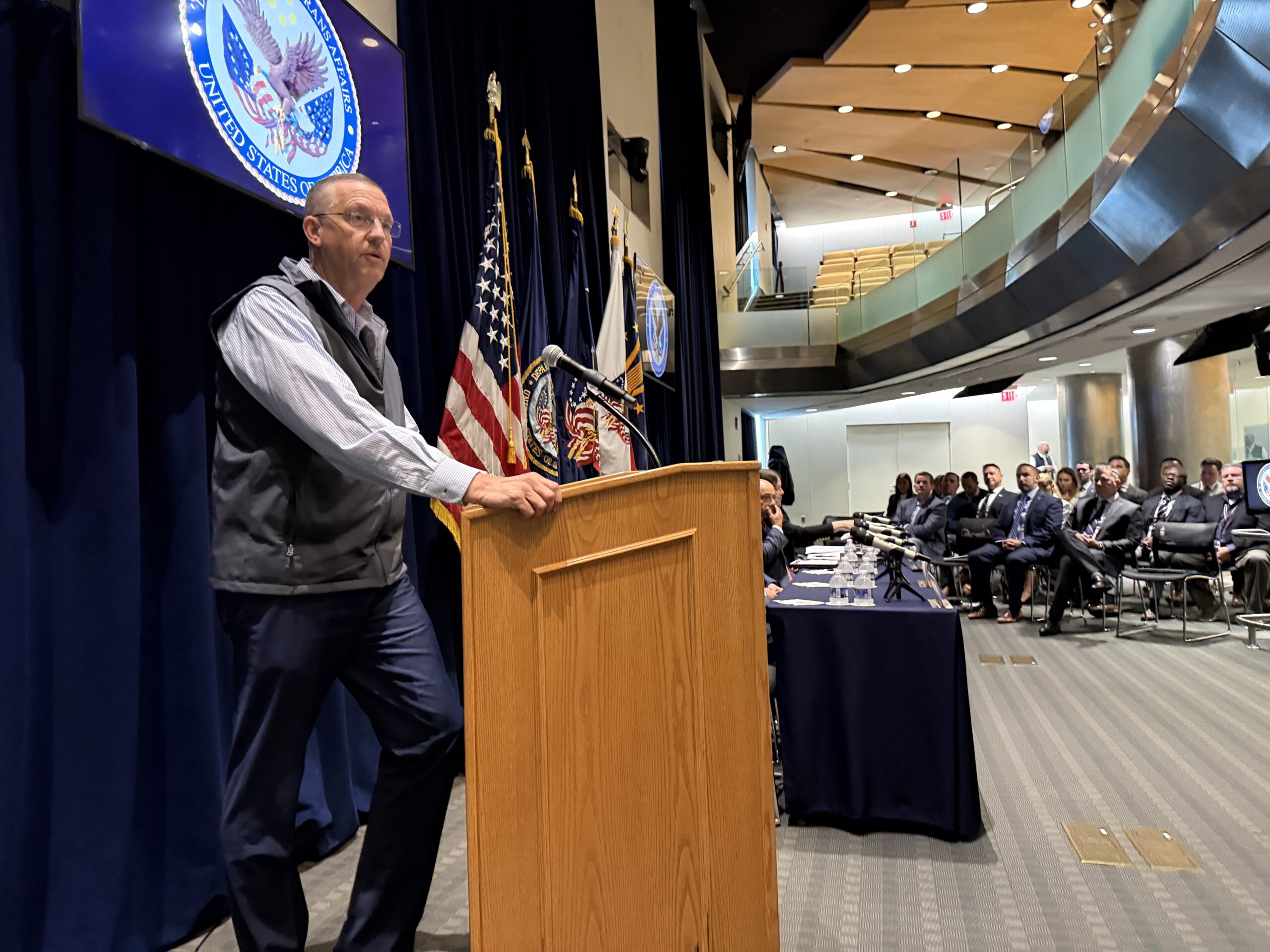
In response to the joint letter from the veteran service organization (VSO) community in April, VA Secretary Doug Collins made clear to the veterans community that he is aware of this problem and was willing to take initial action. At a briefing the Secretary hosted at VA Central Office in Washington, DC on June 15, he committed to the 20+ veterans groups in attendance that the VA would soon be implementing the reforms that were announced on Thursday, September 28.
While these groups applauded the Secretary’s actions and thanked him for his leadership in a July 8 response letter, the groups argued that the reforms did not go far enough.
We noted that limiting written informed consent to veterans aged 30 and under is an arbitrary cutoff that does not align with the FDA’s Black Box Warning, which extends to age 25. Nor is this action supported by published data that shows the risk continues to nearly all age groups.
Also outlined in the letter was evidence showing benzodiazepines warrant written consent as a monotherapy – not just when mixed with opioids – and that myriad mortality related side effects are associated with antipsychotics, stimulants, and narcotics. These are concerns meriting the same level of respect and prescribing safety reforms.
Federal Advisory Committee
An additional action was requested for the creation of a federal advisory committee, through the use of the Federal Advisory Committee Act, to ensure veterans and independent experts have a permanent seat at the table in mental health treatment and safety planning. This request was added after it was recognized the actions outlined by the Secretary were largely informed by the VA’s Office of Mental Health (OMH), and possibly associated trade groups, and that outside counsel was now needed.
Third Letter – Letter Reissuance
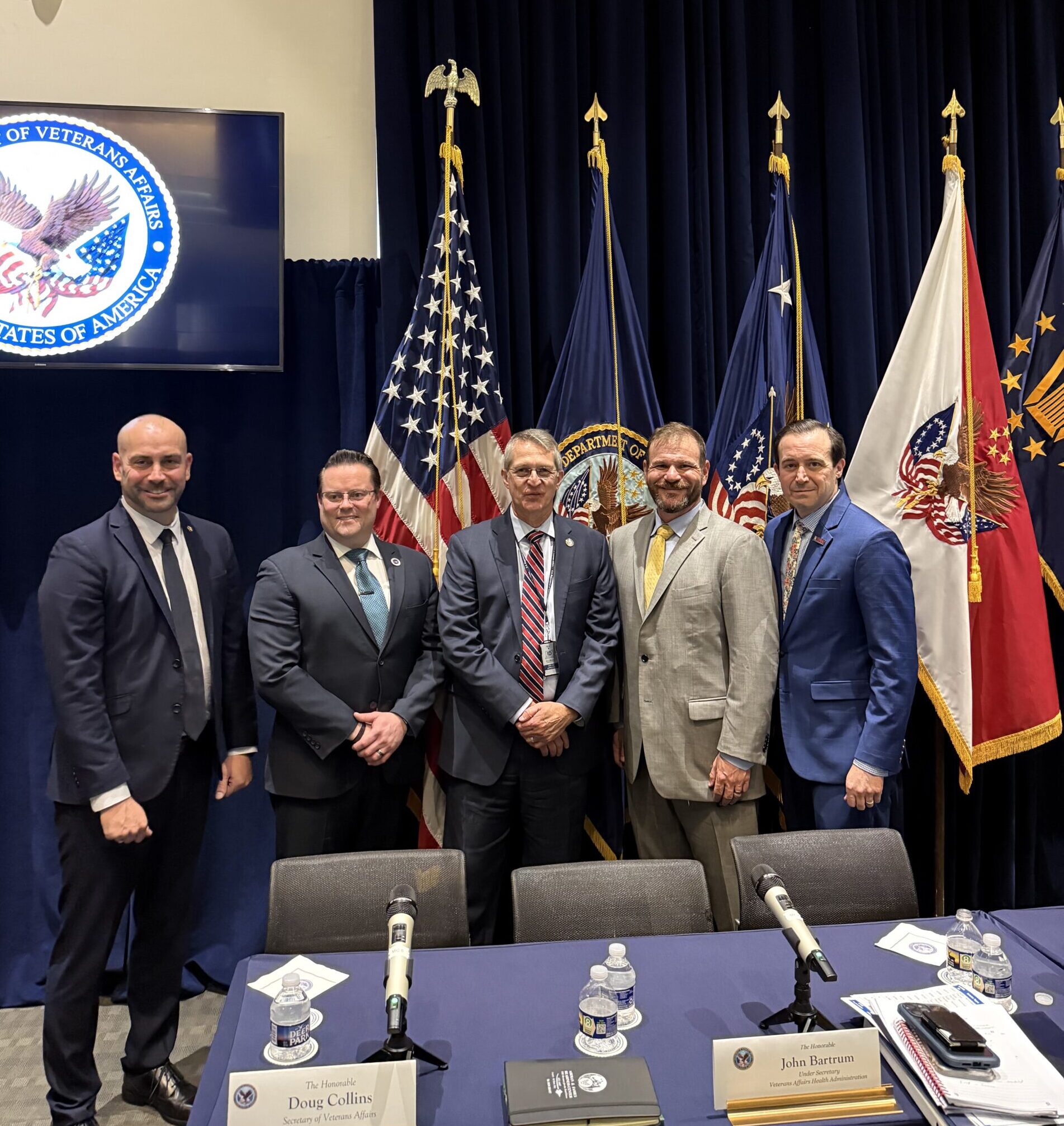
While the second letter was addressed to the VA Secretary, it was noted that the letter may have gone to the wrong desk following the resignation of former Under Secretary of Health John Bartrum in July. When this error was identified, we updated the letter with proper addressees and re-sent the letter on August 27 to Secretary Collins and John Figueroa, the Acting Under Secretary of Health. We copied committee staff on the House and Senate Veterans Affairs Committees, along with the authors of the Written Consent Act.
Inspired by Reforms and Partnership
Though the path to today’s first actions from the VA on prescribing safety reforms have taken years, long before the April 29 letter, VA Secretary Collins and Acting Under Secretary Figueroa taking action to require written consent in some cases, sends the message that there is a great problem to solve, and this is just the beginning.
It is also inspiring to know our veterans groups can come together when necessary, and that Congress is now beginning to provide oversight on this issue in a bi-partisan way. While medications are not causing every tragedy, it must be recognized that 160,000 veterans have taken their lives, and safer prescribing can save many.
Kudos to the VA for lifting the final unturned stone in the veteran suicide crisis, and for the opportunity to work with our veteran group partners in assisting the VA with helping to ensure veterans are provided the safe, informed care our they earned in service to our nation.













It’s a step in the right direction, but how many lives have been lost that could have been saved had this been implemented sooner? Hopefully some lives will be saved now.
Report comment
This is all so wonderful. Even with the missing oomph that would take the requirement for written consent beyond the age of veterans under 30. My additional hope is that this major advancement in patient protections, with necessary tweaks, becomes a copy:paste scaffold for civilian patients seeking support from psychiatry as well. Informed Consent is needed for all; beginning with our worthy and highly compromised and often under served veteran population was the perfect place to start. Now, non-VA voices in power need to take up the cause and make this happen.
Report comment
Possible: Cynicism about advocacy. Yes influential voices in positions to voice their influence are important. This is a win for the advocates.
Consent is very important. Fully informed consent is even more important.
Will consent and warnings change the side effects and adverse effects of the prescribed drugs? Will consent for opioids and benzos in combination (probably along with other prescription drugs and substances), lessen their side effects and adverse effects?
How so that some veterans cope and some do not? Direct functional supports?
And the utmost gratitude goes to them for serving and protecting others.
“Congress budgeted nearly $200 billion to the United States Department of Veterans Affairs (VA) to implement evidence-based outreach campaigns, screening protocols and treatments for veteran mental health and suicide prevention initiatives.”
Hypothetically: What could those 160,000 service veterans have done with for example a direct share of that 200 billion dollars? (1.25 million).
Maybe they could have purchased a house, built an extension to live alongside family, employed a companion/caretaker, afforded a pet, developed other skills, maybe gained meaning in some form of employment, and possibly required less drugs.
What is going on, that that young age group in particular, is not finding the right supports?
Maybe psych drugs and related drugs are not the most beneficial answer. The pain could be emotional and psychological as well. So these mental pains are dampened and suppressed for months, years, decades. ?
Report comment