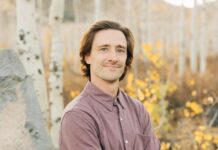
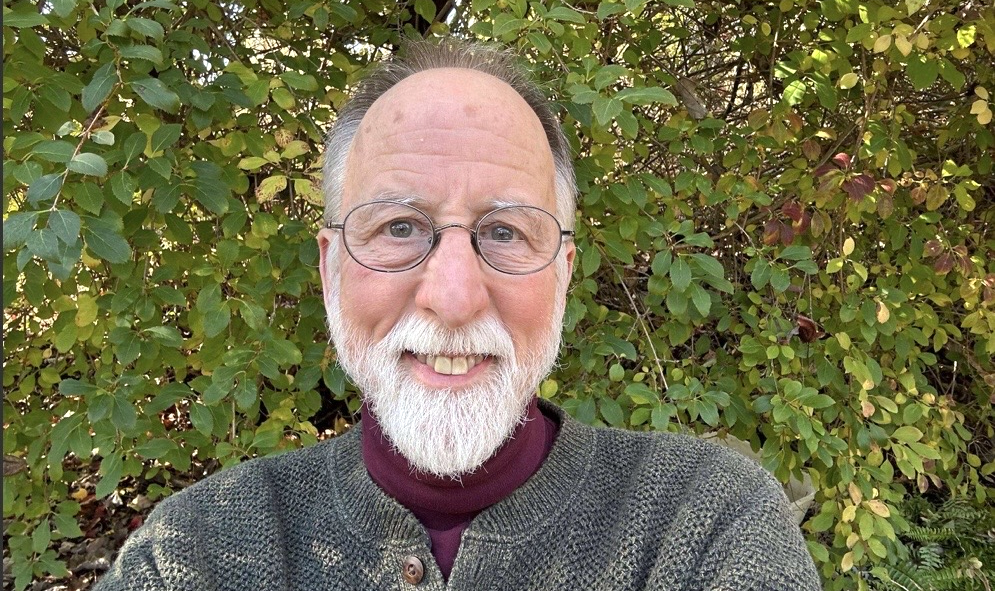
How does a wounded world wound us in return? Can we be mindful and offer intimate attention to pain and trauma? We answer these and other questions with Will Adams who is an Associate Professor and Chair of the Department of Psychology at Duquesne University in Pittsburgh, Pennsylvania. He holds a PhD in Clinical Psychology from Duquesne and completed his clinical psychology internship at McLean Hospital, affiliated with Harvard Medical School.
Dr. Adams is the author of A Wild and Sacred Call: Nature-Psyche-Spirit, published by SUNY Press, a book that explores the deep connections between human psychology, the natural world, and spirituality. His work brings together phenomenology, relational psychoanalysis, Gestalt therapy, transpersonal psychology, and contemplative traditions, particularly Zen Buddhism and Christian mysticism.
His scholarship invites us to reconsider the relationship between self and world, mind and nature, and psychological healing and spiritual life. In this very personal interview, we’ll be speaking with him about how a lifetime of contemplative practice came to his rescue during the most traumatic time in his life, the possibilities of a relational understanding of human and more-than-human experience, and what psychology might learn from contemplative traditions and our relationship with the natural world.
The transcript below has been edited for length and clarity. Listen to the audio of the interview here.
Ayurdhi Dhar: Dr. Adams, you’ve learned from multiple traditions—Christian mysticism, Buddhism, and phenomenology, which is the study of lived experience. How did all of these come together?
Will Adams: First, I want to say that I appreciate this opportunity to have this conversation. I want to thank you and thank Mad in America for touching folks in a deep way, especially many folks that have been marginalized and wounded.
This was during my undergraduate years at University of North Carolina which got me interested in humanistic and existential psychology. I had powerful experiences with a roommate in college and then later volunteering at a state psychiatric hospital. I started reading people like Martin Buber and R. D. Laing, and I found my way to a wonderful master’s program at University of West Georgia. You and I both are alums from that program. That program changed my life.
I went to London to study with R. D. Laing. Then I came to Duquesne as a PhD student and immersed myself in not just phenomenology, but the larger human science psychology tradition. I became interested in meditation. I practiced Vipassana meditation for 11 years, and then a wonderful Zen teacher fell into my life, Bruce Harris; I’ve been practicing with him for 26 years now.
I’m practicing psychotherapy and bringing these sensibilities into the therapy. Later I realized that with all the ecological destruction and desecration, with our human plundering of the natural world, the more-than-human natural world, that psychology has something to say about this, because it’s not only a biological problem—habitat destruction, mass extinction, climate change. It’s a malady of consciousness and culture, and psychology has something to say about consciousness and culture. All of this sparked me to do work in eco-psychology.
Dhar: You spoke about suffering; a lot of our readers are privy to what suffering is. They’re often people with lived experience of terrible psychological distress and also of horrid institutional responses that we have to that distress. You mentioned working at the state psychiatric hospital, and how that was an important experience for you. Could you share your experience at the Halloween carnival at the institution?
Adams: That experience, and also the one with my college roommate were life-changing. We were roommates and dear friends. He was realizing that he was gay, and this was at a time when it was much more dangerous to express than today. We had long, intimate conversations about his excitement, his suffering, his confusion, and his inspiration. This is before I studied psychology, but through those conversations, his trust and generosity, and his opening to me, I realized that really being with another person, and listening intimately and openly is transformative.
That was right at the time I volunteered at the state psychiatric hospital. It was a bleak place, not quite as extreme as the depiction in One Flew Over the Cuckoo’s Nest, but similar. I was working on a unit that was locked, a unit with schizophrenic men, and there was a Halloween carnival coming up. Most of the men had lost contact with their family and friends. This was a time when folks were hospitalized for decades. They didn’t have any Halloween costumes and they asked me if I would bring face paints so that they could have some kind of costume decoration.
We painted each other’s faces and went to this carnival. I went up to this booth that had basketball, and the person behind the booth, the nursing staff, said, “This is a basketball, do you see? You take this and throw it through that hoop, and you win a prize, you see?” It seemed a little strange, but I just took a couple shots and went to the next booth.
There was another booth and the person that was handling the booth talked to me in the very same way—really slowly “this is a game, and you get those rings on those bottles, and you win a prize, and do you see how this works?” It was just really weird, but it struck me that this is how the nursing staff thinks they’re supposed to talk to psychiatric patients. This is their view of what it means to be suffering psychologically, that it’s like being a little kid or having brain damage. Even today, 40 years later, I feel this sort of uneasy chill running through my body because it was horrible to be treated that way.
That experience coupled with these conversations with my roommate, made me realize that we don’t really need that much from each other; we just need someone who listens, is open and cares, doesn’t judge us or quickly put us in a box.
Dhar: About 15 years ago, I did my clinical internship at a state psychiatric hospital in India, about 9,000 miles away from where you were, and it was the same. There was both an infantilization of the patients, so treating them like they were kids, but also something punitive about it, punishing them like they were kids.
I remember psychiatrists during our morning rounds talking about patients like they were not there in the room. It’s interesting that across culture and time, that kind of punitive infantilization of some of the most vulnerable people, remains.
I have found that with many people going through extreme states, people with lived experience, some form of spirituality was important in recovery. What do you think about how spirituality can help some people heal through some really adverse experiences, from trauma and self-harm to psychosis or depression. Have you met such people?
Adams: Yes, and one of those people was me, because four years ago I had a horrible trauma where my neck was broken, and I could have easily died, been brain damaged, or paralyzed. My contemplative practice and some spiritual realizations that came as a blessing were profoundly life-saving. It saved my life and saved my sanity.
There have been so many people that I’ve known for whom spirituality has been crucially important in healing, growth, transformation, and in navigating the ongoing pain that life sends us. Sometimes it’s formal, organized religion, other times not. The common ground is a deep experiential realization that we’re not separate from each other, from the community, from the rest of nature, and we’re not separate from this great unfathomable, infinite, all-encompassing, all-pervasive mystery that goes by different names in different spiritual traditions.
That realization about the lack of separation that we’re not in it alone, but we’re in it with each other and even for each other—in service of each other—is crucial. One of the most profoundly healing experiences is offering ourselves in the service of others. Spiritual traditions differ in many ways, but the heart of these traditions seems to be a surpassing of a supposedly separate, self-centered, narcissistic stance. Once one realizes this, then the natural response is kindness and compassion, not because the Ten Commandments or the Buddhist precepts or the APA ethical principles tell you. It’s just completely obvious and natural.
Dhar: When I’ve talked to people with lived experience, apart from spirituality, the other important thing has been being of service to others. Peer support is built on that, but I know people who take care of animals, often at great personal cost, but it allows them to heal and not get lost into throes of psychosis or pits of depression.
You said that this idea that we are separate is a delusion. A lot of psychological theories would come in and dispute that, saying achieving a sense of separation is the foundation for a healthy ego. Many of these become pop psychological theories. On Instagram or Facebook, we have overwhelming narratives around strong boundaries or that you must only care about your own truth or anybody who doesn’t agree with you is toxic and should be cut off. I’m sure cutting people off is absolutely needed sometimes. There are some truly awful people out there, but the push towards disconnection and separation is real. Why do you think psychology equates health with a strong sense of separateness?
Adams: Contemporary psychology often does advocate for separation as the pinnacle of health, autonomy, that version of a strong ego. That’s happening in 2026 and this was a concern that Shakyamuni Buddha raised 2,500 years ago in a very different culture.
The fantasy of being a supposed separate self, or I would add a supposedly separate species—humans elevated above the rest of nature—that’s a delusion. It’s a delusion that’s based upon confusion and paranoia and greed, and it amplifies each. When I say that it’s a delusion, I’m not critiquing the affirmation of difference. You and I are different people, but we’re having a wonderful conversation. I’m different from the plant, and from the water, but I’m feeling its coolness, and I know I can get a drink. I’m not separate.
But separation, the felt sense that I’m actually independent, that my well-being can be separate from and independent from the well-being of my brothers and sisters, both human and more-than-human, this is a dangerous delusion. It arises because life is really painful and scary at times. We’re all going to die. The people we love are going to die.
There’s something alluring about the fantasy of reinforcing my supposedly separate, independent, autonomous self. David Loy says it’s not just that humans are aware that we and all of our loved ones will die, but deep inside we are aware that our taken-for-granted notion of our “self” isn’t real from the start. Historically, modernity gave us a lot of gifts. But modernity joining with the technological power of science and technology also led to an overreaction, where a core ethos of modern Western European culture was that we would be separate from and elevated above the rest of nature and dominate and control and exploit the rest of nature. Masters and possessors of nature—this is total madness!
Dhar: We are part of it. We are it.
Adams: We are it, nature. That’s the thing. You can’t be separate from what you most deeply are, but you can have the fantasy that you’re separate. There are developmental processes in an individual’s life that lead to a sense of supposedly separate self, partly to help us navigate this strange, wild, confusing, and sometimes dangerous world that we’re growing up in.
It’s helpful to distinguish between so-called ego strengths, like the capacity to reflect, to think, to not act on impulses, to be able to hold painful or pleasurable experiences without immediately acting, the capacity to remember and to plan. All of these ego strengths are valuable. They are different than the representational aspect of the ego, where we give ourselves a self-representation—“I’m smart, I’m kind, I’m a psychology professor.” The self-representation that’s the most bedeviling is “I’m a separate self.”
Dhar: In your book you discuss what I’m calling are cultural determinants of mental health—these larger narratives in the culture. You write that our suffering is partly because of these larger cultural stories that we are told. For example, a homeless person is depressed because there’s a whole world telling them that you should pull yourself up by your bootstraps and they’re not able to. We professionals say, “The problem is in you. It’s your personality, it’s your neurotransmitters.” As a professional, how do we respond to cultural pain and how do we not harm people more than we already have by individualizing their issues?
Adams: It seems to me, the basic structure of suffering goes like this. Life is painful and scary so I separate myself or I separate my tribe. Me and my tribe are separate. Because we’re frightened, we elevate ourselves above others as a defense mechanism, a security move. Out of elevation, we devalue others. This happens individually, but it also happens collectively. Out of that devaluation, we feel entitled to exploit, control others. Fear, separation, elevation, devaluation, domination, right?
This happens interpersonally and collectively. The collective systemic structural pathologies that Mad in America addresses operate according to that dynamic. There needs to be an interdisciplinary multifocal psycho-cultural therapy with different people and groups working in different ways that complement each other. This has to be according to one’s personal inclinations and gifts. We need psychotherapy and we need friendship. We need interpersonal exchange. But we also need people working on the legal system, the political system, the educational system, larger collective systems.
It’s crucial that we find a way for ourselves and in support of each other to take the most painful as well as the most joyful experiences, experiences that feel like they’re ineffable, unsharable, unspeakable, no one will understand. We need to find at least one other trusted person who can listen openly, non-judgmentally, non-punitively, and dare to say what can’t be said, because it can be said, in the right relationship. This happens individually, but it also happens collectively, to speak up and challenge the pathological madness of our contemporary culture.
Dhar: Let’s shift gears a little. People can have very profound spiritual or peak experiences that leave them shaken and in awe. How can we turn the altered states of consciousness into altered traits of consciousness? How can we incorporate the sublime into our daily life and pay “intimate attention” to the world around us?
Adams: This is the heart of psychological and spiritual practice to me. I learned this phrase from Huston Smith. He says that the point of spiritual practice is not to just have altered states of consciousness, but to cultivate altered traits of character. The point of spiritual practice, and even of psychotherapy, is not to have special experiences on a meditation cushion or in conversation with a psychotherapist, as valuable and profoundly important as those can be. The point is living differently day to day with each other and for each other.
These powerful experiences are often fleeting and ephemeral. The opportunity, and indeed the responsibility is to find a way to integrate them without reifying them, to integrate them into our more consistent reliable ways of being with each other. How to do this is a beautiful question. First is to not make those experiences so special. To really open to the deep intuition that the depths of life and of myself are ceaselessly being revealed and are playing out all the time. It’s not like we have to get anywhere else. The deepest realization is that there’s no distinction between spirituality and the rest of life. This is it.
My Zen teacher says mindfulness practices are helpful but the deepest practice is one of re-mindfulness—how do we remind ourselves many times a day to open, to release, and respond with the best understanding, compassion, love, and justice we can bring forth in actual nitty-gritty everyday encounters. We make a devoted commitment while knowing that we’re going to forget, that we get lost. We’re fallible, we get confused, frightened, and shut down. This is just the territory of being human with each other. Make a commitment to many times a day, pause and recognize the depths that are ceaselessly flowing forth, the overtures of life that are being sent to us and to say yes to those overtures.
I think a daily meditation practice is immensely helpful, that you consecrate a certain time and space to do a meditation practice. But then the deepest meditation, the deepest spiritual practice is everyday life, everyday relationship. In Zen, we say the world is our Zendo. For example, there is a stone in my pocket. Whenever my hand touches this stone accidentally—I reach for my keys or I’m just sitting with my hands in my lap—it’s a re-mindfulness stone. It’s a spiritual touchstone, literally. I touch the stone and I pause, and silently to myself I open and savor that this is my life. How do I want to live? How do I want to respond? That helps me integrate things.
Dhar: That is lovely but it makes me think—let’s say a person who’s listening to the interview is going through devastating grief or brutal withdrawal from psychiatric medications. They might say, “Well, if I were to sit down mindfully and consider that this is my life and feel the pain of withdrawal or of grief, it would not help!” So, I want to go back to what you shared with us in the beginning.
What was it like to have to deal with a broken neck, near-death trauma, and have that stone in your pocket where the moment by moment was incredibly painful and deeply terrifying? What was it like to be mindful of agony?
Adams: First, I would say there are times to get away from pain. If things are too overwhelming, we need to find ways, maybe it’s distracting ourselves, taking a medication, just moving away from pain. We need to learn the difference between pain as a danger signal that we need to take seriously and protect ourselves from and pain that isn’t actively threatening us and that we could open to and understand and learn from and even grow from. How can we be scared but not scared away? Pain says pay attention, something important is happening. I don’t want to romanticize the pain.
But we also know, and Freud and the other depth psychologists, but also the spiritual teachers show us that a habitual response of avoidance towards pain doesn’t work over time. What we try to push away is going to come back to haunt us. It’s important to cultivate our capacities to allow pain to come into our awareness so that we can discern how we want to respond. Meditation practice really helps with this.
In particular, you ask about my trauma. I went to hang out with my son and we went mountain bike riding. We were riding through the woods at a park in Pittsburgh. He skillfully rode over this small wooden bridge that didn’t have any rails, that was over a creek. My bike hit a bump at the beginning of the bridge. I lost control of the bike, fell over the handlebars into the creek, and really hit my neck—it snapped. I could feel it instantly. I knew, “Oh, this is really bad.”
To make a long story short, my years of meditation practice came in because I knew I needed to lay as still as possible because if I moved, I could die or get paralyzed. My spinal cord would be severed. I was hurting in the worst way I’ve ever hurt. My 14-year-old son saved my life and got paramedics there and got me to a hospital. I had multiple vertebrae fracture, especially cervical vertebrae, lumbar vertebrae, broken ribs, broken skull, but I was alive, thanks to my son, and I would say also thanks to my Zen practice.
They needed to do neurosurgery to fuse my spine; it was scheduled for two days later. The first night, after everything quieted down, everyone left, I was in the worst pain I had ever felt. Even though they were giving me morphine, it was barely touching it. But the physical pain was only part of it because I was aware that I could die. I could die that night; I could die on the operating table. My meditation practice came into play there. Whenever my eyes were open, the pain was excruciating. Whenever I closed my eyes, I was thrown into this kind of hell realm where these insidious presences, beings, I couldn’t really see them exactly, but they were like evil destructive presences that were trying to kill me. It was like I was in a game that was a deadly serious game. They knew the rules, but I didn’t.
They would attack me and I would try to avoid them and survive, and then they would attack again, surge after surge of these attacks. I knew that if I didn’t win this game, I would actually die. As a psychologist and a long-time contemplative, part of me knew that this was my psyche working out my death dread that helped a teeny tiny little bit, but it was mostly really, really horrible. Again, to make it short, I found a way to make peace with the fact that I might die. I’ve made plenty of mistakes in my life and hurt people that I love, but I’ve also lived a good life, a loving life. I said, okay, if it was just me dying, I could make peace with that. But I wanted to live to be a dad and a husband.
I made a commitment to myself, which was also a promise to my family, I’d do what I could to stay alive. The next day doctors started coming, I got to see my kids, I got to see my wife again. Then the night came, people left, I told my wife to go home and be with my kids. It got quiet, the pain was there all the time, my fear of dying was there, I didn’t want to die and leave my family bereft, and the hell realm started coming back. I felt like I was helpless, I couldn’t do anything, I couldn’t do anything to stop the pain, I couldn’t do anything to get out of the hell realm. But then I remembered, well, what I can do is breathe. I can breathe consciously, and I can open to the painful stuff without letting it totally tyrannize me, control me, captivate me. I could make a contemplative meditative space for the stuff to arise and hit me but not dominate me. That I could find a capaciousness of awareness that allowed this.
Eventually as I was breathing, meditating, this was like minutes by minutes by hours by hours, breathing out, opening, breathing out, releasing. Suddenly, unexplainably, everything released. The pain released, my death dread released, I released, I was gone, and all that was there was love. Boundless love, boundless spaciousness, suffused with love, imbued with love. I was gone. I died, but I died into love. I don’t know how long I was gone. I was outside of clock time. It was eternal, not everlasting.
Eventually I returned to something kind of approximating ordinary consciousness, although still resounding with this boundless love, absolute openness, peace. My neck pain and my fear of dying came back, but they weren’t grabbing me like before. In that experience, as I was coming back, I realized this is the way it always is. This is our nature. This is what life is, this dynamic presencing of what felt like love. That was pretty darn important, but Ayurdhi, what was even more important were two things that happened after that.
As my pain and dread of dying and leaving my family came back, it was totally clear to me that that the pain and death dread were an expression of that boundless love. Even though I didn’t want them, even though I didn’t like it, even though I was ready to move past them, that’s just the way it was; and seeing them, feeling them, knowing them as strangely perfect expressions of love was liberating.
I realized that my surgery was the next day, but I was already healed in the deepest way possible. That I could die that night or on the surgeon’s table, and I would still be well. That somehow, I had fallen into or been carried into a wellness that’s deeper than any wound. Coming through that experience, I knew that my spiritual practice was to live up to the gift of that boundless love day to day in my everyday relationships, to embody and convey that love in the nitty-gritty encounters of day-to-day life. Ever since then, these experiences are more vividly present for me day by day.
Dhar: I want to thank you for sharing that story; it was extremely powerful and quite beautiful, and equally horrifying—all of those things at the same time.
Adams: All of those things. This experience that I lived through, and I’m still trying to live up to is what inspired me to be writing this next book that’s almost done. That’s the one on trauma, love, and meditation, and where I tell my story.
***
MIA Reports are supported by a grant from Open Excellence and by donations from MIA readers. To donate, visit: https://www.