Have you ever found the meanings you make intolerable?
Do you feel things that there are no words to say?
In the summer of 2020, following my discharge from a psychiatric hospital and in the worst depression of my life, I slipped into a state of consciousness in which I experienced the world within me and the world around me as one. The clicking of my bathroom heater was the metronome of my despair; the dust on my desk was the objectification of my paralysis; and my heart sank daily with the sun.
It was a world of terrible significances.
Desperate to capture this state—to put it outside of me—I discovered that if language took the shape of my experience, rather than my experience conforming to the norms of language, I could communicate what it was like. I found this shape in metaphor, personification, and symbol—language that mirrors feeling, instead of naming it. I wrote from within my Madness; and I called it inside-writing.
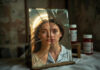
After drawing out the core themes from months of inside-writing using Gupta’s Cinematic-Phenomenological Method (2018), I pieced together excerpts to create the voiceover script for a short film. From there, I constructed a visual and sonic script to stand in for and evoke those aspects of this experience for which “there are no words.”
The result is a cinematic prose poem that invites viewers to move beyond the habit of viewing extreme psychological states solely through the lens of psychopathology, and toward forms of understanding the experience of “Serious Mental Illness” that are also experiential.









Very subtle and erudite exposition above, but there is something wrong with the link at least in my attempt to click onto it. I wonder why you use any methods whatsoever in your writing, or conform to any form if you want language to mirror feeling, which is the mimetic translation of feeling into what we call the poetic. This is the only real part of writing poetry for me and methods/forms seem like socially and historically conditioned intrusions and limitations on what you wright: I know it’s entirely normal among writers but why do we do it? Is it timidity, or does form and method provide a feeling of security? (Intended as a question rather then assertion.) If I can view the video later I will have a butchers. (Sorry, have a butchers means have a look in the UK and comes from the cockney rhyme “butchers hook” meaning look. Cockney rhyme was unusual in doing the opposite of abbreviation and it captured their working class imagination and humour. I just explained that cuz it’s quite interesting when I think about it.)
Report comment
Hello, Zeroxox.
Sorry the film didn’t play for you! I am having the same trouble at the moment. Hopefully it can be fixed shortly. So, do check back, okay?
And thank you for your thoughtful and incisive commentary. You pose a good question! I did not (and do not) use any method at all in my writing, which is actually vigorously amethodological. My whole PhD dissertation was researched and written without adherence to “method” on the very grounds that you point to—truth to feeling is its own ‘method’. However, I used the Cinematic-Phenomenological Method (Gupta, 2018) in identifying persistent themes within my “inside-writing” and in building (i.e., arranging) the film’s script. I was, at the time working with a mentor who had devised this method, and who saw my writing as the expression of an inherently phenomenological process. And I produced this film as an initial foray into phenomenological filmmaking.
I hope this answers your question. Thanks again for your comment!
India
Report comment
Look, I am now 70 years old, a lifelong warrior going through ugly, harsh, and often punitive psychiatric hospitalizations basically throughout my entire life. There have been spans of years between some of these often forced mind jail state. A few in Philadelphia itself. One in Towson MD where I literally didn’t think I would get out alive, and yet maybe hard but navigable psych hospitals. I am back in older meds that had significant side effects as I had taken them when much younger, some leading to attempts. They tell me they ran out of any new psych meds to offer me..I am off all psych meds for a week or two, having just been discharged maybe three weeks ago from a whackadoodle illegal as fuck three consecutive involuntary commitment stay. Never once mentioned or intended suicide, homicide, self harm, or harm to others. But back on Seroquel, now extended release form? A mood stabilizer and a much more tolerable sedative for both morning and night, sans the Seroquel. All these do is put me in a coma like state at night and w forever haze all day..I must set like ten alarms just to get out of bed in time to prepare for my regularly scheduled transportation to my appointments. I lost almost every friend, even once close ones, and literally go from just deep depression to crying, to anger, and only to literally talking to my apartment walls. The very same apartment I don’t doubt I will be evicted from at any notice sooner than later. Since moving to this small city and apartment living, I have been abused at varying intensity levels from physical, emotional, and mental ways, for over 40 years. All illegal, but of course no real evidence, and I am always the crazy one hallucinating it all according to not just the authorities but by most psychiatrists as well as many therapists I saw throughout the years. The mental health systems I generally do or had dealt with are very negligent and abusive even on an outpatient basis. Maybe not my entire current outpatient team now, but… None of them will understand living in a forever haze or coma like state, all while this is the same med I took at a higher dose when younger and had a serious attempt while on it then. Oh, maybe it wasn’t the Seroquel itself that led me to that attempt but the physical, mental, and emotional abuses ongoing for several years in a non project subsidized apartment in one such building, by a clique of my neighbors. They were former health care workers in the same hospital I volunteered in for over ten years. All were retired. That same hospital’s behavioral clinic and other outreach places were very abusive as in such blatant HIPAA violations and other interactions and not just to me either. The head clinical psychiatrist held me back for too many years from referring me to any talk therapy as he insisted I had schizoaffective disorder and would not respond to talk therapy but mainly psych meds. I waited much too long to just up and go elsewhere. I did maybe more than two decades ago, not just having PTSD but Complex PTSD AND Borderline Personality Disorder, all unfortunately unhealed as fuck. No, I found a really decent longer term therapist which is very unusual with my government (U.S.) insurances and that bitch Medicare which severely limits where and my choices of therapists alone.. it’s just been over three years where I see my current therapist. I guess I shirked the hard work involved in so many different types of therapies over this time. In addition, my entire life has been further severely destroyed by a home health worker over and before hip surgery. The hospital, surgeon, and surgery were all great. But everything afterward has about destroyed me to where I am now..All these agencies supposedly offering help and support in my area, well “you don’t qualify, funding cuts, case worker not paid to do this or that?” Decades of doing all these things on my own. Now, I have no more options and am flat out of ideas and ways of getting anything done. I am not done, but just sitting in my apartment doing ugly time until my natural end.
Report comment
Hi, Donna.
You have been through so much. All these different channels of “treatment” and “help”. Sending you support, in whatever form you need it. To the trenches, from the trenches. You are not alone.
India
Report comment
I am struggling more than ever even at my now age of 70. I am told by my psychiatric and psychological team to take Seroquel yet again. They say they have run out of newer options. I am not saying Seroquel was the reason for a significant attempt back in 2008. There was much abuse to me by others but I was also taking higher doses than now of that same Seroquel. But now, it’s extended release form. Struggling and more often opting not to be in a semicomatose state all day. Not much in my life is really going well. Still keeping my head barely above water. But I took a spur of the moment trip to Philadelphia recently with the remainder of rent money. I will never forget or regret doing so. As far as many populations saying Philadelphians are very rude, not my experience at all while there. That was rewarding in many ways.
Report comment
Travel in body is inevitably travel in mind. Disruptions of the geographic kind can be helpful.
Report comment
This is amazing work – well done. Don’t worry if you remain unrecognized: this is raw talent but we are living in the end of days, so we have no future. There is a very nice sense of space and aesthetic integrity in this work, and it seems to blend a Zen like quality of space and tranquility with an illumination of the vicissitudes of Western psychological life, which is really like our left brain and right brain, and this adds a depth and richness that becomes transportive with your really well done and well paced video. It’s full of subtle intelligence. The sense of space created in this video really allows the meaning of your words to resonate, and you’ve got an elegant poetic voice here revealing an elegant heart and mind, with an original creative quality in your work. I don’t know what forms or methods you drew on in this if any, but you’ve totally made it your own. Nice work and really nice video.
Report comment
Hello again, Zeroxox
Thanks for coming back to see the film and for your appreciative words! The thoughts you’ve shared about the way the film was put together, and the the sensibility behind it are consonant with my orientation and intentions in making it. I have had a varied background—documentary and experimental film, phenomenological psychology, life writing, etc.—which doubtless informs my choices in the shooting, script, and editing of this project. But I have always thought of myself as more of a ‘naïve’ artist, in that my choices are largely felt and intuitive, not planned or conscious. Thanks again for your thoughtful comments.
India
Report comment
In a strange way your film reminds me of something that in almost every respect is completely different, and that is the Alfred Hitchcock film The Birds. But the one similarity is in the core impact of the film which is the sense of space and silence that really allows the well chosen aesthetic and artistic moments to shine through. If you had released this film of yours in the sae era though I think it could have given The Birds a serious run for it’s money. There’s a total artistic unity in your work which probably couldn’t be paralleled by a major production because as they say (at least in the UK), too many cooks spoil the broth.
Report comment
That is a true compliment, indeed. Thank you! Hitchcock was the first director that made me think about making films. Vertigo is my favorite, but The Birds is amazing too!
Report comment
I don’t mean to break the spell, but I noticed the creator mentions taking “meds”—I’m assuming she means psychiatric drugs. It made me wonder if she’s ever considered that these might be contributing to her sadness. That was my experience.
I support artistic expression, but I personally have never been a fan of turning emotional anguish into currency—whether aesthetic or medical—because both tend to idealize something deeply human that deserves far more respect.
I think it’s important to keep in mind that both art and medicine have a way of distorting the human experience—shaping it to fit a form, a diagnosis, a narrative.
The simplicity and dignity and of the spoken word is good enough for me.
Report comment
Hello, Birdsong.
I agree that it is difficult to do the human experience justice when “shaping it to fit a form”. My approach to making this film was to let the form of my experience shape the narrative form and not the other way around. Certainly, any time we communicate one experience in terms of another, we lose something. But that doesn’t mean we shouldn’t try. Thanks for your feedback.
India
Report comment
You’re welcome, India. I appreciate your reply.
I think you’ve succeeded in letting the form of your experience shape the narrative.
I just happen to think art gets more credit than it deserves, especially when so much of it is rooted in fetish — as in stylized spectacle — because the real people who suffer real pain are often forgotten in all its hoopla.
Report comment
Thank you, Birdsong. That is generous of you to say. Your observation about art and fetish is very interesting. Clearly many “real people” with “real pain” are artists… So that I can better understand, can you offer an example of real people getting forgotten in art’s “hoopla”?
Report comment
Absolutely.
Art gets showcased in galleries and film festivals often attended by people with money to burn, money that rarely reaches the people whose stories are being told, or who need it most to access quality care. The spectacle consumes the suffering but rarely funds the healing.
An example: gallery goers or film aficionados sip wine gazing at paintings or films inspired by trauma with donors applauding a panel on psychiatric reform while survivors remain unfunded and uncared for.
The artist narrative is not superior. It’s one voice among many, and when it’s elevated above lived truth, it risks turning suffering into spectacle.
Artists are no better at seeing truth than anyone else .
Report comment
… in other words, it’s heartless to elevate an artists curated interpretation of pain above someone’s raw experience.
Report comment
Hi Birdsong,
I know this comment thread is kind of old, so you might not even see this. As a self-identifying artist myself, I had an initial knee-jerk reaction to reading your comments, but upon further reflection, I think I do get where you’re coming from.
I think you’re confusing art with Art.
Anyone can create art. This kind of art is inherently democratic. You don’t have to possess any special kind of education, lots of money, or even talent. You just have to possess the drive to create. These kinds of artists probably don’t make any money from their art. Even if they do, they are still doing it primarily for their love of the art form, not for fame & riches. In this case, they likely fit the “starving artist” stereotype.
Now, Art, on the other hand is a whole different species. Elitism, snobbery, spectacle, pretentious wine-sipping in the gallery – everything you just described. But that is not art, inherently. That is Art.
I think the issue you have with Art is the commodification of art. Not art itself. Essentially, your issue then, is with capitalism. With that, I could not agree more.
“We live in a world where artists have historically been given more credence and respect than people who aren’t.” I think it’s a false notion that art is raised on a pedestal in our society, or that this has historically been so. In fact, I think the opposite could not be more true – art is the least funded in our education system and one of the least respected careers, with a very low likelihood of financial stability. On the other hand, STEM, business, law, and medicine are the fields that better fit your description.
I think you are also confusing a disdain for Art connoisseurs with a disdain for artists themselves. Sure, if the world listened to people in pain, maybe they wouldn’t feel the need to express their pain through art in order to captivate the attention of an audience. Does that mean it is the individual’s fault – who happens to possess artistic talents themselves – for using their talents to try to get people to understand/listen? Or is it the fault of society for pigeon-holing them into that position in the first place? Isn’t their artistic expression just an adaptive response like any other to try to survive otherwise unsurvivable circumstances? In a similar way, mental health patients who are “polite” & “compliant” should not receive better treatment than those who are turbulent & angry. But is this the fault of the “good patient”? Or is it the fault of the mental health system? Is the “good patient” really privileged above the “non-compliant” patient by that much? Or are they both victimized by the system in unique ways? A “fawn” or “freeze” adaptation is just as much of a trauma response as a “fight or flight” response. To blame individuals for their survival responses rather than the circumstances which brought about those adaptations is a form of victim-blaming, regardless.
You mentioned art being “rooted in fetish.” However, I recently read “The Perils of Privilege” by Phoebe Maltz Bovy – highly recommend – and one concept she illuminated in this book is how “privilege” gets a lot more airtime than “power,” and part of the reason for this is our fetishization of powerlessness. Though oppression can certainly disempower people, is the goal of social justice not, ultimately, to (re)empower? If one’s power lies in their artistic ability, is it wrong for them to reclaim their power through artistic expression after experiencing disenfranchisement?
Additionally, you appear to be assuming that people exist in black-or-white – that either they are able to express their suffering through art, or they are not. However, these two opposing experiences may exist within the same person at different times. Us artists are notoriously inconsistent, going through creative bursts as well as periods of “writer’s block,” so what happens when we are not able to reliably alchemize our pain into beauty? (Same thing for those of us who may be able to “code-switch” into intellectualizing language, yet in times of intense distress or crisis, we lose that ability. It reminds me of a post I saw by @dr.jenniewh on instagram that I really relate to, especially slide 5: https://www.instagram.com/p/DI_hHxLJGf0/?img_index=1 ) I expressed the pressure of always having to make one’s pain “beautiful” for others’ consumption in this poem: https://www.madinamerica.com/2024/10/true-story-by-jasmine-marshall/
You mentioned in another post that you are not a fan of poetry. That is fine, but may I ask if it is because of these same feelings you expressed here towards Art? In that case, I encourage you to read “Poetry Is Not a Luxury” by Audre Lorde. You can find it here: https://makinglearning.wordpress.com/wp-content/uploads/2014/01/poetry-is-not-a-luxury-audre-lorde.pdf
Lastly, the notion that artists aren’t “real people” with “real pain/suffering” is a troubling one. Of course, our pain/suffering is not any more real than anyone else’s, but neither is it any less. You say, “Suffering does not become more valid when filtered through artistry, meaning talent should never determine who’s seen and who’s not.” Perhaps this is true, but is your proposed solution to this for artists to stop creating art altogether, as though that is the only way for other, less talented people’s voices to be heard? That sounds like bully-logic to me: the logic by which the only way for those who are insecure to be “boosted up” is for those who are smart/talented/kind to be “put down.” (I’m not saying YOU are a bully, but I am saying that that line of reasoning can be a slippery slope towards bullying.)
I am reminded of this quote that goes: “Our deepest fear is not that we are inadequate. Our deepest fear is that we are powerful beyond measure. It is our light not our darkness that most frightens us. We ask ourselves, who am I to be brilliant, gorgeous, talented and fabulous? Actually, who are you not to be? You are a child of God. Your playing small does not serve the world. There’s nothing enlightened about shrinking so that other people won’t feel insecure around you. We were born to make manifest the glory of God that is within us. It’s not just in some of us; it’s in everyone. And as we let our own light shine, we unconsciously give other people permission to do the same. As we are liberated from our own fear, our presence automatically liberates others.”
That is my own goal as an artist: Not to outshine anyone else, but to share my light & hopefully inspire others to do the same, in their own way, using their own unique talents. I’m not taking anything away from anyone else. In fact, art – whether it’s about love, grief, pain, suffering, etc – often has the power to transcend the boundaries of the individual, representing a much more universal experience. An artist may speak not only for themselves, but for many, giving voice to the voiceless during times when they cannot find the light within themselves. That is what I got from India’s poignant video-poem.
Thanks,
Jasmine
Report comment
Jasmine,
I appreciate your passion and the care you bring to this topic. I want to gently clarify that my critique was never about artists themselves, nor about artistic expression as healing.
I’ve long held that art is a democratic form of self-expression—available to all.
My concern is the way suffering is sometimes stylized or elevated in ways that can obscure the dignity of raw experience. That’s not a rejection of art or artists. It’s a defense of the soul that inspired it.
To be clear, my intention was never to imply blame, and I don’t believe in binary thinking.
I simply offered a perspective that felt true to me.
Birdsong
Report comment
It’s just that so many artists themselves suffer. I speak from personal experience. While some art may get “elevated above lived truth”, this is far from an inevitability and can happen with any cultural object (scientific article, commercial product, etc.). I agree that the artist’s voice is simply one voice among many. And as such, it should be given the same credence and respect as any other.
Report comment
“It’s just that so many artists themselves suffer.”
No more than anyone else. I speak from personal experience.
I once attended a school for artists where it was taught that artists are “special”, a belief I couldn’t stomach. And for what it’s worth, my instructors thought I was an unusually gifted artist.
Suffering does not become more valid when filtered through artistry, meaning talent should never determine who’s seen and who’s not.
Unfortunately, we live in a world where artists have historically been given more credence and respect than people who aren’t.
Report comment
… in other words, stylization does not confer sanctification, as the doctrine of artistic exceptionalism would have us believe, often at the expense of those in actual pain, all around the world…
Report comment
CLARIFICATION:
Curation does not confer sanctification—aesthetically or medically.
In other words, interpretation is inferior to simply bearing witness, and witness asks nothing but presence.
I’m not anti-art. I’m defending the dignity of the uncurated.
Report comment
I FULLY believe in the dignity of the uncurated. Much of the best art and writing is never presented or published.
Report comment
I’m not questioning your belief in the dignity of the uncurated. I’m questioning the halo that surrounds art — how easily it forms, how rarely it’s examined. Interpretation is not witness.
And who’s to say which art is “best”?
Report comment
Artistic fluency is not the same as emotional depth.
Report comment
CLARIFICATION:
Artistic interpretation is not the same as being emotionally present for those who need it. And maybe if those need it actually got it, they wouldn’t need to express themselves artistically.
I don’t believe in the deification of art or artists. I believe in honoring living things that actually breathe.
Art is a sorry substitute for giving a damn.
IMHO.
Report comment
Art may be more for the artist than the observer. I recently wrote a very emotional poem, not something I usually do. But it was quite cathartic for me. Others found it beautiful, but it didn’t have the same meaning for them. I wrote it for me more than anyone else.
Report comment
Art is more for the artist. I know that. What I object to is the deification of art and those who create it.
The problem comes when people who create art think creating art makes them more worthwhile than people who don’t’, which—speaking from my own personal experience—happens quite a lot.
Not a good thing for anyone.
Report comment
I suppose any time folks think that being in a particular category makes them more worthwhile than others, we have problems. We’re all just humans!
Report comment
Being human is no excuse for thinking you’re above others, whether that be artist, therapist, psychiatrist, or anything else.
Report comment
I think I just said that.
Report comment
It didn’t sound that way to me.
Report comment
Well, I certainly meant that no one should hold themselves above another because of their identity or role in life. Maybe you should read it again?
Report comment
I think there comes a point when saying, “We’re all just humans!” becomes a copout.
But it’s a great way to avoid accountability.
Report comment
That was not the intent of my comment. Saying we are all just humans means to me that none of us are better than the others based on what we do for a living or any other reason. I am quite sure you agree with me.
Report comment
That I do.
Report comment
Nevertheless, I’ve always felt that too many people worship the wrong things, and that art is at the top of that list.
Report comment
My years of observing various “mental health” practitioners both on and off the job taught me that the phrase “a manner of speaking” usually seals the client’s fate, diagnostically and otherwise.
The more “artistic” or verbally fluent the client, the more receptive the practitioner. Heaven help you if you happen to be neither.
I thought it most unfortunate the number of therapists who seemed captivated by performative pain: the more eloquent, the more applause.
Report comment
… in other words, the client’s means and manner of expression is typically used to measure the client’s worth—making “therapy” more of a performance review than an opportunity for the therapist to simply offer their presence.
Report comment
Many might conjecture that my critique of art and its creators stem from jealousy. But that’s not the case.
My critique is meant to draw attention to the reality that artistic circles contain just as many—if not more—unexamined power dynamics as any other domain.
And often, the negative effects of those dynamics are more deeply felt precisely because art is the conduit of the soul…and often the artist’s ego is placed higher than that…
Report comment
Halal certification in Bahrain is a religion based practices followed by the Muslim community which has to be mandatory practiced on the slaughtered animal meat. This is not any of the International standard Defined by any of the non profit organization.
Report comment
The artist’s hunger for admiration has always escaped me.
Connection? Yes. Admiration? No.
Art that centers the artist’s ego loses its power.
Their depiction of emotional pain too often feels like my own has been cannibalized.
The canonization of art feeds egos, not hearts.
It’s no substitute for genuine connection with the Self.
Report comment
CORRECTION:
The artist’s hunger for reverence has always escaped me.
Resonance? YES. Reverence? NO.
Report comment
India’s short film is visually compelling, but what came through most for me was how self-referential it felt. Depression—the collapse of the soul—ought not to be fed upon.
It felt like watching pornography of the soul, much like psychiatry and its cousin psychology: all three stylize suffering for consumption.
Report comment
This isn’t a dismissal of art—it’s a defense of the soul.
Art as spectacle desecrates it.
No one should ever kneel before pedestal logic—from any source, especially when it invites a voyeuristic gaze.
Report comment
I’m going to make the comment no one seems to make on this site: “stylization” of suffering and everything wrong with psychiatry wouldn’t exist without suffering and the need to contain it. If distress didn’t seem like so much of a feature to be controlled in this world, the whole economy would die and only then would we all be happy. Worth it? Good question, but we would all be happy.
So the next time you think that someone shouldn’t be “self-referential” and making “pornography” of his/her own distress by posting it in a psych survivor website, ask yourself how this was allowed to happen in the first place, because I’m sure he/she didn’t earn it and couldn’t do much else here. I’m sure he/she must be as much a puppet of fate, perhaps in the hands of a God incapable or unwilling to prevent suffering of its sentient beings, as you and I are.
Report comment