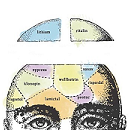
In the 1980s and 1990s, across southern Ontario, groups of former psychiatric patients started their own courier companies, cafés, and craft studios. They called them consumer/survivor businesses. They were workplaces run by people who had survived the mental health system and wanted to make a living, help one another, and change how society viewed them.
A new study in Frontiers in Sociology by Danielle Landry, a sociologist at York University and the Canada Excellence Research Chair in Health Equity at Toronto Metropolitan University, brings this history back to light.
“There is more to consumer/survivor businesses than their therapeutic potential, or their ability to put a few dollars in community members’ pockets. While these are important aspects, they overlook what motivated establishing consumer/survivor businesses.” Landry writes.
“While CSIs [consumer/survivor initiatives ] have changed over time, interview participants narrated them as having resistant, even disruptive origins. Having a base of operations during a recessionary period was a valuable resource which survivor leaders could leverage to rally community members and organize around pressing issues facing their community.”
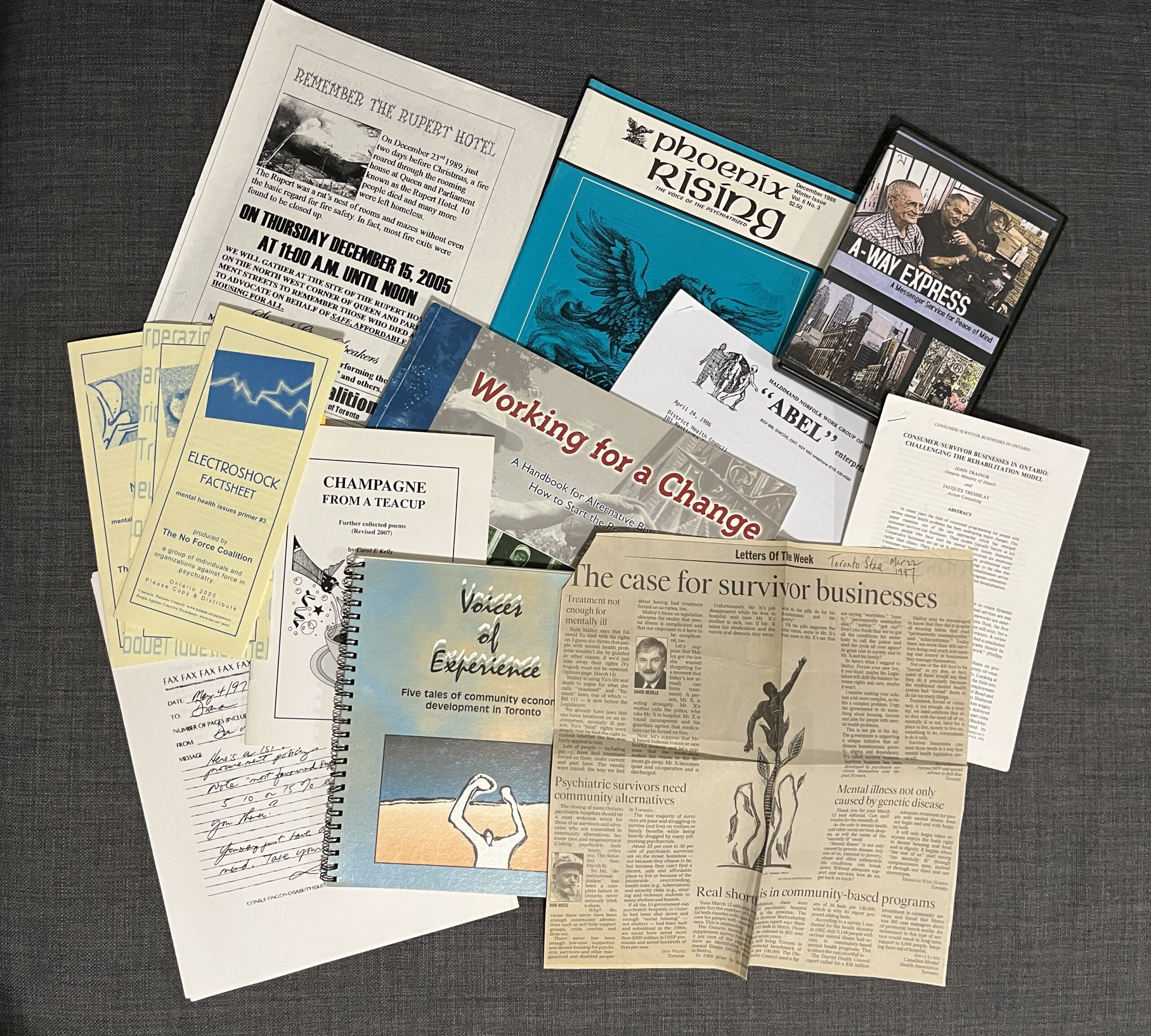
The paper also introduces a way of studying memory and activism when archives are scattered or missing. Landry uses institutional ethnography, a feminist methodology that begins with people’s lived experience. She asked former activists to look through boxes of photographs, flyers, and newsletters as they spoke, letting the materials bring old stories back to life.
“Though much more than simply prompts, archival materials can provide important memory cues to elicit recollections, whether those are semantic memories (those that affirm that an event took place), or for individuals who were present at the event depicted in the materials, episodic (remembrance of personally experienced events) or sensory memories,” she writes.
Over the course of two years, she interviewed forty-two people who had been involved in Ontario’s survivor-run businesses between 1980 and 2005. Many were older or lived with memory loss linked to psychiatric treatment. To help them recall, she gathered artifacts from personal and business collections and used them during interviews. The result is both a social history of Canada’s “mad movement” and a model for more inclusive, participatory research.













Given the fact that the psych survivors and independent psych researchers, have found the iatrogenic etiologies of all the “invalid” DSM psych “disorders.”
I definitely agree, “psychiatric-survivor knowledge” and independent psych researchers, “as a form of scholarship in its own right,” is invaluable.
Many thanks, Robert Whitaker … but as a psych survivor researcher, I would like to be given respect for finding the medical evidence of the iatrogenic etiology of the “sacred symbol of psychiatry.”
Report comment