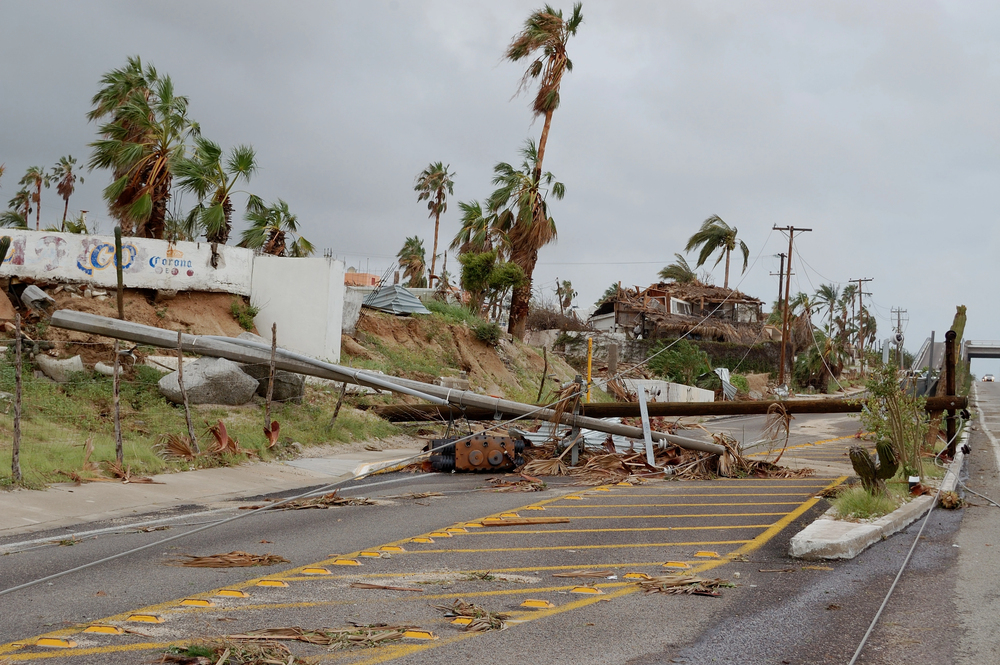
After a natural disaster, it is common for groups like the Red Cross to send mental health professionals to help affected people recover from grief and psychological distress. However, a study recently published in BMJ Mental Health finds that interventions designed to prevent mental health problems after exposure to natural disasters are largely ineffective. This research, led by Ahlke Kip from the University of Freiburg in Germany, reports that post natural disaster interventions do not improve symptoms of PTSD or depression compared to controls. These interventions may have some effect on symptoms of anxiety, but this link remains unclear due to limitations in the data. The authors write:
“This is the first meta-analysis to investigate the efficacy of psychological and psychosocial interventions for the prevention of mental disorders after exposure to natural hazards. Aggregated effects did not show a general efficacy of preventive interventions for either PTSD, depression or anxiety. Beneficial effects compared with passive controls may evolve in the long term, however, too few studies were available to draw firm conclusions.”
Study Details
The goal of the current work was to investigate to what extent psychological and psychosocial interventions prevented the development of mental health disorders in survivors of natural disasters and first responders. To accomplish this goal, the authors decided to conduct a meta-analysis of randomized controlled trials of post disaster psychological interventions.
Included studies had to examine a post disaster psychological or psychosocial intervention with the goal of reducing mental health disorders in the targeted population. At least 70% of participants had to have experienced the disaster firsthand or the study had to focus on treating first responders. Included studies also had to focus on symptoms of depression, anxiety, and PTSD, as these are the most common complaints of people that have experienced natural disasters. PTSD, anxiety, and depression symptoms had to be rated by the participants or a clinician using a validated instrument. In total, the authors examined data from 10 studies including 5,068 participants.
Seven studies looked at post disaster psychological interventions in adults and three in children. The majority of included participants were female (67.80%). Four studies came form the US, and one each from Canada, China, Nepal, New Zealand, Sri Lanka, and Turkey. Ninety-eight point six percent of participants were directly exposed to a natural disaster, meaning they were either there when the disaster happened, or were exposed to the immediate aftermath as first responders. Included studies used both active (receiving a proven treatment or placebo) and passive (receiving no treatment) control groups.
There was no significant reduction of PTSD symptoms post-intervention. This was true for comparisons to both passive and active control groups. Omitting studies did not change this result. At follow-up, which was 30.4 weeks on average, the authors observed some improvement relative to passive control groups. However, they note that this was entirely based on only two studies. No significant difference was found between intervention and active control groups at follow-up.
There was no significant reduction of depression symptoms post-intervention. This was true when comparing intervention groups to both active and passive control groups. At follow-up, which was 23.3 weeks on average, a small improvement in depression symptoms was observed when comparing intervention groups to passive control groups. However, there was no improvement when comparing intervention groups to active placebo groups. This likely means that these kinds of interventions are better than nothing with respect to improving symptoms of depression, but not better than a placebo.
Only three included studies examined symptoms of anxiety. All three found that anxiety symptoms improved in the intervention group relative to the passive control group. However, the authors note that this result was mostly driven by a single study. Anxiety symptoms were not improved in the intervention group when compared to the active control group. As there was little data regarding anxiety in the current work, the results are inconclusive.
This research has several limitations. Included studies were observational, meaning they cannot speak to causes of observed changes. It examined a very limited scope of mental health outcomes. Other measures, such as insomnia, suicidality, or substance use, could have led to different results. Only 10 studies were included, which is a small evidence base. This especially limits the validity of the findings with regard to long-term effects. The included studies had a high risk of bias and examined different interventions, delivery modes and populations. Most of the included studies came from wealthier places. Low- and middle-income countries were underrepresented, limiting generalizability.
The authors conclude:
“Findings from this meta-analysis suggest that survivors do not seem to benefit from mental health prevention programmes in the aftermath of natural hazards, while two studies found significant effects for disaster responders … The findings are a call for action to increase investments in the development of effective prevention programmes for mental health in the aftermath of natural hazards. It is essential to intensify research efforts to adapt effective preventive interventions to the context of natural hazards and to accumulate evidence on requirements for effective mental health prevention in such settings.”
Limitations and Risks of Post-Disaster Psychological Interventions
Many of the models employed in helping people with the mental health aspects of living through a natural disaster are based on critical incident stress debriefing. This model has shown mixed results in research, with some studies finding it was not helpful in the recovery process. A Cochrane review of 11 clinical trials based on this method found that there was no evidence this method worked. Experts have expressed concerns over the methods employed by this model, which typically involves recounting and emotionally processing the traumatic experience very soon after it occurs. Research has found that repeatedly reliving a traumatic experience, especially soon after it happened, can lead to worse long-term outcomes.
In addition to concerns about the efficacy and possible harms of psychological interventions after traumatic experiences, one study found that most people affected by natural disasters do not use the mental health services offered by emergency response teams. Previous research has found that while experts largely support psychological first aid as a disaster relief tool, actual evidence for its efficacy is lacking. Experts have also pointed to psychological first aid as a way that Western psychological concepts spread to other places, often replacing local forms of healing, medicalizing suffering, and leading to more harm due to clashes with local culture and customs.
Post-disaster Intervention and Exporting a Harmful Model of Mental Health
The post-disaster interventions investigated in the current work often involve a Western country sending aid abroad. This can lead to an exporting of mental health concepts that do not fit with local knowledge systems and cultures. The results can be disastrous. Some experts have expressed concern over this kind of top-down imposition of Western mental health concepts on non-Western countries, noting that this often manifests as Western “experts” ignoring indigenous healing systems that are already effective for treating psychological distress, medicalizing social problems, and paving the way for exploitation by pharmaceutical companies. Authors have argued that a medical model of mental health risks undermining local identities and creating an over-reliance on treating the individual rather than focusing efforts on changing systemic issues. Experts have also argued that exporting Western concepts of mental health threatens to allow mental health decisions to be shaped by market interests rather than local needs and reduces complex social issues to clinical disorders.
****
Kip, A., Weigand, L., Valencia, S., Deady, M., Cuijpers, P., & Sander, L. B. (2025). Prevention of mental disorders after exposure to natural hazards: A meta-analysis. BMJ Mental Health, 28(1). (Link)










Preventative measures have been based on the assumption that it is ‘arrested information processing’ that lies at the heart of debility post trauma. Hence the supposed need to recount the trauma and ‘properly process’ it. But as the study shows it simply doesn’t work. As I have argued in Personalising Trauma Treatment: Reframing and Reimagining (2022) London: Routlege, the noton of ‘arrested information processing’ has become a conventional wisdom that doesn’t deliver. More plausibly it is the centrality accorded to the trauma that is pivotal in post-trauma debility. Looking at perceived ‘relevance’ for today is a much easier and user friendly way forward. Dr Mike Scott
Dr Mike Scott
Report comment
The results line up with what some honest mental health workers have been admitting as far back as the 1950’s and 60’s: psychotherapy doesn’t really do anything on average. As Thomas Szasz would say, it’s just talk. Here is a list of quotes from psych workers: https://totalmentalhealth.info/how-well-does-psychotherapy-work-mental-health-workers-tell-the-truth/
Report comment
These known confounders/ results informed my own (in retrospect wise) decision to avoid seeking counseling after a horrific experience losing my home after Hurricane H, 2024. I experienced a definitive experience of coming out of shock a bit over 4 months later. One morning in February I woke up with a smile and knew I was going to be okay. The important thing is to provide supportive and non exploitative services for people in the aftermath because one is so vulnerable.
I was lucky as I already had plans in place since I had been working towards relocation for months. And I was heartened reflecting on how I had already given away much of my belongings. The tough thing was disposing of my property ‘As Is’. It was disappointing that no one in my family seemed to know how to ‘be there’ for me. This is a big vacuum in our culture that was also exposed during Covid.
Report comment