In May 2026, a 21-year-old man (pseudonym Liang Yu) was ambushed in Guizhou by three men posing as cyber-security officials. They forced him into a van, tied him down, and hauled him across provincial lines to a closed disciplinary school in Chongqing. His parents had paid roughly 30,000 yuan just to fix his habit of staying up late. While these institutions promise to cure “internet addiction” and behavioral problems, what actually waited for Liang Yu were violent beatings and a failed attempt to escape.
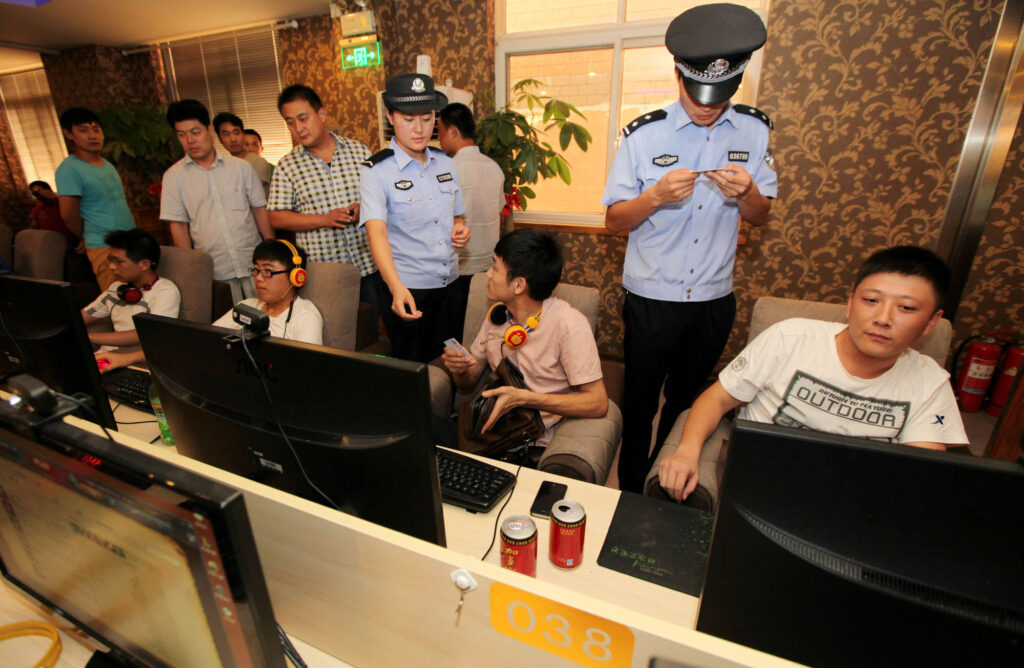
In October 2017, the South China Morning Post reported that students at the Jiangxi-based “internet addiction” school were subjected to physical punishment, confinement, and other forms of abuse. Radio Free Asia soon followed with reports of beatings, forced labor, and severe physical restriction. By 2019, SupChina (later The China Project) revisited the case after activists who exposed the school began receiving death threats. Voice of America later cited Yuzhang Academy as a prime example of China’s broader disciplinary school system, pointing out cases of illegal detention, physical abuse, and student self-harm.
English-language Chinese outlets also covered the case in detail. Caixin Global’s 2017 investigation reported on solitary confinement, beatings, forced labor, and how some students were tricked or forcibly taken to the school. In 2023, Sixth Tone interviewed former students during the retrial of the school’s founder.
International attention largely faded after 2023, following the final verdict. In late April 2023, China Daily reported that all five defendants were convicted of unlawful detention. The sentences were relatively light—all under three years—and victims received no civil compensation. Yet the issue persists. Junz, one of the original whistleblowers, remains active on social media, helping teenagers break out of similar facilities and find legal help as these “behavior correction” boot camps continue to run.
Yuzhang Academy operated for ten years, from 2007 to 2017 (originally named “Longhui School” until 2013). Another well-known facility, Yang Yongxin’s center in Linyi, Shandong, ran from 2006 to 2016. Their longevity is remarkable: for roughly a decade, parents voluntarily sent their children—mostly minors—to these places.
Public warnings appeared early on in 2008. As in that year, Yang’s center was featured on national television for using electroconvulsive shock on teenagers. After intense media criticism in 2009 led to a ban on electric shock therapy, the facility did not close. Instead, it switched to “low-frequency pulse therapy”—claiming the device only caused mild pain to reduce resistance and make patients easier to handle during psychological sessions. However, a video leaked by former inpatients showed there was excruciating screams from the ward, and other patients also backed up the story.
Despite the severe backlash from the public, Yang was never criminally prosecuted for his methods. Yang’s center had previously operated as a specialized unit within the Linyi Mental Health Center, also known as the Linyi Fourth People’s Hospital.
When China Newsweek called the hospital in 2019, a staff member claimed the internet addiction program no longer existed but Yang was still serving as the hospital’s vice president and attending physician.
His actual employment status had been a mystery to the public. To reply the questions of whether he was still employed or not, in 2024, the local health authorities claimed he had retired and that the center had closed back in 2016. At the same year, the Linyi Municipal Health Commission stated in an official response to a former patient that no abuse or harassment had ever occurred at the hospital.
After the shutdown of Yuzhang Acedemy and Yang’s Internet Addiction treatment center, there still are other facilities emerged in different cities across China, hosted by private operators.
In late June 2026, Southern Weekly reported the case of Jin Lyu, a 30-year-old man from Taizhou, Jiangsu. Five men dragged him from his home in broad daylight and sent him to a treatment facility after his mother labeled him “rebellious and depressed.” A veteran anti-internet addiction activist told the magazine that these institutions are far from disappearing—they are spreading. Driven by targeted social media ads, military-style management, and glaring regulatory loopholes, they pose a constant threat to both minors and adults.
With the public disclosure of these facilities, regional crackdowns began. By July 2026, a multi-agency task force in Chongqing announced it had uncovered and shut down 41 unlicensed discipline facilities across 19 districts and counties. Yet similar operations remain active nationwide. Among the most notorious was Rushi Academy in Xinchang, Zhejiang—a strictly managed residential facility that disguised itself as a school for traditional culture, etiquette, and family values.
On August 5, 2026, domestic media exposed the academy’s internal operations. Former students recounted being beaten, physically punished, stripped of their phones and IDs, and locked away for months. One survivor recalled being shipped there at age 14 after arguing with her parents, spending nearly a year under total isolation and control. Following the news exposure, local authorities closed the institution and detained three individuals including the institution’s founder, on suspicion of abusing persons under their care.
As Mahatma Gandhi said, “The true measure of any society can be found in how it treats its most vulnerable members.” However, historian Lord Acton also warned us: “Power tends to corrupt, and absolute power corrupts absolutely.” When the authority of these institutional operators goes unchecked—and continues to proliferate behind closed doors—abuse becomes inevitable. According to publicly available records, many victims of abuse at internet addiction treatment institutions, including the families of those who died, have not received the full civil compensation they sought.
There are four primary questions I want to raise based on the previous reports of these kind-of restrictive institutions:
First, why did local authorities, such as the Linyi Municipal Health Commission, conclude that no abuse occurred at Yang Yongxin’s center? Their official statement was in contradiction to years of testimonies from former patients who reported painful treatment, extreme coercion, and even long-lasting psychological trauma.
Second, how can private individuals be forcibly seized in broad daylight based on nothing more than parental consent? Recent cases reveal that parents can simply hire private agents to kidnap and transport their children to closed boot camps—even when those “children” are legally independent adults in their twenties or thirties. At what point does parental authority cross the line into illegal confinement without police intervention or judicial process?
Third, why was Yang Yongxin never criminally prosecuted for practices that sparked nationwide outrage? Although the Ministry of Health explicitly banned the use of electric shocks for “internet addiction” in 2009, Yang’s center continued to operate until 2016, and he faced no criminal charges. The absence of criminal accountability sends a dangerous message to operators of similar institutions: public outrage over abuse carries no real personal consequences. While multiple “educational institutions” have been shut down after media exposures, legal accountability for their founders varies wildly—with public records suggesting that operators rarely face serious criminal charges unless a student dies under their care.
Fourth, how should “internet addiction” actually be defined? Is it truly a clinical impulse-control disorder, as Yang claimed, or merely a label applied to “disobedient” behavior by parents exercising absolute power over their children? In a system where parents sign away their children’s rights, does the consent and free will of the individual never count simply because they are deemed in need of “behavioral correction”?
To approach these four questions, I examined some of the laws or regulations in China.
Part 1. Legal and clinical perspectives on the first question
First, the official conclusion that no abuse occurred raises a basic question about how abuse is defined in a clinical context. How can repeated painful electrical stimulation, used explicitly as a form of punishment, be considered legitimate medical treatment instead of a form of abuse?
Yang initially used the DX-IIA Electroconvulsive Therapy (ECT) device, an instrument that lacked approval from the State Food and Drug Administration (SFDA) after 2000. Following the Ministry of Health’s ban in 2009, the center shifted to low-frequency electrical pulse devices, which were originally designed to “reduce pain, stimulate muscle contraction, and support physical rehabilitation”. Standard ECT requires the use of anesthesia, while pulse therapy is meant to be applied within safe, medically calibrated parameters. In Yang’s center, however, the intensity and frequency of the electrical stimulation were determined not by clinical diagnosis, but by the severity of a student’s disciplinary violations.
In cases involving alleged abuse that occurred many years ago, physical injuries may no longer be visible, and psychological harm can be difficult to document retrospectively. This can make it harder for police to corroborate victims’ accounts and gather sufficient evidence to support criminal charges.
The local health commission’s reply to the patient who reported Yang in 2024 shows that they are hiding the problems and reluctant to raise the question of whether Yang’s practices can actually be classified as abuse. Jie Lijian, who was placed in one of the Ankang Hospitals (police-run forensic psychiatric hospitals) also suffered from ECT without anesthesia. These kinds of treatments were seen as punishment by the inpatients; however, these treatments were rarely scrutinized by the relevant regulatory authorities.
For a licensed medical facility like Yang’s center, resolving the question of abuse requires answering four specific points: whether the practices were medically justified, whether parental consent exempted operators from legal liability, whether patients had a meaningful right to refuse, and whether the procedures caused unnecessary physical or psychological harm.
To date, these questions remain unanswered by the local authorities, despite the accounts provided by former patients.
Part 2. Can parental consent override the will of the children?
In normal circumstances, parental consent should not automatically substitute for the consent of an adult child or a child under 18.
Children are physically seized, restrained, transported across provincial lines, and confined without having consented to any of it. It is difficult to understand how the parents’ wishes alone can override that person’s liberty and remain legally unchallenged. After all, anyone’s concern, even genuine concern, is not the same thing as legal authority over another person. The power that parents hold over their children often comes with few legal consequences when abused (as victims may decide not to report the incidents or may lack knowledge of the law).
More troubling is that some parents hand over their “management” power over their children to private institutions. These institutions exercise powers, such as physical restraint, involuntary transport, confinement, and communication restrictions, that normally require a clear legal basis. If such acts would appear unlawful when seen by ordinary strangers, it is worth asking why there are still parents continuing to send their children to these institutions. Parents’ good wishes for their children to be on the ‘right’ path alone don’t justify the measures used by these institutions, nor are they an excuse for their ignorance about child education.
Part 3. The legal consequences for the unlawful behaviors of these institutions
Yet there is no public record showing that Yang was criminally prosecuted for practices that generated widespread controversy, nor has he been held accountable for the pain former inpatients experienced. Similarly, the five defendants in the Yuzhang Academy case received sentences of less than three years for unlawful detention.
Legal outcomes in other recent cases follow a similar pattern. In the Chongqing Fumiao case, an instructor received only seven days of administrative detention and a 500-yuan fine for assaulting a student. While police opened a criminal investigation into suspected abuse of individuals under care, no public record confirms a criminal conviction for the founder. Likewise, no criminal conviction has been publicly verified for the founder of the Nanyang-based Compass institution yet.
Across multiple cases reported in 2026, legal experts have noted that these actions may constitute unlawful detention and illegal entry into a residence, while violating victims’ basic rights to physical integrity and health. Yet, public records show no criminal convictions or court-ordered civil compensation for the victims.
Part 4. Rethinking the “internet addiction” and mental-health law
The term “internet addiction” is often used as if it were a self-evident medical diagnosis, but the clinical definition is more restricted. The World Health Organization (WHO) in its ICD-11 recognizes gaming disorder as a condition attributable to addictive behaviors only when it involves impaired control, gives increasing priority to gaming over other activities, persists despite harmful consequences, and causes significant functional impairment—typically for at least 12 months.
China’s National Health Commission adopted the WHO’s ICD-11 diagnostic criteria for gaming disorder since 2019. Between 2008 and 2019, the Clinical Diagnostic Criteria for Internet Addiction, developed by Beijing Military General Hospital, provided a set of diagnostic criteria for internet addiction (including spending at least six hours online per day for three months, difficulty controlling internet use, or needing to spend increasing amounts of time online). Before 2008, China had used CCMD-3 since 2001, as well as earlier versions of the Chinese Classification of Mental Disorders, which did not recognize internet addiction as a separate disorder (although some clinicians may have classified it under other behavioral or mental disorders).
The term “habit and impulse-control disorder” previously used by Yang Yongxin also requires being used with caution. A psychiatric category cannot simply be expanded to include any behavior that parents find inconvenient or defiant. A legitimate diagnosis demands objective clinical criteria, professional differential diagnosis, and clear proof of functional impairment. It should not begin with the assumption that a young person is “disobedient” and then search for a medical label that legitimizes coercion.
It is questionable whether the children who were sent to these locked-up “internet addiction” institutions actually met the diagnostic criteria for internet addiction or other mental disorders, or if their behaviors were rigorously assessed according to these medical standards at all. When labels like “internet addiction” or “behavioral disorder” are stretched too far, almost any unwanted behavior can be medicalized. At that point, the label may not be a real diagnosis, but rather an explanation for taking someone away from their daily life and placing them under institutional control.
Even though these children may not have undergone a clear clinical diagnosis or a rigorous, standardized psychiatric assessment, some were still sent away for excessive gaming described by the parents, while others were locked up since their parents saw them as rebellious, depressed, unwilling to attend school or work, staying up too late, experiencing frequent conflicts at home, or simply refusing to follow their parents’ expectations. They have vastly different behaviors and circumstances, and most of the children sent to these correctional institutions may not have a mental disorder if their previous “symptoms” were rigorously examined according to psychiatric diagnostic criteria.
A deeper problem lies behind these loose “diagnoses” and “labels.” Not merely whether “internet addiction” exists, but who decides that treatment is necessary, and whether the person being “treated” retains the right to say no. When the parents and educational institutions unanimously define a young person as “sick”, control the diagnosis, the payment, the confinement, and the terms of release—the boundary between treatment and parental will becomes thin.
Beyond the issue of diagnosis and labeling, whether a child’s consent matters is another critical concern. Even when a genuine mental disorder is present, that does not automatically give a family or private institution unlimited authority to detain, restrain, punish, or forcibly “correct” the person. Mental health care should not turn disobedience into pathology, nor should it allow parental authority to become a justification for depriving individuals of their physical or mental freedom.
Beyond these pseudo-educational or private correctional facilities, the final issue I wish to highlight is the blurred boundaries of involuntary psychiatric intervention within state-sanctioned medical systems, just like the one run by Yang Yongxin.
Under China’s Mental Health Law, psychiatric hospitalization is, in principle, voluntary. Involuntary hospitalization is permitted only in limited circumstances: when a qualified psychiatric evaluation concludes that a person has a severe mental disorder and has already harmed, or poses a danger of harming, themselves or others. (The law sets out specific procedures governing diagnosis, guardianship, hospitalization, and the right to seek a second diagnosis or independent assessment.)
However, in practice, when parents send their children to a psychiatric hospital, or even when the police send criminal suspects to a designated psychiatric hospital, psychiatrists, facing pressure from families or authorities and concerns about potential personal liability, may suggest that the individuals being evaluated need treatment (especially when these individuals show strong resistance to their parents or hospitalization).
The safeguards provided by the Mental Health Law, which supposedly limit involuntary psychiatric treatment to certain serious conditions, appear not to have protected some people who were involuntarily admitted to psychiatric hospitals.
As Bo Chen and Hao Yao noted in a 2024 study, the 2013 Mental Health Law had only a limited effect on reducing the use of restraint and seclusion. Their review of court rulings found that courts were often not strict when examining these practices. In some cases, hospitals were even held responsible for not using them.
As we have discussed earlier, diagnoses of “gaming addiction” or “habit and impulse-control disorder” should be made with caution, and involuntary hospitalization should only be permitted under certain serious conditions. Still, these involuntary placements in institutions continue. The person being hospitalized and sent by their parents may have the least power to define their own condition.
Besides the involuntary hospitalization in psychiatric hospitals, these private closed-door schools also hold people against their will. As long as there is demand from parents to discipline their children, there are providers willing to meet that demand. Moreover, the law may not treat these closed-school systems as unlawful detention, instead focusing on specific cases where students were locked in rooms for days without being allowed to leave.
The continuing dominance of parental decision-making is difficult to ignore when it comes to restricting a child’s freedom, and the parental consent may conceal some of the legal responsibilities that should be borne by the institutions. If later, patients decide to sue the institutions for mistreatment, parental consent may make it more difficult to determine the institutions’ responsibility. The institutions may argue that the parents had agreed to the treatment by signing the consent form. (However, parental consent does not automatically protect these institutions from legal responsibility if unlawful acts occur.)
Part 5. Why does the same system keep coming back?
The final question is not about one institution, one doctor, or even one generation of “internet addiction” treatment. It is why, after nearly two decades of scandals, testimony, media investigations, and public outrage, remarkably similar institutions continue to reappear.
Yang Yongxin’s internet-addiction center opened in 2006 and became a national controversy only a few years later. Former patients spoke publicly about painful electrical stimulation, coercion, and fear. Parents defended the program, journalists investigated it, and health authorities eventually prohibited the use of electrical stimulation for treating “internet addiction.” Yet the center continued operating until 2016.
Then came a famous case—Yuzhang Academy. Operating from roughly 2007 to 2017, it became nationally notorious after former students described confinement, corporal punishment, forced labor, humiliation, and other forms of coercive discipline. Once again, victims spoke out; once again, parents, institutions, journalists, courts, and regulators became involved. The school closed, and its operators were eventually prosecuted. Yet the model did not disappear.
In the years that followed, new institutions emerged under different labels: internet-addiction treatment centers, behavior-correction schools, military-style academies, traditional-culture schools, psychological training programs, and “special education” institutions. The terminology changed, but the underlying relationship often remained similar: a family decides that a young person needs some “treatment” to shape their behavior, and an institution promises to correct the problem. During that decision-making process, the person being sent away often had no say in the matter.
That persistence raises a more uncomfortable question: why does parental authority carry so much practical weight in these cases?
Part of the answer may lie in the ambiguity between care and control. Parents may genuinely believe that they are rescuing a child from academic failure, depression, gaming, social withdrawal, or a life they fear is moving in the wrong direction. From their perspective, coercion can be reframed as sacrifice: “You may hate me now, but one day you will understand that I did this for you.” Once that logic is accepted, resistance itself can become evidence that stronger intervention is necessary (even though their child may be an adult with full autonomy over their lives).
If a family can still override their child’s choices, restrict their freedom in the name of correction, and then transfer its parental authority to an institution, and if all these things can be done without legal consequences, the pattern may never end. As described in Alice Miller’s book For Your Own Good, in the concept of poisonous pedagogy, adults control children through forced obedience, humiliation, threats, withholding affection, and isolation, while justifying these practices as being in the children’s best interests. However, the deliberate use of humiliation and other such practices destroy the child’s self-confidence and may lead them to believe that obedience is necessary to receive love and acceptance.
When will it stop? We do not know. But as long as institutions can make money without facing serious legal consequences, and as long as parents retain the desire to “teach” or “fix” children who do not conform to their expectations, the system is unlikely to disappear.
It may simply return under another name, with another method, and another promise to “correct” someone who never consented to be treated.