Needle In a Haystack: Identifying the Next School Shooter Before He Shoots
A total of one hundred and fifty-eight school-related shootings since Columbine, carried out by one hundred and ninety-nine shooters, have resulted in two hundred and twenty-four deaths and two hundred and eighty-eight injuries; a rate of one shooting a month during that almost sixteen year period. Eighty-five of these shootings have occurred since Newtown, i.e; in little less than three years, doubling the rate of shootings to one every two weeks. A ritualized public and political response to the shootings has evolved, particularly in the wake of the mass murders, which always attract the most media attention: shock, outrage and a demand for action to prevent a recurrence. Who are these teenagers who are doing the shootings and why? How are they getting their hands on the powerful weapons they’re using? Where are the stricter gun controls needed to deny the shooters access to these weapons?
My Response to Dr. Pies’ Response
A "little white lie" is an inconsequential falsehood, told to avoid causing embarrassment or hurt. So the question becomes: did Dr. Pies believe, or argue, that the chemical imbalance hoax was an inconsequential falsehood, designed to shield individuals from embarrassment or hurt? Of course, I have no way of knowing what Dr. Pies believes. Nor, to the best of my recollection, have I ever speculated on such matters. But I do know that he has argued that the chemical imbalance theory is an inconsequential falsehood designed to shield individuals from guilt and self-blame.
Rep. Tim Murphy May Be in Violation of Professional Psychological Ethics & the Law
As a former practicing clinical psychologist, I find Congressman and psychologist Tim Murphy's actions deplorable, a disgrace to the profession, a violation of the ethical principles that guide psychologists in their duties, and an attempt to use his credentials as a psychologist to manipulate the public and Congress to believe obviously false statements. As a result of becoming increasingly concerned about Congressman Tim Murphy's false, public statements conflating mental illness with violence, I contacted the Pennsylvania Psychology Licensing Board and formally requested the implementation of a State ethics investigation of Representative Tim Murphy, Ph.D. I invite you to do the same by emailing the PA board at [email protected]
The Mental Health Channel & Beyond: What Does it Really Mean to Present a...
How are we going to get anywhere at all if people believe that speaking to alternatives just means occasionally putting something out there that isn’t about psychiatric drugs? Assuming that the Mental Health Channel folks genuinely believe they’re offering a product that’s ‘well-rounded,’ how do we even get to a point where they understand why it’s not, and can make a well-reasoned decision about where to go from there? Yes, it’s about the drugs. But, in some ways, no, it’s not at all about them. It’s about the damage we do by convincing people that there’s no other choice than to take the drugs because of a ‘chemical imbalance’ or ‘chronic brain disease’ that, just like cancer, will only get worse if it goes untreated. It's about the inescapable nature of the boxes people put us in (even some of those boxes not filled up with pills).
Think About Mental Health Wellness for Your End-of-year Donations
We hope we have convinced you by now (this is our 24th blog) that the field of Nutrition and Mental Health is a vital piece of the solution, for preventing as well as treating mental health problems. What we have not talked to you about at all is how behind-the-times the regular granting agencies are. The two of us have always been very successful at obtaining research grants, as long as we do not want to study multinutrient treatments. When we (and some other colleagues in the U.S.) want to study multinutrient formulas, the reviewers react by asking “but which is the important ingredient?”
Where’s the Outrage?
One of my problems with Mad In America is that not enough seem quite mad enough. I would like to encourage more outrage. I feel that if we were talking about a situation in another country, the US would be outraged. If we were talking about a common substance (like Big Macs), there would be outrage. If it were a business, citizens would be outraged and the government would intervene and shut it down. What is the “it” that I’m talking about?
Psychiatry’s Last Tango? — A Response to Bonnie Burstow
For the past few years, I've been trying to put words on my multiple dissatisfactions with mainstream psychiatry and its shameful lack of rigour, compassion, reflection and ethical practice: hence my enjoyment of Bonnie Burstow’s percussive, hard-hitting MIA article in September. (I have not read her new book, and am almost afraid to do so, since it may well make irrelevant the final draft of my own critical monograph on psychiatry!)
Electroshocking Veterans and Their Fetuses
I have long been concerned with the way society responds to people who come back from war. Veterans are routinely funneled into psychiatry’s grasp. Over the decades, some people who fought in wars have shared with me their experiences of being psychiatrized upon return from war. Sometimes these experiences included veterans being stripped of their second amendment rights, and a host of other constitutional, civil, and human rights violations as they began to be forced into complying with psychiatric regimens, and on several occasions this included veterans being subjected to electroshock.
Sanity, Friendship, Community
In the early 1970s I became acquainted with the work of R. D. Laing and in 1973 I decided to relocate from California to London to work with him. I thought I would stay there a year and then return to my graduate studies in San Francisco. Instead I stayed there for seven years; seven years that changed my life completely.
Hypermodern Hyperactives
ADHD (or “Attention Deficit Disorder” - with or without Hyperactivity) is not among the “cutting-edge pathologies” of contemporary clinical practice, such as the addictions, eating disorders, narcissistic disorders, chronic fatigue syndrome, or fibromyalgia; however, in my view ADHD is paradigmatic of the contemporary ethos that some have described as hypermodernity. The advocates of ADHD explain to us that a hyperactive child with an attention disorder is a disturbed and often disturbing child, who does not comply with the adults’ rule, often has his own idea of development, and whose problems, unless they are treated, threaten to undermine his autonomy and self-esteem; the two supreme values of the hypermodern society.
Don’t Harm Them Twice (Part II): What Can Be Done?
When language has been ingrained in a culture for a long time, it takes a concerted effort to change it. How do we stop using the word “addiction” in relation to cases of iatrogenic benzo dependence? Here are a few suggestions.
MIA Continuing Education: An Update
As I've told Bob Whitaker and many others, it's taken me 45 years in my career to get to the point where I feel completely free to "do the right thing." By that I don't mean to downplay the work I've done in the public mental health and addictions systems. But now, the Mad in America Continuing Education project moves me in a more recovery-oriented direction than ever, and has a specific focus on the ways in which most programs have over-used psychiatric medications to the detriment of the people we are serving.
Stranger Than Kindness
A couple of years ago I had a novel called Stranger Than Kindness published in the UK. It was about the cumulative trauma that can accompany work in the caring profession; how people can become bruised and reshaped by caring for a living, and what they might do to repair themselves. It was essentially a comic novel about hurt nurses. When promoting the book I found myself talking to two different audiences. The first, were people who like books and come along to events and chat about them. The second were occupied by people with a special interest or expertise in mental health.The questions asked and the conversations that we had were different in those two spaces.
Crisis is (un)Learning
The mission statement for the Western Mass Recovery Learning Community’s peer respite (Afiya) is “To provide a safe space in which each person can find the balance and support needed to turn what is so often referred to as ‘crisis’ into a learning and growth opportunity.” Although I sometimes question our choice to use the word ‘safe’ (given how impossible an absolute version of ‘safe’ is to achieve and how saddled with distasteful meaning such a term can be within the mental health system), I’m not sure that statement could otherwise be any more straight forward and meaningful. Yet, so often, It’s unclear what meaning people are truly making of it.
Appendix A: Section IX of United States of America vs. GlaxoSmithKline, PLC: GSK’S...
Appendix A: Section IX of United States of America vs. GlaxoSmithKline, PLC
1. GSK’S OFF-LABEL MARKETING OF LAMICTAL
In December 1994, Lamictal (active ingredient lamotrigine) was...
“Let Food Be Thy Medicine” — So Let’s Teach Physicians How to Cook!
Most people reading this blog will have heard or read the quotation attributed to Hippocrates: “Let food be thy medicine, and medicine be thy food.” Whether or not this ancient Greek physician actually made that comment 2500 years ago is something that we cannot determine. But it certainly is a statement that is coming back into favor in the current era.
My Response To Dr. Pies
In the October 2015 issue of The Behavior Therapist (pages 206-213), Jeffrey Lacasse, PhD, and Jonathan Leo, PhD, published an article titled Antidepressants and the Chemical Imbalance Theory of Depression: A Reflection and Update on the Discourse. I thought the article had particular merit, and I drew attention to it in a post dated November 2. In an email, Dr. Ronald Pies raised two objections: That the phrase "little white lie" as applied to the chemical imbalance theory was misattributed to him, and that he has never accepted payment from pharmaceutical companies with the intent or purpose of promoting their products.
(Editor's note: Dr. Pies' response is now appended to this post.)
Study 329: Big Risk
Study 329 seems to fit the classic picture: It has Big Pharma ghostwriting articles, hiding data, corrupting the scientific process and leaving a trail of death, disability and grieving relatives in its wake. But is it at fault alone? Both Big Pharma and Big Risk (the insurance industry) were once our allies in keeping our hopes alive – in keeping our children alive and well. They are now a threat. And of the two – Big Risk is the bigger threat.
Beyond ADHD: Moving Past the DSM Paradigm of Mental Illness
A paradigm is a way of thinking about things. For the past 60 or so years, our thinking about mental health and illness has been dominated by what can be referred to as the "DSM (Diagnostic and Statistical Manual of Mental Disorders) paradigm." What this looks like in everyday practice is that when a child is referred to my behavioral pediatrics practice for anxiety, the questions that parents, referring doctors, and teachers ask is, "Does he have anxiety disorder?" followed by "How to we manage his behavior?" and "Does he need medication?"
Study 329: Psychiatry’s Thalidomide Moment, Part 2
Nobody has retracted or apologized for a study that was an academic disgrace—but a marketing coup for GSK—which may well have caused untold numbers of deaths, suicide attempts and irreversible anguish to myriad families. Can we stand idly by when we’re told that it “accurately reflects the honestly-held views of the clinical investigator authors who do not agree that the article is false, fraudulent or misleading.”? What is the current market value of the honestly-held views of people who tell lies?
A Mental Patient’s View of the Body
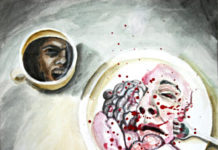
In 20 years of inpatient hospitalization, the psychiatrists that I encountered focused almost exclusively on treating my diseased mind and had no concept or interest in the body. While the wheels of “progress” turn slowly in mental health, I hope that along with ongoing advocacy there will be a focus on responsible health counseling and supporting people in healthier eating and living.
We Are Failing Our Kids: A Few Remedies
Are colleges unrealistic in their demands academically, or are we failing to equip our children with the tools they need to live mentally and emotionally healthy lives? I’m leaning toward the latter. We need to provide more support for today’s college students and raise awareness that mental and emotional distress is not something one should suffer alone. It is our responsibility as a society to prepare our kids for life.
RAISE-ing Some Questions
All the media hubbub surrounding the recent publication of the RAISE study has been somewhat confusing. A sampler of headlines includes; Game Changer? (HuffPo); New Approach Advised to Treat Schizophrenia (New York Times); New York Times Issues Correction on RAISE Study Report; Landmark Study Recommends More Therapy, etc… What is one to make of all the fanfare and conflicting commentary?
Don’t Harm Them Twice: When the Language Surrounding Benzodiazepines Adds Insult to Injury (Part...
Language is important. And when language dictates specific treatment protocols, it should be used with extreme scrutiny. Using the wrong words can put vulnerable people at risk—not only to their sense of self-worth, their sense of self-knowledge, and they way they are treated, but also to their health.
The Revolution in Psychotherapy
Since the time of Freud, the field of psychotherapy has assumed that modalities and techniques were the instruments of change in psychotherapy. But the evidence is mounting that modalities and techniques have relatively little to do with effectiveness; evidence shows that it is the human elements of psychotherapy that are the most potent agents of healing