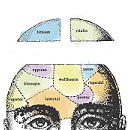

The Dangers of Precision Medicine: Mental Health Is Not a Battlefield
Rather than a war to be fought within individuals, we should envision mental health as a garden to be carefully nurtured.
SSRI Withdrawal has Social, Cognitive, and Emotional Consequences
New research finds that the non-physical aspects of withdrawal from SSRIs are often overlooked.

“Impairment: Says Who?”: The Fundamental Question of Mental Health Treatment
The criterion of "impairment" is defined not by the person seeking treatment, but by other people: parents, clinicians, courts, employers, and so on.

Much of U.S. Healthcare Is Broken: How to Fix It (Chapter 2, Part 5)
Les Ruthven addresses increases in suicide and homicide caused by antidepressant drugs.

Searching for the “Psychiatric Yeti”: Schizophrenia Is Not Genetic
After decades of study, billions of dollars spent, and thousands of studies conducted, the failure to identify any genes for schizophrenia should definitively put to rest the notion that schizophrenia is a genetic disorder, according to E. Fuller Torrey.
Psychic Gardening and Walking the Sensitive Path
I learned that trying to fight, ignore, push away what I was dealing with was not working. I had to face it, accept it, work out what it had come to teach me and then work out how to set it free.

Toxic Interactions: Social Circumstances and Well-Being
Social circumstances are indisputably connected to psychological well-being, but this has gained no traction in policy and service provision.
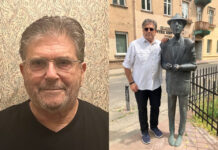
The Psychological Humanities Manifesto: An Interview with Mark Freeman
Justin Karter interviews narrative and philosophical psychologist Mark Freeman about his vision for the future of psychology.
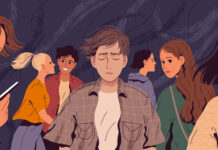
Accounting for Mental Disorder: Time for a Paradigm Shift
Many people continue to be victimized by psychiatry’s adherence to a model that exists to satisfy guild interests, not science.

Much of U.S. Healthcare Is Broken: How to Fix It (Chapter 2, Part 4)
Les Ruthven addresses a ghostwritten study claiming effectiveness of antidepressants for children and adolescents.

Arrested Development: Britney Spears’ Memoir Is a Survivor’s Tale of Generational Trauma, Psychiatric Abuse,...
Miranda Spencer discusses Britney Spears' new memoir and the harms of conservatorship.

Manic and Mistreated
I was shaking and crying as I told a stranger everything about my life, and they looked at me like I was a criminal. Like I was crazy. I started to think maybe I was.
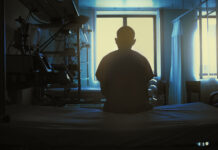
Giving Caregivers a Platform: Sherita, Mother of Tony
This is the story of Sherita and her son Tony, and her efforts to help him following years of psychiatric drugs and hospitalizations.
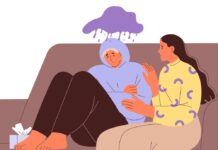
What Helped—and What Didn’t Help—My Recovery
In order to recover, it was necessary to give up the psychiatric treatment system, and the idea that I need something from that system, that I belong there.
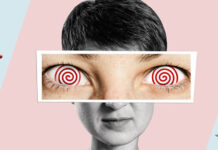
It’s Health’s Illusions I Recall, I Really Don’t Know Health at All
There is a core concept shaping the ‘market’ in health, the concept of an assay, that few doctors or patients understand.

Much of U.S. Healthcare Is Broken: How to Fix It (Chapter 2, Part 3)
Les Ruthven addresses the lack of evidence for antidepressants being better than placebo, as well as a note about ECT.

Therapy by App: A Clinical Psychologist Tries BetterHelp
Revealing concerns about BetterHelp’s ability to provide quality, secure treatment—and the unresolved tensions in the science of psychotherapy that services like BetterHelp exploit.
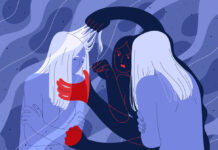
A Psychotic Experience can Help to Process Difficult Memories
The patient is talking, if sometimes more or less metaphorically, about real experiences. Hallucinations and delusions are not meaningless.

Winding Back the Clock: What If the STAR*D Investigators Had Told the Truth?
The STAR*D Study has been cited as real-world evidence of the efficacy of antidepressants. In truth, it told of a failed paradigm of care.

De-privatizing Our Relationships
I’m glad we’re chipping away at the cracks in psychiatry and psychology and de-privatizing our lives.

Much of U.S. Healthcare Is Broken: How to Fix It (Chapter 2, Part 2)
Les Ruthven addresses the scientific literature on antidepressant efficacy and FDA approval.
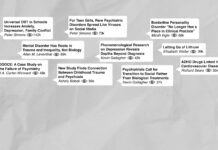
Mad in America’s 10 Most Popular Articles in 2023
A roundup of Mad in America's most read blogs and personal stories of 2023 as chosen by our readers.

Self Stolen: How ECT Fried My Brain
Extreme ECT memory loss is like having Alzheimer’s, and being fully cognizant of it. It takes away who you are as a person: your self-identity.
Dr. Gordon Warme: The Curious Case of an Unconventional Psychiatrist
Dr. Warme bucked convention, examining the cultural role that shamans, witch doctors, and placebo cures played in medicine.

Conservatorship: The Racket That Ruined My Father’s Last Years
I have watched as my father’s pursuit of happiness was swept away by the court system in his senior years.