
In a new qualitative study in Critical Public Health, Iffath Unissa Syed of Pennsylvania State University and Rachel da Silveira Gorman of York University, a core member of York’s Mad Studies Hub, trace how rising costs and the housing crisis are impacting care workers.
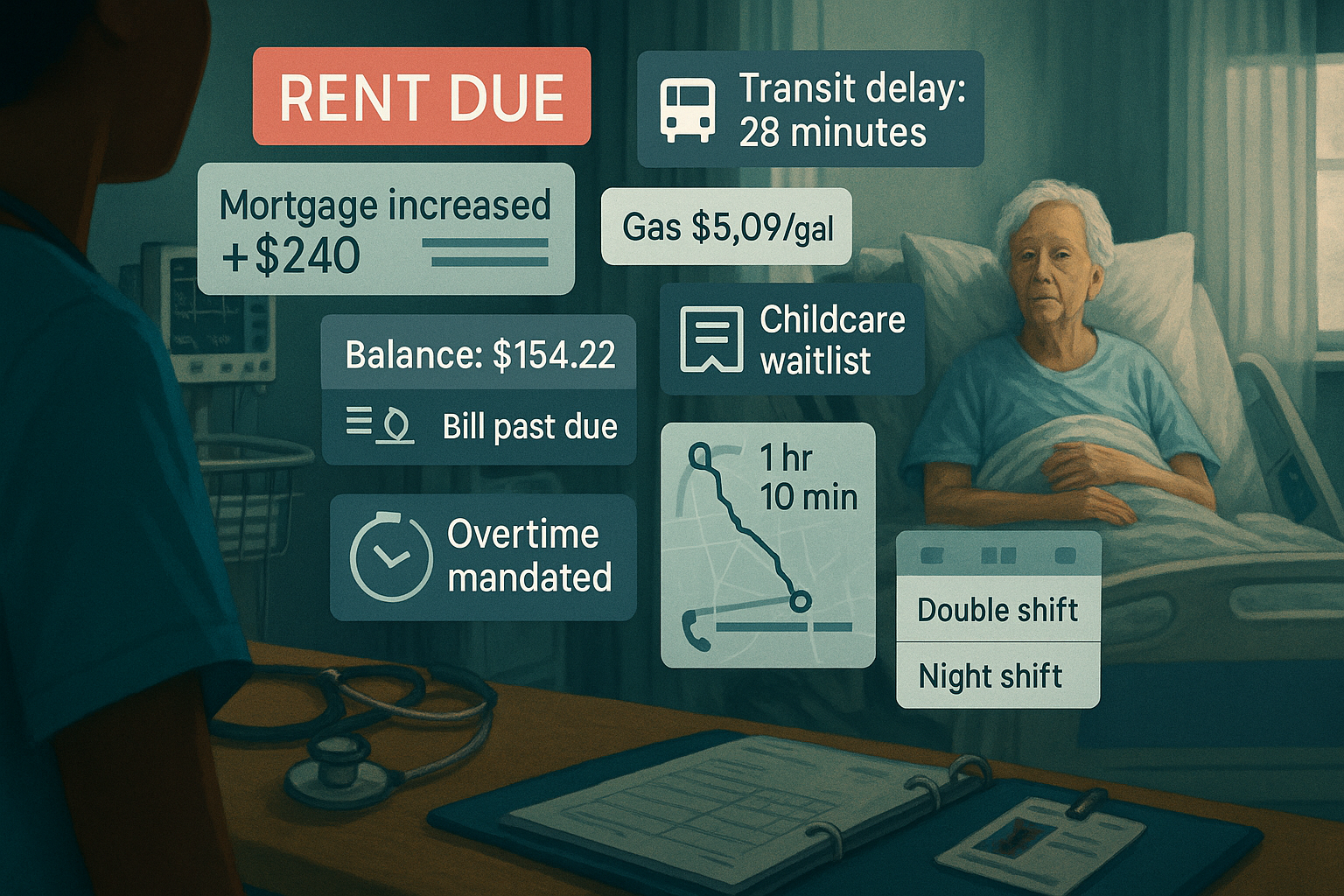
Drawing on in-depth interviews with care workers, they show how housing costs and transportation barriers drain time and money, narrow margins for rest, and push workers to make hard choices about how to spend each hour with service users.
In this way, political decisions lead directly to rushed mornings and double shifts, creating a constant trade-off between meeting basic tasks and offering relational attention and care.
“Our data reveal that the levels of stress reported from inadequate housing, deficits in income, and problems related to affordability manifest in everyday experiences and lived realities,” they write.
The research by Syed and Gorman allows for an analysis of the quality of care provided as a structural outcome. If we want safer, kinder, more dependable care, they suggest, we have to fund the conditions that make that care possible in the first place.












This is literally a nationwide problem, but I guess it only matters that “care workers” are impacted? No mention of how EVERYONE’S health is impacted by chronic stress and creates a higher total “care” burden? I hope “care” in this way doesn’t mean fucking “therapists”.
Once again we see industry “professionals” displaying their extreme bias toward considering anyone with a degree or institutional authority more important and worth listening to or caring about than any of the millions of people every year they torture and kill.
Literally, there’s NO other reason “care workers” deserve more focus in a NATIONWIDE (if not near global) problem. Everyone is affected by this, everyone’s health is affected by this, but only the “care workers” matter. Do you not see the harm being done this way when you only frame the problem as “professionals” being too stressed to do their jobs, when the larger problem is that the entire care burden is massively inflated because EVERYONE IS SUFFERING? But the problem is only framed as CERTAIN people suffering.
TAKE THE FUCKING SOCIAL JUSTICE OFF YOUR TAGLINE
Report comment
Well said. I could not agree more.
Report comment
Agreed. TAKE IT DOWN.
Report comment