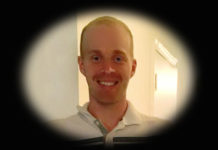
Steven Morgan, who was well known for his activist efforts in challenging conventional psychiatry, which included writing for Mad in America, recently passed away, at age 45. We would like to share some of his writings, music, and art, and some memories of Steven from our editors who knew him.
We are also adding a tribute written by one of his closest friends, Jennifer Leigh Harrison.
Articles on Mad in America by Steven Morgan:
“Reviving the Myth of Mental Illness” (2012)
“The Wind Never Lies” (2012)
“Stranger” (2014)
“The Helping Room” (2016)
“To See An Atom: Psychosis and Ecology” (2017)
“Is Psychosis Natural?” (2018)
“The Censors Are Coming for Mental Health” (2022)
Steven Morgan on Madness Radio with Will Hall:
Reinventing Bipolar (2008): Steven Morgan talks about his experiences with spirituality and meditation, including healing through dream work.
Visionary Ecology (2024): Do grieving goats lick psychedelic lichen? Altered states are part of nature, used by plants and animals for survival(!). How does ecology reveal the evolutionary — and spiritual — purpose of psychosis?
* * *
From Kermit Cole, MIA founding editor and board member:
Among Mad in America’s most important roles is bringing the world’s attention to the inspiring people who exemplify alternatives to the dominant paradigm of mental health care. People who, in many cases, would have been lost had they followed the path that a diagnosis had once laid out for them. There is no better example than Steven Morgan; a paragon of healthy living, even as he contended with illnesses that made daily living a challenge and took his life this week.
Steven emerged from a psychiatric hospitalization in his early 20s by immersing himself in the relevant research and realizing the diagnosis he had been given did not resonate with his actual experience. Meeting him in 2012, soon after we started MIA, when he was director of Soteria Vermont — a facility that fostered mutual support among residents for healing — he gave me hope that we would succeed in changing the standard of care for mental health crisis. When he went to work with Intentional Peer Support I felt confident that Shery Mead’s model could take on the establishment — and in many ways it did, offering training to significant projects around the world.
Steven shined so brightly it was hard to imagine he wouldn’t eclipse the mainstream model entirely. He was uniquely able to weave the scientific, social and spiritual threads of critical psychiatry, smiling while he navigated the politics and preparedness of his audience to understand — and ultimately accept — what he was saying. I often marveled at his ability to land a complicated argument in a hostile environment, like a crack pilot flying a plane through craggy mountain passes during a storm and landing safely. I can honestly say that I’ve never seen better. His abilities astonished me.
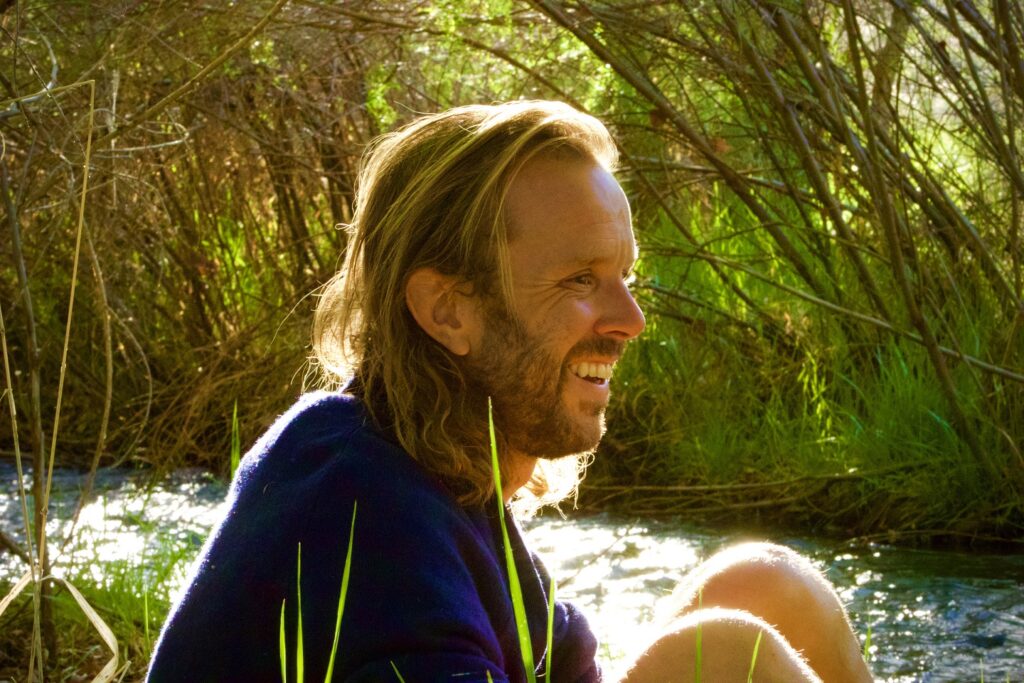
However, his greatest accomplishment may be the life he lived. When pursuing his passion for introducing people to the power of mutuality brought him near to collapse, he moved his life to a custom-built trailer so that he could spend his days and nights among mountains and streams, making music and art, carving spoons, fly fishing, and — via satellite — continuing to train people around the world. His life might be called homeless or nomadic by some, but my experience was that for Steve it meant that home was where he wanted to be, and wherever he was.
I am grateful for the times he called our property home. Initially he came to recover from exhaustion and plan next steps. Sitting by the fire with Steve, under the bright New Mexico sky, I learned to pay extra attention when his beliefs were different. More often than not he succeeded at what psychiatry still struggles to do: he changed my mind.
Steven was — or so we thought — on his way to us, when his spirit flew into the wilderness to stay. The world keeps turning, but more darkly for now. I hold on to the feeling he is on his way still, his kind smile one daybreak away.
Please spend some time with Steven now, in his writings, his website, his interviews and the many tributes to be found on his memorial page on Forever Missed. Please also share any memories or appreciation you might wish to as well.

* * *
From Emmeline Mead, MIA personal stories and arts editor:
Steven was a prolific artist and craftsman who worked in many mediums, most of them natural or wild in some way. He captured stunning, National Geographic-worthy photos of the natural environments he passed through and lived within and loved — photos so deep you can dive into them. He designed and built a beautiful and practical tiny home on wheels, completely lined with wood. He made wooden spoons that he carved and sanded by hand, washed in a mountain stream, finished in oil and beeswax and then cured in the sun “so that starbeams absorb into the color.” He hand-stitched leather bags that he called “Messenger Owls.” He spoke to coyotes and crows in their own language. While exploring the interface between animism and Christianity, he produced his own version of the Gospels without distracting verse and page numbers, subheadings or red text — “just the Word, crystalline” — and offered it free online.
All of his work was created with a great deal of thought and care. And it was the same with his writing, every word carefully chosen and placed, sometimes agonized over. Working with him as an editor, I remember him asking me to remove a “the” before “Earth,” because he wanted Earth to become an entity, grammatically. I loved that.
Steven also created music. He’d post videos of himself playing ukulele on Facebook, shirtless, with mountains in the background. Last year he shared an album he’d created, writing: “This album is the culmination of thirty years ‘trying to make the thing I always wanted to make,’ and now that I have, I plan never to touch an instrument again. Please have a listen, share, throw a chair across the room. I certainly did. Godspeed.”
I really admired Steven and felt he was a kindred spirit. We first spoke over a decade ago, a few years before I came to work at Mad in America. I was working with a radical mental health peer support network called The Icarus Project back then, and was still learning to question and eventually reject psychiatry. Steven and I talked on the phone for a few hours, and while I don’t recall the details of the conversation I do remember how warm and encouraging he was, and I wonder now if that support helped me find my path and stick with this movement despite all the challenges. We never managed to meet in the physical realm, as our forays outside of our respective hermitages never seemed to line up. I regret that. But I continue to be inspired by his beautiful soul, and hope that our readers will be too.
* * *
From Jennifer Leigh Harrison:
November 14, 2025
Nineteen years ago to almost the day that our dear friend Steven Morgan died (April 5, 1980 – around October 28, 2025), I moved to Vermont, where we rented a room in a beautiful Airbnb adorned with maple walls, heavy mahogany furniture, and a huge fireplace. It was a magical time—leaving a culture we agreed was interfering with our ability to see the wider world. Following Steven to Vermont was like chasing a wild animal through the desert. In “Elsewhere in Vermont: A Love Story” (2020), he wrote:
I’d been working the evening cash register at a New Age bookstore in Sandy Springs, Georgia. There was no sand nor spring. But in between welcoming space cadets who shop for wax fairies and glitzy crystals and Nepalese loot and bright violet books all with “SHAMAN” squeezed somewhere into their titles; in between showing post-Jesus celestial light-surfing warriors the buy-one-get-one-free table of hazy quantum physics and astral projection DVDs; in between escorting droopy-eyed angels to the backroom $100-an-hour psychics who will tell them their sacred number and channel their run-over cat; in between all that, plus my casual meditations at the register that’d eventually get me fired (though, it must be argued, my dismissal may also have had something to do with the witchy employees’ assessment of my aura, which emanated from the only male body around), I realized that I wasn’t going to be able to rent that dilapidated trailer somewhere in the New Mexican desert and meditate for a year straight as my dreams had indicated. Not on eight bucks an hour, nor on the slightly better pay from my day job working mental health peer support at the city hospital.
If I really wanted to escape the vise of city life—a top priority now that I understood my madness as machine-made—I’d have to score a full-time job in the countryside. That’s how I ended up googling “mental health peer specialist” and returning three hits nationwide, one of which was for low-pay work at a county mental health agency in some place called Springfield, Vermont, population 9,373. “No one could possibly want this job,” I reasoned, then revved up my engine and drove twenty-two hours North for an interview.
Steven was hungry for something greater, and so was I. It was spiritual. It was psychological. His hunger was not mine to analyze. Both of ours were urgent. While we would come to agree emphatically that our young romance was not suited, we did not know we were forming a friendship that would traverse the peak of our careers, and the rest of his 45 short years of life. He did eventually find true love, and it changed him forever. But back in Georgia, Steven had dropped out of his counseling master’s program, agreeing it was not a fit, and set off as a person with a lived psychiatric experience, to bring peer support to Vermont and beyond.
Before we made that move, I remember walking through Piedmont Park in Atlanta, eating ice cream. Steven stopped in his tracks, got very serious as he squared off with me, and said, “I have something to tell you and it’s fair you should know.” His voice strong but quivering, he continued with his eyes on mine: “I will never have a full-time job. I will never make a lot of money. I’m Bipolar and I’m going to have to take medication for the rest of my life. It gives me side effects.”
He was 25—tall, wiry, bright-smiled, full of contradictions and wild curly hair. We were celebrating his first music album and my poetry publication, against the gloom of this new life sentence. Having already developed a caring rhythm with one another, I laughed out loud. I asked, “Where did you get that information?” He told me from his psychiatrist. And I retorted, “Well, he might be wrong. You’re young and I don’t think anyone has the right to tell you how your future will be.” That night we went to a drum circle and danced around a huge bonfire until he cut his bare foot and we had to go home.
No one needed to tell Steven how his future would be. And no one could make him wear shoes. His spirit was unhoused and limitless, and his light never went dim. Not in the days I saw him after his open-heart surgery, or in the days before his life ended. His spirit carried him forward, even if it meant pulling his body along with it, with a cane, or otherwise. He repeatedly transcended limitations that, while real, remained transmutable in his perception. And so it came to be that his imagination, discipline, and sheer will took form in the diverse range of gifts he bestowed on us all. Steven believed in big things. Also, he delivered.
While he shredded guitar like nobody’s business, his hands told him something was wrong. His sleep told him something was wrong. His brain fog told him something was wrong. So as our romantic relationship unraveled on its own destined path, so did his commitment to his psychiatric drugs. And just like that, he embarked on a disciplined, mindful effort to taper off them, documenting this procedure in real time. He was always careful to say his path is not for everyone, but also: everyone had the right to know it exists. He began casually referring to his inpatient days as “after the fire,” which for many painted a picture of everything having been burned down, almost into a new rebirth.
In “Psychosis and Ecology” (2017), Steven describes nature as his umbilical cord. Like fever responds to illness, he saw psychosis as the body’s response to the toxicity of our logged, drugged, screen-bathed world. Living in the rolling green of Vermont, I watched this man begin, like phototropism, to move toward his calling as if his life depended on it—burning both ends of the candle, working well beyond 40 hours, completely devoted to his mission.
Fuck that psychiatrist and his narrative. Steven became a pioneering voice from the non-dominant frame, reshaping mainstream mental health discourse. Trailblazing, well-read, and brilliantly critical, he challenged the boxed dialogue my clinical education had handed me. During dark winters he sat in cafés reading and writing for hours, cultivating his emerging ecopsychology: a romance between him, nature, harm reduction, and the re-naming of what had long gone unspoken.
He wrote in a poetic muse:
“I am weary of iterating the term, solidifying it. The most benevolent translation of psychosis—increase in psyche, with psyche being the Greek term for animating spirit—is lovely, but love and psychiatry are at odds, so it has lost a bit of luster in their hands.”
When Obama took office, Steven became Executive Director at Another Way and played a turning role in establishing peer support in the larger community, increasing funding and putting his heart and sweat into making their building a welcome respite. He was constantly sharing photos, stories and new visions with me, from afar. It was his proposal that funded and established Soteria House, an alternative to forced treatment and standard hospitalization for people experiencing psychosis. As he pushed for policy change at the state level, he developed his chops in challenging old-guard psychiatrists and professors who came to respect him—even those who disagreed.

By then I was finishing my master’s program but struggling with debilitating pain, cognitive difficulty, and fear about my own health. Before things worsened, I drove three hours to see Steven. He gave me his stuffed bear, lay on the hardwood floor next to me while I slept in his bed, and read to me from Lao Tzu’s Tao Te Ching. It had been a tiring few years, and against the classically designed psychodynamic rigor of my institution, I had begun pushing back. On the platforms Steven had helped build in my own mind, our conversations helped me challenge the infrastructure at its core, beginning with the false dichotomies of “us and them,” diagnosis-as-identity, and the unchecked power dynamics in mental health. I gathered people into academic rooms to challenge them, though not nearly as smoothly as Steven made it look.
It wasn’t difficult to get thrown out of class by one of the well-appointed white-haired professors teaching outdated rhetoric. The lectures were insufferable, and blatantly untrue. I simply asked him to show me exactly where in the literature had any scientist proven that there was a schizophrenia gene, followed by my grave concern that he was shaping young minds with false information that would undoubtedly lead to unsubstantiated ideas of biological permanence, ensuing stereotypes against free will. When the professor did not answer, but changed the subject, I returned the next day with a quote from one of the leading researchers who stated that while they were close to finding one, a gene had still not been found. It had been years of this circular delivery of addendums in the science journals.
I called Steven that night, proud to be fighting the mainstream narrative inside the very institutions shaping it. We got fired up discussing what would become my thesis, an exploration of the “othering” that occurs inside the dominant mental health discourse where I would end up quoting one of his main mentors, Shery Mead, the founder of Intentional Peer Support, who would become his final employer.
Wherever Steven went, people sensed something magnetically different about him. He loved aspens, fly fishing, all the bright stars in an unpolluted sky—beauty found far from civilization. And because people were not off the grid: he took photos, told stories, and carried artifacts from the wild. He also understood nature’s shadow side.
By the time he was diagnosed with autoimmune disease, we both knew our pain made us outsiders. We were folded back into the non-dominant frame again. He wrote in 2020: “Autoimmunity followed industrialization. What else should we give up for things?” Like before, he withdrew from civilization—the poison well—toward the mother who had always healed him: nature herself.
Not long after he left for the road, I received an unannounced package labeled “fragile”: a clean, intact animal skull he had found in the desert. Wrapped around it was a long, rambling letter from Steven, starting with “I thought you needed to have this.” Also, that I would understand. In “The Helping Room,” he states:
I have worked in places with helping rooms. I have been locked up next to them (though privileged to have never been in one). I am not Pollyannaish to the difficulty of loving strangers who flip out or present danger, so in our culture’s vacuum of support, I can understand how this morally indefensible room intended for the least controllable of us makes logical sense. In the last hundred years, so did cramming ice picks in our eye sockets—which won its auteur a Nobel Prize [5], so did sterilizing us [6], so did institutionalizing us forever, so did electrocuting our brains against our will. All of these treatments were widespread, legal, celebrated, and considered modern scientific advances furiously defended by people with the highest education [7]. They were committed in the spirit of our own good, and as such were unassailable by individuals who felt themselves harmed. Only when Life Magazine showed giant photos of these horrors to the American public did our culture begin to question whether it was helpful [8].
In his activism, Steven willed his way toward the sun, understanding that with light also comes shadow. In the most remote parts of our country, in the quietest places imaginable, he showed me how he was never alone, but in the company of a network of living organisms that sang their tribal existence around him. Nature held struggle and repair, but did so incorruptibly.
There was no obstacle in Steven’s way that he did not take by the horns, and attempt to wrestle down, and that included his long relationship with ankylosing spondylitis that debilitated him, his cardiac arrests that hospitalized him, or the valley fever that surely should have done him in, and almost did. Much like his diversion from psychiatric drugs, he realized early on that standard medical treatment for his condition was not an option. Once again he pioneered new terrain, sharing his discoveries in hopes that while he helped himself, he undoubtedly helped others too. Isn’t this at the very heart and vitality of peer support? All of his creations had roots that interconnected a deep, loving path of healing and lifting others up through kindness, understanding, and knowledge as an ever-growing phenomenon. He again drew his medicine from the land.
We didn’t complain, we problem-solved. Illness did not define us. Where plasticity remained a mantra, we stood as each other’s sounding boards asking always, how do you rise above, what are you going to do now? Or, more devoutly, “What art can you still make now, if you cannot sit up?” His spiritual outlet was a waterfall of never-ending supply. Even during his hardest times he’d send videos of quiet deserts or shimmering rivers, whisper-narrating their magic with childlike delight and sage-like wisdom.
I was a proud reader, listener, and critic for many of his draft speeches, writings, and music. In its infancy, he did the same for my art. He was a prolific and dedicated artist, creating beauty that connected others to themselves; his creations were full of delight, deeply inspiring, and nourishing. And they were a reflection of his many adventures: he found true love, Jesus, strong relationships, wild and sacred experiences, mind-blowing states of consciousness as he traveled and gave powerful keynote speeches, trainings and support in trauma-informed and culturally sensitive ways. He raised our awareness of humanity and ecopsychology from a peer’s perspective.

In his final years, Steven returned to his Catholic roots and spent much of his time in solitude and prayer. Following the Dalai Lama’s idea of universal religion, he worked hard to put into practice the act of compassion and kindness in his exchanges with others. He nurtured his relationships with his parents. With less energy, his faith and simplicity was deeply comforting to him.
“Myriads Teeming” (2024) was Steven’s brilliant farewell. In his childhood best friend Dax’s words, “Steven yanked this album right from his soul.” I don’t think any of us could have worded it better. His music fills you up with his spirit, curiosity and luminous wonder with the world. Born out of the pain, suffering and absolute primal joy of a life well lived, and truly suffered, you can hear the mysticism, the asylum, the unknown through the wind, the howl and the guttural growling that eclipses into the sublime. Steven takes you on an epic journey not unlike his own.
Every time Steven completed an album he would say, “This is my last album! I sold all my instruments! I am done!” I would always roll my eyes. I have thousands of email files of this version/not that of his audio takes, his writings, his rants, brilliant works he never released. I often found myself in laughter that someone would have so many gifts, they could lay a few of them to rest while pursuing the others. But this time I knew this album was his last. He had given us everything. He was timestamping his departure.
Steven was meticulous—not just in photography, writing, leathermaking, woodworking, and music, but in his ethical regard for life. He saw dignity everywhere. Maybe it was the undignified experience of psychiatric hospitalization coupled with years of deeply listening to others. As much care as he put into the smoothness and roundness of a hand-carved wooden spoon, his regard for others was sanded into the development of how he cultivated dialogue and relationship. I watched this evolve in him. He showed up for the hard conversations, the ones that men from his native culture would have avoided. His art was a meditation on showing you what he’s seen in his most sacred moments of communing with nature and what he felt. You cannot hear his album and not feel moved. It is his gift to us all, and he gave it away for free.
He often reminded me that what we don’t know remains to be a large repetitive verse in the scripture of our lives. He influenced my clinical practice and was a living reference point in my own healing and in my work with others. Not only did he stand outside the mainstream practice, he also effectively infiltrated his views inside the sterile stripped-down rooms where he once was himself a patient. Steven led his life with his narrative, and used it as a demonstration for a path forward where his story became the tale of his heart.
In 2022, coming out of my own period of hospitalization for autoimmune illness, Steven wrote in one of his articles for Mad in America:
In a utopian world where absolute truth is decipherable, we are surely obliged to separate fact from fiction. But in a corruptible world, it’s worth remembering that medical patients (though not psychiatric ones) are encouraged to seek a second opinion in matters of life and death. Human beings, no matter how credentialed, are fallible participants in the mysteries of life, and doctors institutionalized with narrow sets of knowledge can therefore make errors of judgement. Not because they’re evil: because they’re limited. All of us, and our certainties, are subject to revision.
Outside of mainstream medicine, I had been proof to my doctors that all the medicines they threw at me could not save my organ. But plants did. Love did. We both found ourselves woven into this truth time and time again as we made our way in and out of the existential question of if we were coming or going and the fundamental truth that our bodies speak, and like nature, we should listen.
In his dedication and time spent with Intentional Peer Support, those he trained have described him as a legend, an activist, and a demonstrator of what energy is needed to carry the torch forward into the next generation. The insistence that our narrative is not lost, but at the forefront of our guiding principles is something he substantiated while writing for Mad in America. In a world of leaders propping up hate, Steven led with love.
His last decade living off grid exemplified this path. While he was outside, he always traveled in to be with us, to teach us what he was learning, to laugh and cry with us. He taught us the right to determine not only how we live and answer to others, but also how we go. Father Victor Cancino of St. Ignatius Mission, who prayed over him after his quadruple bypass, wrote: “He was a seeker and spirit and a foreigner in this land. I respect that so much.”
We all did.
Before Steven’s death, he had a profound spiritual experience at the Grand Staircase-Escalante. In our talks, including when I sat at his bedside this year, he said repeatedly that if he died any time, he would be at peace. As we prayed and read scripture, still, we talked about what he would do next.
I thought of all the stories I’d never write, our jokes about his Siddhartha-esque journey, and how he had lived a life many only imagine. He had defied the mainstream. He lived in the wild not as performance, but in communion with the principles he taught.
His nomadic presence carried an impenetrable activist growl. I remember him visiting me in Seattle in 2017, and watching him toss a plastic bottle in the trash. I fished it out and demanded, “What has gotten into you!” He was clear his hope had undergone serious defeat in the face of an authoritarian regime that had no care for the protected forest, the biosphere, or his love letter to the earth. In a 2020 email titled “Steven’s Last Story,” he wrote:
“Green” your apartment all you want, but your toilet, faucet, floors, walls, couch, lamp, dishes, dishwasher, and every thing in between were not, for the first time in ecological history, made by the sluggish and deliberate process of an evolution wherein species adapt together, but were ripped from a living biosphere where in their raw state they belonged, having carefully arisen over billions of years, and to reach your apartment, they were assembled in sad factories by arthritic hands and elaborate machines that require thousands of other ecological lootings, then transported along a vast steel and aluminum and plastic and rubber infrastructure made possible only by fossil fuels and all the horrors implicated in their removal and burning, and even if the entire infrastructure were run on the sun, you’d still need the mined panels and assembled batteries to store it, and asphalted roads and freight carriers and copper lines to transmit it, and militaries to protect the whole enterprise, and even then, your water is dammed, and your food had to be grown elsewhere, meaning atop a once-thriving ecosystem that belonged to the planet too, having carefully arisen over billions of years, and once you realize that you are only one of billions participating in this blitzkrieg, it becomes morally untenable to defend it continuing on, unless you veneer the heartwood, are willing to say fuck the future, live in willful ignorance, or throw your hands in the air and say someone else will figure it out. But they won’t. (Steven Morgan, “The Silence of Animals,” 2020)
From the depths of the shadows back into the light, it was his intentionality, his deliberate meaning-making of the networking and friendship of the mycelium, the way the hemlock hugged the maple, shared roots, signals and sugars, that he influenced my own way of defining, pursuing and making meaning of this life, especially in the face of pain and suffering. His legacy leaves a blueprint of how to find joy in the face of self and worldly destruction, amid collapse, how to rest there, how to laugh, find reverence for each breath, even as his labored.
Within the first hour of our search for him (which stretched to 72 hours), I knew he was gone. I made sheriff calls, crossed off remote towns; his family and friends did the same. It was only right that his closest childhood friend, who had traveled all over this earth with him, knew to find him there at the Grand Staircase, in Dax’s own words “enshrined in mystery,” his body an exitway for the magnificent surrender of an energetic, alive, full throttle spirit that could no longer be held down, inside his body of pain.
Jennifer Leigh Harrison is a Seattle-based interdisciplinary artist, social worker, psychotherapist and social justice activist who works with performance art, installation, critical essay, poetry and painting. Her work explores the interiority and narrative components of critical history that include trauma, attachment, erasure, power, resiliency and resistance. She is the owner of Organic Inner Work, and founder of the nonprofit for arts, ecology and social activism, Air Water Skin Teeth.









Oh my, I am so sorry to hear this, and very sad. I ran into Steven in Ajo, Arizona, in the winter of 2021. He was living a somewhat nomadic existence at the time and I had gone there to do water and supply drops in the backcountry for immigrants moving north. I would see him with his Prius, I think blue, and Vermont plates, we struck up a conversation, and of course quickly realized our common interests. We kept in touch occasionally and I had thought recently that fit I made it to Ajo this winter I might see him. What a lovely and thoughtful man. Thank you for remembering him so nicely here.
Report comment
Steven, you will be missed on this plane. I know wherever you are in the universe your light is shining brighter and will be a beacon for the rest of us when it’s our time. Have fun in the Milky Way.
Report comment
Beautiful Kermit. Thanks for putting this together on MIA for Steven. A shining star that for those of us fortunate enough to have shared his path we feel and see that sparkle
Report comment
This is ver sad news. I met Steven when he lived in Vermont. I both admired and learned so much from him. Thanks for highlighting one of his (many legacies) — advocating for Vermont’s Soteria house.
RIP dear Steven.
Report comment
Dear Steven was one of the kindest and loving people I’ve ever known. Thanks to Kermit and all who made this blessed MIA memorial possible.
Report comment
Steven was such a bright, helpful, respectful, nurturing, creative person. When he joined Another Way, to me it was as if he was joining my large extended somewhat estranged (at the time) FAMILY so I welcomed him. He offered me a job but I didn’t take it. I felt that I could confide in him about my messy perhapsunconventional life … And I did.. and he uplifted me,,, and bought me dinner… and he was SUCH A TALENTED WRITER and a good, creative, ground breaking, caring human being who did a world of good in healthcare in Vermont!
Report comment