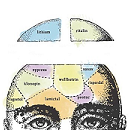
In a new paper published in NPP – Digital Psychiatry and Neuroscience, researchers argue that including scientists with lived experience of mental illness or substance use enhances psychiatric neuroscience’s understanding of mental health by integrating experiential knowledge alongside empirical methods. They suggest that this dual expertise can strengthen insight, relevance, and innovation rather than compromising objectivity.
“There remains a common assumption in science that Lived Experience (LE) may introduce bias and pose challenges to objectivity. The authors challenge this framing. In practice, Researchers with lived experience (RWLE) are held to the the same standards of scientific excellence as their peers; their methodological rigor, statistical competence, and experimental design skills are no different. What differs is the integration of experiential knowledge-offering insights that can be inaccessible to researchers without LE, including insights into phenomenology and/or etiology that explicitly challenge the status quo.”
This research, led by Uma Chatterjee (from the University of Wisconsin), Maya Schumer (from Harvard Medical School), and Devin Effinger (from the University of Colorado) highlights contributions to the field of psychiatry made by authors with lived experience of mental health issues and diagnoses. This piece also explores the challenges faced by RWLE, including having to face consequences whether they choose disclosure or non-disclosure.

Drawing on both scholarly literature and their own professional and lived experiences, the authors set out to examine how researchers with lived experience (RWLE) of serious mental illness or substance use disorders remain marginalized within psychiatric neuroscience. Despite having contributed meaningful research, they and others report facing stigma, disclosure risk, and structural barriers.
Evidence of epistemic exclusion was found across career stages from admissions to mentorship, funding, and leadership. The paper challenges the assumption that experiential knowledge introduces bias, instead reframing it as a form of expertise that can strengthen scientific inquiry and suggests practical reforms to support RWLE in the field.
Challenges Faced by RWLE
The authors describe psychiatric neuroscience as a field shaped not only by scientific norms, but by long-standing assumptions about who is considered a legitimate knowledge producer. The contributing authors themselves reflect a wide range of positions within the field, including researchers who openly live with serious mental illness and/or substance use disorders, as well as senior investigators who do not share that lived experience but have mentored and collaborated closely with those who do.
Together, they span multiple career stages and research approaches, including preclinical, clinical, and translational neuroscience, as well as public mental health. The authors emphasize that their shared perspective is grounded not in ideology but in direct observation of how lived experience, when meaningfully included, can strengthen research questions, interpretation, and relevance within academic and scientific settings.
Against this backdrop, the authors detail the structural barriers that continue the pattern of epistemic exclusion. Disclosure of lived experience is frequently described as a “kiss of death” in graduate admissions, grant applications, and hiring decisions, with applicants warned that openness may jeopardize their careers. Those who disclose report encountering ableist assumptions that cast them as “broken,” “unreliable,” or too personally invested in their work to maintain scientific rigor.
At the same time, nondisclosure can also carry consequences, particularly for applicants asked to explain gaps in training or employment histories related to periods of illness, treatment, or recovery. Inconsistent standards have resulted in penalties for both openness and silence. As the authors write, “As a result, RWLE face a paradox: disclosure is deemed risky, yet omission is penalized, perpetuating silence and exclusion.”
The authors further describe how these barriers shift—but persist—across different stages of an academic career. Early-career researchers report pressure to conceal lived experience during undergraduate training, graduate admissions, and postdoctoral fellowships, where gaps related to medical leave are often scrutinized without adequate protections against discrimination.
At mid-career stages, disclosure can complicate efforts to secure funding, lead research teams, or maintain professional authority, while also placing disproportionate mentorship and emotional labor demands on those who are visible.
Senior researchers who openly disclose describe heightened expectations to represent lived experience without corresponding structural support, alongside ongoing concerns that disclosure may limit leadership opportunities. Across all stages, the authors emphasize, these challenges are compounded by intersectional stigma related to race, gender, disability, and socioeconomic status.
Contributions by RWLE
Despite these constraints, the authors document how their own lived experience has already contributed to substantive advances across psychiatric neuroscience. Uma R. Chatterjee, who openly lives with obsessive-compulsive disorder, describes identifying a major translational gap in prevailing animal models of OCD. While commonly used paradigms capture repetitive behavior, they fail to reflect the intrusive, distressing obsessions that drive compulsions in human experience. Drawing on this insight, Chatterjee has worked to develop modified behavioral assays that better model the obsessional dimension of OCD and its associated safety behaviors, offering a more accurate framework for studying the condition.
Devin P. Effinger, a researcher with lived experience of substance use disorder, contributed to the development of a non-human primate economic choice model designed to more closely mirror real-world decision-making. His lived experience with medication-assisted treatment proved critical in interpreting findings showing that methadone reduced withdrawal symptoms without shifting drug-related choice behavior. Rather than viewing this outcome as a failure of the model, Effinger’s insight clarified that such medications may alleviate withdrawal without eliminating desire—an interpretation that challenges simplified assumptions about addiction and treatment response.
Other examples illustrate how lived experience has reshaped dominant neurobiological frameworks, even in a field where disclosure remains risky. Maya C. Schumer, who lives with bipolar disorder, led large-scale neuroimaging meta-analyses that moved beyond narrow limbic-centered models, emphasizing distributed brain networks associated with risk, resilience, and fluctuating mood states.
Nev Jones, a researcher with lived experience of psychosis, empirically challenged conventional assumptions about hallucinations by demonstrating that voice-hearing experiences are not always auditory in nature, expanding how psychotic experiences are conceptualized and studied.
These findings underscore the perspectives’ central claim: when lived experience is integrated alongside empirical methods, psychiatric neuroscience gains access to forms of insight that would otherwise remain obscured. The marginalization of researchers with lived experience, they argue, has not only shaped individual careers, but has constrained the field itself—limiting the questions asked, the models developed, and the realities reflected in mental health research. The authors conclude:
“RWLE advance a pluralistic approach to psychiatric neuroscience—one that moves beyond binary notions of ‘normal’ and ‘abnormal’ toward models that capture the full complexity and heterogeneity of psychiatric disorders.”
Limitations
Importantly, this paper does not present new experimental data or claim that lived experience alone guarantees better science. Rather, it offers a perspective that synthesizes existing literature alongside professional and experiential insight to examine how knowledge is produced, valued, and constrained within psychiatric neuroscience. As such, its arguments are not intended to be generalized in the same way as findings from controlled empirical studies.
The authors also caution against romanticizing lived experience or framing it as a kind of “superpower.” While openness about lived experience can, in some cases, lead to mentorship opportunities or visibility, it can also create a culture of heightened expectations in which researchers with lived experience are implicitly asked to do more—provide deeper insight, take on additional emotional labor, mentor other marginalized trainees, or serve as informal representatives for an entire group.
Such expectations risk placing disproportionate demands on RWLE, particularly when these roles are not formally recognized, compensated, or supported by institutions. In these contexts, lived experience may be valorized in theory while still operating as a professional liability in practice.
Researchers can find themselves simultaneously celebrated for their insight and scrutinized for their perceived vulnerability, reinforcing a double bind in which they are expected to perform exceptional resilience while navigating ongoing stigma. The authors suggest that this dynamic can reproduce burnout, self-silencing, and uneven career advancement, especially in environments that lack structural protections or shared responsibility for inclusion.
The paper further notes that lived experience is not a singular or uniform form of expertise. Experiences of mental illness and substance use are diverse and shaped by diagnosis, social context, access to care, and intersecting identities. Treating lived experience as monolithic risks flattening this diversity and reinforcing tokenism rather than pluralism. The authors argue that lived experience strengthens research when paired with methodological rigor, ethical reflexivity, and collaborative practices—not when it is isolated, sensationalized, or expected to compensate for systemic shortcomings.
Finally, the authors acknowledge that many researchers with lived experience remain undisclosed due to ongoing stigma and structural risk, making it difficult to assess the full scope of their contributions within the field. Structural change, they emphasize, cannot be achieved through individual disclosure alone. Without institutional reforms—such as clear protections against discrimination, accessible funding pathways, and shared mentorship models—the burden of inclusion risks falling disproportionately on those already marginalized.
A History of Epistemic Injustice
The authors situate their analysis within a longer history of mental health research in which experiential knowledge has often been marginalized in favor of professional and institutional authority. In psychiatric neuroscience, narrow definitions of objectivity have frequently treated researcher identity as a source of bias rather than a dimension of epistemic diversity. This dynamic reflects broader debates about epistemic privilege in mental health research and the importance of centering lived experience. The underrepresentation of researchers with lived experience is not simply a matter of individual disclosure or preparedness, but a structural issue shaped by how academic pathways are organized.
Previous work has shown how efforts to include lived experience often stall at advisory or consultative roles, rather than extending to authorship, leadership, and agenda-setting. From this perspective, meaningful inclusion requires building a sustained research pipeline for people with lived experience, supported by mentorship, funding, and institutional protections Rather than positioning lived experience as oppositional to scientific rigor, the authors frame its inclusion as essential to producing research that is both valid and relevant.
This view aligns with growing attention to shared decision-making and lived experience as drivers of more responsive and ethical mental health systems, where expertise is understood as relational and plural rather than hierarchical. From this standpoint, inclusion is not a concession to subjectivity, but a necessary step toward research that better reflects the complexity and heterogeneity of mental health.
Recommendations and Conclusion
To move the field in this direction, the authors outline five priorities aimed at reshaping how psychiatric neuroscience recruits, supports, and evaluates researchers with lived experience. First, they call for reforms to admissions, hiring, and review processes to reduce disclosure-related discrimination and inconsistent standards.
Second, they emphasize the need for dedicated funding mechanisms, mentorship networks, and training pathways that support researchers with lived experience across career stages.
Third, they urge journals, conferences, and professional societies to expand representation and professional development opportunities, recognizing lived experience as a form of scientific contribution rather than symbolic inclusion.
Fourth, the authors argue for greater epistemic inclusivity, treating experiential knowledge as a legitimate form of expertise alongside empirical methods.
Finally, they stress the importance of leadership and power-sharing, asserting that inclusion must extend beyond participation to meaningful roles in shaping research agendas and institutional priorities.
Excluding researchers with lived experience has shaped not only who participates in psychiatric neuroscience, but how mental health is understood. Treating lived experience as a form of expertise broadens scientific inquiry and strengthens the relevance of research to the complexity of real-world mental health.
****
Chatterjee, U.R., Schumer, M.C., Effinger, D.P. et al. (2025). Breaking barriers: centering researchers with lived experience in psychiatric neuroscience. NPP—Digital Psychiatry and Neuroscience 3, 26. (Link)












“Psychiatric neuroscience” – that’s an oxymoron! There is no real neuroscience, or science of any sort, involved in psychiatry.
Report comment
…and, in any case, Steve, (Western) psychiatry, neuropsychiatry, psychology, neuropsychology, neuroscience and science are all, well, Western, by their very nature, are they not?
And, as such, not one of them can function without unstated (Western) notions/assumptions of what is “functional,” and what is “maladaptive”/”disordered:” Ultimately, they cannot function without moral judgements of what is right and what is wrong, all based on the (usually unspoken) assumption that we each have/live but one, finite, human lifetime, and all these notions/assumptions every bit as essential to them – to their function/survival – as were notions of sinfulness to Christendom etc?
And, as surely as the Inquisition assumed and insisted upon the existence of immortal souls, Western Science continues to assume and to insist with equal certainty that there is no evidence of life-after-corpse, does it not?
One basic assumption which both Christianity (and Abrahamic religions) and Western Science have in common, I suggest, is the mistaken (I suggest) belief that one thing is certain: We human beings are not all God or “God,” or fully divine.
The solution to the paradox, puzzle, conundrum, riddle and mystery of it all upon which I believe every mystic or every hue, Carl Jung I hope included, has always agreed upon is the all-things-in-God, God-in-all-things one:
“Between God and me, there is no ‘between!'” – Meister Eckhart.
“Theologians may quarrel, but the mystics of the world speak the same language.” – Meister Eckhart.
“Out beyond ideas of wrongdoing and rightdoing,
There is a field. I’ll meet you there.
When the soul lies down in that grass,
The world is too full to talk about.
Ideas, language, even the phrase ‘each other’
Doesn’t make any sense.” – Rumi
“In all chaos there is a cosmos, in all disorder a secret order.“ by Carl Jung.
“The first half of life is devoted to forming a healthy ego, the second half is going inward and letting go of it.” Carl Jung.
“I have treated many hundreds of patients. Among those in the second half of life – that is to say, over 35 – there has not been one whose problem in the last resort was not that of finding a religious outlook on life. It is safe to say that every one of them fell ill because he had lost that which the living religions of every age have given their followers, and none of them has really been healed who did not regain his religious outlook.” – Carl Jung.
I am hoping and guessing Jung might agree to alter that “religious” to “spiritual.”
“Who looks outside, dreams; who looks inside, awakes.” – Carl Jung.
“And when he was demanded of the Pharisees, when the kingdom of God should come, he answered them and said, ‘The kingdom of God cometh not with observation: Neither shall they say, Lo here! or, lo there! for, behold, the kingdom of God is within you.'”
– Jesus of Nazareth, reportedly.
– https://www.biblegateway.com/passage/?search=Luke%2017%3A20-21&version=KJV
‘3) Jesus said, “If those who lead you say, ‘See, the Kingdom is
in the sky,’ then the birds of the sky will precede you. If they
say to you, ‘It is in the sea,’ then the fish will precede you.
Rather, the Kingdom is inside of you, and it is outside of you.
When you come to know yourselves, then you will become known, and
you will realize that it is you who are the sons of the living
Father. But if you will not know yourselves, you dwell in poverty
and it is you who are that poverty.”‘
– Jesus of Nazareth, reportedly.
http://www.sacred-texts.com/chr/thomas.htm
If what was once often considered deliberate sinfulness, wickedness, vice, waywardness, possession by demons, heresy etc. and what is now often labeled hapless mental illness or personality disorder may be readily explained as spiritual unconsciousness, and if we are all very rapidly becoming very enlightened….then I really don’t know what I am so very worried about – if I am.
I do know that I am tremendously grateful to MIA and to all who contribute to it.
Thank you.
Tom.
PS: So I said to the Jesuit priest, I said, “Father,” I said, “if you thought you were doing God’s will….wouldn’t you already BE in Heaven?!” I said.
And there was a silence.
And then he said,
“I don’t know how to answer that question.”
And I said to my dear friend Khaled, “Khaled,” I said, “isn’t everything the will of Allah?”
And Khaled said, “Yes, everything is the will of Allah.”
And I said, “Then your will, and my will, too, must be the will of Allah.”
And Khaled said, “Yeh-es.”
And I said, “Then you and I must BE Allah!?”
And Khaled said, “No!”
And I said, ‘Why not?”
And Khaled said, “Because it doesn’t work that way!”
And I said, “Khaled, it doesn’t work any other ******* way!”
And it doesn’t – does it?
Report comment
Any self-respecting Neuroscience, like Medicine, were it truly objectively scientific rather than religiously laboring under religious misconceptions, would long, long ago have called out Psychiatry for the nonsense it is.
But Western Science persists in seeing randomness and chaos when there can be none (and even where at least some ancient Israelites saw that there could BE none: Hashgachah Pratit (הַשְׁגָּחָה פְּרָטִית) or Hashgochah Protis).
I mean, many of the moral judgments and assumptions made by Medicine and by Science, Neuroscience included, are so subtle as well as so absolutely all-pervading as to easily evade detection, I find.
I think a doctor might or might not consult a spouse, partner, parent or child about whether or not to let a patient know their prognosis is hopeless, based partly, at least, on whether and to what extent that doctor believes in immortality.
And you might agree that any judgement call, at all, that even the purest of practitioners of neuroscience makes about what is “good” or “bad” for us – like, say being bored or “feeling not-ok” – depends on the philosophical views of that neuroscientist – right?
I’m not suggesting Arthur C. Brooks is a neuroscientist, mind you,
https://hbr.org/2025/08/you-need-to-be-bored-heres-why ,
nor Margaret Murray, either,
https://theconversationus.substack.com/p/its-more-than-ok-for-kids-to-be-bored?utm_source=post-email-title&publication_id=5605864&post_id=182028658&utm_campaign=email-post-title&isFreemail=true&r=59amx&triedRedirect=true&utm_medium=email ,
but surely any call, at all, at all, about what is “good” for us or otherwise really depends, among other things, upon why one thinks we are here, at all – as well as how often and for how long and whether we are mortals or immortals?
So, scientifically speaking, please, precisely how much boredom do we need to endure to provoke how much deep thinking to find how much (more?) meaning to stave of how much of how intense a “depression/anxiety” – given our projected life-expectancies or lives’ expectancies etc. etc. etc., of course?
I mean, for Heavens’ sakes!?
(Me? I say we are here to help another as much as ever we can, and that, accordingly, we all invariably find things tedious, irksome, worksome, effortful, boring, misery-producing or frustrating in direct proportion to how much we feel they impede or they halt or even reverse our progress towards just that end: I mean, why else might riding my bicycle uphill possibly seem harder than down?!)
In that presentation by Professor Brooks, he starts by declaring:
“You need to be bored. You will have less meaning and you will be more depressed if you never are bored. I mean, it couldn’t be clearer.”
(When St Saul/Paul or Founding Fathers or clerics or scientists tell me that something couldn’t be clearer or is “self-evident” or is perfectly clear to them, and expect me to take it on their say-so, I wish I could tell you I’m a nice enough guy to merely be bored…)
He ends by saying:
“You need more meaning in your life. And so do I.”
So, the point of human life, then, is to find ever more meaning, but presumably without ever finding enough meaning – or THE Meaning, if there is one, or any?
Of the many perfect strangers I have asked “What is the meaning of life?” I think a majority quickly assured me what I had pretty much already concluded:
“Huh!?”
Apart from these, I guess my favorite four had to be:
#4: “To take other people back to Heaven with us when we go.”
(I particularly enjoyed this one for its element of delightful surprise, issuing most promptly, as it did, from an aged and emaciated female of ashen complexion clothed almost head-to-toe in antique grey, grey garb, but with strikingly jolly long black-orange-and-purple, hooped socks, as I recall: She fairly knocked at least my judgemental socks off.)
#3: “Forty-two,” but mostly because, until my wife later explained to me that this came from “The Hitchhiker’s Guide to the Galaxy,” I had been so terribly impressed by the alacrity, assurance and authority with which the guy had responded.
#2: “The lessons get harder until we get ’em.”
This came with much laughter from a lady (who turned out to be a lawyer) in response to my clarification that we obviously come here to learn lots and lots and lots and lots and lots and lots and lots and lots and LOTS of lots and lots of lessons but for what or for freaking Whom, in response to her “How d’you mean?” response.
#1: “Do the next-best thing!”
It may have been “Do the next best thing,” but, either way, I chose to interpret it as divine advice to “Do the next, next-best thing, Tom” and to now realize that this, of course, was, like everyone else, what I had already spent my entire life doing, had been divinely designed to do, and ought now to carry on doing, amounting, as it did, to Dolly Parton’s monumentally wise advice to
“Find out who y’are and do it on purpose!”
I mean, it isn’t only when it’s a female novelist with whom you cross a deadline that you get a very, very, very, very clean house, is it, nor only the most audacious and intrepid of explorers and Ironmen who know they really ought to be sitting snug at home, working on their relationships?
Like any self-respecting scientist, I reckon, both Margaret Murray and Arthur Brooks do not tell us what, if any, meaning Life may have, of course, and upon all which improvements must be predicated, do they?
Like the clerics who went before them, advising, instructing or commanding us how to live, our neuroscientists as well as social workers, communications scientists, psychologists, psychiatrists, therapists and life coaches do seem to know, or tot hink they know, or to feel a need to pretend to know – right?
And yet, COULD any neuroscientist possibly declare any more than they could possibly leave aside their own philosophical/religious beliefs any more than any social scientist, psychologist, psychiatrist or general medical practitioner?
Could we recognise Science or Neuroscience without their philosophical/religious assumptions about human life, or Life?
Happy New Year!
Tom.
Report comment