Have you ever wondered if one word could destroy your entire life? If so, what word do you think it might be?
I had never considered this scenario either—until it actually happened to me.
It was one word. One word in the English language. One word out of the roughly 600,000 words in the dictionary. It’s not a curse word. Not a slur. Just one clinical term, scribbled into a chart by someone who barely knew me.
This one word became the murderer of my hopes and dreams. The destroyer of my relationships. The mocker of my sanity. The determiner of the rest of my life. The filter through which every future interaction was judged. The robber of my Master’s degree and career goals. The keyholder to my lifelong prison cell.
One word that turned my entire life upside down and nearly convinced me to end it.
What was that one word?
Borderline.
Up until 2021, I hadn’t heard of the word “borderline” before, much less known that it was a damning diagnosis on page 663 of the Diagnostic and Statistical Manual of Mental Disorders, Fifth Edition.
Actually, I take that back. I had heard it on a rare occasion. It was a word people said when someone was “borderline genius” or when a joke was “borderline funny.” Rarely was it in my vocabulary.
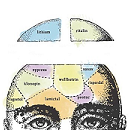
But in the summer of 2021, the word that rarely ever crossed my mind was now at the forefront, practically tattooed on my forehead. I had just turned 24, excited to start a Master of Science in Data Analytics at my alma mater on a prestigious merit scholarship. I was immensely academically ambitious, both at my university and in my career. My extreme workaholism kept me distracted from my long-standing existential despair and internal hopelessness. During my teenage and young adult years, my time in the mental health system was expensive. Years of hospitalizations and revolving-door “treatment” plans based on one false diagnosis after another had left my doctors dumbfounded. Eventually the system steered me to a “prestigious” psychology group. You know, the kind where the clinicians’ daily uniforms consist of suits, ties, pantyhose, and glasses perched on the tips of their noses, between their condescending glares and the DSM Bible in their laps that they consult as gospel.
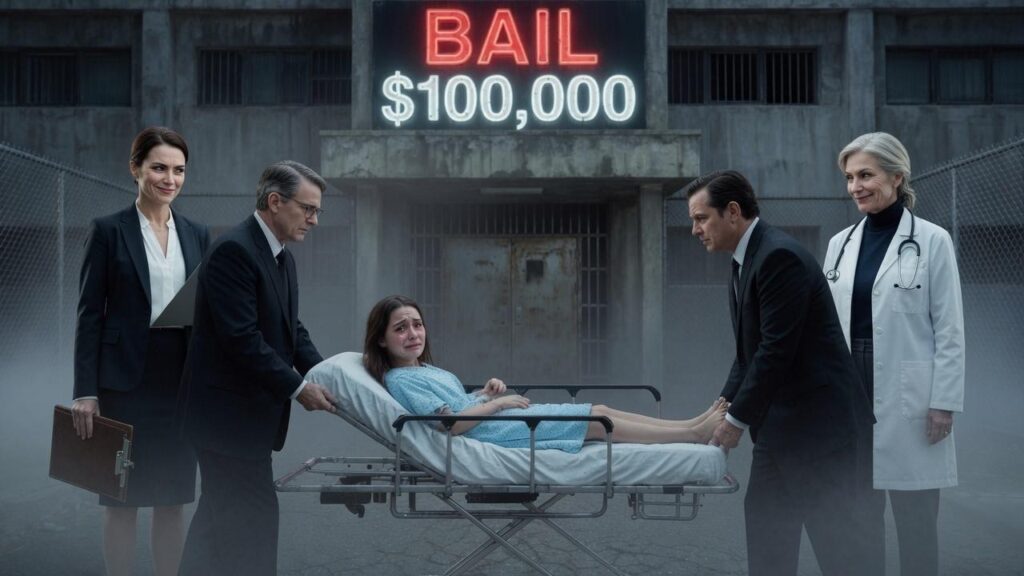
I sat in the office clutching a small pillow, trembling, while an icy, arrogant woman who reminded me of Miranda Priestly from The Devil Wears Prada delivered the verdict that would change my life. She spearheaded an interrogation against me with some others in her network—psychologists, a psychiatrist, and a bogus “residential coordinator” whose only credentials were an associate’s degree in psychology from a mail-order college and years of funneling wealthy parents’ troubled children into wilderness programs and overpriced institutions. Together, they decided that I had Borderline Personality Disorder. They ordered another antipsychotic added to my heavy cocktail, demanded I start Dialectical Behavioral Therapy immediately (both individual and group), and told me that I was not capable of starting graduate school due to my personality disorder. A bed was waiting for me at an institution that “fixes” disturbed individuals like me.
The length of my prison sentence? A year and half.
The price tag on my stay? $100,000.
The amount of time these idiots spent actually talking to me and reviewing my history before rewriting my life? Less than a total of two hours.
The Devil on My Shoulder
I had collected more than a dozen false diagnoses before. But this one operated on another level. It didn’t just categorize symptoms. It rewrote my identity.
In the weeks after my court date with Miranda Priestly, the word “borderline” lodged itself in my brain and never left. It pounded at every second of every day like it was a little devil on my shoulder. Soon, it wasn’t just that one word in the English language that tormented me. Words that merely rhymed or sounded remotely similar—line, lying, fine, mine, I’m—triggered full-body flinches and waves of pain in every cell. I forced myself to read the book they recommended, I Hate You–Don’t Leave Me, to attempt to understand this diagnosis I had no clue even existed. One chapter in, I was appalled that this was the monster they had decided I was. It was demoralizing. Dehumanizing.
At my follow-up meeting with Mrs. Priestly, I questioned her logic in suddenly slapping this diagnosis onto me at age 24.
“So, why the sudden label now? If I’ve always had this, then why didn’t anyone diagnose it when I was 13, 18, or 21?”
She seemed stunned that I was biting back against her stupidity.
“Well, you see…” she stumbled over her words between long pauses. “As clinicians, we aren’t necessarily allowed to diagnose personality disorders until true adulthood. Your symptoms started forming around those ages, but now is the time for a proper diagnosis.”
Her bogus answer didn’t satisfy me, but I hung my head and nodded, the way I always did to keep the peace.
The Weaponization and the Stigma
I couldn’t escape the diagnosis; it was regularly weaponized against me from every angle in my life. It became a self-fulfilling prophecy. I couldn’t express normal human emotions without someone—sometimes even myself—using the diagnosis as a club.
Once word got out to the people in my communities that I was “a borderline,” it spread like wildfire. The people around me researched the label, and their view of me shifted. Suddenly, every emotion I felt was “evidence.” Every thought pattern was “splitting” or “instability.” Every boundary I set in an attempt to protect myself from further hurt was “manipulation.” Moments of overwhelm and inability to control visceral bodily reactions and trauma responses to my flashbacks were met with condescending remarks like: “That’s your borderline acting up.” Or sarcasm: “You seem sooo angry!”
The religious communities I was heavily involved in told me I would never be allowed to hold leadership positions. “Friends” distanced themselves. I begged people to understand it wasn’t true. But the stigma was too strong. They had already purchased books like Stop Walking on Eggshells to learn how to deal with my behavior. Dr. Google, TikTok therapists, and gossip about me they had heard through the grapevine carried more weight than anything I could say.
Online, armchair critics and keyboard crusaders spread the gospel of “narcissist, borderline, sociopath” to anyone who disagrees with them. It’s groupthink on steroids. Real trauma survivors get lumped in with actual abusers, while the system shrugs. This brainwashing permeated the brains of just about everyone in my life that was important to me, who preferred to believe what they saw online rather than actually talking to me about my experiences. The stigma was simple and lethal: “Since she’s a borderline, you can’t believe anything she says.” Accusations of being a pathological liar sank deep inside me, making me question my own reality and the honesty I had once been confident in. They could no longer see the real Natalie. They only saw Borderline Natalie. I could no longer see the real Natalie. I only saw Borderline Natalie.
Days went by, and my anger grew. My phone kept ringing from the institution’s prison guards. I tried to distract myself with pre-coursework for my Master’s, dissociating at my computer screen. How could I focus on writing a single line of code when the only line I could focus on was a borderline? I wrestled with rage, thinking it wasn’t true. But the other voices were too loud. So, I began to accept the verdict. Then, I internalized it. I became afraid of my own emotions. I stopped expressing almost anything and stopped talking in general. I was genuinely convinced I was the abuser in all of my relationships. I felt bad that people felt like they had to “walk on eggshells” around me. So, I avoided everyone so I wouldn’t hurt them more than I already did or bother them with my existence. I spent long stretches in bed, suicidal, staring at the ceiling, wondering whether the only way out of the label was to stop existing.
Once a Borderline, Always a Borderline
And the most painful part after not being believed by people outside of the system that I was not the borderline that Miranda Priestly had brainwashed them into believing I was? The diagnosis followed me like a permanent record throughout the rest of my time in the system and grew in power. Once it was in my history, future medical providers continued to weaponize it, even in places that had no connections to the psychology group that created this mess in the first place.
On one suicide hold I sat curled in a chair in a paper gown that barely covered me. I fought back tears while a tone-deaf nurse with long acrylic nails sat in front of me interrogating me about situations I had endured in high school that were very traumatic for me. She tapped her nails on the table in a circular motion and sipped her iced vanilla latte, shaking the cup so violently that the noise of the ice drowned out her squeaky, inauthentic voice. She looked up from her clipboard with a sarcastic smirk and said: “It’s not your fault you’re a screaming borderline.”
So at this point, I wasn’t just “a borderline.” I was a “screaming borderline.” How lovely!
Another psychologist, who proudly paraded around as the “Borderline Whisperer,” talked down to me sarcastically: “I have another patient who has it. But he’s gotten it under control, and he just got married and had children. You can do it too, Natalie.” The twinkle in her eye was blinding.
So, not only was I now a “screaming borderline,” but I was also someone who, because I had this label, was potentially incapable of fulfilling my dream of becoming a mother one day?
The Director of Admissions at the institution, when meeting with me after giving me a tour of its grounds, sat me in her office asking about my thoughts about the program. She said with a condescending tone, “I think you’ll meet some good friends here. Don’t you wish you had friends?”
If only she knew I didn’t have friends because I was bullied to the point where I almost killed myself.
No matter where I went, I was surrounded by constant brainwashing designed to make me doubt myself until I broke. One fellow patient in the psych ward shrugged off her father’s recent death and wore the label like a badge of honor: “My dad died, but I got over it in one day. I don’t care anymore. It makes sense because I’m a borderline.”
This kind of thinking is repulsive to me. I would never use my diagnosis as an excuse to write off a loved one’s death in the way that the “friends” these people were trying to get me to interact with did. No matter how hard the system tried to make me adopt this label for myself, I found no comfort in it. And it certainly wasn’t something that I proudly advertised on my resume. As I encountered more borderline-related comments like this during my time in the system, I started to see through its facade.
But years went by where I couldn’t get help without being reminded of this word. Doors slammed shut. Professionals refused care. Bookshelves lined with books about borderlines in therapists’ offices made me concerned they probably had a bias like the others did. Institutions saw my chart and wrote me off as a threat before I even opened my mouth.
“Unstable. Threat to safety. Personality disordered.” Case closed.
Listening to Myself and Quieting the External Voices
All of this for what? A label that didn’t even exist in the DSM until the third version was published in 1980.
After the final suicide hold of my life, I left everything behind and moved to a cabin in the woods. Surrounded only by trees, deer, hogs, and crickets, I finally had the space to sit with what had been done to me.
I dug into archives. I obtained a copy of the 1952-published DSM-I (which was very hard to find, by the way!). No “borderline” in there. I realized that the label that had been tormenting me for years is a relatively modern construct, heavily influenced by psychoanalytic ideas that warped trauma responses into character defects.
The label I eventually received years later—Complex PTSD—fits far better. The overlap between CPTSD and BPD descriptions is real: emotional dysregulation, relational struggles, negative self-view. But the differences matter. In CPTSD, the self-image is rooted in prolonged trauma. My relationships did involve avoidance and withdrawal, but it wasn’t the frantic idealization and devaluation cycles listed under BPD. It was simply because trust had been shattered by what was done to me. My closed-off behavior after my life had been threatened was not a personality disorder. It was a survival adaptation.
Their ultimate goal was to put me in an environment where non-compliance was impossible. They wanted to keep me there forever, believing $100,000 was what it took to “fix” a screaming borderline like me. Who else would I be if they couldn’t make that kind of money off of me? At that point, I might as well have been a weeping tarantula, a whistling cattle herdsman, or one of those hilarious fainting goats. Give me a break!
During my multiple stays in psych wards and hospitals over the years, I encountered others who had been victims of the same labeling. The young girl I met who was sold into sex slavery by her parents, left on the streets, and taken in by her drug-addicted grandmother did not have Antisocial Personality Disorder. The woman whose children were put in the hands of her pathologically-lying ex-husband was not a borderline. The guy who exploded at authority figures in the psych wards when they told him what to do was not a narcissist. Who were they? Real trauma survivors who just needed someone to listen to them. During my brief stays, I listened to these people more than the people who were being paid to do so.
Power Trips and Profits
The overdiagnosis of personality disorders in contemporary society has spiraled out of control. Trauma survivors—especially young women—get slapped with these labels while real issues go untreated. Social media amplifies it, and providers enable it. This is both demoralizing and dangerous. In an increasingly authoritarian mental health landscape, these diagnoses justify forced medication, institutionalization, and stripping of rights.
Mental health providers profit from pain while retraumatizing people who already survived hell.It’s about time that, as a collective, these providers face the consequences of their intellectual laziness and lack of empathy. But I don’t think they ever will. The financial incentives for everyone involved are too great. The optimist in me hopes that as more people like me speak up about their experiences being misdiagnosed with personality disorders, some providers will wake up. However, the realist in me doesn’t think things will get better even on an individual level. Even without the financial incentives, the power to pull these bows and arrows out of their back pockets and hurl them at their vulnerable patients is intoxicating. Using their patients as mirrors for their own sadistic traits is the easiest way for some clinicians to distract themselves from what they refuse to own up to within themselves.
I hope and pray there comes a day when medical providers stop labeling everything that breathes—even the squirrels that scurry across their feet at the park—as narcissists, sociopaths, borderlines, and psychopaths. I hope they learn to take full trauma histories, differentiate CPTSD from BPD properly, question financial and institutional incentives that reward chronic labeling, and start treating people as human beings with stories, not collections of defective traits.
Turning My Pain Into Power
My experience being misdiagnosed and almost shunned from society as a personality-disordered individual was one of the most humiliating, degrading, and dehumanizing experiences of my entire life. At age 29—five years after that intimidating encounter with Miranda Priestly and her minions—I am finally able to laugh at the absurdity of it all. Not because it wasn’t devastating, but because I survived their clown show.
The sleepless nights of deep research, resilience forged tooth and nail, the slow rebuilding of self-trust, and my process of learning to stand up for myself and refusing to sign my life away to a $100,000 prison sentence that I never deserved was time I could have spent advancing my career, building relationships, and living a normal life. I am now taking that lost time back. I am proud of myself for waking up to what was done to me when all the odds were against me. If I had not stood up for myself and refused to participate in their little cash-grab scheme, I believe I would still be locked away, convinced I had an incurable personality disorder, daily being brainwashed by DBT, while every move I made put another dollar in Big Pharma’s pocket.
In a world that never stops talking, I believe that being quiet is one of the most powerful things a person can do. I don’t need to prove to anyone in my life—including the medical providers I desperately sought help from all those years—that I am not the “screaming borderline” I was once demonized to be. I no longer shout my innocence. They were the ones screaming. And if more providers don’t learn to shut their mouths and set aside their inflated egos, they will keep manufacturing the very “screaming borderlines” they claim to treat—people who are really just screaming for everyone to stop hurting them and for someone to finally listen to them.
I am not defective. I never needed antipsychotics. I am not a disgrace to this world. My end destination was never an institution. I am simply a normal human being who was failed by a system that fetishizes quick labels over listening.
I know these things in my head. But getting this knowledge into my body is slower work after years of gaslighting and mockery. The little devil is still there most of my waking hours, looping “screaming borderline” on repeat, but it is slowly growing quieter every time I refuse to feed it. I am working so hard. I have discovered self-love during this process. I am a strong, sensitive, empathic young woman building a life on my own terms. I am no longer being forced to do anything; I now have the freedom to design my life the way I choose. And who knows? Maybe one day, if I choose this path for myself, I will stand on stage in a cap and gown and accept that Master’s degree.
My $100,000 life sentence ends here. Not because the system freed me, but because I freed myself.











Natalie: Have you tried getting the Borderline diagnosis removed from your medical record? I think my Bipolar diagnosis similarly disparages me.
Report comment
Hi Chris,
Thank you for your concern, and I’m sorry you’ve had a similar experience with your bipolar diagnosis.
Honestly, the BPD label was just one of about 25 diagnoses I collected over the course of my 13 years in the system. In the midst of my anger, I did consider fighting to have it removed from my record. But the damage was already done at that point. I had numerous other inaccurate and equally stigmatizing labels (schizo, psychotic, etc.), and these continued to raise red flags with future providers anyway, so it simply wasn’t worth the energy to fight for the borderline removal.
The real battle has been getting the little demon of the label out of my own head. As I mentioned near the end of my story, it is still there–literally every minute of every day. “Screaming borderline, screaming borderline!” It’s torture. I could care less what other people think (if I am “a borderline” or not), though for a few years, I did care and wasted a lot of time and energy trying to prove them wrong. I just want peace and quiet in my mind about it.
Unfortunately, the long-term side effects of the antipsychotics have kept certain emotional flashbacks on repeat, and “screaming borderline” is just one of the little demons that’s too stubborn to leave. I continue to trust that there will be a day when the noise finally stops. I’m working really hard toward that.
I wish you all the best on your journey as well!
Sincerely,
Natalie
Report comment
It strike me that the Borderline diagnosis is misogynistic.
Report comment
Many of psychiatric labels are sexist or misogynistic. Bipolar sounds to me like something that was invented that could be used as a catchall for what previously was labeled as hysteria – nobody that has the female bits in the hormone-producing age can hardly escape some of the hormonal fluctuations. Normal life mode before the ovulation, the more moody/depressed/whatever label mode until the next phase without hormonal hell.
Also seems like that one is also a catchall for quite a few neurodivergent people in crisis, if the so called professionals first see only their customer’s sex.
Report comment
We are chasing after these people, but haven’t quite caught up with them yet. They know it, and are using the “big guns” against us. Of all the different beings on this planet, the ones who supposedly know who is crazy and who isn’t are the craziest of all; way beyond “borderline.”
And though I don’t mean to give all the rest of us a clean bill of health, this gives you some idea of how inverted the current situation is. Some day, maybe, enough of us will become trained enough and courageous enough to put these “mental experts” out to pasture, where they belong.
It’s not clear to me that we will ever pull this off. But for each being who figures out how to disconnect for a while, take a good look at the situation from outside, then reengage with the purpose of making things better, we get a step closer to turning the tables on these bastards.
Report comment
Hello Larry,
Thanks so much for your comment and for your support of my article.
I agree with you about the irony of the inverted situation. It reminds me of the Daoist concept that the person who criticizes is only revealing a map of his own mind — his preferences, biases, worldview, rigid boundaries, the things he has been brainwashed with, even a lack of his own internal peace. I think many of these “experts” are in deep chaos on the inside, yet remain too blind to see it. They fool many others (as they once did to me when I was still vulnerable and fast asleep), and they fool themselves as well.
Laozi wrote: “Those who know do not speak. Those who speak do not know.”
I personally find it far more powerful to stay quiet and humble. It is difficult to remain unmoved when confronted with their loudness, but as I continue to work through my recovery and practice recognizing that their narratives are a result of their own internal landscape, my mind grows quieter and quieter by the day. And as you noted, I could never have begun this kind of stoicism without going into the woods–where I could no longer hear them screaming.
It’s nice to know there are others out there like me who share this perspective and can see through the madness. Thanks again for your support!
Sincerely,
Natalie
Report comment
Thank you!
But I do prefer to speak. It’s in the Way To Happiness; set a good example, treat others as you would want to be treated.
If there is a danger in my environment, I would prefer to be warned about it. Then I must assess if that warning is rational or reactive.
Report comment
“I am proud of myself for waking up to what was done to me”
I am proud of you, also!
“I left everything behind and moved to a cabin in the woods. Surrounded only by trees, deer, hogs, and crickets”
Yes! Away from the stories being told about us – we are there with our own selves.
Good job!
As near as I can tell, the healthcare industry will not correct their mistakes. At best, they will say you are in remission. They are protecting the institution, not our future health – as you know, these slanderous labels are apparently license to accuse us of whatever physical malady that we are experiencing – of it being all in our heads.
The words to insist are in our records are:
“I dispute the psychiatric diagnosis.”
Submit this to them in writing.
9 years drug and symptom free. “They” were wrong!
Way back then, I would wake as myself, only to hear this story about crazy I was.
It wasn’t true. In my heart, I knew that 100 years from now – this would not be happening! Just as you have found that this slanderous term is a relatively modern invention, with no biological marker.
“They” do not know of the harm they are causing. The smugness of passing down slanderous life sentences based on “expert opinion” is … I guess, human nature.
It is not my truth.
It is said that “Annie Oakley” (Wild West sharp shooter) spent the last 25% of her precious life fighting slander from the newspapers.
I will not waste my breath.
But to each, their own.
The best revenge is to go live the best life available to you.
We can not change the times we live in.
I am proud of you, Natalie.
FWIW
Report comment
Hi Hope (love your name!),
I appreciate your very sweet words! I always admired Annie Oakley’s spunk and tenacity. But I agree, it’s a waste of time and energy to try and prove the liars wrong.
I am working to attain something I believe is even more worthwhile than that kind of revenge: true, lasting internal peace and contentment. Many people have told me that it isn’t possible to attain in this life… But as an open-minded person, I’m very much inclined to disagree and keep going until I find it. We’ll see what I discover 😉
I’m not a giver upper. And sounds like you’re not either!
Thanks for being proud of me. I am proud of you too!
Proud of *us*!! Teehee.
Xoxo,
Natalie
Report comment
Actually, it IS a slur!
Report comment
Pretty much!
Report comment
Stigmatizing psychiatric “diagnoses” are a sort of lifelong curse that can further erode the self-esteem and even physical well-being of people who have already suffered greatly from negative experiences. It takes an immense amount of effort to free oneself from the burden of a pathlogizing label, as the author’s moving account makes abundantly clear.
Are psychiatrists aware of the emotional harm they inflict on their clients (leaving aside the havoc wrought by neurotoxins and other brain-disabling treatments)?
Report comment
Hi Joel,
It’s great to see you again on another article of mine–thank you for the continued support.
It really is still, years later, an excruciating battle to free myself from this burden. And as you pointed out, the brain damage from the treatments is already more than enough. Adding the emotional weight of a pathologizing label on top of it creates a tsunami.
I would love to see more psychiatrists and psychologists begin to wake up to the real harm these labels can cause.
Report comment
Steve in professional circles as time went by yes. Not only a slur a diagnostic assault .
In the early eighties when the word came out it was specifically aligned with trauma. And it was defined as being in trauma mode and not being able to cope especially also with body image somehow. Healthcare professionals know that label is a time bomb when it is put into the medical record. It is weighted toward females and I think the history of the word hysterical is a precursor.
Report comment
I have also seen it used against women.
Report comment
Hi Mary,
Agreed! I first learned about the “hysteria” craze through Thomas Szasz’s book The Myth of Mental Illness. He uses a case study of Jean-Martin Charcot and Sigmund Freud’s work with “hysterical” women–particularly during the Victorian era of rigid gender roles–to show how the term was twisted into a language for women’s emotional distress. Today, BPD has largely taken its place.
I’ve yet to meet a man with a BPD diagnosis. If I ever do, I’d like to hear his experience of receiving the diagnosis. But whenever label-pushers encounter a woman with intense emotions, BPD is one of the first things they jump to.
Report comment
Natalie great article and thanks for responding . I probably should have addressed this post to you. I am sorry abd ha I did what
I complain about professionals doing! Damnation ! Hells bells as my mother would say .
Report comment
Natalie didn’t receive treatment. She was gaslit – by experts.
Report comment
Yes! I couldn’t see it at the time. But I can see it with very clear eyes now.
Report comment
Great article thank you.
Report comment
Thank you for your support, Nancy!
Report comment
I’m so extremely sorry for what credentialed brainwashed paid employees of the mental sickness system did to you and so extremely happy and grateful for you that you escaped that madness and are on a journey to become what every human being has a right to. Thank you for a truly inspiring story. I am finally on that path too! I also was captured as a teen. It took me until my 56th year on earth to escape the labels and their pills but I’m out and proud now and growing more and more each day! Best wishes for your very very promising future!
Report comment
Hi Lori,
Thank you so much for your very sweet and supportive response to my story!
I really like the word you used—“captured”—to describe what was done to us. I’m sorry it began so young for you as well. It’s never too late to take your power back from some of the sickest captors on earth… so proud of you and excited for your future as well!
♡, Natalie
Report comment
The people who dish out pejorative labels for a living deserve a few of their own.
Unfortunately, the mental health system is perhaps the hardest place to learn one of the most important lessons in life: know who and what you are dealing with before confiding in them.
But something more interesting to consider — and perhaps more useful — is to look at what might be one of the largest factors driving more than a few of these people’s destructive behavior.
In this vein, I came across a fascinating YouTube conversation about the roots of Dark Triad behavior – something that might interest anyone who’s curious about how these patterns actually form.
“What Really Causes Dark Triad Behavior? The Roots of Human Predators.” Brad Carr with Peter Salerno and Deb Lieberman
Report comment
Your referenced video presents two people who sound sensible and well-informed on the subject of psychopathy. And though they do both seem rather sensible, the are not very well-informed.
Deb has the right idea that we have to educate the general public about these sorts of people. The other guy is right that some people just don’t believe such people are real. But that can be changed since these people are real.
But Deb obviously knows nothing about past lives or the influence they have on the formation of this-life personality. The past is very important, and it is VERY LONG. Our “evolution” on Earth is a very minor factor. Especially since most of us, as spiritual beings, have only been on Earth for a few thousand years. “Evolutionary psychology” is basically a scam.
Report comment
Apart from the doctrines of Scientology, what credible arguments can you cite to prove that evolutionary psychology is “basically a scam?”
Report comment
The problem is in your own question. You think Hubbard’s work produced “doctrines.” I think it produced findings. Facts that could be verified. And some of them have been, through the work of people like Courtney Brown and Steve Burgess.
The basic finding is that most of the beings on Earth now did not originate here. If that is true, then our psychology could not have “evolved” here.
Brown has found that Earth was populated by a different sort of humanoid being during the time of the dinosaurs. So there has been a lot of interplanetary travel dating back a long time. When we look at the actual amount of time that humanoid beings have existed, along with the fact that we reincarnate, a lot of the underlying assumptions of evolutionary psychology fall apart.
Report comment
If you can cite any credible “findings” that sentient humanoid beings existed during the Jurassic period or in even more ancient times, or that most of the creatures inhabiting Earth evolved in other solar systems and reached this planet here via interstellar space travel, what reputable scientists (biologists, paleontologists, geneticists, etc.) NOT affiliated with Scientology have confirmed them?
In the absence of conclusive, independently verified evidence, I will continue to regard Hubbard’s work as mere fantasies no more believable than other pseudo-scientific doctrines claiming the status of Revealed Truth.
Report comment
Joel, you demand that the researchers be “reputable” and NOT connected with Scientology. Those requirements open the doors to serious biases, I think. I consider Hubbard a reputable researcher. I also consider Courtney Brown reputable. And many therapists doing past life regressions also seem to be reputable.
I am not aware of ANY Scientologists doing research along this line. They are busy people and they know better.
Courtney Brown did the project that found humanoids on Earth at the time of the dinosaurs. Other remote viewers have made similar findings regarding the past existence of off-Earth humanoid groups.
Contributions from the hypnotic regression community have been less substantial. Dolores Cannon went quite far in the direction of finding past lives off Earth. Robert T. James also did a little work in that direction.
Of the non-Scientologists I know, Courtney is definitely the most convinced that the history of humanoid life goes back much further than most human scientists assume.
But I am not asking anyone to be convinced by these researchers. I am simply asking everyone to be aware that this work was done and points in directions that are not supported by mainstream human science, but do show promising results.
Report comment
Another thing worth noting is that people who rely heavily on labels often do so because it gives them a sense of control when their own inner world feels chaotic.
Once you see that, their language stops sounding authoritative and starts looking like a coping mechanism — and remembering this can matter a lot when dealing with people who rely on linguistic gymnastics.
Report comment
Natalie, I commend you for your strength and courage on pushing back on the dehumanizing and life-altering label of BPD and thank you for writing this very compelling article that confirms just how harmful this label is.
You wrote “The optimist in me hopes that as more people like me speak up about their experiences being misdiagnosed with personality disorders, some providers will wake up.”
I have my own surreal story of finding out this label was put on my records while I was in cancer treatment. At the time I was 56 years old and had always lived life very responsibly, independently and other than mild anxiety due to chronic back pain from a workplace accident, I had never had mental health issues. I too had never heard of this label of BPD before. Because the chemo and steroids caused issues with sleep I was sent to someone to “get help with sleep meds”. The ‘someone’ was a young, arrogant female psychiatrist, yes with matching shoes and purse, big ego, cold, condescending and had a VERY privileged life. In addition to the label of BPD she diagnosed my pre-existing back pain and the well known effects of the chemo drugs a “Somatization Disorder”. She filed her first report leaving out any context as to me being in chemotherapy and experiencing the many adverse effects and chose instead to quickly paint me as a nut job by writing “the patient appeared in my office with a scarf wrapped around her head and looking much older than her stated age”. Haha, it was still wintery out and the ‘scarf’ she claimed I had “wrapped around my head” was actually a hat I purchased at the cancer hospital to keep my head warm as I was bald after all my hair fell out.
It is way past time for these people to be exposed for all the harm they inflict on vulnerable people who put trust in them to receive a little “help” dealing with difficult life circumstances, trauma, etc. Since having these labels on my records I realized these types of mental health ‘professionals’ use the label of BPD as a weapon and as a slur. I believe when all their psych drugs don’t ‘help’ and instead cause harm, this label is a great way to blame the patient. This psychiatrist had prescribed me Seroquel, AD’s, benzos, etc. but I had very unpleasant effects and could not keep taking them. So in her reports on electronic records she totally mocked me for that, portraying that I made up the bad side effects of her wonderful psych drugs.
Congratulations on your path to freeing yourself Natalie! I really hope one day you will stand on stage in a cap and gown and accept that Master’s degree! Stay strong! Best wishes to you!
Report comment
Dear Rosalee,
It’s so good to see you on another one of my articles! Your story is very powerful as well. I can’t imagine the pain you went through and are still recovering from.
And LOL, it’s always the ones with the matching purses! My own Miranda Priestly was the same, and I ran into plenty of others like her. I’m able to laugh about it now, but I still can’t believe how intimidated I was by them back then. The system is designed so carefully to hand these people enormous power over their patients. Doesn’t matter if the patient is a child / young adult like I was or a grown adult.
I’m sorry things started for you later in life. It’s baffling that the provider you encountered did not once question your otherwise squeaky clean record or the side effects of the chemo. It’s a perfect example of how the ulterior motive is often to get people onto the drug path that ends up doing even more damage. Agh! I’m so sorry.
Thank you for your encouragement. Stay strong as well. As survivors, we’re in this together! ♡
With love,
Natalie Rose
Report comment
Rosalee, the ‘psychiatry’ experience you describe above brings the following quotation powerfully to my mind: –
“Evil is The Absence of Empathy”
Q: Captain G.M. Gilbert. Military Prison Psychologist.
Nuremberg Trials.
Report comment
Retired Consultant Physician, Yes that is a good quotation. Thanks!
Report comment
It’s striking how quickly some professionals move from listening to interpreting. Interpretation becomes automatic — almost a reflex — where the client’s own meaning gets replaced by the clinician’s version of it, and usually through diagnostic labels.
At this point, interpretation isn’t insight anymore; it’s a form of dismissal. And when this happens, the dynamic stops being about understanding and starts being about maintaining control, often through conceptual sleight-of-hand.
Report comment
This practice, also known as “evaluating for the patient” is strictly forbidden in any proper form of therapy. Therapy totally relies on patients arriving at the truth of the situation for themselves.
Report comment
If it’s strictly forbidden, then why does it happen so often in therapy?
Report comment
Because most therapists are not properly trained. They are psychologists and so forth. That training is terrible.
Report comment
The very fact that psychotherapists accept the untenable concept of mental illness and emphasize the need of their “patients” to be diagnosed and treated is itself a form of evaluation.
It’s illogical to use the language of pathology when describing thoughts, emotion, and behaviors. Hence what you call “proper therapy” can be viewed solely as a misleading metaphor fraught with harmful consequences for those in emotional distress–as the accounts by psychiatric survivors on this website amply demonstrate.
Report comment
Except when therapy is done without “diagnosis” or the attendant evaluation and invalidation. It can be done.
Report comment
I consider your viewpoint of this a bit extreme, Joel.
If someone steals something from you because they “felt bad” that day, is that going to be OK with you? When someone lies to you because they were “afraid to tell the truth” is that alright?
There are boundaries to human behavior that most of us agree should not be crossed without consequences. If you want to keep a human group going, you can’t do that while letting some portion of the group run around tearing things apart.
And so we get a concept of unwanted or unacceptable behaviors. I don’t see how a human group can survive without such concepts.
The difference between “good” therapy and “bad” is how this situation is addressed. A criminal or poorly-trained “therapist” will take advantage of someone’s unwanted behaviors to make them feel inferior or to control them. A good therapist will simply help the person deal with the unwanted actions in a way that feels right to them.
The problem with this filed is that it is filled with charlatans, not that it is in itself an intrinsically suppressive field.
Report comment
The “boundaries to human behavior” that you claim exist are NOT universally agreed upon, as a cursory knowledge of cultural anthropology makes clear.
To cite just one random example, are you familiar with the history of Sparta? Young boys being trained in the “agoge” were encouraged to steal food and were punished severely only if caught in the act. Similarly, bands of armed youth were tasked with killing disobedient helots in order to keep the subject population in check. Such duplicitous or murderous behavior was admired and emulated.
Did Spartans suffer from mass psychopathology?
Concepts of what you call “unwanted or unacceptable behavior” differ in accordance with cultural norms, which constantly evolve over time.
Lastly, there is no such thing as good or bad psychotherapy, since thoughts, emotions, and patterns of conduct cannot be “healed” except in a purely metaphorical sense. Similarly, there cannot be good or bad phrenologists, inasmuch as phrenology is an absurd, discredited pseudo-science.
Report comment
Joel, I just think you’re wrong about these things. That’s all. I don’t know why you’re trying so hard to convince me. I won’t be convinced any more than you will be.
I think a society needs boundaries. You don’t apparently, yet rant against psychiatry for inventing “bad behaviors” that don’t really exist. So you must have some sort of boundaries in mind yourself. That everyone should be free to do whatever they want… except psychiatrists? Or that psychiatrists are wrong but everyone else is OK? It just seems like an inconsistent position to take. The loudest voices I am aware of for moral relativism are from psychiatrists. But if you think we can have a crime-free society by calling crime a social construct, I guess you have that right. I just think that’s totally incorrect and unworkable.
Report comment
Well done. Please continue using your excellent writing skills to help others whose stories parallel yours. I feel sad for all those who could be living a normal life but are unable to break the system because of its stifling pressures, especially the false accusations that they will hurt those they love if they don’t succumb.
Reading psych books from before the pharmacological model became the standard helped me as well. Godspeed
Report comment
Hi Stacey,
Thank you so much for your kind words. Writing has been very therapeutic for me. I don’t know what I’d do without it. I never thought of myself as “a writer” before I started publishing these articles, but the feedback has been consistently strong. Maybe it’s finally time I start claiming the title. Teehee.
I’m glad you found encouragement in those earlier psych books and began sifting through the brainwashing that way. I wish you the best on your journey!
Sincerely,
Natalie
Report comment
There have so been many stories like Natalie’s that it’s reasonable to step back and ask why.
Maybe it has to do with a culture that tends to overvalue the intellect, because when the intellect becomes the dominant lens, everything else — intuition, embodiment, emotional truth — gets downgraded.
Some might say, “Just follow your heart”, but I’ve never found the heart to be the best compass. I’d rather follow my gut, because the gut is smarter than the heart. It’s grounded, perceptive, and usually honest long before the mind catches up.
But the question remains: what makes the intellect the problem?
It’s where the ego lives.
Report comment
Psychiatry rarely questions itself. It treats ego-generated interpretations as clinical authority.
But that’s what happens when you operate from inside the ego.
And time after time, it produces outcomes like Natalie’s.
Report comment
You’re absolutely right, Periscopic.
Psychiatry’s credulous acceptance of ego-generated wildly speculative hypotheses (e.g. Freud’s guru-like interpretation of dreams) is more characteristic of religious dogma than of a rigorously empirical science, which it futilely claims to be.
Unfortunately, the hypotheses of biomedically oriented practitioners can and do have severe emotional and physical consequences for their unwary trusting clients. Natalie’s experience is a graphic case in point.
Report comment
Thanks for your sharing your story. I recall seeing your name and clicking into your web site in the past.
DSM labels are definitely slurs.
I hope you are seeking to publish in the wider world, like Brooke Siem. If so, can I say writer to writer, here are some questions I would like to hear discussed as a reader of your story, which I would love to see get out to the wider world.
Who is paying for the 100 grand bill and the cabin?
Please know this question about money is not intended as criticism.
My basic understanding as one destroyed by psychiatry that I did not seek is that the destruction is widespread, and money helps healing/legally/personally.
FYI I am 63 and can’t afford to retire or heal.
Thanks!
Report comment
Kevin McKee has some interesting things to say about how antagonistic people can often feel threatened by people who think independently. I thought it might apply here.
“How Narcissists Hijack Communities | The Royal We (Kevin Mckee) on Brad Carr’s YouTube channel
Report comment
Natalie’s story points to something much larger than the misuse of psychiatric labels. It shows how certain personalities can use institutions, authority, and “expertise” to destabilize vulnerable people and create dependency.
For anyone interested in the broader psychological mechanics behind this, Brad Carr and Prof. Sam Vaknin’s conversation “How Narcissists Recruit and Control New Victims” offers a framework that overlaps with many of the dynamics Natalie describes. It’s not about psychiatry itself — it’s about now coercion, manufactured helplessness, and power imbalances can take root in any system.
Report comment
Hi Natalie,
a great article! Proud of you and your ability to believe there is nothing wrong with you.
You will definitely obtain any degree in any field you choose in your life.
Keep strong. God bless you!
P.S. and this one is so true – ‘they warped trauma responses into character defects.’
Cheers,
Ivan
Report comment
Larry, in your latest post you implied that I’m a kind of philosophical nihilist who supposedly rejects the concept of crime and moral boundaries.
What I do reject is the notion that the pseudo-science of psychiatry should have ultimate authority to set the boundaries for “proper” thinking and behavior–especially when the criteria for judging human conduct are always evolving and not universally agreed upon.
In various societies, for example, homosexuality is considered a heinous crime (sometimes punishable by death), a mortal sin, a genetic disorder, a mental aberration, or a natural, acceptable sexual orientation.
Who should have the right to define what constitutes normal behavior or to forcibly suppress or “treat” any condition that supposedly deviates from it? Mental health “experts?”
Report comment
Joel, you express your dislike for psychiatric arrogance in a way that is confusing to me.
While it is quite true that psychiatrists cannot play the role of behavioral policemen and mental doctors at the same time, we cannot easily escape society’s needs for both these roles.
That Psychiatry is willing to take on both these roles demonstrates its own insanity. But the relative insanity of societies is, in the end, a separate question.
It is also true that there are individuals who feel mentally “sick” or “impaired” and seek out expert help for their problems. And what they run into, usually, is psychiatrists. This is an unfortunate result for those individuals and for society at large.
A true mental doctor would never accept the role of behavioral policeman. He or she would not go around creating mental “illnesses” or “disorders” just to expand their own clientele and sell drugs that don’t work and often kill people. But that doesn’t mean that there is no such thing as mental “health” or mental “illness.” It just means that for most people this is a matter of personal evaluation, not social evaluation.
That “modern society” is willing to live with or accept Psychiatry as it currently exists is frustrating and very worrisome, as Psychiatry is so obviously destructive. It would indicate that our society, as a whole, is not that sane, which I would agree with. And sure, this forces us to wonder if anyone is really qualified to evaluate the sanity of anything or anyone else. It is a legitimate wonder. But certainly at least the individual should have the right to evaluate this matter for himself or herself. And it would be really nice if such an individual judges that they need help, that a trained profession exists that could actually help them. That would not be, of course, Psychiatry as we know it.
Report comment
Larry, your term “true mental doctor” made me cringe.
I know I’m repeating myself, but you are conflating medical diagnosis and treatment of confirmed physical illnesses with psychiatric techniques to alter widely disparate mental states, which (apart from disorders such as dementia that affect cognition and behavior) are only hypothesized to originate in a brain pathology, hormonal imbalance, or genetic abnormality). That is the crux of my objection to manipulative psychiatric verbal legerdemain, which deliberately seeks to create the impression that various types of emotional distress can be neatly categorized and likened to discrete physical “disorders” needing professional therapy.
This semantic trickery would be little more than a set of misleading metaphors were it not for the expensive and often harmful practices it fosters.
I could go on, but I’ve already set forth my personal opinion about this matter at length in other posts. So let me ask just one question for now: If you actually know how to distinguish a genuine “mental doctor” from an unscrupulous mercenary quack or a well-meaning but feckless incompetent, please tell us what criteria can be reliably used to make this judgment.
Report comment
All I mean by “doctor” in this context is “a practitioner of the healing arts – usually trained and licensed.” Perhaps there are other better words.
As you are aware, I favor Scientology practitioners. They come at different training levels, with Class 8 considered quite thorough and Class 6 just slightly less. But such persons do not work alone; they work with a “Case Supervisor” who always oversees their work, and is usually a Class 8.
In other fields you have to go by reputation. I have little experience with alternative medicine, but Chiropractors have a decent reputation.
My training mostly warns me about who to avoid. Traditional medical training, which produces “MDs” is dangerous, perhaps even for emergency procedures, although we rely on them for that. If I were seriously looking for a good body healer, I would ask the person certain qualifying questions, like: Do you believe in reincarnation? Do you believe that a person is an immortal spiritual causative being? Do you believe that mental and emotional state plays a role in healing? But I have never made such a search. In the field of psychology, Steve Burgess is the only one I am aware of who comes even close.
Report comment
Many pages (from my country and abroad) on which I’ve written about the horrible aspects of medical Psychiatry and the mental health industry (pages of psychiatry graduates, their departments, lecture videos etc.) and how it damages lives have either removed their pages or shut off comments. I’ve written more about this in the comments here.
Report comment
Something interesting: one guy who studied Psychiatry has just won the Nobel Prize in 2026 – Dr Karl Deisseroth.
Another guy who studied Psychiatry is set to become the first person to be executed by US Military firing squad since World War 2 – Dr Nidal Hasan
Oh, how people’s lives turn out.
Report comment
The hallmark of predatory dynamics is being pulled away from oneself.
Good thing Natalie found her way back.
Not everyone does.
Report comment
I earned my masters degree after being misdiagnosed as schizoaffective four years ago. I got letters from two physicians stating I didn’t have it and it was the result of a stressful life period. You don’t need to explain everything, just bring a binder or folder with evidence to show your a responsible, functioning adult who hasn’t been on meds for a X amount of months or years. Those letters can actually help you if you need them in the future. It makes you harder to abuse. I believe you can get your masters degree. Go do a marathon, Ironman, or something athletically challenging too!
Report comment
It’s a shame that such proof is necessary. Criminals have to be convicted “beyond a reasonable doubt.” But the so-called “mentally ill” are guilty until proven innocent!
Report comment
Steve, yes 100%, such an excellent point! There has to be solid evidence to convict someone of a crime but psychiatry can hastily give someone a lifetime psych conviction/label without ANY proof/evidence and it’s basically impossible to appeal or dispute a psych label. It also appears criminals confined to jail get treated with more respect and are given far more rights than someone confined to a psych ward.
Report comment