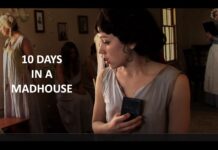
Our Mad in America affiliate, Mad in Norway, is hosting an international film festival from September 24-26 in Lillehammer, Norway. For the next few months, we will be posting trailers of some of the films that will be shown. First up is The Recovery Channel, a Norwegian film that has been called a “creative act of protest.”
Summary
In The Recovery Channel, director Ellen Ugelstad takes us inside a fictional news channel that delves deeply into mental health, human rights, and coercion. With this as its starting point, the film sheds light on the challenges associated with modern psychiatric treatment and what it means to be deprived of one’s freedom. In addition, we follow the TV channel’s editorial meetings and Randi’s life off-air, as she loses contact with her mentally ill sister Ylva. The Recovery Channel is both a personal and political project. The film is based on filmmaker Ellen Ugelstad’s own experiences as a family member for over 25 years.
Description
The film blends documentary and fiction to explore complex themes in an engaging way. Its central framework is a fictional television station, “The Recovery Channel,” which presents news segments on coercive psychiatry, human rights, and different paths to recovery. Alongside these broadcasts, viewers are taken behind the scenes into editorial meetings and the personal life of the news anchor, who is also navigating their own experience as a relative. This combination creates a dramatic narrative while simultaneously introducing both national and international debates on forced psychiatric treatment.
Humor is used as a powerful tool throughout the film. In one segment, an award ceremony is held for the “best manic outburst of the year,” where eccentric individuals are celebrated for their unconventional and socially impactful actions. By turning reality on its head, the film offers a sharp and thought-provoking critique of how the media portrays people with mental health challenges.
The production is of a high professional standard and features a wide range of voices, including activists, lawyers, experts, and professionals working within Norway’s treatment system. It includes rare historical interviews and highlights significant legal developments, such as the case of Inger-Mari Eidsvik against the Norwegian state—the first time coercive psychiatry has been challenged as a human rights issue in Norwegian courts.
The film also documents activism against discrimination and the dehumanization of psychiatric patients, emphasizing how many are deprived of fundamental aspects of a meaningful life, such as stable housing, income, relationships, and purpose. At the same time, it presents research and data showing that reducing or eliminating coercion can lead to remarkably positive outcomes. Ultimately, the film underscores essential human needs and offers insight into more compassionate and effective ways of responding to emotional crises.
The film’s website is twentyonepictures.com/recovery-channel
This and many other films will be presented at the Mad in Norway International Film Festival in Lillehammer, Norway September 24 – 26, 2026. Please visit Mad in Norway International Film Festival’s website at madinnorwayfilmfest.org to find out more about festival programming, tickets, and other information. We hope to see you there!
And stay tuned here each week for more exciting films!