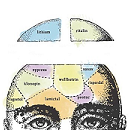
A new article in Psychological Review by researchers Yulia E. Chentsova-Dutton and Andrew G. Ryder argues that internalizing disorders, such as depression, anxiety, and trauma-related conditions, are not stable or discrete entities, but rather “shapeshifters” that defy the categorical logic of modern psychiatric diagnosis.
This finding challenges the foundational assumption behind many dominant classification systems: that mental disorders can be neatly separated, named, and universally applied.
“This heterogeneity is observed over time within individual sufferers, across different sufferers, and across groups of sufferers in different sociocultural contexts,” the authors write. “Rather than understanding these types of heterogeneity as a problem in need of a solution, we argue that variability in symptom presentation is a core feature of internalizing distress: These disorders are, in their essence, shape-shifters.”
The authors focus on internalizing disorders, referring to conditions that affect mood, emotion, and perception. They highlight how these diagnoses often appear highly comorbid and inconsistently expressed. For example, depression in one person may be marked by fatigue and self-blame, and in another, by agitation and existential despair. Across cultures, too, these disorders do not take a singular form. Despite this, mainstream diagnostic systems such as the Diagnostic and Statistical Manual of Mental Disorders (DSM) rely on what’s known as a polythetic approach. Sometimes likened to a “Chinese menu,” this method allows clinicians to diagnose a disorder if an individual meets a sufficient number of listed symptoms, although not necessarily all of them. While this provides some flexibility, the authors argue that it also reinforces an illusion of diagnostic stability that obscures more than it reveals.












Liam:
If the dis-order is transitory, moving across the spectrum of the whole mind, then whose benefit does a label justify? And if the prevailing social psychology shapeing the community in which one lives is experiencing serious abuse in social existence due to polluted or corrupted business practices, then who or which communities have the knowledge to shape an economy affirming “To LIFE”? Would the scientist/artist be reading accurately if the context is one of belief of a heterogenity or homogentity across “the mind”? Fuller Torey and the NIMH were trying to analyze brains through theft, when the courtesy of decision making was not understood in a working brain with a soul. Hence, how do the parts contribute to convey the “whole” with heart and emotion?
Report comment
Shape shifting a clever word. Folktales are full of this theme. But if one does an archival review of medical charts this can be seen. Always shifting – diagnosis dependsnt on who was doing the labeling. Sometimes wildly shape shifting labels. A review of several medical charts of folks would be interesting.
However the huge problem is folks do not have control of their own medical records. In my department of psychiatry records were kept totally separate from the regular chart under lock and key. So that might be hard. And what I would do is involve the human being and review their charts with them as well as using for an academic article. Get their permission and don’t have them pay. They should be credited in the article as well either anonymously or not depending on their choice.
If we are to work together as patients, clients, survivors and professionals who are also patients , clients , or survivors in perhaps or perhaps not different ways we need to be part of an all inclusive academic team.
Report comment
The Cleveland Clinic hands over medical records of their patients – with the given diagnoses, or lack there of – at the time of payment, or lack thereof. That’s what all doctors should do, including the psych “professionals.”
At least that was my experience with a good doctor at the Cleveland Clinic, albeit I can’t say there aren’t bad psychiatrists there as well, since I did run into one of them too. Thankfully it only took mentioning I was allergic to the anticholinergic drugs to quickly scare him off ….
Report comment
Psychiatrists write, type, AI (and not properly proof read) their notes, after the person in front of them has left – the 40 or 50 minute hour was created for this purpose. Psychiatrists who consult for prescribing – usually within 15 minutes or less, barely write notes. Either way, the notes are what the psychiatrist writes as their version for their legal protections.
Since technology is so advanced, a copy of any notes written ought to be given to the patient, client, person in real time. This process would evidence a match of the discussion had between the psychiatrist and the person attending.
This would balance the current power tilt.
For too long, psychiatrists (and other practitioners) write whatever diagnosis they choose that will get them the most financial claims and benefits. The changing of diagnosis, for example from anxiety to depression, or depression to bipolar, fits within a mapped out process. Even so, any new and different diagnosis can and will be accounted for, because the psychiatrist has free licence to do so.
There is no explicitly stated plan, no explicitly stated goal. So “shape-shifting” works for the psychiatrist, practitioner, who gets to diagnose and prescribe drugs and treatments and therapies. It’s a win all ’round for them.
We have been conned into quick fixes, by taking an instantly available drug, that ironically takes some 4 to 6 weeks to “work”, if it works at all.
We could choose to do differently; however taking 4 to 6 weeks off work or time away from excessive stressors, is a luxury available usually only for the wealthy. And even they often choose the prescription drug (pharmaceuticals) route.
Rest. Restorative rest – does not come in the shape of a prescribing practitioner.
It would be interesting to see what would happen if governments, society, politics, economists, supported provisions for a suitably qualified carer per se, to be available 24/7 for two weeks and lighten a person’s load? Would the person decline into further anxiety, depression in that 2 week period? Likely not.
Two weeks according to the DSM, is the psychiatric and phaRMa ideal time frame for…what? Why two weeks?
Acute crises? People in acute crisis are drugged. The prescription pad is always at the ready as a first-line approach.
Report comment
I don’t see how this “theory” is in any way new or “radical”.
The more obvious explanation for this “shape-shifting” is that the “diagnoses” and the entire classification system is invalid. The concept presented here doesn’t really challenge the idea of discrete “disorders” which has no scientific basis, it simply appears to broaden the net – capturing more behaviours into the diagnostic system, exposing people to more useless and harmful labels and harmful “treatments” (ie experimentation).
Report comment
My thoughts exactly!
Report comment
Why I used the word labels. Yes a shady and shaky set of constructs. As soon as I saw and realized this I was suspicious and why I went into the field to figure out what was going on. There is a long history and every now and then some folks jump out with a good or great idea but it usually came out of an ahistorical understanding of human civilization.
Report comment
Defy the “categorical logic of modern psychiatric diagnosis?” Where did you get the idea there was “categorial logic” or logic of any kind involved in psychiatric diagnosis? It is as subjective as saying someone has courage or is shy or has been successful in life. There is no real logic in grouping heterogeneous collections of people based on external symptoms, any more than there is logic in saying someone experiencing pain in their knee has “Knee pain disorder.”
I would have to say it is the psychiatric “thought leaders” who are the shape shifters here, never allowing themselves to be pinned down to actual logical thought but instead assuming various rhetorical positions that seemed more focused on preserving their illusions than in establishing a viable categorical logic that is actually logical!
Report comment
Absolutely agree – the history of psychiatry is a series of rhetorical shifts – led by prevailing social trends and demands – and facilitated by the fact that psychiatry has no concept of exactly what it is “treating”. The goal posts can shift as needed.
What is confusing and confused about this proposed model? concept? Is that it claims to undermine the arbitrary labels of psychiatric diagnosis, while reinforcing the idea that specific “psychopathologies” and “disorders” exist, which entirely undermines the supposedly “radical” idea that people do not neatly fit into diagnoses and react differently to experience, social conditions etc.
What would be radical – would be to question the concepts of psychopathology and disorder – and their lack of a scientific basis.
Report comment
Very well put!
Report comment
Psychiatry is like soccer? Are you saying that we are like a bunch of insects that will end up being victim of those who are throwing us into a web that just teleports all over the damn place because you said the goal posts they are changing? Give me like this? https://en.m.wikipedia.org/wiki/Netherlandish_Proverbs
Report comment
Haha!
This is the best translation for “moving the goalposts”:
051 To hang one’s cloak according to the wind – To adapt one’s viewpoint to the current opinion.
My interpretation is this:
To change the rules whenever you want to or need to.
I hope that helps!
Thank you for the link – I like the proverbs very much and I love Bruegel!
Report comment
Soccer’s goal posts never move during any given game time! Interesting analogy.
We could become aware of and mindful of the analogies and or metaphors being used, both by ourselves and or others.
Report comment