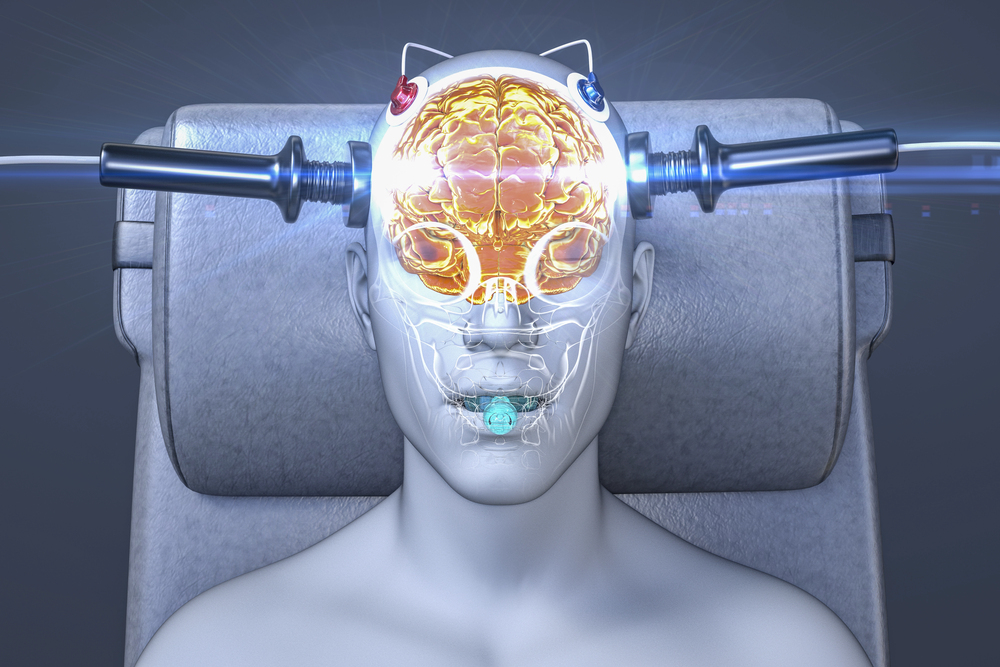
A new international online survey published in the Journal of Affective Disorders gives voice to the lived experiences of people who have undergone electroconvulsive therapy (ECT), documenting both perceived benefits and harms directly reported by recipients themselves. The current work, led by John Read from the University of East London, examines responses from 766 people across 41 countries. The study found that while some participants described improvements in mood or suicidality, nearly all reported negative effects, most commonly memory loss and cognitive decline. The authors write:
“About half (48.8%) spontaneously reported one or more positive effects and almost all (96.9%) spontaneously reported one or more negative effects. About half (51.2%) reported only negative effects, 45.6% reported a mixture of positive and negative effects and 3.2% reported only positive outcomes … Such variability [regarding potential benefits seen in previous studies] is unsurprising given that since its introduction in 1938, ECT has become one of the most controversial procedures in the history of medicine.”
The findings add to ongoing debates about ECT’s safety and effectiveness by highlighting outcomes that may be underrepresented in clinician-led research and clinical trials.
Methods
The study was designed to build on existing research examining electroconvulsive therapy by centering the perspectives of those with direct lived experience of the treatment. The authors aimed to address limitations in prior studies—many of which relied on clinician assessments or short-term outcomes—by giving ECT recipients, and in some cases their relatives or friends, an opportunity to describe the effects of ECT in their own words.
By doing so, the researchers sought to better capture both perceived benefits and harms as they are experienced outside of hospital settings and beyond the immediate treatment period. This focus on longer-term, out-of-hospital experiences is particularly important, as it reflects the everyday realities of living with ECT’s effects—contexts and outcomes that are often underexamined or absent from clinical research.
To achieve this, the research team conducted the first international online survey focused specifically on ECT recipients’ self-reported experiences. The survey was open between January and September 2024 and gathered responses from 766 participants across 41 countries. Eligible respondents were adults who had received ECT at least four weeks prior to participation, or close contacts with direct knowledge of the individual’s experience.
Participants were asked open-ended questions inviting them to list up to three positive and three negative effects they attributed to ECT. Responses were analyzed using qualitative content analysis, allowing themes and categories to emerge directly from participants’ accounts rather than from predefined clinical outcome measures.
Perceived Benefits and Harms of ECT
Analysis focused on responses from participants who described at least one effect they attributed to electroconvulsive therapy. Across the sample, reports of negative effects substantially outnumbered reports of positive effects, with most respondents describing either exclusively negative outcomes or a combination of benefits and harms. Only a small minority reported positive effects without accompanying negative experiences.
Among the positive effects described, the most commonly reported was improved mood, cited by 23.2% of respondents. Reduced suicidality was reported by 12.6%, including a subset who described ECT as having saved their life. Smaller proportions reported reductions in psychosis (3.1%), general symptom improvement (3.1%), increased energy or functioning, and feelings of hope. No respondents reported improved memory as a positive outcome.
Negative effects were far more prevalent. Memory loss was reported by 81.6% of participants, making it the most frequently cited effect overall. Of those who elaborated, many described severe, long-term, or permanent loss of autobiographical memory. Cognitive decline beyond memory loss was reported by 29.0% of respondents, including difficulties with concentration, executive functioning, processing speed, and reading ability. Five percent explicitly described their experience as involving brain damage.
Participants also reported a range of additional adverse effects that extended beyond cognitive functioning. Headaches were reported by 11.6%, often described as severe. Nearly 8% described feeling abused, violated, or traumatized by the treatment, with some reporting that ECT reactivated prior trauma. Fear or anxiety related to ECT was reported by 6.8%, and 5.4% described impaired relationships, often linked to memory loss or personality changes. Other reported effects included chronic pain, emotional numbing, loss of employment, stigma, mistrust of professionals, and increased suicidality following treatment.
Because responses were collected weeks, months, or in some cases years after treatment—and outside of hospital settings—the reported effects reflect participants’ experiences after returning to daily life rather than immediate post-treatment impressions. Within this context, negative effects were reported far more frequently than positive ones, with most respondents describing either exclusively negative outcomes or a mixture of benefits and harms. Only a small minority reported positive effects without accompanying negative experiences.
Limitations
The authors note several limitations that should be considered when interpreting the findings. Because participation was voluntary and recruitment occurred primarily through online platforms and mental health networks, the sample may not be representative of all people who have received electroconvulsive therapy. Individuals with particularly positive or particularly negative experiences may have been more motivated to participate, introducing potential response bias.
The study relied on retrospective self-reports, sometimes describing experiences that occurred years earlier. As a result, recall bias is possible, especially given that memory impairment itself was one of the most frequently reported effects. In addition, some outcomes attributed to ECT—both positive and negative—may have been influenced by other factors, such as the course of the underlying condition, age, concurrent treatments, or placebo effects.
Because the survey did not include a control group or standardized clinical assessments, the findings cannot establish causality or determine the extent to which reported effects were directly caused by ECT. The authors also note that the sample skewed younger than the typical population receiving ECT and was drawn primarily from English-speaking countries, limiting the generalizability of the results.
ECT Under Scrutiny
The findings arrive amid growing scrutiny of electroconvulsive therapy and renewed debate over how its risks and benefits are communicated to patients. Since its introduction in the late 1930s, ECT has remained one of the most controversial interventions in psychiatry, shaped by shifting scientific claims, uneven regulatory oversight, and a long history of coercive use. Although ECT continues to be promoted by some clinicians as a safe and effective intervention for severe depression, it remains a treatment for which long-term safety and effectiveness have not been conclusively established, and its use varies widely across regions.
Recent reporting has highlighted growing tensions between clinical assurances and the experiences described by people who have undergone the procedure, particularly as challenges to long-standing narratives about ECT harms gain visibility.
At the same time, these findings emerge within a broader movement across mental health research to center lived experience and include those directly affected by interventions as contributors to knowledge production. Historically, assessments of ECT have been dominated by clinician-led frameworks that prioritize symptom reduction over patients’ broader lived realities. Many early studies were conducted in hospital settings immediately following treatment, often under conditions in which patients had limited opportunity—or safety—to report adverse effects.
Survivor accounts and long-term outcomes were frequently discounted, reframed as unreliable, or attributed to underlying illness rather than the treatment itself. This pattern has contributed to persistent mistrust and to concerns that patient experience has been systematically excluded from evaluations of ECT’s risks and benefits.
The present study also draws attention to enduring structural and ethical concerns surrounding ECT’s continued use. Treatment protocols and methods of administration are not standardized, with substantial variation in dosing, electrode placement, frequency, and clinical practice across countries and healthcare systems. In addition, ECT has not received full regulatory approval for long-term safety and effectiveness, and its mechanisms of action remain poorly understood.
Under these conditions, meaningful informed consent may be difficult to achieve, particularly when recipients are unable to fully understand or weigh potential long-term risks against uncertain benefits. When consent is incomplete or compromised, some individuals may experience the treatment itself as frightening, violating, or traumatizing—an outcome reflected in participants’ reports of distress, retraumatization, and loss of trust. These experiences closely mirror accounts highlighted in recent coverage documenting the depth and persistence of ECT-related memory loss and its far-reaching consequences for identity, relationships, and daily functioning.
More broadly, the study raises questions about how “healing” is defined within psychiatric research and practice. Clinical measures often emphasize symptom change while overlooking social, relational, cultural, and identity-based dimensions of recovery that matter deeply to those receiving care. By centering lived experience and documenting outcomes beyond the hospital setting and immediate treatment window, the study underscores the limitations of clinician-centered and short-term assessments. Without sustained inclusion of lived experience in research design, interpretation, and knowledge-making, critical harms risk remaining minimized, misunderstood, or excluded from the evidence base altogether.
****
Read, J., Cunliffe, S., Hancock, S., Harrop, C., Johnstone, L., & Morrison, L. (2025). The self-reported positive and negative effects of electroconvulsive therapy: An international survey. Journal of Affective Disorders Reports. (Link)













ECT is “electrical lobotomy !”
See figure # 3 of this paper published in PNAS:
https://pubmed.ncbi.nlm.nih.gov/22431642/
The only reason why ECT keeps being applied is because 10 sessions bring around US$ 40-50,000 to the psychiatrist and hospital.
Report comment
I think the worst thing is the lack of true informed consent and not getting a baseline full cognitive assessment. When a patient is having a major mental health crisis neither of those things are possible.
I had ECT in 1994 and 1996. I lost a chunk of autobiographical memory that has never returned. My cognitive abilities were reduced and continue to worsen because of the 5 years of chemo I just completed.
I do wonder if the cures were worse than the illnesses. I’m alive, but will never feel like myself again.
Report comment