During 2025, we published 141 blogs, 243 reviews of scientific findings, 60 personal stories and 59 MIA reports, of which 25 were podcast interviews. This year’s webinars have included discussions on The Case For Soteria: Past, Present and Future, Recovery Oriented Cognitive Therapy for Psychosis and Navigating Complex Choices in Antipsychotic Reduction.
Please donate to help us continue our work in 2026 and beyond. You can become a Mad in America Supporter for $5 per month or $20 annually. Subscribers get free access to all Mad in America content and webinar events.
Here we highlight the top ten most-read blogs and personal stories of 2025.
“It’s Torture, and People Are Scared”: Patients Describe Trauma of Involuntary Psychiatric Care
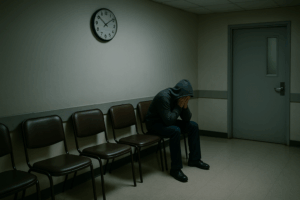 In October, Richard Sears wrote about a Clinical Nursing Research study that found that patients view involuntary psychiatric treatment as clinically ineffective, nurses are divided, and both report low professional support and family involvement during detention.
The current work finds that while nurses’ opinions are split on the clinical effectiveness of psychiatric coercion, patients overwhelmingly view this process as ineffective. Nurses and patients generally agreed that professional support and family involvement during psychiatric detention were “low.”
This research, led by Pierre Pariseau-Legault from the Université du Québec, additionally finds four major themes in how psychiatric detention is perceived by the participants: psychiatry as a waiting room, nurses as subordinates, emphasis on psychiatric drugs as “care”, and refusal of psychiatric treatment as resisting undignifying “care.”
The results paint a picture of psychiatric detention as offering little support to patients while causing additional distress. The authors frame this kind of “care” as convenient for medical and judicial institutions, but not helpful for patients.
Trauma in the Name of Treatment: Multiple Studies Confirm Adverse Experiences in Psychiatric Hospitalization
 Laura López-Aybar reported on a new study published in the International Journal of Nursing Studies which provides a comprehensive review of psychiatric hospitalizations. The study reveals widespread harm, from coercion to retraumatization, challenging the dominant narrative of therapeutic intent.
The authors write: “These findings challenge the prevailing narrative of positive psychology, which often emphasizes recovery and wellbeing without adequately addressing the real adversities patients face. By extending the focus to include profound and often systemic adversities, our review highlights the necessity for a more balanced approach. This approach must integrate positive and negative outcomes to foster holistic and genuinely supportive mental health practices.”
Severe Anxiety Vastly Improves After Minimal Treatment
 In December, Peter Simons noted that the common wisdom within psychiatry is that severe anxiety is a medical disorder that requires intensive treatment, usually including a combination of antidepressants and therapy. But a new study contradicts that wisdom, demonstrating that minimal online interventions delivered via phone app led to full remission of anxiety in the majority of participants.
The study was a clinical trial of an app that delivered digital CBT (DCBT) at a patient-led pace. The app was compared to a control group of “digital psychoeducation”—online information about anxiety.
Strangely, medication seemed to increase the likelihood of remission in the DCBT group while reducing the likelihood of remission in the psychoeducation group. The researchers don’t address whether this could be due to a “nocebo” effect where those who took the medication believed they needed more intensive treatment.
Conceptual Synaesthesia as Cognitive Literacy

In June, Jacqueline Gueye shared a personal story which describes her experience of synaesthesia.
I used to assume everyone thought like this, and I’m still partially unconvinced that they don’t. Isn’t the world so obviously layered in colour, shape, and emotional tone? Don’t all people navigate ideas through textures or loud and demanding visuals? Don’t they feel shame in their body as grey and black shadows that take over their ability to think, move, or communicate clearly? I thought the way I processed wasn’t unusual. And in a way, I was right, everyone does it, but to a certain point.
RFK Jr. May Be Wrong on Many Medical Issues, But He’s Right About Antidepressants

Edward L. Jones III, writing in February 2025, observes that documented cases show a link between SSRIs and school violence, but pharma has suppressed the data that could prove this link.
For decades, pharmaceutical behemoths like Eli Lilly and GlaxoSmithKline—the makers of Prozac and Paxil, respectively—have successfully suppressed mountains of clinical trial data that establish a link between SSRI antidepressants and suicidal and homicidal ideations and, in rare cases, murder and mayhem. And early on, the FDA was duplicitous in burying these negative clinical trial results.
It is high time that more politicians, journalists, health officials, physicians, psychiatrists, and patients were made aware of this potentially lifesaving information.
From Public Service to Private Practice: The Collapse of the Social Work Profession

Social work is a profession in collapse according to this article written by Darragh Sheehan in March 2025.
Social work originated with the Settlement House movement as a response to the increasing poverty brought about by industrialization. By the mid to late 20th century, neoliberal policies led to cuts in social programs, shifting social responsibility from the state to mostly nonprofits and privatized services. The social services that remain government-funded are often outsourced to private entities.
This shift towards privatization has not only weakened public programs but also pushed many social workers into either nonprofit organizations or private practice businesses (as social work embraced psychotherapy into the profession).
A Hospital Surgeon Falls Victim to Psychiatry

In November we published this personal story by retired consultant obstetrician and gynaecologist Phillip S. In it he describes how psychiatric treatment and a cocktail of psychiatric drugs exacerbated his work related distress.
From then on, I was snared into a world of psychiatry that I had no knowledge of. I was then given mirtazapine, and over the course of a few weeks, other antidepressants and then antipsychotics too. My family were told, mainly by occupational therapists, that I had various forms of psychiatric problems and was very unwell. Although my son was an orthopaedic surgeon, like me he had no experience of psychiatry so he could not challenge the psychiatric management.
I was now drugged and beside myself with confusion and anger about the way I was being treated. It was all alien to me, and most discourteous. The psychiatrists seemed to enjoy the role reversal with a previously highly successful surgeon as a patient. Psychiatrists hate successful conventional doctors, especially surgeons who make so much indisputable difference. They were particularly aggressive with me because of my position. The increase and changes of drugs were awful. I was soon seen at home for a MHA assessment and I was fine, so was not committed. However, they said instead that I had to see the ECT psychiatrist, to discuss ECT treatment. I did not know anything about it.
Antidepressant Withdrawal Symptoms Linked to Life-Altering Consequences, New Study Shows

Richard Sears reported on a study revealing that withdrawal symptoms from antidepressants can last years, disrupting lives and relationships.
Led by Joanna Moncrieff of University College London, the research found that 80% of participants withdrawing from antidepressants experienced moderate to severe impacts on their lives, including disrupted work, strained relationships, and even the loss of jobs. Alarmingly, 40% of participants reported symptoms lasting more than two years, while 25% were unable to stop taking antidepressants altogether.
As the authors note: “Half the participants in our study who had stopped antidepressants had experienced withdrawal symptoms that lasted for over a year, around a third for more than two years and 10% for more than five years. Impairment of the ability to work was common, including having to reduce hours, take sick leave or stop work altogether. Family and relationship problems and having to give up social activities were also frequently reported. Free text answers revealed that some people had suffered significant disability and distress.”
“I Made it Through the Horrors of Psychiatric Drug Withdrawal” A Conversation with Comedian Dex Carrington

On our Mad in America podcast, Brooke Siem interviewed Dex Carrington about his experiences taking Lyrica and Zyprexa, including a five-and-a-half-year taper after 10 years on the drugs.
“Things started unraveling pretty fast, so I went to a psychiatrist and said, “Listen, I don’t want to become a drug addict but I have so much anxiety and depression. Please help me.” And the way he framed it was basically: If you’re a good person, you take psychiatric medication. If you’re a bad person, you take narcotics. What do you want to be? It’s funny, right? Because every mood-altering substance affects your brain — but somehow, these pills are magical! They’re beyond the laws of physics!”
A Reflection on “Unshrunk: A Story of Psychiatric Treatment Resistance”
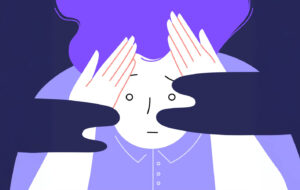 In April, Sandra Steingard provided her personal reflections after reading Laura Delano’s memoir entitled Unshrunk: A Story of Psychiatric Treatment Resistance.
I have known a number of psychiatrists who respond to Laura’s story and those of others like her by saying she was misdiagnosed. That suggests that some wise, all-knowing psychiatrist would have made the “correct” diagnosis.
Misdiagnosis as the fallback explanation when things do not go as expected constitutes a retrospective correction that assumes there is a way to “get it right” from the beginning. Diagnosis should always be considered a hypothesis, a provisional way of thinking about a person’s problems, a guide that suggests—but does not dictate—potentially effective treatment.












God bless to MiA in the next year, and many thanks for all of you at MiA for your existence in the past. And God bless to you in the coming years.
Report comment
Love your site, a true beacon of hope in a sea of darkness.
Report comment
I do appreciate Mad in America because there are research findings that are really relevant to my work with my psychiatric survivor peers and the providers who treat them here, where there are so few providers that providers cannot be questioned (folks wait forever to get in and feel lucky — the providers have no incentive to improve their practice. Except for the bulk of the providers who have almost no qualification and are often motivated to help.)
Anyhow, I want to point out that I often feel that Mad in America should be renamed “Employed in America.” America is a nation of service providers, prison guards, forensic nurses, psychologists, social workers, rehab professionals …. oh man, it is endless. One on one aides. Special Ed teachers (one of my favorite categories to debunk).
“Mad in America” is a different group: we are very much a Venn Diagram these days, but still, we are an unheard voice embracing some of the most impoverished, most persecuted, torture survivors in the United States; we are denied many benefits of citizenship including civil rights, custody rights, and even the right to be licensed in certain professions in certain states. We are un- and under-employed to a shocking extent, and in the face of talents we clearly possess. We are gossiped about by providers and relatives and rarely heard to speak in the first person; our history is nearly erased. Our progenitors are in unmarked graves around locked institutions. There has never been Truth and Reconciliation, whether real or pretended. Around the world we have served as guinea pigs; even today, psych survivors are in poor physical health due to treatments purported to improve our overall health.
And this journal is about those employed by the industry who did that.
Maybe a little more balance, Bob? I attended a talk once, by you and some folks I really like, including Peter Breggin; the talk included the idea that anti-depressants had lowered all our IQs. This is not a wise thing to tell a population whose intelligence has been routinely questioned by the captors. I yelled — “I’ll take an IQ test with any of you!”
But I was ushered out of the forum dedicated to my own liberation.
Bob, maybe think a little harder about our position in the world.
Thank you!
Grace Nichols, JD
Report comment
Goods points.
Report comment
As one who got in the top 99.95% on my math SAT’s, and who is supposed to be a “judge or architect,” according to 40 hours of unbiased psychological career testing. I will say the psych “professionals” who misdiagnosed the common symptom of antidepressant withdrawal (given under the false guise of a “safe smoking cessation drug”) of brain zaps, as “bipolar.”
They are pretty much the dumbest and least respectable people I’ve ever met. Not to mention, the “mental health professionals” trying to cover up such malpractice (one now FBI convicted) are downright criminals.
It truly is shameful that our society gives more respect to the scientific fraud based “mental health professionals,” than those of us who know about anticholinergic toxidrome, and that it can be created with the antidepressants and antipsychotics … especially since all doctors are taught about anticholinergic toxidrome in med school.
Oh, I just noticed my computer hacking, malpractice covering up, non-hired psychologist nemesis, or Google, has taken away my right to comment on this website utilizing my pseudonym, Someone Else.
Is that legal? I don’t think so.
Report comment
Thank you for this Sharon; anger is appropriate. For my mother, me, and then my students, we saw Lithium withdrawal, which led to mania, as being diagnosed as an exacerbation of bipolar (which might or might not be present). And then kidney disease via lithium was prescribed. Watch out for this! My mom actually had MS which was misdiagnosed for many years, ascribed to her “manic depression.” While I have periods of fluctuating energy states, thankfully leaving me alone for many years, it is not at all clear to me that the doctors understand it. One pointed to abnormal theta waves, one diagnosed extreme ADHD. So I diagnose a need to live carefully, sleep consistently and keep my sense of humor around medical professionals. I also see gifts in my differences and experiences and, like you, have always been classified as a gifted, scholarship student. Keep on going with believing in yourself.
Report comment
I like the new layout. Better organized, though it took me a minute. Thank you.
Report comment