My phone lights up with my mom’s name in the middle of a workday, and I already know what I am going to hear, because it has been the same for over ten years.
“I CAN’T SLEEP, I CAN’T EAT, I CAN’T WALK, I CAN’T DO ANYTHING. I JUST WANT TO DIE.”
She screams it, crying, and then she says it again. Some days she calls more than thirty times.
I want to tell you who she was before any of this, because otherwise this would just be a sad story. My mom is the kindest person I have ever known.

The Woman on the Other End of the Phone
My mother was orphaned young. There was nobody to fall back on and no version of her life that anyone was going to arrange for her, so she worked it out herself. Whatever grit I run my companies with, I got secondhand from her.
In Vietnam she was a teacher. In California she became a hair stylist, and her clients adored her, the kind of loyalty where people follow you from salon to salon for twenty years.
Raising us, there were years she worked two jobs. She was up at 4:30 AM for the gym every day, then home to make fresh juice, cook, pack my dad’s lunch, clean and get us ready and drive us to school. Then work. Then home again to take us to after school activities, make dinner, finish the rest of the house, tend the garden, walk in the evening, and feed the animals nobody else wanted. A bird with one leg. Two rabbits, one of them with one eye. A tortoise, a guinea pig, lizards, the cats, the dog. People abandoned them and she took every one of them in.
That was one day, and then she did it again the next day. She never once complained about any of it.
The tips she earned as a stylist went into taking us somewhere once a year, not to rest, but so that her children would stand somewhere new and understand that other people lived differently and that their ways were worth knowing. On those trips she took us to orphanages, where she handed out food and school supplies and toys, whatever she could afford that year.
She had been one of those children herself.
By the time we were grown and she had retired, those were supposed to be the good years, the ones she would spend traveling with her kids.
2016: When Everything Changed
By 2016 the stress was enormous, her sleep had stopped, and menopause was on top of it. My dad suggested a piece of chocolate with THC in it, thinking it might help her rest. She ate it. He was trying to help her.
What followed was a panic that did not stop. Suicidal, screaming, for a solid week. We kept waiting for it to clear her system, the way you wait for a fever to break, and it never did.
She was hospitalized, put on antidepressants and antipsychotics and medication for anxiety, and then discharged. After that came the loop, and we could not find the exit from it for years. Involuntary holds, stays that ran a month or longer, discharge, deterioration, back again. We went to the best psychiatrists in Southern California. We went to UCLA. Over those years she was diagnosed with schizophrenia, then schizoaffective disorder, then bipolar disorder, then major depressive disorder, then psychosis, each new label replacing the last one and each new prescription meant to answer the one before it.
She had none of them. A woman in her sixties does not simply become bipolar one year, and not one of those labels ever fit the mother we knew.
What Was Actually Happening
She was having a severe adverse reaction to the drugs.
The worst of it has a name that most people have never heard, and I want to describe it properly, because the word alone does not carry it. Akathisia is not anxiety, and it is not restlessness in any sense a well person would recognize. It is a state the medication creates in which being still is not possible. There were days my mom paced for twenty hours without stopping. She would sleep for a few minutes and then be pulled out of bed by her own body, not because she wanted to be awake but because lying down had become unbearable. She could not tolerate music. She could not tolerate being talked to. People who have lived through it describe wanting to climb out of their own skin, and that is the closest description I have found to what I watched happen to her.
The part that took time to understand is that the wish to die is not something separate that arrives alongside it. It is part of it. When my mother screams that she wants to die, she is not depressed in the way most people mean that word. She is inside something her body cannot get out of, and dying is the only exit she can see. Almost everyone I have come across who has been through akathisia arrives at that same place.
Every time the drugs made her worse, it was read as the illness worsening, so the dose went up or another drug was added, and that drug had its own effects, which were read as illness and treated with another drug.
No doctor told us any of this. I worked it out, at two in the morning, after the workday and after the house had gone quiet, reading studies and clinical trials and patient forums, looking for anyone describing what I was watching. I am not a physician. I am the daughter who would not let go of one question, which was: What if the medications themselves are part of what is hurting her?
The Days They Told Me She Was Sleeping
There is one hospitalization I have to tell you about, because it is the clearest evidence I have that I was not imagining any of this.
She was on a 5150 hold, which is what California calls an involuntary psychiatric hold. Early on I asked to speak with the doctor who was treating her, and on that call he told me that elderly people get bored, and that is why they become depressed. I have not been able to put that sentence down.
Then he treated her. Every time I called the unit to ask how she was, the staff told me she was sleeping. She was sleeping when I called in the morning, and sleeping when I called in the afternoon, and sleeping again when I called at night. After enough days of that I stopped believing it, and I pushed until they let me in to see her.
I found her with her head and neck cramped over to one side and held there, drooling. She could not eat. She could not talk. She looked at me with nothing behind her eyes.
We begged them to discharge her and they told us they could not. So my siblings and I took her out ourselves and drove her straight to a different hospital, and that hospital found lithium toxicity. It came from what the first doctor had put her on. The same one who had explained to me that elderly people get bored.
She had not been sleeping. She had been medicated to the point where she could not speak or move her own head, and the people telling me she was resting were standing over her every day.
That was not the only stay like it. Another time she was held for over a month. When they finally discharged her she could not walk straight and she was drooling, and on the freeway on the way home she tried to jump out of the moving car.
After that I knew to put the child locks on. There was a later drive where she rode in the back with the locks down, and I drove with one hand on the wheel and the other arm holding her back while she lunged forward trying to take it from me, screaming at the top of her lungs to let her die.
Sometime after that stay I was copied on an email between the attending doctor and my mom’s outpatient psychiatrist. They called each other healers.
I have thought about that word for years. I do not believe either of them meant her any harm, and that is the part that is hardest to explain to people who would like this to be a story about villains. They seemed like good-natured people who believed they were helping. They had no idea what they were doing to the woman in their care, and nothing in the way they worked was ever going to tell them.
I Spent Years Being Told I Was Wrong
When I raised the issue of akathisia, some of her doctors knew the word. They told me that was not what this was, that what we were watching was late onset psychiatric illness, which had conveniently arrived right after she was given a cocktail of their drugs. Most of the rest did not seem to grasp how severe it can be, or how much of what they were seeing it could account for.
Meanwhile my mother was called non-compliant for being unable to sit still and unwilling to swallow more of the insidious pills. She was not refusing care. She was reacting to it, and telling us so, over and over, because it never stopped long enough for her to finish describing it.
I tracked and recorded everything I could. Her symptoms, every medication she was given, every doctor visit, every change and what followed it. I learned an entire specialty at night, in fragments, reading about the brain and how it works, brain disorders, medication names, mechanisms of action, side effects. I researched treatments and then arranged them for her, because nobody else was going to.
If there is a treatment out there, my mother has tried it by now. That is the part I want people to understand about her. Through all of it, through suffering I still do not have adequate words for, she stayed willing. Every time I came to her with something new I had found, she said yes. She has been saying yes for ten years.
At a facility, the attending nurse practitioner said out loud something that explains the whole decade. When I asked about tapering plans for the laundry list of medications my mom was on, he asked me how it would look if he were taking medications away instead of adding them, with my mom behaving like this. He was describing the trap from inside it. The medications were causing the behavior. The behavior was the reason nobody would stop the medications.
The Year Before Hospice
My mom could not last more than a few months at any facility. Her behavior became too much for the places that exist to care for people like her, and we would be told to find somewhere else, and then somewhere else after that. My siblings both tried caring for her at home. My cousin came from overseas to help, and stayed until she was too burnt out to stay.
Last year my mom started smashing her own head against the wall, over and over, until her face was black. Then she stopped eating.
The director of nursing told me to call hospice. So I did, and I sat with the fact that I was arranging my mother’s death, and it ate me alive.
Hospice Is Where It Turned
On hospice, a psychiatrist finally said yes.
Nobody proposed deprescribing to me. I asked for it, the way I had been asking for years. What was different was that this psychiatrist did not dismiss it. She listened to what I had watched happen, she took seriously that the symptoms were real and caused by the drugs, and she let us begin taking things away. I am grateful to her to this day.
Here is the part I did not know, and I want to say it clearly because I think a lot of families do not know it either. Once someone is on hospice, taking medications away becomes the normal thing to do rather than the dangerous thing. The goal stops being to fix the person and becomes keeping them comfortable, and under that goal deprescribing is no longer a liability, it is simply good care. Doctors who would not consider it for years were suddenly willing, and nothing about my mother had changed except the label on her care.
I did not learn that from anyone. I learned it because my mother ended up there. I want to be careful here, because this is the part people take badly, and because we learned it the hard way before we learned it the right way.
At home, earlier on, my mother stopped taking her medication on her own. She was not being difficult and she was not refusing care. She was suffering so badly from the side effects that she stopped. It went badly. You cannot come off these drugs abruptly, and what happens when you do is frightening, and it gets read as the illness coming back rather than as withdrawal.
Nothing warned us. Those orange pill bottles come with a label about drowsiness and about not operating heavy machinery, and not one word about what happens if you stop. A person in that much distress is holding the bottle in their hand, and the bottle tells them nothing about the one thing most likely to hurt them next.
So I am not telling anyone to stop their medication. Coming off these drugs can be as dangerous as being on them, and ours was a long slow taper guided by the one doctor who finally listened. What I am saying is narrower than that. Adverse drug reactions can look exactly like psychiatric illness, and almost nobody is looking for them.
My mother had to be dying before anyone would consider that her treatment was hurting her.
Where She Is Now
It has been over ten years. She has dementia now, and I believe the years of medication are how she got there.
She is still debilitated, still severely anxious, still restless in a way I cannot fix. But she is not hurting herself anymore, and this week she takes the last dose of the final antipsychotic we have been tapering her off of. A decade to get her off the medications that were making her ill.
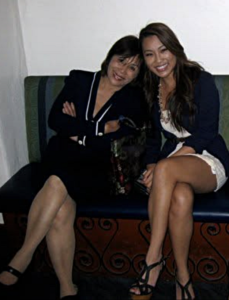
I want to say this plainly: I love my mom. She is the kindest and most supportive person I have ever known, and she is still that person underneath all of it. In the middle of her own suffering, screaming down the phone that she wants to die, she will stop and ask me whether I have eaten.
She still calls me more than thirty times on the bad days, so I built something to help us both, and other families living inside this same illness. She hears my voice and she settles for a few minutes, until her mind lets go of it and she dials again. What it means is that she is not met with a voicemail anymore, while she waits for me to get to her.
If Someone You Love Got Worse
If someone you love got worse after starting a psychiatric medication, and the answer was always more medication, you are allowed to ask whether the treatment is the problem. You do not need a medical degree to notice a change in someone you have known your whole life. You know them better than anyone else in that room.
So advocate for them, and keep advocating, because no one else is going to. Not every doctor can think outside the box. Some of them are trained to stay inside it, and that training is not malice, it is just the shape of what they were taught. It does mean that the person willing to ask the uncomfortable question is often going to have to be you.
Keep asking until you find the one who is willing to actually look. That person does exist. In our case she was the difference between my mother dying and my mother still being here.
My mom is still here, and I will keep fighting for her.











Thanks you for this brilliantly written account of your mother’s, your own, and your family’s suffering.
I have seen inappropriate ‘antidepressant’ prescribing cause intense, overwhelming and unbearable AKATHISIA; misdiagnosed as “psychotic depression”.
AKATHISIA, at this level of intensity, may be ‘barn – door” obvious when seen by a physician experienced and aware of this common adverse drug reaction.
What is wrong with the training of prescribers who incarcerate those with this life-threatening iatrogenic emergency, and then force them to take ‘antipsychotics’ and ‘antidepressants’ which not only intensify the suffering and toxicity, but result in the kaleidoscopic series of additional psychiatric ‘diagnoses’ which are LABELS FOR LIFE?
Once labelled, another ‘treatment’ (toxic drugging?) follows for each of the serial ‘diagnoses’ you recorded above. The resultant further adverse drug reactions result in you ‘laundry list’ of
psychiatric labels.
Diagnosis begins with a history being taken.
What/when prescription dugs have been taken? How and when did these symptoms appear?
(has/have the drug/drugs been continued? changed? dose increased? – et al)
These questions are fundamental in the prompt recognition of AKATHISIA and the rapid amelioration of its intense suffering.
Observations from family/loved ones enhance this history. The akathesic patient may be unable to describe what is happening to them.
Improved AWARENESS OF AKATHISIA is required both by prescribers, and by patients.
Many years ago a global success was achieved with the (then) unique introduction of AIDS AWARENESS DAY.
We need everyone to have heard the word AKATHISIA, just as they have heard of AIDS.
Time for WORLD AKATHISIA AWARENESS DAY?
When it is due to prescription drug induced AKATHISIA, the experience of suffering and misery you describe should become avoidable, or at least manageable promptly and effectively.
Report comment
el problema parte primero del diagnóstico, no hay prueba objetiva y rara vez se aplica las que existen, que tampoco son infalibles. Se limitan a copiar y pegar en el siguiente seguimiento. En la mayoría de las veces, no es el mismo facultativo, con lo que tampoco ven la progresión, ni pueden hacer un análisis funcional, o una historial progresivo, ni registran los efectos, incluso estando ingresados, quien registran suelen ser auxiliares, ya que enfermería aplica tratamiento y el médico ve al paciente un rato. No se escucha ni al paciente ni a la familia, quien se convierte al alta en enfermera, auxiliar, terapeuta e investigador hasta colapsar. se les suele asignar la etiqueta de falta de conciencia de enfermedad, acallando así el posible registro de los efectos secundarios. y si se registra algún síntoma no se hace forma clara, por ejemplo “conducta disruptiva”, que puede ser que la persona esté llorando, o puede ser que la persona esté dando golpes o gritando, lo cual lleva a una interpretación subjetiva de quien lee el informe. Si se ocasiona iatrogenia, se oculta, bajo otro diagnóstico, ejemplo “esquizofrenia resistente” o “falta de adherencia”..u otros. Se premia la prescripción y se castiga la desprescripción.
Report comment
Iatrogenic damage at its finest and no one professionnal agrees to remove what causes the harm.
Report comment
Really? Prove it.
Report comment
Reading what your mom (and you) have been through completely shattered my heart. Some of the worst suffering imaginable is caused by psychiatric drugs.
I experienced akathisia when I tapered a drug too quickly and almost didn’t survive. Thinking of what your dear mom went through is tragic.
I’m so glad that your mom is still here and has been able to free herself of those horrible drugs.
She is fortunate to have such a caring and loving daughter.
Report comment
Just a note that I love the name you use — Future Psychiatric Survivor. May your continued journey proceed well for you.
Report comment
What a powerful article. Thank you for writing it and sharing it here. I am so sorry to read about what your mother, you, and your family has been through.
As I read through this, one of the first thoughts I had was “This is criminal.” This whole trial and error thing that happens is not at all “scientific.”
I really appreciated this statement: “Not every doctor can think outside the box. Some of them are trained to stay inside it, and that training is not malice, it is just the shape of what they were taught.”
I have said for several years that too often “we are what we are taught.” At some level, some type of different approach is warranted. Some level of common sense should kick in that to just try more and different drugs is more of a desperation move than healing and care.
If you can try adding or changing the drugs, then you can try detoxing someone off of them for awhile to see how that impacts things. That is no more “trial and error” than the polypharma approach.
Again I am so sorry for what you and your family have been through.
Report comment
Yeah, I don’t entirely buy the “that’s how they were trained” trope. At some point, as a professional, you ought to start noticing that your “help” is not helping or doing harm in too many cases, and start thinking about what you’re really doing and what options might be better for your clients. Humans are not computers. We can do more than what we’re trained to do.
Report comment
Everything is criminal to someone with a holiday plan. Right? Steve, let me think, Steve aah McQueen. and and the little guy Papillion or the day butterfllies that very girl with a tiny brain loves, the papillionidae. the lepidopterans include all those pesky moths to (moths to a flame) and dont look up the Atlas Moth either.
Report comment
Totally agree, Steve. And yet much of our education system is not about challenging the system itself. It’s about learning what we are taught from the “experts.” That’s why I love that a quote attributed to Albert Einstein is that “Experts are trained dogs.”
Report comment
I never heard that one! Thanks for sharing it with me!
I’m reminded of the Mark Twain quote: “I never let my schooling interfere with my education!”
Report comment
Steve McCrea
logged in via Facebook
“Assuming mental distress is caused by bad biology is a big part of the problem. The DSM takes subjective groupings of behavior and assumes they are some kind of a scientific entity. There will never be a biological explanation for any mental illness because there is no reason to assume these “mental illnesses” are meaningful diagnoses that reflect some biological reality. That’s not to say that SOME mental distress may be caused by biology, but the categories would have to derive from the biology rather than the other way around. And most “mental illness” is the result of dealing with adverse circumstances, usually starting in childhood. The DSM needs to be ditched they need to start over from scratch, or this new approach will be a waste of time.”
Steve, if this was you, recently, to “The Conversation US,”
https://theconversation.com/im-part-of-the-team-writing-the-next-bible-of-psychiatry-for-the-first-time-the-dsm-will-use-biology-to-understand-mental-disorders-288064#comment_3084153 ,
you cannot possibly actually mean “they need to start over from scratch,” can you – when THEY, psychiatrists of any hue, are never going to concede that, like all “nociceptor” theories, the very notion that a mind, personality, psyche or behavior can be diseased is obviously nonsense?!
But that may deserve a whole blog – or a book – of its own?
Wishing mirth and joy to all,
Tom.
“Get your facts first. Then you can distort them as you please.” – Mark Twain, reportedly.
Report comment
We do not think outside the box, because our society has been set up to house many elite people in gated communities, special quiet settings protected from noise irrelevant to those who live there. Not bad in itself, but the country has been developed in this way, as white flight ran from cities, instead of realizing that intellectually based cultures can learn from oral community cultures. The net result is that one finds very little support in those gated communities, for challenging a mental health system based on the diagnosis of noise as insanity or chaos – for parents have no history of guiding their children of both genders, to emerge in a world that contains some risk and lots of other people. Our intellectual interpretations of “wellness”, “kindness” that focus on “self-care” in a protected, isolated world – has very different ideas of language, ways of getting help from peers and bystanders – it is designed to define relationships and anything unexpected is chaos. Instead of teaching people how to rebel, join others to build alternatives, the business builders that are gigantic can overshadow local networks of care – and nobody challenges those community networks to handle substance use people effectively, not because they hurt themselves, but because they discourage their own families and communities. They need treatment, rehabilitation, paths in this changed world, paths that help them over a few years, to design and live a stable network. People centered care, support through life transitions – not universal assumptions about behaviors of stress as if they were unrelated to life in a world where families are normally chopped up, with no alternatives.
f
Report comment
Yes, Steve, but if a psycho pharmacologist were to have a sudden or even a not-so sudden Ah-HAAAAAAH, what’s a poor boy/girl gonna do – quit and revert to GP’ing, while consistently not only eschewing all “anxiety -depression” diagnosing anymore but also, in good faith, doing her/his best to debunk the whole psychiatry thing?
I think it’s important to have this discussion and to offer folks ways out, don’t you?
Wishing you mirth,
Tom.
Report comment
Kat so sorry to read this. Nothing really I can say too close to home for me. The horror that only a palliative care doctor would deprescribe the poisons. Brave writing brave family.
Report comment
Reading this very moving account of two very great women’s struggles, I think once more of Joan of Arc, of Lady Mariko (of “Shogun”), and of Dolly Parton (thank YOU, Dolly (and of Tina Turner, and of my own mom, Vera, and I think of the very learned gentlemen who so tortured and persecuted them, and I think of my two magnificent mothers-in-law, Nancy Joan and Christa, and I think of terms like witch and sinner and heretic and hysteric and unclean…and grace and disgrace…and of precise prescriptions prescribed women by men, such as prayer and good works and slavery and ostracization for their salvation, and the rack and burning-at-the-stake and extremes of self-sacrifice and so on to save their souls…oh, and I think of female circumcision, too…and then I read a woman write of “brain disorders” and of “medications” for them, prescribed by psyche-iatrists (or healers of souls, male and/or female), and I know I have nothing nice to say and I think once more of my beloved mom and of how often she implored us
“If you have nothing nice to say, say nothing!” and I know that, as I wonder how and why abandonment issues may cause any of us – but especially the girls – to try to overcompensate for taking up so much space and time on this planet, that I must wait until I have something nice to say if I am to say anything other than
Thank you, Kat, and to your mom, and to MIA, again, too!
Comfort and JOY!
Tom.
“Find out who y’are, and do it on PURpose!”
– Dolly Rebecca Parton Dean,
Whom some say checked out yesterday,
But I’ve begged, “NEVER LEAVE!”
Report comment
“Not every doctor can think outside the box. Some of them are trained to stay inside it, and that training is not malice, it is just the shape of what they were taught.”
AND
“Assuming mental distress is caused by bad biology is a big part of the problem. The DSM takes subjective groupings of behavior and assumes they are some kind of a scientific entity. There will never be a biological explanation for any mental illness because there is no reason to assume these “mental illnesses” are meaningful diagnoses that reflect some biological reality.”
I seem to think both these statements are true. That some think this is the way of things, and that some think these human nature fallacies are correctable – is the human condition.
In listening to the account of a young physicist (age 23) this morning – the person described themselves as analytical and precise. I was once an accomplished Software Engineer. I can relate. To get my mind to quit counting everything is against my nature!
Now drop me – as an elderly female into the junior high “mean girls” club that passes for senior community and frankly – I don’t get it!
What is often referred to as IQ versus EQ. I didn’t go to the prom, I went camping … so your nostalgia prom party means nothing to me.
A long winded way of saying – they don’t know what consciousness is! I only know this because the current wave of technology development “A.I.” are pursuing machines that are conscious (think Hal, in 2001 – A Space Odessey). They can’t decide whether the machines are conscious or not, because they don’t know what consciousness is!
And they have no idea why some of us incline analytical versus some of us incline social ladder climbers.
The hubris of our times seems to know no limits.
Which completely misses the point of this article. The establishment will not help people stop taking these toxic psychiatric drugs. Not until you are dying (and possibly from those drugs). It’s against those individuals survival – whether we are talking about ongoing fees from the “come back and see me” or the risk of litigation if something goes horribly wrong.
The article is extremely well written!
We are not machines!
Use the agency you were born with as a human being.
Report comment
Kat, thank you very much for this powerful account of your mother’s pain. I’m so sorry for what you have been through and continue to endure. What an incredible person and daughter you are for sticking by her side and never giving up on her. I am someone who experienced the things she has (including akathisia). I’m on the tail end of my recovery journey and still quite young. There was a time when I didn’t think it was possible to find hope in life. I’m so glad I didn’t give up. Thank you for not giving up on your mother and for being a voice for survivors.
Report comment