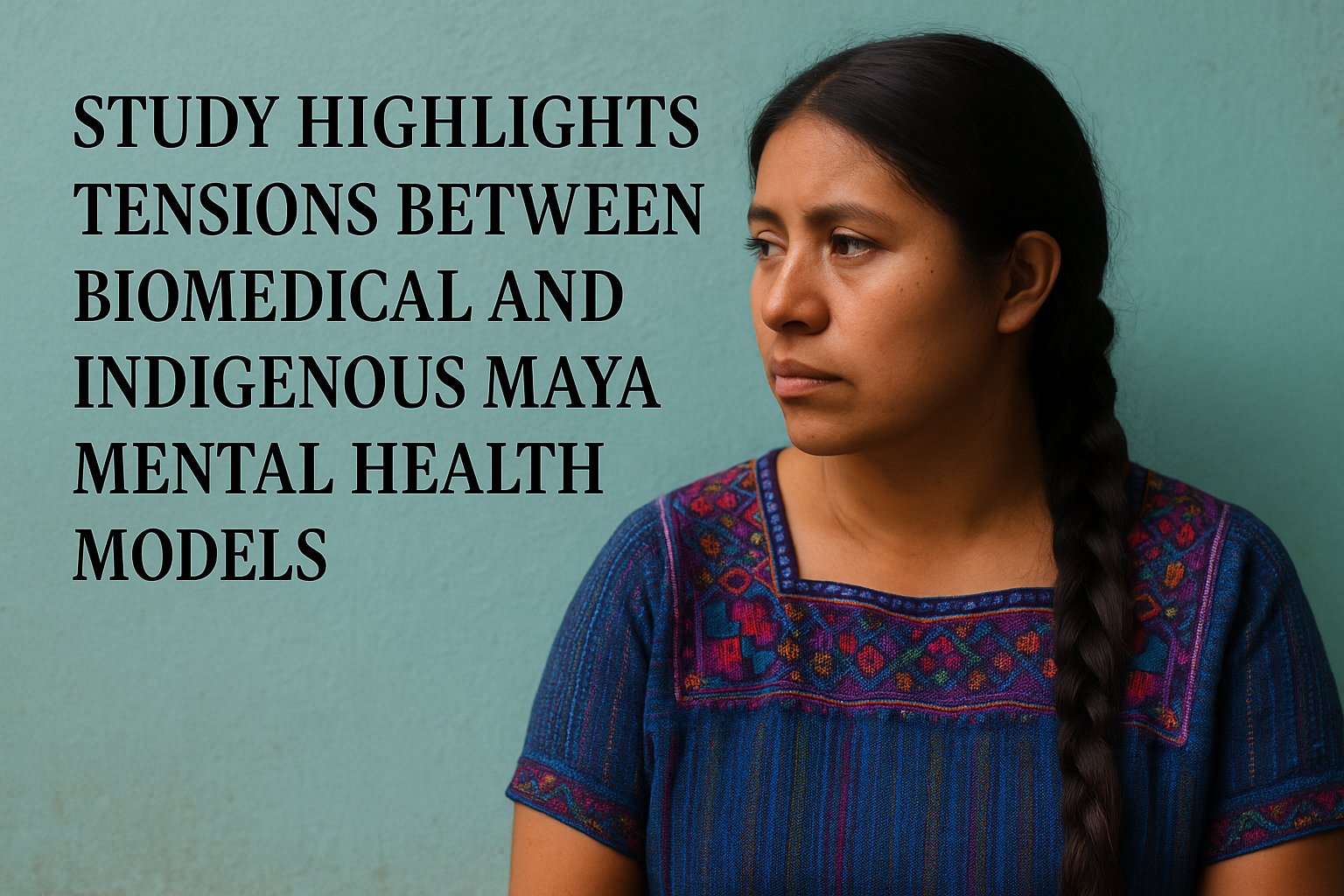
A new article published in SSM – Mental Health explores how Maya communities in Guatemala understand and respond to psychosis, revealing tensions between biomedical psychiatry and traditional healing systems.
Led by Michelle Marie Pieters of the Association for Mental Health in Guatemala City, the research found that people with lived experience of psychosis and their families often linked the condition to trauma and family stress, while mental health professionals emphasized medical causes such as genetics and neurological disease. Traditional healers, by contrast, attributed psychosis to spiritual forces like witchcraft, possession, and divine punishment.
“The study highlights how beliefs, language, and history shape perceptions of psychosis and recovery in a Maya Indigenous community in Guatemala,” the authors write. “Understanding these views is essential for designing culturally relevant mental health interventions that bridge biomedical and traditional practices. Without this, programs risk being disconnected from community needs, causing delays in care and stigma.”
The authors note that there was evident tension between traditional healing and biomedical practitioners, with many traditional healers refusing to refer people to biomedical practitioners and mental healthcare professionals being quick to criticize traditional healing practices.
Mental healthcare in Guatemala was limited, according to most participants’ perspectives. Community expectations and recovery outcomes generally aligned, with participants emphasizing goals such as well-being and economic productivity. Stigma was also a concern across various groups.
“Our findings support creating more inclusive, accessible care that respects the experiences and priorities of people living with psychotic conditions and their families,” the researchers add.








“Maya healers are questioning the effects of psychotropic drugs and mistrusting biomedical providers.”
Wisely, I will say, Maya healers. Especially given Robert Whitaker’s research findings, and since I found medical evidence that the antipsychotics / neuroleptics can create the positive symptoms of “schizophrenia,” via anticholinergic toxidrome; as well as the negative symptoms, via neuroleptic induced deficit syndrome.
Report comment
Isn’t this kind of like “tensions between workable and bullshit models?”
Report comment
Yes, and sadly the Western world, believes in the “bullshit models.”
Report comment
I’m not computer literate enough to be able to format multiple links and my comments in one post.
“Laughter is the best medicine.” Sometimes I’ve felt better after crying. Crying can be good medicine too. (I’m going to post this and then post a short video link on the topic of “Skin in the Game.””
Report comment
Link about “Skin in the game.”
https://youtu.be/qx5X0ICOej4?si=SyznViwXfhrIMV-O
Report comment
Link about Indigenous Peoples. https://open.substack.com/pub/stevennewcomb/p/indigenous-peoples-as-dominated-peoples?r=5yjo19&utm_campaign=post&utm_medium=web&showWelcomeOnShare=false
I see similarities and parallels in this article to me being a Psychiatric Survivor and Ex Mental Patient. For example, my family says “We all know you’re mental.” Too bad for my family or anyone else that have been led to believe the alleged claims of Big psych/pHarm that are not based on any evidence or scientific method (despite successful pseudo sales and marketing efforts that rely on misinformation.)
Somewhere in the history of the DSM the “committee” that is responsible for the contents of the DSM admitted that the DSM is based on “guess work.” I searched the MIA archives and couldn’t find the source of that admission. Maybe someone remembers the source. Maybe it was the late Paula Caplan in one of her books.
Regardless, the label/diagnosis/prognosis that was pinned on me was fraudulent and a world away from the reality I was going through back in 1989. However the mere label was a form of dominating, violent character assassination, that, like Indigenous Peoples, I’ll never be FREE of.
(I’ll post a recent MIA article below this post titled “Beyond Knowing.”)
Report comment
MIA Article. https://www.madinamerica.com/2025/10/from-knowledge-to-being-expanding-what-lived-experience-means/
Report comment
New title: “Attempts by Western ‘mental health clinicians’ to coopt and bully traditional Mayan healers and communities are met with strong resistance.”
Report comment