
How to Help Someone Who is Suicidal
Together, we can hold individuals who are plumbing the depths of their pain and help them to transform it. We can show them that there is another, med-free way to accept themselves and that there is precedent for what it looks like to break free from psychiatry, its labels, and consciousness-warping chemicals.
Reappropriating Bipolar Beyond Pathology
It’s still not easy for me to say, “I’m bipolar.” Know that I’m bipolar for good reason, reappropriating a painful word, so those in pain can find me—so you can find me. This is how I reappropriate a term used to strip me of my humanity, a term used to sell me counterfeit versions of reality. I refuse to let go of a label that helps me find my people, no matter how painful it is to retain.
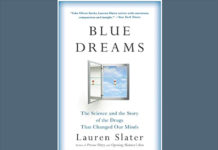
Still Seeking a Chemical Cure After All These Years: Lauren Slater’s Blue Dreams
Blue Dreams offers a history of the development of psychiatric drugs, but is partly a memoir of the demise of the author's health during the decades she spent on psychiatric drugs. At the time of writing her memoir, Slater is not yet at the point of realizing that the mental health system is not a productive place to go for answers to depression.

The “Essential Principles” of Psychiatric Practice: More Psychiatric Cheerleading
In the May 2018 issue of Current Psychiatry, renowned psychiatrist and editor in chief Dr. Henry Nasrallah provides a list of 27 "principles of psychiatric practice," most of them self-serving platitudes. There's one principle he has omitted, if we are to consider his own career to be exemplary: Cultivate mutually beneficial relationships with pharmaceutical companies.

Busting 7 Myths About the Practice of Psychotherapy
All in all, it is not enough that public policy pundits push for greater access to mental health services. Alongside improving access, there needs to be renewed focus on the quantity and quality of psychotherapy the average American currently receives. Health insurers need to reexamine their false assumptions about the effectiveness of short-term, quick-fix therapies.

Is Psychosis Natural?
Much of the wild world is now a garden: a rational, controlled space. Yet if we step out of the garden and back into the old growth, I believe the process of psychosis belongs as part of Earth’s “will,” of her wild. The physiological process of psychosis—that of amplified senses—is ecologically purposeful. Not good nor bad, but part of what Nature does trying to grow. Here I share a talk I gave in Boulder, Colorado exploring these themes.

Learning to Speak Psychotic
One of the biggest barriers that people who are “psychotic” face is one of communication: other people often have trouble understanding what they’re talking about. The way they describe their experience and their ideas are simply foreign to most people. This lack of clear communication is what gets them labelled as “psychotic” in the first place, and thus it leads to a breakdown between the “psychotic” and the rest of society. This is a loss to both groups.

Randomized Controlled Trials of Psychiatric Drugs Tell of Harm Done
The most important data in an RCT is not whether the drug provides a statistically significant benefit over placebo. The most important data is the “number needed to treat” calculation (NNT). For the person considering taking an antidepressant or an antipsychotic, the NNT data provides the “math” needed to weigh the potential benefit of taking the drug against the potential harm of doing so.

Suicide in a Culture of Mandated Happiness – Who’s to Blame?
We live in a culture of mandated positivity and compulsory happiness, which somehow remains untouched by the current political, social, ecological and economic realities of the world. If you’re distressed, it must either be your bad attitude (which is a choice) or your broken brain (which is not a choice); god forbid we look anywhere outside the self.

Spotlight on Institutional Psychiatry
Spotlight on Institutional Psychiatry is a response by psychiatric survivors and allies to Operating in Darkness, a scathing 2017 report on British Columbia’s Mental Health Act Detention System. We hope that professionals will take note of the devastating effects of forced psychiatric treatment and be moved to speak out, and, above all, that survivors will feel encouraged and inspired by our efforts.

TED Betrays Its Own Brand By Flagging Nutrition Talk
Four years after Rucklidge gave her talk on using micronutrients for psychiatric disorders, why did TED suddenly decide to flag it as falling “outside TEDx’s curatorial guidelines?” And why did it do so when her talk—a review of published science, by a researcher who has conducted placebo-controlled studies on this topic—obviously met TED guidelines? Our guess is that they caved to outside pressure.

Rising Rates of Suicide: When Do We Acknowledge That Something Isn’t Working?!
Scapegoating a purported unseen "illness" may provide temporary comfort from acknowledging the horrors and injustice of the world, but it is a delusion — and one with fatal consequences for many. When 45,000 people a year would rather die than live in this world any longer, it might behoove us all to consider what is happening in the world to cause this.

So What’s This About Another Webinar Series on Psychiatric Drug Withdrawal?
With this second course we are focusing on the challenges that drug withdrawal presents to prescribers as more and more people seek to come off medications. As many have noted, prescribers may have extensive experience getting patients on psychiatric medications and then managing their drug use, but little or no experience helping patients taper off the drugs.

Dear Roseanne, The Blood is At Your Doorstep
Chatter about Roseanne Barr's racist tweet is taking up far more space in our collective culture than, say, the murder of any one black or brown person by police in our country. If we want to shine light on the relationship between psychiatry and racism, let’s turn our attention to the people getting overlooked. People like Dontre Hamilton, whose death was the focus of the documentary ‘The Blood is at The Doorstep.’
Perspectives on “Reality” from an Alternative Epistemology
Contemplating human existence with a different paradigm of thinking will open our minds to perceiving the profound human diversities rooted in race and culture, developmental experiences, gender identities, sexual orientations, trauma, hunger, or immigration status, to name but a few ways we are or become profoundly diverse as humans.

The Secret to Psychiatry’s “Success,” as Revealed by a Psychiatrist
Pills can’t be the main source of psychiatry’s sustained success, since they’re mostly placebos and people who take them usually worsen over time. Could psychiatry’s newly invented diseases themselves be the hot items that people are being manipulated into buying? Yes — I saw from within my field how it happened.

This Is Your Personality Test Result On Capitalism
Personality tests function for an employer, intentionally or otherwise, much like diagnostic criteria function for the mental-health system: these labels determine who gets resources that capitalism itself makes scarce — not only basic necessities like food, clothing and shelter, which require money to obtain, but empathy, understanding and support, which are kept in short supply.

ISPS Australia’s Response to Schizophrenia Awareness Week: Drop the Label!
It really is time to drop the label of schizophrenia, and ISPS Australia invites us to consider just that, in favour of understanding human experience and removing the impediments to a person making sense of their experience — impediments that exist due to the primarily biomedical perspectives that continue to dominate the mental health systems.

Towards the Re-politicization of “Mental Illness”
In the models of other social movements, I implore us to advance a multifaceted, structural, cultural, and political analysis of mental illness in America, to illuminate the reality and mechanisms of sanism, and to then envision and implement ways of organizing American life around it that do not limit our potential for flourishing so drastically.
Neurofeedback is Not For Everyone: The Dangers of Neurology
One thing I noticed, from the moment that I stepped out of my psychiatrist’s office, was how strangely blank and yet clear my mind was. I felt surprisingly calm and relaxed, and I decided to go back for another treatment the next week. What I couldn’t have known then was that after that next “treatment,” life would be completely destroyed for me.

Questioning the Integrity of Psychiatry
The Royal Australian and New Zealand College of Psychiatrists claimed that “the prescription of antidepressant or antipsychotic medications is something that a psychiatrist only ever does in partnership with the patient and after due consideration of the risks and benefits.” How could a responsible professional body make an assertion so patently wrong?

The Next Deadly Epidemic: Adult ADHD and Stimulants?
I refuse to be one of the doctors that contribute to the next deadly epidemic. I see too many similarities between stimulants and opiates — they’re both strongly addictive, stimulate our pleasure centers, and have long-term dangerous mental and physical effects. And they both “work” in the short term without actually fixing anything.

UN Meeting on Human Rights in Mental Health: A Response
On May 14 and 15, the UN Office of the High Commissioner for Human Rights held a meeting on human rights in mental health. The event represented tensions in the United Nations between the promotion of mental health and the promotion of the human rights of people with psychosocial disabilities under the Convention on the Rights of Persons with Disabilities.

ADHD: Disempowerment By Diagnosis
Giving a diagnosis of ADHD can profoundly disempower students and lead to what psychologists call “learned helplessness.” Isn’t it time for those of us in education to reclaim our profession? Who are the teaching and learning experts? Doctors? Drug companies? We are! And if we don’t stand up—for our students—against disempowering diagnoses and harmful drugs, who will?

Distinguishing Dissociative Disorders from Psychotic Disorders: Compounding Alienation
If a person recognizes the “alien” parts of themselves as being parts of themselves, they are likely to be seen as having PTSD or a dissociative disorder. If they see the “alien” parts of themselves as being literally aliens, or demons, they will likely be diagnosed as psychotic. But these experiences are really on a spectrum.