From Picket Lines to Worry Lines
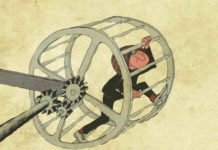
In Politics of the Mind: Marxism and Mental Distress, Iain Ferguson aims to use the marxist approach “not only to make sense of mental distress but also help us address and change the material conditions that give rise to it.” He begins by describing the ‘crisis in mental health’ that disproportionately affects the unemployed, poor, and oppressed.

What Should We Really Call Psychiatric Drugs?
There is no rational way to argue against putting psychiatric chemicals into the category of neurotoxins. All psychiatric substances alter “the structure or functions of the nervous system,” disrupt “the normal function of nerve cells” and act “specifically on nervous tissue.” It is time to clean up the misleading mess of words in psychiatry.

What National Health Surveys Tell Us About Nutrition and Mental Health
We have been interested in the broad public health implications of nutrition, such as the findings from national health population surveys. What conclusion can be drawn from these studies? Improving people’s diets may protect them from experiencing poor mental health.

Speaking Out Against Electric Shocks
Essentially what Choy et al are seeking in their editorial is the total suppression of information concerning the harmful and often permanent effects of high voltage electric shocks to the brain, thus implying that the very large number of individuals who report more extensive and persistent damage are not worth listening to.

Our Sexualized Culture and the Prejudiced Roots of Psychiatry
The problem with the DSM is that it not only pathologizes asexuality, but also pathologizes the distress asexual people feel due to marginalization and prejudice. In attributing people’s distress to their lack of sexual attraction or interest, rather than their environment, psychiatry fails to recognize oppression.

Publication of the Power Threat Meaning Framework
The Framework is an ambitious attempt to outline a conceptual alternative to the diagnostic model of mental distress. It builds on the Division of Clinical Psychology’s 2013 Position Statement recommending work in conjunction with service users to develop a multi-factorial and contextual approach.

The Medicalization of Conversation
Language, and how we use it, are important to counselling’s conversational work. As a counsellor, my language for understanding and addressing client concerns often fits poorly with the diagnostic and treatment language used to manage services within that system.

The Scientism of Psychiatry
Psychiatry likes to portray itself as a scientific discipline, and indeed there is a lot of useful science to draw on when evaluating the evidence base connected to mental health problems. Sadly, most of the mainstream psychiatric literature of recent decades has shown a marked preference for rhetoric over scientific accuracy.

It’s Unlikely That ‘Antidepressants’ Have a True Effect on Depression
I submitted a letter to the editor of JAMA pointing out the likely explanation for the lack of effect of sertraline. JAMA rejected my letter, as it has done many times. Explaining why psychiatric drugs don’t work is not a priority for medical journals, it seems.

Stealing Blankets from the Hospital: How Life Really Works on a Psych Ward
Every time that I have been confined in a psych hospital, I have collected as many trophies as possible. Sometimes I go out of my way to steal the silverware, or the sheets, or the blankets from the beds, or even the signs off the walls. But it’s the really forbidden stuff that attracts me.

To Make Adolescence Permanent, Just Label it “Bipolar Disorder”
When parents accept the bipolar label, something seems to click in their minds, and it’s in this instant that their kid’s life is forever ruined. Now they retrospectively view all the turmoil that began in puberty as due to permanent brain illness rather than normal, outgrowable adolescent issues.

2017: A Wake-up Call on Mental Health and Human Rights
At Mental Health Europe, we see 2017 as having been a crossroads for mental health and human rights. Let’s ensure that this yields concrete change in 2018 with the support of like-minded communities ready to take the discussion to the next level and truly enact this as a civil rights movement.

Florida’s “Free Kill” Law – A Death Trap for the State’s Populace and Visitors
Florida’s Wrongful Death Act essentially denies residents and visitors alike the right to live once they enter a hospital. The law has been dubbed “Free Kill” because while it can cost money to correct mistakes, keep hospitals safely staffed and update equipment, it is free to kill.

Micronutrients for ADHD Symptoms in Children
Over and over again, we have shown that additional nutrients positively affect behaviour and mental states. This research offers further evidence that children with ADHD, mood dysregulation and symptoms of aggression should be given the opportunity to try micronutrient treatment FIRST.

People Are Dying Prematurely Due to Polypharmacy
Our son, Mark, is an example of the deadly effects of polypharmacy. He died at the young age of 46 and his death was caused by toxicity/cardiac failure from two of the five medications he was taking, at higher than recommended doses, as prescribed by his psychiatrist.

The Upcoming MDMA Research Will Transform Mental Health Care
If MDMA can effectively treat and perhaps even cure PTSD it will create clear documentation that the core premises of the chemical imbalance theory are dead wrong. It is ironic and only fitting that a chemical molecule will finally bury the chemical imbalance theory and allow us to move on.
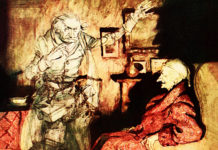
Dickens’ Christmas Carol: A Psychiatric Primer of Character and Redemption
Scrooge’s character was forged from his own emotional pain. Indeed, we can change the course of our lives through facing and mourning that pain. Want, deprivation and cruelty create the evils of the world. Mourning and trust, in the context of love, are its antidotes.

When Minds Crack, The Light Might Get In: A Spiritual Perspective on Madness
You can’t go back to mundane ways of seeing the world after very dark things happen. Trauma cracks open a hole in our lives and in our minds, throwing us into the zone where we face the big spiritual questions. Bad ideas can get in when things open up like that. But it’s also possible that something new and positive can get in.

Human Connection is the Antidote to a Culture of Isolation
We need to burn through some darkness before we collectively see the light. The light is a palpable shift toward reaching for human connection; toward opening our hearts and our minds and intentionally focusing on the positive future that wants to emerge.

Launch of Online Forum for Young People Who Hear Voices
I am very excited to announce that Voice Collective, a UK-based project supporting children and young people who see, hear or sense things others don’t, has launched the first-ever online forum dedicated to supporting young people who hear voices, as well as their parents, carers and supporters.
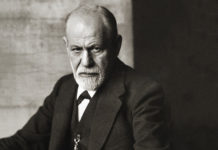
Freud: The First Anti-Psychiatrist
Freud showed disdain for psychiatrists — he saw their untruthfulness and harmfulness. An antidote for the medical model’s infestation of our culture would be to reintroduce some of Freud’s theories to the public. After all, wouldn’t the medical model’s opposite be the best means of counteracting it?

The Three Most Important Facts About Psychiatric Drugs
Psychologist and educator Michael Corrigan was a guest on my radio show and brought up some questions about how to communicate with people about psychiatric drugs. Specifically, he asked, “What are the three most important things for anyone to know about psychiatric drugs?” Here is my answer.
How Would We Know If We Really Reformed the Mental Health System?
It is true that there are many great programs and initiatives out there, but when a system leaves so many without recovery-oriented supports it's like swimming upstream. Here are 20 indicators that if fully implemented would represent a complete system reform.
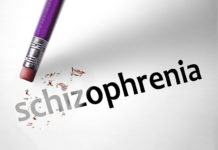
APA: Drop the Stigmatizing Term “Schizophrenia”
I believe that the American Psychiatric Association and the World Health Organization should follow the lead of several countries that have already retired the term "schizophrenia" from their vocabularies. The time is now to drop this stigmatizing, hope-disabling, scientifically controversial term.
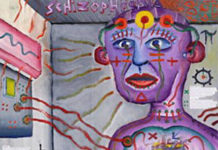
Reexamining Schizophrenia as a Brain Disease
Schizophrenia has occupied, and continues to occupy, a position of great import in psychiatry, and it is frequently used to assert the supposed biological nature of the field. What evidence is there to suggest that what we call schizophrenia is a disease of the brain? Surprisingly, very little.