
Thou Shall Not Criticize Our Drugs
A medical journal is expected to promote an open-minded discussion of treatments, even if findings—or criticisms—threaten conventional beliefs. But the American Journal of Psychiatry will not find space for criticism even if it comes from one of the best-known psychiatrists in the world.

Psychiatry Ignores an Elephant in the Room
Large cohort studies of people with a first-episode psychosis provide a unique opportunity for finding out why so many young people with schizophrenia spectrum disorders die at a young age. However, it seems that those psychiatrists who have access to the mortality data generally do not want the facts to come out.

More Follow Up Needed for Drugs Granted Accelerated FDA Approval
Drugs to treat serious or life-threatening conditions can receive accelerated FDA approval, but may expose patients to increased safety risks and reduced efficacy.

Part VI: How Adult Society Betrayed Michelle Carter and Conrad Roy
The story of Michelle Carter and Conrad Roy is not only a tragedy within itself and for all those involved with them, it is emblematic of the situation faced by millions of young people in the western world and increasingly around the entire planet. Final installment in the series.

Replacing Pain with Pain: Hazards of Antidepressant Use for Chronic Pain Relief
The paradox of relieving chronic pain with an antidepressant (and a new set of symptoms).
Health Disparity Project Cuts Out the Recovery Movement
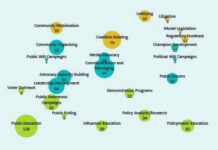
Lots of funders are now doing initiatives to address health disparities. But once again we have found that a project designated to help our community has gone astray without even bothering to ask our community what we need. Here's why that matters and what grassroots advocates can do about it.

The Most Promoted Drugs are Those with Little Therapeutic Value, Study Finds
Majority of top-selling and most promoted drugs in Canada are rated as having very limited safety and efficacy.

The Salvation of Psychiatry
Hope lies in psychotherapy. It is a purely human practice, based on the development of real trust and genuine responsiveness. It is not an analytic process, but a feeling one. We need to return to a psychiatry that respects the complexity of human nature. We need to go beyond ‘do no harm’ and promote genuine healing.
Trauma-Ignored Care? Going to the MAT on Opioids
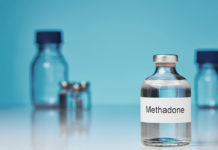
Our current, reductionistic approach to mental health issues doesn’t offer any insights or explanations on the etiology of most mental disturbances. Similarly, medication assisted treatment (MAT) focuses on the surface symptoms of opiate abuse without addressing the underlying causes of overwhelming distress and pain.

If Psychiatrists Took Truth Serum, What Would They Say?
Psychiatrists don’t use the same language that others do — the meaning of what they say isn’t always so clear. I can translate “psychiatrist speak,” since practicing within the field for over 30 years enabled me to gain easier insight into understanding what their words really mean. Here are 13 examples.

Part V: The Michelle Carter Texting Trial Becomes a Witch Hunt
In Parts I-IV, I discuss how the DA succeeded in gaining the conviction by means of highly emotional and at times misleading and untruthful manipulations in public and in the courtroom. Here I want to look more closely at the DA’s motivation and other activities. Was it a personal vendetta?

Belief in a Favorable Future May Undermine that Future
People who are more likely to believe that others’ views will change to match their own over time are less likely to engage in actions to facilitate that change
The “Shotgun Method” – A Story of Mental Health Crisis in Iceland
"Let's try the shotgun method," my psychiatrist said — meaning that you load the gun with a bunch of pellets and hope that one of them hits the target. I went through 16 different psychiatric medications in five years, and they were not the right choice for me.

Researchers Question Add-On Treatment for ‘Schizophrenia’
A common practice when antipsychotics are found to be ineffective for schizophrenia is to prescribe a second, additional psychoactive medication. Now, a new study suggests that this practice is not supported by the research.

Inappropriate Use of Antipsychotics on Adults with Intellectual and Developmental Disabilities
One-third of adults with an intellectual or developmental disability are dispensed antipsychotics, despite having no existing psychiatric diagnosis.
Introducing “Ten Tips for Parents”
As I settle into my role as the editor for parent resources here at Mad in America, I’m reaching out to folks who have something to contribute to the conversation and asking them if they would be willing to condense what they know into a Ten Tips format for easy digestion and comprehension. The first four are now available.

John Read: What the Science and Evidence Tell Us About Electroshock
Professor John Read talks about his research interests and in particular, the science and evidence base for Electroconvulsive Therapy (Electroshock).

The Unintended Consequences of Colorado’s “Social Experiment”
The lack of any regulations on the potency of THC in marijuana has allowed the cannabis industry to increase the potency to astronomical proportions, resulting in a burgeoning public health crisis. Many people seem to lack a true understanding of the potential negative consequences of the higher-potency THC.

Pharma Responds: Antidepressants Really Work. Really?
A recent meta-analysis published in Molecular Psychiatry claims to have settled the debate on whether the slight superiority of antidepressants in trials is due to side effects breaking blind. The principle author was quoted as saying: "once and for all, we've answered the SSRI question." Have they?

First Systematic Review of Leading School-Based Mental Health Programs
Results reflect moderate to strong evidence in support of the non-pharmacological school-based interventions reviewed in the study.

Michelle Carter Part IV: Did She Tell Conrad to “Get back in the truck”?
There is no text, transcript or recording that demonstrates that Michelle ever said anything to Conrad about getting back in the truck to die. The DA’s entire case is based upon the “confession” of an irrational girl on antidepressants who has been trying to communicate with her boyfriend in heaven via phone.

Criticism of Coercion and Forced Treatment in Psychiatry
A recent editorial, published in BMJ, argues there is an increase in coercive measures in psychiatry that are damaging to individuals diagnosed with mental illness.

The Downfall of Peer Support: Are You Kidding Me?
In April of this year, Sera Davidow authored a blog titled “The Downfall of Peer Support: MHA & National Certification.” I do not agree with much of what she says in her blog, and as the vice president of Peer Advocacy, Supports and Services at Mental Health America I'd like to respond.

Researchers Question the “Adequacy and Legitimacy” of ADHD Diagnosis
A new article, just published online in the journal Emotional and Behavioural Difficulties, presents research suggesting that the diagnosis of ADHD is philosophically inadequate.

The Invisible Holocaust and the Gene Hypothesis
The Nazis either killed or sterilized almost all the schizophrenics in Germany, yet this was followed by a doubling of the population of schizophrenics in Germany. If it were really an inherited disease, how was this possible? My own explanation for the appearance of these high incidence rates were the conditions of the time.