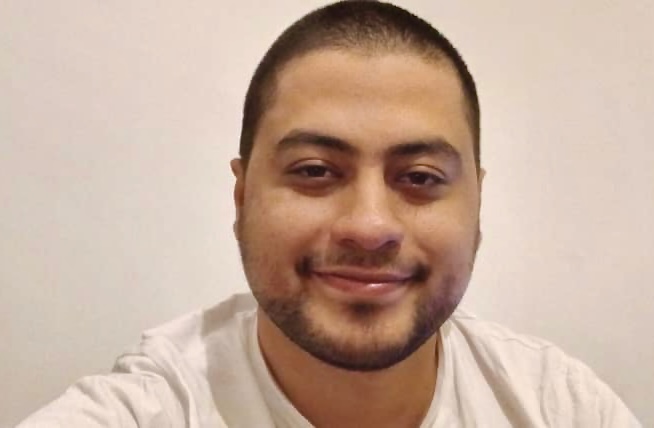
Welcome to the Mad in America podcast. My name is Brooke Siem, and I am the author of a memoir on antidepressant withdrawal, May Cause Side Effects. Today, I am here with Safa Askeri, who’s based in Urmia, Iran. Safa’s story is very interesting, as is how we got connected.
Safa initially reached out to me on Instagram, and something about Safa and his energy and his story really spoke to me. We started chatting, and that has changed the course of his life, it seems.
The transcript below has been edited for length and clarity. Listen to the audio of the interview here.
Brooke Siem: Safa, welcome. Can you tell us a little bit more about your story?
Safa Askeri: First of all, thanks very much for accepting me, and thanks for the invitation. I’m so excited and grateful to be here; it’s such an honor and pleasure. I actually had a history of OCD, and during the pandemic, it got worse. I had compulsions that led to severe anxiety and depression, and so I decided to go to a psychiatrist. After a five-minute appointment, he prescribed me Prozac. In two weeks, instead of making me feel better, it gave me such severe agitation and suicidal thoughts that I couldn’t handle it, and I kind of collapsed. I had the most severe panic attack ever, and it was the worst experience of my life.
That led to several hospitalizations and polypharmacy. I was on many medications and had many misdiagnoses, like bipolar, schizoaffective disorder, and ADHD. I couldn’t get out of this trap, so I was stuck in the cycle. Eventually, I decided to just wean myself off all the medication, and that was the time I faced severe withdrawal. I found you, and I asked for help, and you totally became a lifesaver for me.
Siem: You know what I find both so heartbreaking and heartwarming about our interaction was that I didn’t really do anything in the sense that I didn’t offer a taper plan. I didn’t help with your medications, but I think I just listened to you because I could tell that you didn’t have that. What is so important about that is just how the one voice can be such a lifesaver for somebody.
Askeri: At the time, I was so terrified, and I was feeling horrible, and I needed someone to listen to me and just normalize the process and give me validation. It was so important for me, and I’m so grateful to finally meet you.
Siem: You too. We have a lot of listeners who are from all around the world and who are dealing with very different systems than I experience in the US, or others experience in the UK or Australia. Can you talk to us a little bit about what the mental health or psychiatric world is like in Iran?
Askeri: I believe that mainstream psychiatry is probably the same all over the world. It has got differences, but I think it’s so misleading and terrible because of the many myths in psychiatry, like withdrawal doesn’t happen, and all those side effects can be blamed on your mental health condition. I think I witnessed this kind of iatrogenic injury in the hospital vividly. It was so terrible for me.
After I found that I was being sabotaged by this medication, I also found that I was gaslit for many years because of the horrible side effects I got from these medications. If I reached out to psychiatrists, instead of addressing the withdrawal, they’d always blame my OCD and anxiety.
Siem: Did you believe them at any point?
Askeri: My family and I just trusted the specialists in this field. They warned me that you have OCD, you are so sensitive, and you don’t need to search the internet about the side effects. But I had this feeling that it can’t be anything to do with my mental health condition because I hadn’t had this side effect and these weird symptoms before.
Siem: How did you begin this process? By that, I mean, how did you follow your own instinct? There was something in you that was not allowing you to just believe all this and step away. What did that look like for you?
Askeri: It was a long journey, and I experienced many, many things. At first, I had many different types of diagnoses, like bipolar, schizoaffective, ADHD, and health anxiety. I was given up on. I couldn’t do anything because I was not functional, and there was so little information out there to search and educate myself. My waking point was that three times I was pulled off the medication in the hospital. I felt very, very horrible. I couldn’t just stand my symptoms.
After my last medication, I searched the internet and I found Surviving Antidepressants. I also found you, and you guided me. I found that there is something like withdrawal, and that I was gaslighted for many years to believe that it’s a relapse. But for the tapering part, I haven’t had the education, and I did it on my own, and it was terrible for me. I faced a protracted withdrawal for 18 months. It was totally horrible.
Siem: How did your family react during this time?
Askeri: It was hard to explain all the details and convince them that it’s not my mental health problem but really the medications. Even I struggled to believe this. It was so hard to get a good relationship with my family. I lost my trust, and they lost trust in me. It was a lonely process. We had arguments, but unfortunately, they were on the side of psychiatrists, and they trusted them. However, after watching many documentaries and explanations, they come to the conclusion that maybe it could be the meds that are the problem.
Siem: That’s pretty extraordinary that they were willing to watch documentaries and read and learn.
Askeri: It was so hard to just have support in this journey. Your family is very important because at the time you are so hopeless and you need help. But for me, the community members are so very helpful.
Siem: By community, you mean the other people around the world who are going through this?
Askeri: Yes, especially you and Angie [Peacock]. You are my main hope, and because of your support, I made it. That’s why it was so important for me.
Siem: I think it was about six months after you first reached out to me. I hadn’t heard from you for a while, then I got a message. I remember you said, “Brooke, you’re not going to believe it. I’m back”. I just started crying because there’s a tenacity that you have. I think a lot of the time in this space, there are people who are suffering so greatly, and they have all the support. They may even have a doctor’s support, but it’s like people in a support position are just kind of pulling them through one moment at a time.
I found it really remarkable to know that you had basically said that everything had been stripped away, your friends and family, even your job. You were supposed to come and study here in the United States, and it’s like your whole existence had just evaporated. Yet you still had the strength to keep going. Where did that strength come from? Why do you think you chose to keep going?
Askeri: That’s a really great question. You have to consider a lot of different aspects of the story. For me, I mean, it was a miracle. It was impossible to even just tolerate one minute of this hell. It really totally belongs on another planet. It was like a science fiction movie; you lose your connection with the world. You’re feeling severe anhedonia, racing thoughts, and a lot of different symptoms. But on the other hand, after I got my first window, I was like I was reborn. I had this feeling that my brain is rewired.
For the first time, I felt joy after many months of suffering and torture. It was a blessing. It gave me such motivation and strength to continue and get back to my life and become functional. It was one of the most challenging experiences. But on the other hand, I really find myself being better. I reached some appreciation that I haven’t had in my entire life.
Siem: What did that first window look like for you?
Askeri: It was so beautiful. It was like I woke up in the middle of heaven and I felt everything. My OCD thoughts are gone, my anhedonia is gone, my akathisia is gone, all of the symptoms are gone. I was feeling a sense of being alive and human again. I’m about to cry, but it was so beautiful. It was something that I wish everyone could just experience it for one minute.
Siem: How long did that feeling last?
Askeri: It lasted for only five minutes. I was in severe waves for 10 months, and these five minutes totally changed my way. I started to get back to my life. I participated in some classes. I got a little bit back to my educational process. Those five minutes were enough to push me forward, and my whole mindset changed.
Siem: I’m very interested in what happened in the sixth minute. You had five minutes of this, let’s call it bliss or freedom or just a state of no pain. Then the window closed a little. What was that transition like?
Askeri: It was so isolating because I locked myself in the first floor of our apartment. I just couldn’t connect with any of my friends or family. It was only me and myself. I really tried hard, and I was fantasizing about the moment that I’m going to recover. Those two sessions that Angie gave me and talked about the injury and how we can maintain hope it was so important for me to keep going.
Those five minutes were a miracle for me. It was such a beautiful experience. I can’t come up with any exact word to describe it, but it led me to just get back to my life and have the power and control. Because everything was out of my control, my sensations, my symptoms, everything. I really wish I could travel back in time and deal with my own problems instead of this horrible withdrawal.
Siem: When you had another wave, how did you talk to yourself during it to maintain this hope?
Askeri: After those five minutes, after the wave came back, I had the right mindset. I was feeling that it was okay. It’s a temporary brain injury. I don’t have to interpret my symptoms. I don’t need to just try hard to push them away. I had to live with them to wait for another window, or I’m going to just behave normally and get back to society.
Siem: Where do you feel you’re at now in the recovery process?
Askeri: I only had the five-minute window, but it was enough for me to get back to life, as I said. I haven’t had any other windows, but I’m totally back to life. I’m so functional right now with all those symptoms, and I have a normal life. I think I’m not waiting for another window. I’m just living my life now. At first, it was so important and I was so curious to know everything about this phenomenon. I was asking for reassurance from people around me, and I’m so sorry I bothered you a lot. I asked you a lot of questions.
Siem: No, you’re fine. I love talking to you.
Askeri: You were the only source that I could rely on because I couldn’t find any other people to help me. I really owe you a lot because during this time, I was really struggling to find validation. But right now, I’m just normalizing the situation, and I’m trying to socialize with different types of people and get back to my normal life.
Siem: I think what you’re saying is so remarkable in a way that we don’t really talk about very much. In both the withdrawal world and just in life, there’s such an instinctual desire to get away from pain and suffering. But the lesson and the process really is not about eliminating the suffering. It is learning to coexist with it and not to tell stories about it and to keep marching forward and keep going about your life, even when things are bubbling away in the background.
I think sometimes in the withdrawal world, we really focus on symptoms going away. But that’s not really how it works. There’s a lot of life that has to happen in between the windows, and you can’t just roll over during all of that.
So, how did you balance everything? How did you balance still having symptoms and getting back to life at the same time?
Askeri: That’s a great point. Before starting meds, because of my OCD, I was forced to do a lot of compulsions, and I made appointments with many different experts and doctors because I didn’t know how to handle this phenomenon. At the time, I think it’s the same for many people. I thought that this medication was going to boost my serotonin, and my OCD was going to be cured, but it was only ever masking my symptoms.
I think the mindset we had was totally wrong because we thought that this medication was going to fix the chemical imbalance. So it’s nothing to do with you, and you have to lie down and wait for a moment for this chemical to fix your brain. But it was not like that. It’s your job to fix your underlying problem by addressing the root cause.
For me, the hardest thing is to forgive myself. It is like a grieving process. I made a lot of wrong decisions, and I was so angry at psychiatry and the mainstream system. But after all, I find that the best revenge I can get is to make progress and get back to my life because right now, I’m one million times worse compared to before the medication, but I totally know what is going on. This is the withdrawal process, and this is a grieving process. I have to give it some time. As you mentioned, we don’t need to wait for a long time to get back to life. We can do very small things in our lives and be grateful for that.
Siem: There’s a wisdom here that is just extraordinary. These situations change us; they make us more sensitive. I think that if there’s any one commonality between every single person I’ve ever met who has been through withdrawal, it’s that they come out on the other side of it more sensitive, and that manifests in many different ways. Learning to manage that sensitivity is difficult because it’s not very convenient for the rest of society.
Askeri: It was so hard to get adapted to this situation because it’s a long process and so difficult. At first, nothing is going to work because of the severity of your symptoms. A lot of the things you’re experimenting with are not going to work at first because of the many symptoms that you have. You try many things to just get relief from this hell.
If you just get the point that it’s a temporary process, although it’s really hard, you become dysfunctional at first, and sometimes you’re just trying to survive minute by minute. You’re fighting every minute to survive. It’s so hard because your emotional regulation is totally adjusted, and you can’t think logically. But I think when you get the other side, it’s such a beautiful experience. You know how it feels to be human again. You know that you have the capability inside you. You have just overcome one of the hardest things in life. That’s amazing to me.
Siem: What role does faith play in your life? I hear so much faith in the process you’ve followed, and I wonder if that’s something you’ve always had or something you’ve gained through this experience?
Askeri: This process has changed my belief. I was thinking about a lot of philosophical things and about my existence. I was so sensitive, thinking about everything very, very deeply, questioning everything. It was so challenging because this injury has totally changed our perspective and perception of our world and everything around us. But deep down, I found myself that there is a reason, I think, for my suffering and pain. I have to learn from this. There is a reason because of my existence, and I really wanted to just achieve my goals, but it was really hard at first.
Siem: What have you learned about yourself so far that you didn’t know before this process?
Askeri: I found that I’m so a strong person because I didn’t know that I have this capability and I can handle things. Right now, I’m very calm, and I know how I react to every single problem. It was a deep journey about knowing yourself.
After this happened to me, I know that I can handle anything in life, no matter how hard it is. I can embrace all the challenges in life, and I know every single minute is so important for me. I got a new meaning in my life, and it was so hard at first to find meaning for our suffering and pain. But right now, I think I have some meaning, and it totally guides me to find my way, and that’s very important.
Siem: What do you think the meaning is of all of this?
Askeri: I think it is reaching a new appreciation. You should consider how valuable the things are that you had, but you didn’t know how precious they are. But this phenomenon makes me think deeply about everything, about people, about the world around me. I’m so considerate right now, and I know a lot of things about the world because I went through these difficulties.
Siem: Are there any specific resources or philosophies that you really found to be valuable in your recovery?
Askeri: Yes, there are many things. It depends on your interest. I was really interested in watching videos or podcasts about astronomy and theoretical physics. They were so powerful and meaningful for me in this process, and it was my first priority. I changed my field to astronomy because I really want to know more about the world.
Also, Ali Greymond’s OCD YouTube videos were one of the best resources that I found, and I wish I had found her earlier, before starting meds. Peter Breggin was one of the best psychiatrists that I heard speak up about these issues. Mark Horowitz, Joseph Witt-Doerring, and, of course, Angie and you. Melissa Boutilier was talking a lot about OCD. All these sources really helped me a lot to find my way.
Siem: Tell me a little bit more about your interest in astronomy and why that specifically called out to you during this time.
Askeri: When I was a child, I was so curious to know more about our world and our universe. I read many articles and watched many videos, and finally, I applied for a PhD in this field because it’s so tangible to me. I had a very vivid relationship with science because it gives me such meaning. Exploring these facts was so calming because I realized how big our universe is and how extraordinary it is. You can find, I don’t know, peace or a calming effect in that knowledge.
Siem: I think there’s something about forcing yourself to realize what a small role you play. Feeling small, I think, is very, very, very powerful, and it takes the focus off of our own issues.
Askeri: Exactly. When I look up at space and I read about black holes or about time traveling, it simplified my situation because I really needed some strong sources in science to just regulate and adjust my suffering. I really needed to know that there are a lot of important things more valuable than my situation. My protracted issues can’t compare with that stuff. That was so amazing for me.
Siem: I do something similar occasionally, where I will sit in meditation, and I will think about zooming out, and I’ll see myself sitting on my chair, and then I’ll zoom out a little further and see myself sitting on my chair in my house. Then I’ll see the house, and then I’ll see the city I live in, and then the area, and then I’ll see the whole world, and then the planets. You get to a point where if you can still feel a little bit connected to that little teeny tiny dot that’s sitting somewhere in the galaxy, it’s like, okay, this doesn’t matter in a lot of ways. It matters, but it doesn’t.
Askeri: When you’re at your lowest moment, sometimes there is a silence or atmosphere that you feel in the middle of this experience. I could handle some meditations at my very lowest, and it was an extraordinarily beautiful experience. Doing meditation at my worst, it was such a pleasure because I really wanted to try to find meaning. I did everything to just find it, and finally I did. I think I have this huge responsibility to help another people and to try to just share my story in this way.
Siem: I think there’s such a tremendous opportunity for you to be of service to people in your part of the world who don’t speak English. I know there’s suffering out there. I’ve gotten multiple messages from different parts of the world who are looking for someone who can help them understand what they’ve been through. I think you really have the opportunity to be a source of light and example for other people in your part of the world, and we need you. We need that.
Askeri: Thanks a lot. When I think about our relationship, how you were such a great listener and because of some of those messages, I didn’t give up. That’s a really powerful connection between human beings beside our race, our country, or our geographical barriers. We are all human, and our communication is the most meaningful thing in the world. There was a time when I couldn’t speak with anybody in my family or my friends, but I could speak with you very vividly.
You knew what is going on, and it was so impressive for me. I think we have to connect with each other, no matter how far apart we are. We have to eliminate all those wrong interpretations and just feel the humanity. Humanity, I think it’s the most important thing in the world.
Siem: You make me think of this idea that somebody has to go first. I think that what’s happening here is we are still very much at the beginning of this process, where more and more people are going to start waking up and realizing that long-term medication is not the right choice for them.
There are a handful of us around the world, and we have all been tasked without our permission; none of us asked for this. We’ve all been tasked to go first. It’s a very, very difficult position to be in when you’re the only one in your circle and you have to maintain faith without any example of anybody coming before you. But now you have faith because I went before you, and you are still so early that you are going to have such an impact on so many people by speaking out about this.
Askeri: Exactly, thank you very much. I really appreciate all the work you have done and all the speeches that you gave, and you’re trying your best to just raise awareness of this issue. It’s so helpful for other people who are voiceless and can’t find any resources. Yet all of a sudden, on the internet, they can see your speeches. They get a validation, and they can find their way. Thanks for giving me this opportunity to live another life and create my way. I so appreciate it.
Siem: Thank you so much. I just encourage you to keep speaking about this and to especially keep speaking about it in your native language, because I know there are people who need to hear what you have to say, who can’t understand what I have to say. You’re next. If you want to be next, you’re next.
Askeri: One thing I really wanted to share with you is about the gaslighting effect. It’s so important. When I first got Prozac, and I got severe agitation and suicidal thoughts, I was told that I have the bipolar gene, and it was activated. It’s totally wrong. I said that I don’t have a history of bipolar. I don’t have a mania symptom. It’s not scientifically right and valid. For bipolar, sometimes it’s trauma responses, and then being misdiagnosed with bipolar.
Second, after stopping using Prozac, I got severe derealization, anhedonia, and racing thoughts. All the psychiatrists tell me that once the medication is out of your body, it can’t affect you anymore. And they said because you were on a very low dose and for such a short time, there is no withdrawal. But for some people, there is an adverse effect and protracted withdrawal even after a very short usage time. Sometimes you’re taking medication, and suddenly you reach tolerance and you get withdrawal symptoms. We say it’s poop-out or tolerance withdrawal. Am I right?
Siem: Yes, that’s right.
Askeri: Then they say that your underlying condition is causing a relapse. We can’t just ignore the interactions between all the medications. When you get emotional blunting while on your medication, they might say it’s your depression. After you get PSSD [Post-SSRI Sexual Dysfunction] and you have sexual problems, they say it’s because of your depression and nothing to do with meds. Withdrawal can last many, many months, and it can be long-lasting and severe. All these things happened to me.
Siem: It sounds unfortunately normal. I’ve heard all of those things, and so have so many other people. It’s infuriating.
Do you have any closing thoughts? Is there anything you would like to leave with the audience before we go?
Askeri: I was on many medications, I had many hospitalizations, and I tried many times to withdraw from all the medications. I really didn’t expect to be in the place that I am right now. It was so hard to imagine even tolerating one minute of this hell, but I got through this. I’m really hopeful because at the lowest part of the process, maybe you have this interpretation that you’re not going to recover and you have permanent damage, but it’s not like that.
I know it’s really hard to maintain hope. Sometimes you can’t be functional. Sometimes nobody is going to believe you, or you’ve disappointed your family, your friends. It’s totally normal. It’s fine. Just give yourself time and continue the process because you’re going to see the light in the end of the tunnel and it’s such a great experience.
Siem: Thank you so much, Safa. I think your light and your wisdom are just remarkable, and I think you’re going to help a lot of people. Thank you for taking the time.
Askeri: Thanks.
**
MIA Reports are supported by a grant from Open Excellence and by donations from MIA readers. To donate, visit: https://www.













Thank you for sharing your story, Askeri and thanks to Brooke realizing his humanity in the masses of social media. I’m glad you had that good connection. The line that really touched me was, ‘I don’t have to interpret my symptoms. I don’t need to just try hard to push them away.’
I think that captures something essential: psychiatry relies so heavily on interpretation, yet interpretation is a human capacity we all share, and one we should all be able to use subjectively (with appropriate help), especially when the sensations we’re trying to understand don’t yet have a solid scientific baseline. What makes the intrepretation oppressive is the denial to share its meaning equally.
Report comment
When a dr says the prozac has uncovered your bipolar they are telling lies.
Report comment
Does Safa have a Facebook or an Instagram or I could reach out and ask him questions?
Report comment