Editor’s note: This story discusses self-harm, suicidal ideation and suicide methods. Part 1 of this series can be found here.
“Hi, honey!” My mother’s voice blasted cheerily over the car speaker.
“Hi, Mommy.” I knew I had to tell her. My hands gripped the steering wheel, knuckles turning white.
“So, how’s your day going?”
“Um, fine. I just had an appointment with my psychiatrist.”
“Oh yeah, how’d it go?”
“It was… fine,” I whimpered. Okay okay okay, just tell her. “Hey, can I tell you something? Just promise you won’t get mad.”
“Yeah, of course. What is it?” She seemed to think she was doing a good job of masking the concern in her voice. I hated making her worried. Not only because I didn’t like to see her worried, but also because she would always make it my problem.
Well, here goes nothing.
“Um… I kinda like… quit taking my medications.”
I braced myself for disaster. But she just said, “Okay.” That’s it? Okay?!? Either she suddenly didn’t care about me anymore, or this was going a lot better than I thought.
I continued, “And I told my psychiatrist today at my appointment. She, of course, told me to get back on them. But… I’m not sure if I really want to.”
“Okay.” Seriously? Another okay?!? Wow, this was… not what I was expecting at all.
“So you’re fine with that?” I said, partly in disbelief, partly like I was asking for her permission. I was twenty-one years old; I didn’t need her permission. But then again, she had disallowed me from going up to Boston for spring break earlier that year. The driving would be too dangerous, she’d asserted. I’d complied in order to avoid one of her emotional explosions.
“Yeah, I mean, I think you’re doing a lot better.” She sounded calm, even chipper. But for some reason, it was starting to piss me off.
“I mean, yeah, I guess,” I replied curtly. My face felt hot and a lump was starting to form in my throat. “But it’s not that exactly…”
Before I could even finish, she interrupted and started talking over me. I don’t even remember what she said. But I’m sure it was some version of insisting that she knew me better than I knew myself, and from her perspective, I seemed so much better, and didn’t I agree?
“Yeah, but you don’t understand,” I pleaded. “That’s not what it is. That’s not the reason. I’m not–” I’m not what exactly? Not doing better? I realized that I needed to be careful with my word choice here. One wrong step, and she’d switch to insisting I did need to go back on the meds. I didn’t want to blow my luck.
Fortunately — yet unfortunately — for me, however, she clearly wasn’t listening. “I mean, you’re just in such a different place now than you were back then, don’t you think?” she continued obliviously. “You’ve just grown, matured so much as a person…”
No, I’m not, I wanted to say. And no I haven’t. The problem was never with my “maturity” in the first place. The problem was with nobody ever fucking listening to me. I was very clearly still dealing with the same problem; she was proving it to me right now. She only thinks I’m better because I’m better at hiding it now, I thought, and better at placating her. All she cares about is if my emotions are inconvenient or distressing for her. It’s not like it was ever about my feelings to begin with.
“…and I really think you’re ready for this. I fully support you in this decision.”
I don’t think she truly understood the meaning of the word “support.” If she did, then maybe she would’ve supported me as I was going through withdrawals in the coming months. Maybe she would’ve supported me the last time I had wanted to quit my meds. Maybe she would’ve supported me by not pressuring me onto medication in the first place.
I pulled into the junior/senior lot on campus, defeated. “Yeah, okay. That’s great.” I was holding back tears. God forbid I seem “emotionally unstable” and she takes it all back.
Once off the phone, I could let the tears flow freely. I sat in my parked car for a few minutes staring at the fluffy white clouds above the university chapel. It’s not that I quit my meds because I’m doing better, I had wanted to say, It’s that I quit my meds because I’m not doing better. If they were actually doing anything, maybe I would be better by now.
Nearing the end of my junior year, I had spent all of college medicated so far. I also had not gone a single semester without feeling suicidal. My psychiatrist had implied that I might need medication for the rest of my life, but I didn’t want to spend the rest of my life feeling like this. I’d tried everything to feel better — meds, therapy, meditation, journaling — you name it. There was only one thing I hadn’t tried: quitting medication. I made up my mind that it was the last thing I was willing to try before suicide. I’m gonna live fully or I’m gonna die. But I’m not gonna settle for this barely-half-alive bullshit. And I’m not gonna kill myself before at least trying this first.
About two weeks prior, I had quit both Lexapro and Abilify cold turkey. I’d been medicated for over three years by then, and on those specific drugs for nearly two. Since I’d only ever been told that these drugs were “safe,” “non-addictive,” and “didn’t cause withdrawals,” I had no idea what tapering or withdrawal symptoms even were, and no reason to believe I needed to research them.
At first, I felt no different. This lasted maybe a few days to a week. Then I noticed something very strange, but subtle: It felt like the moment of stillness right before something shatters. Everything felt shiny, sharp, fragile. Like shards of glass. Or ice. Like hot sun on a cold day: the way that snow looks sparkly and icicles all wet and drippy glistening in the sunlight as they start to melt away. And I mean everything felt this way: physical objects, my thoughts, the air around me. It felt as though if I were to flick my finger into the air, it would go ting! like the sound of a fork struck against a glass.
Then came the tears. I cried at everything. I cried at nothing. I cried when I wasn’t sad. But I also did begin to feel sad, too, for the first time since the numbing set in. I felt not resistance, but relief. Thank god. Finally, I could feel again; I was alive. But, as had happened with the numbing, this blessing quickly turned into a curse. The sadness was more bottomless than the ocean. Soon, I couldn’t tell the difference between swimming and drowning. Soon, I didn’t even care. Still, what a relief to feel enveloped by the darkness of water. What a relief to stop fighting it, to just sink.
Then came the rage: searing, jagged, itchy — the emotional equivalent of a splitting headache, if a splitting headache actually split your skull in half from the pressure of something bursting out from inside. Everything irritated me: sounds, lights, turning my head too fast. I directed it inward most of the time, though I do remember one specific occasion where I snapped at my friends. By this point they knew I was off-meds, so right on cue, they insisted that I needed to get back on them immediately and that what I was doing was “irresponsible” — the equivalent of a diabetic thinking they can just quit taking their insulin! They didn’t know that it was withdrawal, and neither did I; we all just thought I was “mentally ill.” This was unmedicated me.
On Mother’s Day, my family took a drive up to the mountains. It was a challenge for me to act “normal” the entire day. I couldn’t risk letting my controlling, yet dismissive, family get a glimpse of what I was going through. I knew they would pressure me to restart my medications, or worse, involuntarily hospitalize me. My body felt heavy and stiff with pain. My mind was throbbing and foggy. Every fiber of my being was screaming, begging for an end to my miserable existence. Every mountain overlook, every bridge, every ledge was an invitation to end it all. Not just yet, I told myself as I faked another smile for another family photo. For our image, for their memories of me.
I had tried everything. I’d now tried the last thing I said I was willing to try. I hadn’t left a stone unturned. I’m miserable medicated and I’m miserable unmedicated, I concluded. Maybe this is just me. Maybe I’m just mentally ill no matter what. There’s nothing left to try.
Suicide was not an impulsive decision for me. I’d been contemplating it for years without attempting. By this point, I was certain I wanted to die. It was simply a matter of timing and strategy.
The “suicide is selfish” narrative had burrowed its way into my psyche, so the first imperative was making sure that my suicide was as selfless as possible. Despite my own suffering, I must prioritize the pain it might cause others, because their feelings were what mattered. I didn’t want anyone to be impacted by feelings of guilt; I wanted them to feel like it wasn’t their fault and there was nothing they could have done.
Second, despite the years of contemplation, I am incredibly indecisive. My suicide method had to account for that; I needed to be able to change my mind. Something instant wouldn’t work. Even if the pain dragged on for longer, I didn’t mind that so much.
Third, there was the possibility that I might survive. If left with injuries or bodily damage, would they be reversible or permanent? Jumping off a bridge might leave me paralyzed. Slitting my wrists could sever tendons to my hand, rendering me unable to play the piano — one of the only things that still brought me joy. If my suicide was a response to unbearable living circumstances, I wouldn’t want my attempt at escape to end up worsening my quality of life.
Fourth, although I had long since given up on any religious or spiritual faith by now, the idea that “suicide is a sin” was as much ingrained in me as “suicide is selfish.” Because, again, I didn’t want to accidentally subject myself to more torture by trying to escape my current torture, so just in case there was a God and such a thing as Hell, I needed to evade that fate. My method had to involve some kind of loophole so that my death wasn’t technically by my own hand.
Then it came to me: my eating disorder.
How perfect to die slowly of a “tragic illness”: an indirect form of suicide — so not technically a “sin” — that would be easier on my family to cope with because of its seeming inevitability, that I could reverse at any point by recovering if I changed my mind, and with a low(ish) likelihood of permanent damage.
I opened my calorie-counting app, my calculator app, and my notes app, and got to work plotting exactly how long it would take to get to a weight that I was certain I wouldn’t survive at. There were a few specifications: It needed to happen while I was at school so that my parents wouldn’t catch on or be there when I died; it needed to happen before my brother’s wedding — which was in January — so that I wouldn’t cause a scene with my sick, unsightly body; yet it also needed to happen gradually enough so that others wouldn’t notice and so that I could go on “functioning” in order to maintain a facade of “normalcy.” Once I had my plan sketched out, I swore to myself to keep it a secret.
There was only one time that either of my parents showed concern. While I was home for break, my father sat me down on the couch.
“So, uhm… I know you quit your medications,” he started awkwardly. “How’s that been going?”
“It’s been fine.” Don’t cry, don’t cry, don’t cry.
“Well, I just wanted to ask what you’re gonna do instead to, uh… keep yourself on track?”
“What do you mean?” I avoided eye contact.
“Well, you know, uh… See, with my ADHD, I’ve learned to manage it without medication. Otherwise, I’d be really unproductive, totally unable to function. Sometimes in life, we gotta manage our deficiencies; we gotta figure out how to fit our square pegs into round holes. So how are you gonna manage that?”
“I mean, uh… My ‘functioning’ has never really been a problem, so I don’t understand. My grades are fine. I got a summer job. I mean, what else–”
At that moment, my brother came down the stairs. “We’ll talk about this later,” my dad whispered as he got up.
Later never came.
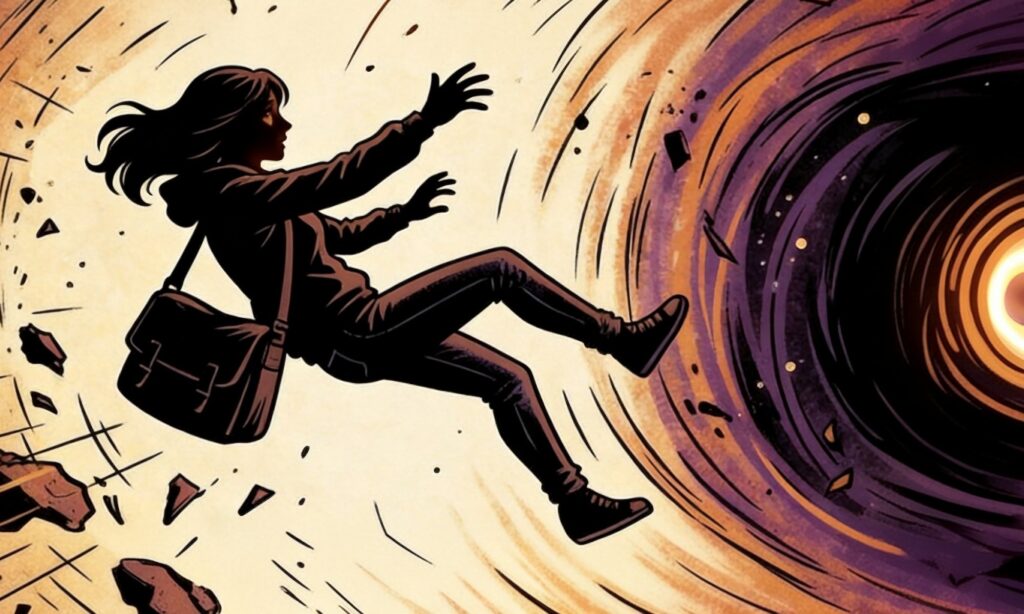
I wanted to cry constantly, but could only allow myself to in private. I took long showers, hoping the white noise would prevent my sobs from being heard. At work, I would hide in the bathroom when I needed to cry, and come back once I’d collected myself. Every night, I would pray to a God I didn’t believe in to have the mercy to let me die in my sleep. Most nights, I couldn’t sleep much at all. I had panic attacks alone, like free-falling through space with no one to comfort me.
My mind had become a labyrinth with harsh beratement at every turn. The voice of every condescending therapist, every disappointed professor, every criticism from my parents, every mean “friend” or boyfriend had been internalized as my tormentor. Everything was always my fault, and I was never good enough. If I was, I would’ve recovered by now. I was wrong for suffering, and I was wrong for not being able to fix it. After all, it’s just “coping skills” and “self-regulation,” right? Why couldn’t I do that? Why was I so weak, so inferior, so disgustingly broken? What was wrong with me?
I sank deeper into pain to punish myself further for being in pain. I would run up to 7 miles a day in 95°F heat. I would slap myself, hit myself, dig my nails into my skin. I took apart my shaving razors and hid them in my desk to cut myself with at night. I would think of all the mistakes I made, all the stupid or embarrassing things I did that day, every hurtful thing that was said to me, and make a cut for each one. Here’s for getting yelled at by my boss. Here’s for eating too much at dinner. I only cut at the tops of my thighs so they’d be covered by my shorts and nobody would see. Nobody can accuse me of being ‘attention-seeking’ now. I needed to be morally pure, perfect.
The abuse wasn’t only coming from within. Some people grew crueller the more I suffered. My “best friend,” for example, rotated between ignoring me, insulting me, demeaning me, comparing me to his other friends, making fun of my eating disorder — even calling my body “disgusting” — and acting mad at me, leaving me to figure out why. Meanwhile, I was constantly apologizing and thanking him just for putting up with my burdensome, unworthy existence. No one ceased to demand more from me. But most people just didn’t seem to notice or care. That made my secret surprisingly easy to keep. I could hide in plain sight.
Music was my only lifeline at first. I made a playlist titled “self-explanatory: songs that explain it better than i ever could.” I wrote a new song that felt honest for once. Then, in July, I started a folder in my notes app called “Things I can’t say (but want to).” I began to write constantly, too, discreetly pretending like I was texting a friend. I wasn’t trying to survive; I was only trying to “protect” everybody else and keep myself from spilling my own secret. It felt like at any moment, I was going to completely lose it.
I would talk to myself too. After I finished running, I’d take long walks through the woods, saying all the things out loud that I’d never been able to. One time, I remember tracing back through my entire life and realizing how long I’d been in pain. My whole life I’d bought into this narrative that I had the perfect childhood, the perfect parents, the perfect family, and that thinking or feeling otherwise meant I was “ungrateful” or “mentally ill.” This was the narrative I was force-fed every time I’d tried to speak up. But that summer, as I talked to myself, I finally started to peel back the veil. And this time there was no one (or drug) to stand in my way. I was furious. And horrified. I had been miserable for as long as I could remember. I let myself talk and validated my own feelings and grieved for myself and got pissed off on my own behalf because nobody else fucking would.
It was liberating to be able to do this, and it’s hard even now not to look back on the depths of my solitude — and moreover my eating restriction — with some glimmer of nostalgia. I only truly felt free when I was alone, and I only truly felt like I had bodily autonomy when I was free to restrict. I remember how liberating it felt when I moved back to campus and I could finally restrict all I wanted without having to worry about my parents catching on. I don’t know if it was a form of self-punishment or indulgence. Nothing made sense anymore. I had been a sane person in a crazy-making world, until finally it got to me, it turned me crazy.
(To be continued…)











This is really powerful writing. I was right with you as you described your withdrawal symptoms. Withdrawal is not understood for all its complexity, or talked about enough, in psychiatry. I was also so glad to read you had maybe some moments of freedom towards the end.
Your story is piercing and I want to hear more.
Report comment
Thank you so much, Ruby, I really appreciate it. It’s so difficult to even put what withdrawal is like into words — it seems to transcend the confines of language in many ways — but I’m glad I was able to do so in a way that resonated with your experience.
Part 3 just went up this morning if you want to read the rest!
Report comment
Jasmine, the invisibility you describe is profoundly painful, especially for a young adult trying to find her footing in the world.
I’m delighted you found a safe place to express your true feelings, and I look forward to reading Part 3 🙂
Report comment
Thank you, Birdsong. It’s a kind of pain that’s difficult to describe.
Part 3 just went up this morning, by the way.
Report comment
Heartbreaking. Absolutely heartbreaking. Just about made me cry about three times!
I wonder how much of a difference it might have made if someone warned you about withdrawal effects? I have to wonder how many people suffer these effects and continue to attribute them to a failure on their own part. I am guessing it’s a lot of people!
Thank you for sharing – looking forward to Part 3!
Report comment
Thank you, Steve; I appreciate your compassion!
That’s a really good question. While I do wish I had been warned, I also don’t know if it would’ve made the experience itself much easier to bear. I mean, the pain of withdrawal itself couldn’t be prevented, though at least I wouldn’t’ve blamed myself for it so much, and that self-blame alone was the source of much of my suffering.
It’s hard to imagine my own experience having gone any differently, especially my journey in questioning & challenging psychiatry for myself. That couldn’t’ve happened if someone had warned me in advance. You’ll see what I mean in Part 3 (which is up now, by the way!).
Report comment