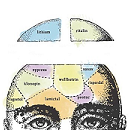
It is common parlance to talk about psychiatric diagnoses as if they were something that existed in nature, like dogs and bacteria, that can attack us. As this reification has many harmful consequences, we should stop fooling ourselves with misleading semantics. So, let’s have a look at what it legitimises, exemplified by two very commonly used diagnoses, depression and Attention Deficit Hyperactivity Disorder (ADHD).
Depression
It is easy to see that the statement: “Your mood is low because you are depressed” is empty because low mood and depression are synonymous.
Surprisingly, however, very few people realise that it is also nonsense to say that depression affects you. This is circular evidence, also called a tautology, from Greek tautologos which means saying the same thing. The information is empty or it is always true, as in this sentence: It will rain tomorrow or it will not rain tomorrow.
A description cannot explain itself. Depression is a description of a certain collection of symptoms some people have. It is just a name, and it is wrong to say that depression affects how you feel, think and manage daily activities, as this was how depression was defined in the first place. Nonetheless, official information to the citizens is full of this logical error, for all psychiatric disorders.
An Australian website presents as key facts that “Depression is a serious mental health condition that affects how you feel, think and manage daily activities. It can make you feel sad, angry or irritable and lose interest in things you usually enjoy.” It is not correct that depression is a serious condition. By far most people who get a depression diagnosis have only minor issues.
The US Centers for Disease Control and Prevention writes that “Depression affects about 16 million American adults every year.”
In Denmark, the official website in one of our five regions says: “Depression is a disorder that can strike anyone – adults, children and adolescents. If you are depressed, you have been feeling sad or just not very happy.” This is a clearcut tautology like “Your mood is low because you are depressed.”
The UK National Health Service tells people that depression “is a real illness with real symptoms.” What is real is that people can become sad but it is not a real illness like those we treat in the rest of healthcare. As one commentator put it: “Real sciences do not decide on the existence and nature of the phenomena they are dealing with via a show of hands with a vested interest and pharmaceutical industry sponsorship.” Psychiatric diagnoses are arbitrary and have been constructed based on consensus conferences and what psychiatrists think and feel. It is therefore appropriate to call this area of medicine pseudoscience.
According to the UK Mental Health Foundation, depression can cause people to withdraw, behave differently or become more irritable and can even lead to physical aches and pains.
They also mention that depression, like many mental health problems, can take over your life, and living with depression for a longer period of time can take a toll on your partner’s levels of energy, motivation and passion.
I would say, more soberly, that living with a dog can be pleasant but living with depression just means living with yourself, as depression is not an existing object independent of you as a dog is.
According to the World Health Organization, depression can affect all aspects of life. Funnily, the website has links to two videos with these titles: “I had a black dog, his name was depression” and “Living with a black dog.” A dog can bite you, but depression cannot, and it is therefore misleading to say that “Depression can lead to suicide.” Nonetheless, such errors are seen everywhere, not only on WHO’s website. It would be correct to say that people who are sad have a greater risk of suicide, which does not involve any reification.
The US National Institute of Mental Health is not any better. It says that “Everyone feels sad or low sometimes, but these feelings usually pass. Depression (also called major depression, major depressive disorder, or clinical depression) is different. It can cause severe symptoms that affect how a person feels, thinks, and handles daily activities, such as sleeping, eating, or working. Depression can affect anyone.”
Allow me to say that this is insane. By grading sadness, it is split into two categories. Minor sadness is not depression, but major sadness is. This is not how we otherwise handle diseases. A minor infection is no different to a major infection in nature; they are both infections.
The American Psychiatric Association went one step further by calling depression “major depressive disorder” and saying it is “a common and serious medical illness that negatively affects how you feel, think, act, and perceive the world.” As just noted, it is not correct that depression is serious and common. What is common is that people with minor issues get a depression diagnosis.
This serves the interests of the drug industry, and it is of note that most leading US psychiatrists are corrupt. They collect more money from drug makers than doctors in any other specialty; those who take the most tend to prescribe psychosis drugs to children most often; and they are also “educated” with industry’s hospitality more often than any other specialty.
Psychologists should know better than this but the American Psychological Association has also reified depression. They say that depression, the most common mental disorder, is more than just sadness and that people with depression may experience altered eating or sleeping habits, lack of energy or motivation, difficulty concentrating or making decisions, and withdrawal from social activities. This is a tautology. What people experience is given a name, which could be sadness, but to make it look like hardcore science, it is called depression, and then we are told that depression causes what defines it, which is nonsense.
ADHD
The absurdities of reification are perhaps even more evident for the ADHD diagnosis. No one knows what ADHD is, and there is a good reason for that. It is just a name for people at one end of a normal behavioural spectrum who are more energetic and irritating than others. Obviously, we cannot all display average behaviour. At the other end, those who are quieter than average can get the diagnosis Attention Deficit Disorder (ADD).
To reiterate, when we give a certain behaviour a name, we cannot say that a person behaves this way because he has ADHD. This is circular evidence. Unfortunately, the psychiatrists talk about their social construct, as if it existed in nature. For example, the authors of the adult ADHD checklist noted that adult ADHD can have a significant impact on relationships, careers, and safety of the patients suffering from it.
Helpguide.org claims that ADHD “can cause misunderstandings, frustrations, and resentments in your closest relationships.” ADHD has now become reified into some sort of psychiatric monster that can attack you and wreck your social relationships.
The American Psychological Association has also reified ADHD and it is a tautology when they say it makes it difficult to get organised, stay focused, make realistic plans, or think before acting, which is what defines ADHD.
In 2024, a newspaper applauded that more and more middle-aged and older people got diagnosed and noted that they have to “live with ADHD.” You can live with a cancer, which is a real thing, but “living with ADHD” just means living with yourself, which we all do, so this is an empty statement. The article noted that the diagnosis provides an explanation for people, which is impossible, as it is just a name.
Nowadays, everybody, even the UK National Health Service and the US Centers for Disease Control and Prevention, call ADHD a neurodevelopmental disorder, but – excuse me for my French as we say in Denmark when we are blunt – this is bullshit, which moreover gives people the impression that science has found out what is objectively wrong with these people and what causes ADHD (nothing does, as it is just a name).
It is a horrific insult to the patients to tell them they have a neurodevelopmental disorder, as these are as conditions that impair the growth and function of the brain and central nervous system in childhood. No such thing has ever been found in reliable studies for ADHD, but ironically, what has been found is that drug treatment of ADHD impairs growth substantially.
Treating children with ADHD drugs is essentially “treating” immaturity. A Canadian study of one million school children showed that the prevalence of children in drug treatment in the same class increased pretty much linearly over the birth months from January to December, and 50% more of those born in December were in treatment. It can be discussed if it is progress that we have replaced the cane with a drug that is a narcotic on prescription.
The diagnosis as a status symbol and an excuse
Those who think my account above is hair-splitting will hopefully change their mind if they read on. The logical error has far-reaching consequences. Indeed, it is a key reason why psychiatry seems to be the only medical specialty that is more harmful than beneficial to the patients.
ADHD has become a fashion diagnosis and it is very easy to get it. Between one quarter and one half have tested positive every time I have lectured for lay people or healthcare staff and they tried the test. My wife and I and one of our two daughters are also “positive,” which is three out of four.
Everywhere, in magazines, newspapers and on TV, we hear about people who feel good together with their psychiatrist because they finally understood why they behave they way they do, after they got an ADHD diagnosis. They are proud of their diagnosis, but it is so laughable that a comedian recently said he had tried the test five times before he passed.
It is not positive that many people are happy for their diagnosis because it involves deception to make people believe it explains anything, and it is unethical for doctors to deceive their patients.
It is also negative that some people use their diagnosis as an excuse for bad behaviour instead of trying to behave better. When one of my friends encountered a teenage girl lying on the floor in a supermarket screaming at her mother, and he asked her to compose herself, she replied that she wouldn’t because she was borderline.
For some people, a diagnosis makes them respectable, as in this joke by a Danish humourist: Two men meet in the street, and one says: “I’m a diabetic.” “Oh,” says the other, “I’m a mechanic.” It is better to be something than to be nothing, even if it is just a diagnosis.
Diagnoses blind us for the real issues
If a child behaves badly, is provocative and defiant, this can lead to a diagnosis of ADHD or borderline personality disorder, although it might be a reaction to a horrible abuse the child doesn’t dare talk about.
Not even when the patients talk about it, it is always being taken seriously. A young woman told me she had noted to her psychiatrist that she had been sexually abused as a child. He replied that it was beside the point. All that mattered to him was the questionnaires he used for making diagnoses. Many patients have told me it took many years before they met a psychiatrist who took an interest in the serious trauma, they had experienced, and many others were never met with a modicum of understanding or empathy.
If we did not have psychiatric diagnoses at all, we would do much more to find out what the underlying reasons are for the patient’s issues, which in many cases would allow us to address the root causes in our therapy and in some cases to cure the patient.
When saying people have been hit by a depression, it removes attention away from the reasons why they have become sad, e.g. because of poverty, unemployment, discrimination, marital issues, violence, the loss of a relative, physical illness, or simply living a depressing life.
The challenge for the doctors who are obsessed with making diagnoses is how to fix the problem without knowing anything about what caused it. Most remarkably, the US National Institute of Mental Health has abandoned the use of psychiatric diagnoses as a research tool and in 2013, its president, Thomas Insel, explained why:
Unlike our definitions of ischemic heart disease, lymphoma, or AIDS, the DSM diagnoses are based on a consensus about clusters of clinical symptoms, not any objective laboratory measure. In the rest of medicine, this would be equivalent to creating diagnostic systems based on the nature of chest pain or the quality of fever.
To overcome this problem, the psychiatrists invented 70 years ago what is likely the biggest lie in all of medicine, that mental health issues are caused by an imbalance in brain chemistry that a drug could fix. This lie has been so successful for the drug industry and the psychiatric guild that most patients even today have been exposed to it. There never was a shred of evidence that it was true. In fact, the truth is the exact opposite: Drugs create a chemical imbalance in the brain, which is why many people cannot come off them again, as the withdrawal symptoms can be severe.
The chemical imbalance hoax turned psychiatrists into real doctors that seemingly could address causes of mental disorders with targeted drugs, just like specialists in internal medicine do when they treat diabetes with insulin. But this is where it becomes really absurd. Psychiatric drugs are not targeted at all and and none of them can cure people.
The American Psychiatric Association’s disease manual, DSM-5, states that major depression is present when the patient exhibits at least 5 of 9 symptoms that “cause clinically significant distress or impairment in social, occupational, or other important areas of functioning.” Given how the disorder is defined, it makes no sense that drug trials don’t use such outcomes. Over a thousand placebo-controlled trials have been carried out, but I have not seen any that reported if the drugs helped depressed patients to come back to a normal productive life.
Instead, the effect is assessed on meaningless rating scales. To claim that a reduction of symptoms of emotional pain on a rating scale that is so small that it is not even clinically relevant is proof of efficacy is like claiming that aspirin can heal a broken leg because it reduces physical pain. A score on a scale cannot tell us if the patient is well. It is also misleading to call drugs against depression antidepressants. Using such scales, we could easily demonstrate that alcohol, opioids, cocaine, ecstasy and amphetamine “work” but we would not call such substances antidepressants.
Diagnoses create power imbalances
When phenomena have been reified, they can be owned, and diagnoses are owned by the psychiatrists. They define who you are and you are not allowed to define yourself. If you say you are sad and don’t want drugs, your doctor might say you have a depression and that very effective drugs are available against depression. What you won’t hear is that depression drugs are ineffective, that they double suicides with no age limit, impairs the sex life in half the patients, and that the inability to have sex or orgasm can become permanent.
For psychosis, the power imbalance is extreme and very harmful. This diagnosis allows psychiatrists to incarcerate people and drug them against their will with antipsychotics, which are highly toxic drugs that double mortality and cause permanent and serious brain damage in many people, e.g. tardive dyskinesia.
When I studied 30 consecutive cases in Denmark where patients had appealed forced treatment orders, I found that the law had been violated in every single case. We also had reservations about the psychiatrists’ diagnoses of delusions – a key element in the psychosis diagnosis – in nine cases. There is an element of Catch-22 when a psychiatrist decides on a diagnosis and the patient disagrees. According to the psychiatrist, the disagreement shows the patient lacks disease insight, which is considered a proof of their mental illness.
When a patient rejected olanzapine totally, this was called a persecutory delusion; another patient who became “hotheaded and difficult to communicate with” as soon as an antipsychotic was mentioned, was called “paranoid and conspiratorial about how we rally against him.”
I have seen several other cases where a patient, fully rationally, was afraid of being treated with an antipsychotic and was labelled delusional for this reason, even by the chairman of the Danish Psychiatric Association. It is so bad that I published the article, “Are psychiatrists more mad than their patients?”
Conclusions
Allen Frances, chairman for the DSM-IV task force, which updated the psychiatric diagnosis manual used in the USA, has argued that the responsibility for defining psychiatric conditions needs to be taken away from the American Psychiatric Association because new diagnoses are as dangerous as new drugs:
“We have remarkably casual procedures for defining the nature of conditions, yet they can lead to tens of millions being treated with drugs they may not need, and that may harm them.” Frances also noted that DSM-IV created three false epidemics because the diagnostic criteria were too wide: ADHD, autism and childhood bipolar disorder.
In another article, “Medicalising unhappiness,” Frances wrote that watchful waiting over multiple visits can enable doctors to see if the problems will resolve without drugs.This is true for many psychiatric disorders, also for psychoses, which are often self-limiting and might be caused by stress and sleep deprivation.
Child and adolescent psychiatrist Sami Timimi has noted how mental-health diagnoses have become brands that are contageous in young people while the real drivers of their psychic pain are hidden, and that the increased consumption of therapy and psychiatric medication in Western countries have been harmful.
We should scrap the whole psychiatric diagnosis system and focus instead on the issues patients have and try to help them the best we can without labelling and drugging them. We should also stop tautological thinking, as it is harmful nonsense.










“We should scrap the whole psychiatric diagnosis system and focus instead on the issues patients have and try to help them the best we can without labelling and drugging them.”
What are the details of what this would involve?
Report comment
Forever, and again, many thanks for your truth telling, Dr. Peter. I was taught long ago not to utilize circular reasoning … which is basically the insanity of much of what psych industries do.
Marc, I’m pretty certain what Dr. Peter means is we flush the DSMs. And those claiming to be “mental health professionals” should actually – instead of the “BS” they’re currently doing – “try to help [their clients] the best [they] can without labelling and drugging [their clients].”
Report comment
Really good article.
“If we did not have psychiatric diagnoses at all, we would do much more to find out what the underlying reasons are for the patient’s issues, which in many cases would allow us to address the root causes in our therapy and in some cases to cure the patient.“
Much in agreement with the first half of this sentence, not so much the second. If a cause of mental distress is rooted in societal systems (or other environmental forces beyond a person’s control), attacking perceived root causes in therapy will not eliminate those societal root causes.
Therapy isn’t the root cause of anyone’s problems (though it may be iatrogenic), therapy is typically sought only after a person has problems—so the cause of the problems existed prior to experiencing problems.
“Unfortunately, the psychiatrists talk about their social construct, as if it existed in nature.”
Economists also talk about the social construct/agreement of money as if it’s so normal to be confused with natural. Politicians might view the laws they make as being the result of a natural process, or somehow akin to laws of nature.
Maybe if some institutionalized social constructs like these were abolished in favor of healthier ones, there would be less call for “professional help.” These human-designed externally imposed forces might be among the most powerful causes of people’s distress. They short-circuit our natural sensibilities.
Report comment
Peter has always been a sane mind in this field, and this article is no exception.
He argues against the whole paradigm of diagnosis and (medical) treatment when it comes to mental or emotional problems. And that is a correct argument.
It somewhat ignores, however, the source (or sources) of our current situation and why it is so recalcitrant (difficult to remedy). That is a much needed next step. And though I have commented many times here that this step has been taken, no one seems to take this comment seriously (which is explained in the work they are ignoring and so in some ways is not unexpected). Could I not be reasonable to expect that at least SOMEONE would be open to look in this direction? After all, I did.
So I say again, as I have said many times before and expect to repeat many times again: Put down or lay aside your intellectual problems with Hubbard, or past lives, or reincarnation, or whatever is bothering you about this space, and at least study it! How could that be too much to expect from some academic like Peter, or the many others who write articles here?
There IS an alternative – many if you are a bit charitable. Study them!
And if you can’t stand Hubbard for some reason, try Ky Dickens. She has created hours of audio and video material on closely related subjects that everyone should be aware of. Last I heard, Autism Spectrum Disorder is in the DSM! And it is being horribly treated, as are those “diagnosed” with it. Let’s get off this intellectual merry-go-round and start looking at some solutions!
Report comment
‘try to help them the best we can’
Psychiatrists want to control people not help them. If that control means with drugs that harm them and the state allows this to happen. Then a psychiatric hospital – which is a prison there are at least two locked doors to the outside world in the UK – is a very dangerous place.
People need to realise they are on their own and need to use the internet to find answers.
Report comment