
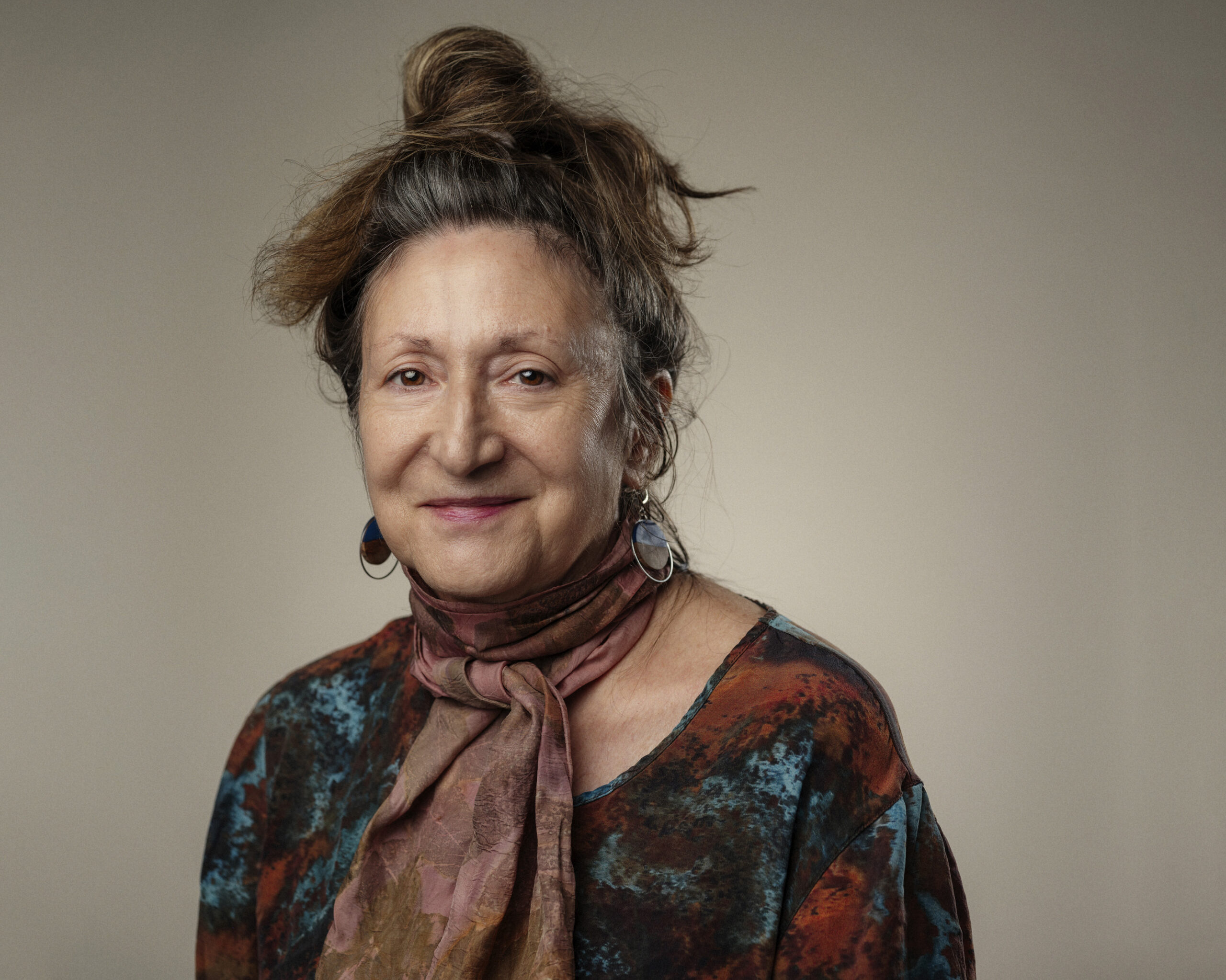
Susanne Paola Antonetta is an accomplished writer and poet, the author of numerous books, and in 2001 her book Body Toxic: An Environmental Memoir, won a prestigious American Book Award. Her latest book is The Devil’s Castle, Nazi Eugenics, Euthanasia, and How Psychiatry’s Troubled History Reverberates Today.
The transcript below has been edited for length and clarity. Listen to the audio of the interview here.
Robert Whitaker: Welcome, Susanne, to Mad In America Radio.
Susanne Paola Antonetta: Thank you, Robert. As you know your work has been a huge inspiration to me, so thank you for having done what you’ve done.
Whitaker: Thanks for the kind words, that’s very nice of you to say. First of all, I have to say that The Devil’s Castle is such a compelling read, so well-written, so well-researched, that I sat down in the morning and I had finished it by the night.
Antonetta: Oh my goodness.
Whitaker: Your book is a composite of several parts. It digs into the history of 150 years of psychiatry, and not just American psychiatry, but Western psychiatry, and into some of its darkest corners, and you do it in this very novel way by telling the biographical stories of three people, Paul Schreber, Dorothea Buck, and of course the third person is yourself.
Antonetta: That’s true.
Whitaker: That makes it such a nice way to illuminate this history within the context of real lives, and of course, all three of you had responses that I think are memorable. Also it was, and I really was compelled by this, you use these three stories to do an inquiry into the nature of consciousness.
Antonetta: Yes, I do. Yes.
Whitaker: Let’s start at the beginning with Paul Schreber. How did you discover his story, and what attracted you to his story?
Antonetta: What attracted me was that he was a German judge, that he was hospitalized for life with a diagnosis of schizophrenia, and litigated his own release. His papers to the court are so compelling. They changed German law, and he did not go in front of a court and say, “I’m not insane.” He said, “You don’t understand insanity and I’m going to teach you about it.” He was for me the advocate, the legal advocate for the mad, and I’m in that category. I was diagnosed first with schizophrenia and then with bipolar disorder.
I’ve lived with psychotic episodes my entire life, and like my subjects, Paul Schreber and Dorothea Buck, I’ve come to completely rethink what that means and the idea that it means that I’m just broken, that there’s just something wrong with me that needs to be suppressed.
Schreiber was my first subject. I discovered Buck when she died. That was 2019, a much later addition to the book. She died at the age of 102. She was an astonishing woman out there in her 90s protesting in front of the German Bundestag for not acknowledging the Nazi victims.
Whitaker: I had vaguely heard about Dorothea Buck as leader in psychiatric survivor movement, but it wasn’t until you wrote about her and you wrote a piece for Mad in America that I really began to see the scope of her life and what happened to her during the Nazi Germany years when she was hospitalized. You really introduced Dorothea Buck to Mad in America readers. And all three stories challenge the reader to re-conceptualize conventional thinking about madness and what it involves.
Let’s go into the details of Paul Schreber’s life. As you say, he’s a judge. What was psychiatry like when he was first hospitalized? He gets hospitalized in an institution which is quite humanistic.
Antonetta: Yes, he did. He got hospitalized in an institution that had been opened as the greatest institution in Europe. It was founded by Ernst Pienitz, who studied with the great reformer Philippe Pinel. It’s the moral treatment. People were treated humanely. They were taken care of. They were given roles and a lot of agency in their own lives, super important, and Pienitz got to know them. His teacher Pinel said, “If you don’t know somebody’s hopes and dreams, you can’t treat them. You’re not their doctor.” I think we’ve lost that so profoundly.
Shreber entered an institution that had started out as something wonderful, but by the time he got there, it had become a really sad human warehouse. The man running it at the time, Guido Weber, could not have been less interested in patients. He was mostly a neuroanatomist. He waited until they died and then he did a lot of autopsies.
He liked looking at brains.
Schreber’s life saw this terrible fall in the state of the institutions around him, and his defense, his litigation that they needed to let him go, was basically these are real experiences. You don’t really understand reality. Your reality is narrower than mine. These are spiritual experiences. The court, the five judges who heard his case, just ended up being sort of fan-boys. They loved him.
Whitaker: I love that idea of his that your reality isn’t broad enough to encompass my reality. What year are we talking about when he’s first hospitalized, the number of years he spends in the hospital, and then a little bit more about how he challenges this definition of insanity that allows people to lock him up?
Antonetta: Now, I’m going to say 1892 was his first brief hospitalization. It might have been 1893. But in 1894, his doctor, who was kind of a creepy guy named Paul Flechsig, sent him over to Sonnenstein Asylum because he thought he wasn’t getting any better, and Schreber was in Sonnenstein for about eight years before his litigation worked and he was released.
His argument is deeply complex. Part of it is a very kind of pragmatic argument. You’re going to let Christian scientists say this, and spiritualists say this, and you’re locking me up, buddy, that’s point one—where he kind of steps outside of his symptoms. But point two is where he says, I have had very real experiences, very deep, very spiritual experiences. I’ve seen this is the kind of architecture of the world in a way that you haven’t, and it’s real. The judges end up talking about the spirits that spoke to Schreiber as if they’re real.
Whitaker: They are real, in a sense. He’s experiencing them as real. Can you talk a little bit about the nature of his experiences, because he’s in a male body.
Antonetta: He transitions while he’s in Sonnenstein Asylum. He begins to present as female and wear female clothing. When he finally is released, he goes back to his wife. He lives with her as a male, and his experience of his own transition, which is fascinating. He wrote a book—it’s called, in English, and this is a very bad translation of the title, Memoirs of My Nervous Illness. He’ll sort of stop and lecture the reader about how women aren’t turned on by men’s bodies, guys, the way you’re turned on by women’s bodies. You need to learn this.
So, he’s speaking from a female embodied place. But I think it’s a little bit different than what we would call a transitioner in that he wanted to be sort of left alone. To him, it was a very deeply spiritual experience. He experienced God through what he called the feminine soul voluptuousness or feminine energy in his body. He did present as female, but it was a bit less than being accepted that way than about this kind of internal experience that he had, which is very beautiful, very, and at times, like I said, very funny.
Whitaker: You captured this so well. There was a sense, though, of knowing God through this experience.
Antonetta: Yes. He felt he knew God more deeply. He knew God as a male, but he knew God far more deeply and far more physically and emotionally as a female. It was a big part of his relationship with his God that he accepts himself this way.
Whitaker: He’s challenging his being in the hospital, which is a forced hospitalization, and the argument he makes, maybe I’m insane by your standards, but so what? Go into a little bit more about the argument and how it changed German law at that time.
Antonetta: He introduced the idea that there was such a thing as harmless insanity, and that did change German law. It’s something that we could, I think, appreciate more than we do in our own day. That just because my reality doesn’t match with yours doesn’t mean you get to lock me up. There have to be other issues involved.
That was kind of thing that Schreber would stand outside of his symptoms and argue. But he also argued that he had had valid spiritual experiences, that they were very important, that they were real, and the judges agreed with him about that. They said what he experienced belonged to the field of religion and not the field of science. Science and medicine back off.
Whitaker: The judges said, that’s okay. Is that law still hold in Germany?
Antonetta: Yes, it does. According to the Germans I know, it does, yes.
Whitaker: That’s fantastic. It was 1902 when that decision came down?
Antonetta: Yes, 1902.
Whitaker: Then going forward, you describe him as such an important figure in the first part of the 20th century, articulating this other view of madness that we sometimes think born from a mad pride movement happening later. But he’s giving voice to it in the first half of the 20th century, it seems.
Antonetta: Oh, Absolutely is. He’s absolutely the model for speaking for neurodiversity and for the wisdom and insight of neurodiversity. Dorothea Buck, the same. She was born in 1917. She’s a bit younger than Schreiber. But one of her first psychotic episodes was seeing how bad Hitler’s war was going to be. She was medicated, she was hauled off to a doctor for that.
Whitaker: This is in 1937, right? That she’s starting to say, like, wait a minute, this is going to be horrible.
Antonetta: It was 1936, and she talked to her choir director, her parents, she even talked to the doctor her mother dragged her to and she said, no, no, what’s important here is we need to talk to Hitler, we need to stop this war. This war is not going to be what you think. It’s going to be monstrous.
Nobody at the time, while they did expect a war, they expected a limited war that would be good for the country. I think occasionally with myself you see people who are neurodiverse, and there are just things getting through the social filters that aren’t getting through the more neurotypical people, and they’re seeing things that are very real.
A fascinating thing about Schreber and Buck, and I envy it in a way, is that they both had a language that they spoke or heard or used during psychotic episodes. Buck continued to be able to use that language until her death.
Whitaker: At 102.
Antonetta: Yes, at 102.
Whitaker: Now she’s getting hospitalized in 1936-37. We are getting into a really dark time. Eugenics is rolling, eugenics is blooming. What happens to her in the hospital?
Antonetta: She had some very bad experiences. She was very overmedicated. She was force-fed, which was horrible. In her first hospitalization, she was tied to the bed. So, really, really brutal stuff. But when the Germans began their program of exterminating psychiatric patients, particularly schizophrenics, it was number one on their list. She was not killed because she was in the hospital of a doctor who refused to comply with that program. While they killed 80 to 100,000 Germans and many more in other countries, she survived the war and became a real pest to the German government, which has not acknowledged those crimes the way they should. So, she protested, she wrote, she had other people out protesting. She formed several victim organizations.
Whitaker: We’ll go into your research on the T4 program. But she was sterilized.
Antonetta: She, oh yeah, I’m sorry, I should have mentioned that right away. At the age of 19, she was sterilized, and she was told it was going to be an an appendectomy. And then she saw the scar was in the wrong place. She was so young, she still didn’t understand it. Finally, another patient told her, and that was something that devastated her throughout her life.
She loved children. Most of her future plans had been around being with children. She wanted to be an elementary school teacher, and the Germans did not allow the sterilized to marry. They could marry another sterilized person. But that’s it. They couldn’t go to college. This cut off every future plan that she’d had for herself.
Whitaker: Of course, one part of the eugenics agenda was locking people up and keeping them away from society, being able to “breed” with others. But sterilization, which takes hold in the United States before Germany, was the second part. Then, of course, the third part was murder. Really, it’s the first chapter of the Holocaust.
Antonetta: Absolutely.
Whitaker: I’ve read a fair amount about T4, and I wrote about it a bit in Mad In America. Your chapters on the T4 program are extraordinary. They’re so detailed.
Antonetta: Oh, thank you.
Whitaker: Can you tell us a little bit about your research? How much did you know about the T4 program before you started to dive into it? Did you dive into it because of Dorothea Buck having had her life so badly affected, so harmed by eugenics?
Antonetta: Buck was certainly an inspiration, but I was already working on the book and I didn’t know about her till 2019. I’ve been working on it for a few years. I was actually alerted to that by a footnote in Paul Schreiber’s memoirs, little footnote that said by the way Sonnenstein asylum became a gas chamber. I just kind of said, what? And I began diving into it and learned German.
Whitaker: You learned German in order to do this research.
Antonetta: I did. Yes
Whitaker: That’s impressive.
Antonetta: Thank you. It’s a funny thing because I read it quite well, but I don’t speak it well because I don’t speak it very much. I’m trying right now to get into some conversation groups so my accent gets a little better. But I did learn German and the newspapers had some really fascinating coverage of what had happened during T4 during the Nuremburg trials. So and I went to several of the T4 sites and I went to the T4 Association in Berlin, which keeps a lot of records.
Whitaker: It’s really impressive, the degree of detail you have on how it unfolded and where it unfolded. You said you got a wind of it through Paul Schreiber’s book. Did you know about it before you see that footnote?
Antonetta: No, I did not and I find very few people do. I think there are some reasons for that that are just logistical reasons being that the Nuremberg trials, the trial of Adolf Eichmann, they decided at Nuremberg they were not going to prosecute German-against- German crimes. Actually they had some strange conversations about it. Like what would happen to the United States given our history with our black citizens if we allowed other countries to come in and prosecute crimes against our own citizens? So they didn’t do that.
Whitaker: But the Jewish people were citizens of Germany.
Antonetta: They were. That’s true. But the majority of Jews killed were not German citizens.
Whitaker: They were from Poland and other countries.
Antonetta: German Jews were killed in the Holocaust, but the Jews that were killed during Aktion T4, which was the first wave of Jewish killing—any Jew got put into that program was exterminated.
Whitaker: Briefly describe psychiatry’s role in T4.
Antonetta: It was instituted by a medical doctor, Karl Brandt, and other medical doctors. It was carried out by psychiatrists and that’s one of the heartbreaking things that Buck said over and over again in her life. Nobody had to force them to do it. Brandt would actually open these meetings about T4 and say is there anyone here who doesn’t want to participate? He would allow them to leave. He maintained friendships with some of the doctors who refused to participate.
While there was certainly pressure—you might not be promoted. It would have an impact on your career if you were a doctor and you didn’t participate. But there wasn’t the kind of pressure that we I think imagined there was.
I think that, having been in the psych system for a long time in the United States, we still struggle with that question of what people like me are worth, and If we have any value, how much are our lives worth? We’re sort of dealing with that question by withholding resources, not by active measures, but we sure are—look at our homeless population.
Whitaker: I want to return to that later because as you say the troubled history reverberates today. One of the things you see in the history of psychiatry is this othering of people and once you other people, you do things to people that you wouldn’t do to yourself. I think that is still present today in many ways.
Go on with Dorothea Buck. As you said she was quite an artist. You talk about a play she performed or she directed. Tell us about the play and why it was so revealing.
Antonetta: The play she wrote was never performed, but I got the German version of it. It had these odd passages, and in her introduction to it, she used the word transcribing and I didn’t realize that she meant it literally.
She had a passage in there where it’s kind of an absurdist play and where they described taking a busload of victims that are going to the Sonnenstein Asylum to be killed being given fool’s hats—you know those kinds of hats you wear around carnivals—and their being accompanied by a band. I thought it was part of the absurdism of the play. But I found that in a newspaper that actually happened. I guess to mock the victims, they had put these fool’s hats on them and sent them off with a band from the institution that was sending them to the asylum to be killed. It was really heartbreaking when I realized she meant literally, she had transcribed that history.
Whitaker: That image is hard to get out of your head once it’s in your head. I guess that’s why I imagined it was actually performed. So Dorothea Buck becomes someone who is making known the horrors of the Holocaust and the killing of psych patients. She also becomes very visible in the psychiatric survivor movement in Europe, isn’t that true? A leader in that moment?
Antonetta: That is true. I mean her legacy did not last the way it should have. I was on her home island of Wangerooge. It’s about five miles by five miles and nobody knew who she was. I went to the T4 sites and nobody there knew who she was. I think that we really need to remember this amazing woman. she learned about the T4 euthanasia murders through the Adolf Eichmann trial and kind of dedicated her life to remember them. The German government did not acknowledge the psychiatric dead as victims of National Socialism in the way that Jews and Sinti and Roma were.
They still haven’t, and she said, even up to the time she died, that they were second-class victims of National Socialism. It was a huge issue for her.
She also ran several survivor movements. She created her own way of dealing with mental distress. She called it trialogue and ran seminars and there were hundreds of them in her life.
Whitaker: Can you explain her conception of trialogue?
Antonetta: It’s quite interesting. She got the idea when she was hospitalized in a very negligent institution and she and eight other women just kind of pushed their chairs together and spent all day talking. They realized they were able to help each other tremendously. A lot of it was just unpacking their psychotic experiences together. She discovered that there was like a shared imagery, a shared symbology, a lot of shared experiences in psychosis.
There were patterns and trends. The younger women would learn a lot from older women who would say yeah, that’s happened to me. I’ve had that vision, I’ve had that experience and you know, it’s going to get better or here’s something you can do.
It was really effective and Buck called it trialogue because it was family, clinicians and patients meeting together, but completely as equals.
Whitaker: Sort of like a forerunner of the hearing voices movement, right?
Antonetta: Absolutely. Yes, very, very like that.
Whitaker: In a way, it normalizes these experiences as within the normal spectrum of human consciousness.
Antonetta: Absolutely, and you know 17 or 18% of the population hears voices at some point in their lives, and that’s in the west. I think if you go to countries where they believe that there may be ancestors or there may be other people speaking to you it’s even more common. The idea that you would run out and get like blasted on antipsych meds because of that common human experience is really sad.
We live in a time and in a culture where the idea of normality is so constricted. I mean, if you go back and look at William Blake the romantic poet. He used to entertain guests sitting naked in a tree, because he wanted you know to pretend to be Adam for the day and nobody called Blake off and threw Quetiapine or Haldol at him.
The idea of the eccentric has been kind of lost. You see these advice columns and somebody writes in and the answer is always go get them assessed. You need an assessment, get an assessment. You know what the assessment is going to end up doing.
Whitaker: They’re going to pathologize you in one way or another. That’s the what the DSM does.
Antonetta: Absolutely.
Whitaker: This is a nice segue into our more modern times. Tell us Susanne about your own path into the system and if I remember, by age 13 or 14, you’ve been hospitalized.
Antonetta: 14, yes.
Whitaker: Explain your growing up, what that was like and some of the visions you had as a child or as a young person.
Antonetta: It’s interesting because I kept diaries when I was really young, and so you can see this sort of “non-consensus thought” is what I like to call it. My cat talked to me. God talked to me through my cat, things like that. But somehow I kept it all to myself and somehow I was functional. I remember that when I was in sixth grade my teacher assigned the kid behind me to poke me in the back with a sharpened pencil because I just zoned out all the time. It was the 1960s, and so the Ritalin then was the sharp pencil and maybe I was lucky that it was a pencil.
I did have a very kind of non-consensus life but it was rich and it worked for me. I also just wrote—I wrote novels when I was like 8 and 9. So I also had a lot of this very creative stuff going on.
Whitaker: Can I stop you a second. When you were in these non-consensual realities, were they painful to you? Were they joyous to you?
Antonetta: They could be joyous; they could be painful. It was a real mix. Some things were very joyous. Very, you know, spiritual. Some things were very frightening. I mean I had fears of being possessed by the devil and things like that. But it would come and go and that’s what we see with people in non-consensus states, they end.
Whitaker: Can you add a couple details about what it was like growing up ? You’re living across from a cemetery, I believe.
Antonetta: Oh yeah, when I lived in Elizabeth I lived across the street from a cemetery. And it was actually a very cool cemetery. I’ve visited it as an adult. But as a kid it was very scary and I lived in an apartment and I was always kind of afraid of what was going on over there and of ghosts and spirits and so on.
But somehow my life had kind of a balance until I was taken to a doctor for an assessment at which point it was just, she’s schizophrenic. She’s going to be in a hospital for the rest of her life. I heard a doctor say that about me when I was 14 or 15. That I was going to be hospitalized for life and I got all this medication thrown at me.
Whitaker: What happened that made your family take you for an assessment?
Antonetta: I had just gotten very depressed, very sad. It had happened to me before and I came out of it, but somehow this time—generally they didn’t pay very much attention to me, which I think that somehow for me that was a good thing—but for some reason at this point they decided to take me to see somebody. You know, it started with meds that I shouldn’t have been on and then med-withdrawal symptoms and then me using street drugs to sort of try to cope with all of this. It was quite a a mess.
Then I remember when I was in my early 20s I got the whole thing changed to bipolar and my doctor said well, you’re very lucky. You have hope. I just bothered me so much. I’m the same me. I’m the same person. I’m still writing the novels and the poems and I’m the same non-consensus odd person that I have been and it just felt so wrong to me. But it took me a really long time to start questioning the system.
Whitaker: I want to talk about your questioning the system, but you did get ECT as a teenager, right?
Antonetta: I got ECT as a teenager. It was awful. It was one of the worst experiences I’ve ever had. I still have a hard time talking about it without tearing up, because my mind was the thing that kept me going, that I could always go to my creative site. I could always go to the place where I wrote plays and novels and poems and suddenly that was gone.
I remember my brain just became this vast emptiness and I had quite a few rounds of shock treatment. I was again very young. I was of developing brain age and I had cognitive losses that have never gone away. Again, luckily the things I’m good at doing don’t need math. But I really became incapable even of basic multiplication and division.
Whitaker: This is part of your extraordinary story. Clearly you had part of your brain damaged, and it stayed permanently damaged.
Antonetta: I did.
Whitaker: Tell us how you moved from that spot to become such an accomplished writer? What did it involve? How did you manage this? I mean, you’re a beautiful writer. You’re so evocative. Your facility with language is extraordinary, so take us on how that evolved. How did you become that writer?
Antonetta: I think part of me that wrote was the part of me that always had kept everything together. For me, it was the one thing that I knew how to do. The period after shock treatment—I stopped keeping diaries. I was just an absence of a person for a long time. But whenever that started to come back, I would always go straight into writing. I think it was always the thing that kept me going.
It was interesting in Buck’s trialogue seminars, people wrote. it was a big part of what they did. They would dialogue with their psychosis. They would dialogue with their depression. It’s the thing that nobody can take away from you.
I became very rebellious. I dropped out of school. I was doing a lot of street drugs, but, you know, I had a friend whose wife worked at a runaway shelter. She said, well, they’re the sane ones in their family because they know to get out. In the psych system, there were moment where people prescribing things, and even before I had any sort of ideology or thoughts to back it up, I would just say, no, just no, I’m not going to do this. This doesn’t feel right to me. I shouldn’t feel this dead inside. I think being a rebellious person served me well—yes, saved me maybe.
Whitaker: You were talking earlier about how your understanding of yourself changed over time. That you’re given this bipolar diagnosis, which is sort of an identity after DSM-III.
Antonetta: It is. Yes.
Whitaker: But then in your book, you’re talking about feeling a lot of commonality to Paul Schreiber and Dorothea Buck, which is a very different conception of what’s going on. Can you tell us about that evolution of your self-identity and how you perceived yourself, whether within the bipolar context, the DSM context or outside of that context?
Antonetta: Sure. I think it was partly climbing out of The Broken Brain thinking. The Broken Brain is actually a book that I referenced that was published in, I think, ‘83 or ‘84 by Nancy Andreasen. The idea that, you know, we’re dealing with biological illness. The brain is just an organ like any other. And I mean, this goes back to the German doctor who trained most of the Nazi doctors, Emil Kraepelin. He said the brain is an organ like any other. If somebody’s miserable, it’s because their brain isn’t functioning. If they lost their job and they’re miserable over their job loss, their brain was sick first, then they lost their job. Everything comes down to neurotransmitters or genetics or some kind of malfunction in the brain.
I got into the psych system at the dawn of the biological psychiatry age. It was so huge for me to read your book. It was very important for me. I think people like you write books like Mad in America and you don’t see the people that are reading it who really need to know that. Then I thought, well, this is completely contingent. There’s no evidence for this. What if there are just people like me? What if we’re just meant to exist? In my book A Mind Apart, I interviewed evolutionary scientists who confirmed that, yes, these things are in the gene pool because we need them and they belong there. We need this novel thinking and we need novel problem solving. We need it now more than ever. Lord knows.
So I and Buck and Schreiber talked about how we’re kind of a tribe. One of my best friends is autistic. She and I think alike so much. We almost don’t even need to talk. And, through her I belong to this group, Casey Cultural Autism Studies at Yale. We really are people who just understand each other.
One of the final pieces in The Devil’s Castle was bringing in neuroscience. I am fascinated by neuroscience and I was interviewing a lot of neuroscientists, really huge names in the fields. I started asking them these questions, like how much are people supposed to be alike, not in what they think but in the way they think. The answer that we’re getting now from research is not at all.
People’s minds are wildly different. They function wildly differently. Whether you get a diagnosis is often a matter of what you happen to say something , who you say it to and when.
Whitaker: I have to say, it’s very rewarding for you to say my book, Mad in America, was part of this transition away from The Broken Brain identity to this other “I was part of a tribe with these gifts in some ways and different non-consensual thinking and visions, etc.” One of the things you do about in your book that is so memorable is that not only do you find members today that are part of the tribe, you feel connections to Paul Schreber and to Dorothea Buck, that you share a sort of consciousness, this consciousness outside of normal, what we call norms. You recognize that in them as well. It seems like you found that quite comforting.
Antonetta: I found it very comforting. I read Buck’s letters. She had a lot of letters she exchanged with people in her psychosis seminars or trialogue seminars. They would talk about how seeing the symbol of the Rosetta. I talk about that in the book, how I actually wrote a book of poetry that’s built around the symbol of the Rosetta. I had had all these mental images that were very similar to what these other people were experiencing in psychosis.
I kind of go on a meditation on this in The Devil’s Castle. Like, at what point am I no longer crazy? Well, it’s when I’ve got the book. Or maybe if you want to be really persnickety, it’s when the book is in print and a press has decided it wants it. Then it’s no longer a psychotic vision. It’s a book.
It’s like things like dreaming, too. I interviewed Anil Seth who is a wonderful man. He’s a British neuroscientist who studies perception. He said to me, “I think that if we really understood our neurodiversity it would be as transformative as understanding all of our physical and identity diversities.”
Whitaker: It should be something celebrated rather than trying to tamp down that diversity.
Antonetta: We should be celebrating it. We don’t want to be dragging the William Blakes out of the trees and slapping them around.
Whitaker: You know, one thing about different realities, I happen to be a very lucid dreamer, have been all my life. Every morning I wake up with a different experience in my mind. I will say the feeling that I have when I’m lucidly dreaming is of utter reality that I am in that reality. Then when I wake up, one of the feelings is, oh, that was so real.
Anyway, my point is, as you say, the human mind goes to many, many places, whether in a waking state or a sleeping state. One of the things I think the book is so powerful about and so beautiful about is talking about the horrors of when we tamp that down and psychiatrize it and pathologize it. Also at the same time, that there is something to be cherished about these visions, these experiences, these expansions of consciousness.
That was my experience as a reader. You can see I was profoundly moved.
Antonetta: Thank you.
Whitaker: Which comes to an obvious question, what has been the response to your book?
Antonetta: Well, I’m one of those squirrelly writers who I try not to read my reviews. I mean, if I have to I will.
Whitaker: Probably good for you.
Antonetta: It obviously hurts more if they’re bad than if they’re good, but I think all of them just feel a little inhibiting. I get an inner voice that that I don’t need. But I hear from people a lot who’ve read it. I hear from people who find me and want to talk about their experiences with medication, with misdiagnosis. I’ve done a lot of radio and a lot of podcasts as well. I find that people are really fascinated by these questions. I think most people are questioning the biological psychiatry we’ve been practicing since around 1980, but aren’t sure what else there is.
I guess I’d say the biggest thing that I get asked is, what else is there? When I talk about how somebody like Philippe Pinel was doing so many things right in the late 1700s, it is kind of criminal that we’re not looking at what he did.
Whitaker: It’s that whole moral therapy between Philippe Pinel and the Quakers. It had such a humanistic core to it. The fact that we lost it, and can’t really seem to get back to it, is so tragic, and I would say, damning of our modern society.
So it’s 2026, and we are in quite a time of political upheaval.
Antonetta: We sure are.
Whitaker: There are comparisons being made, of course, to the rise of Nazi Germany. Where do you think we’re heading in terms of how we treat those we call mentally ill or those we call mad, or the homeless, or the other?
Antonetta: I’m not sure where we are headed. I think where we need to be headed is looking at places in the contemporary world, like Trieste in Italy. I know that they’ve had some pushback, but they have really decided not to use institutions and to create jobs, to create a life path for people who are neurodivergent. I sincerely hope that the crisis we’re in now, because we have a really unacceptable suicide rate in our young, a really unacceptable rate of medication in the whole population. The last DSM, the fifth, was just such a mess.
It’s a mess being written by doctors with pharmaceutical ties adding things like caffeine-induced sleep disorder, complicated grief, that are kind of ridiculous. My hope is that we will do a new DSM on the trialogue model, and that patients will be as involved as doctors. We will simply rethink what we are doing. I think psychiatric training has to change drastically. I think it needs to become much less medical.
Whitaker: Yes, sort of a wholesale rethinking of how we conceive of this and what to do. What are your thoughts about medication because I’m sure you get asked about it all the time?
Antonetta: I get asked about it all the time and my thoughts are that it’s tremendously overused. I mean, Philippe Pinel, God bless him, said that the real measure of a doctor was not in knowing when to use medication, but when not to, right? Pinel, you can go back all the way to Hippocrates, who said that a doctor needs to know his patient more than he needs to know the disease. We’re not even doing the Hippocratic thing here. Mental distress needs to be looked at as a very complex issue, and medication I don’t think should ever be the first answer.
Whitaker: Your book is such an exploration of consciousness. At times can medication facilitate that state of consciousness in a good way? What’s your experience?
Antonetta: Sure. I think it can, and I do take medication. I’m on a very minimal level, and I’ve been coming down off of it for years, which you know is a hellish process. If I hadn’t been put on it my whole life, would I still need to be taking it? I don’t know, and I’d rather not be. But I also know people who really thrive on a small amount of maybe one particular antidepressant, and I would never say that you shouldn’t do that. That would be grossly overstepping. I think everybody’s consciousness is referential to itself.
Whitaker: I think that’s the point, right? People should have the choice and agency to try to find the consciousness they want to inhabit.
Antonetta: That goes for things like psychedelics. I think they’re being monetized to the point of being thrown around pretty negligently, but I think for some people they are very important. I interviewed Michael Pollan about this question. I think for some people they’re an important part of their inner transformation. I feel like my brain does that naturally, and I don’t need to give it any more fuel.
Whitaker: The only thing about these psychedelics, I think one thing is there’s often a ritual aspect to it that if it gets stripped away in a medical environment, I think that could be problematic.
Antonetta: It could be, absolutely. You know, the thing that really came to me when I was talking to Michael Pollan was that the things they’re doing in these therapy sessions with the psychedelic drugs are the things that people like me need but nobody gives us, which is somebody staying with you, somebody saying, I’m going to make sure you’re safe. If this turns bad, it will end, and I’ll be with you till it ends. Can you imagine if we did that with people?
Whitaker: Well, you’d have a companion on your journey, which you don’t have with the disease model. It’s all your problems up in here [in your head].
Antonetta: Exactly, and you go through it all yourself, and nobody offers you any reassurance. That’s the kind of thing that people like Buck brought to treatment. She had medication contracts for a lot of her people. They would sign a contract that if I get to this stage, you can give me this drug for it, at this dose for this amount of time. That way they were in control of it.
Whitaker: That’s giving them agency, right?
Susanne, this has been great. Really, again, I just loved your book. Are you working on something now?
Antonetta: I’ve had this odd thing that after hurricane Helene I’ve really only been able to do poetry. But that’s not exactly true. I’m also working on a book about Shakespeare’s mad characters, because Shakespeare is my Alpha and Omega. I adore him. I have since I was very young. I think that he’s one of the only literary artists who got madness right. His mad characters are always the only ones that know what’s going on. It’s kind of the mad characters and the fools.
Whitaker: I often say that the DSM is such an impoverished philosophy of being, and that we should read our Shakespeare to understand a much bigger, broader understanding of what it means to be human.
Antonetta: One of the things Buck taught was that a psychotic episode can be one of the most transformative things that ever happens to you. I happen to agree with that. Lear is a beautiful example of that, King Lear.
Whitaker: That’s true. Well, it’s been a real pleasure. Where can our listeners get in touch with you?
Antonetta: Sure. susantonetta.com is my website with a contact form. I also write for Psychology Today as the Mad Woman Out of the Attic. I love to hear from people.
***
MIA Reports are supported by a grant from Open Excellence and by donations from MIA readers. To donate, visit: https://www.

I find it rather amusing that you can write so much about Daniel Paul Schreber and never spell his name correctly. You call him Paul Schreiber. What is not so amusing is the failure to recognize that the cause of Schreber’s schizophrenia was the repression of his homosexuality. Freud was the first person who made this observation. Here are some quotations from Schreber’s book Memoirs of My Nervous Illness which confirm this hypothesis. “Fancy a person who was a Senatspräsident allowing himself to be fucked” (p. 164). “I would like to meet the man who, faced with the choice of either becoming a demented human being in male habitus or a spirited woman, would not prefer the latter” (p.165). “It requites only a little exertion of my imagination to attain such sensuous pleasure as gives a pretty definite foretaste of female sexual enjoyment in intercourse” (p. 239). “Few people have been brought up according to such strict moral principles as I, and have throughout life practiced such moderation especially in matters of sex, as I venture to claim for myself” (p. 249).
Report comment
Thank you for pointing out my misspelling of Paul Shreber’s name. I’ve corrected the mistake.
Report comment
Thanks for this. This era and the Histiry so important to know as well as the use of the United States eugenics and racism in the Jim Crowe South not to mention how that all affected the indigenous folks and children.
Report comment
“… an Inquiry into Mad Consciousness” …
Consciousness, itself, is a much understudied, thus a not understood field. I was listening to this youtube video this morning,
https://www.youtube.com/watch?v=pjrnwDTUaO8
when I went back and looked at the title of this MiA blog.
As one who was neurotoxic poisoned for questioning a Spiritual dream, due to distress about 9/11/2001, just after 9/11/2001. Who has subsequently had a lot of lucid dreaming experiences and awakenings … thus still questions my dreams.
I’ll just say, it is my father who is the physics specialist in my family, not I. But I’m quite certain dreams, and consciousness itself, are likely so much more complex (albeit not necessarily disorganized, nor “mad”), that we just can’t fully understand everything about our dreams (nor consciousness) in our waking hours.
But this means our lack of understanding of consciousness itself make it appear “mad,” yet that’s just because we don’t understand it … however, maybe it’s better that we don’t understand everything about consciousness (including our dreams) in our waking hours?
Thank you for this thought provoking interview, Bob and Susanne. But isn’t it poignant to notice that we (as a society) seemingly call things we don’t understand, like consciousness, “mad?”
Report comment
Bravo!!!
Fantastic interview. Thank you Susanne and Robert.
Report comment