
Critical Psychiatry Textbook, Chapter 7: Psychosis (Part Three)
Peter Gøtzsche discusses the lack of evidence for benefit, and the evidence of harms, of psychosis drugs used for early intervention/first-episode psychosis.

LGBTQIA+ Peer Respites: The Personal Is Political
Peer respites have great value. Affinity peer respites—such as an LGBTQIA+ peer respite—may have even more.
Medically-Assisted Suicide Is Not a Win for Mental Health
Medically assisting someone in suiciding because they’re poor or experiencing mental or emotional distress does not value life; it shows a blatant disregard for it.

Emotional Crisis Response: The Peer-Run Respite/Soteria House Approach Compared to the Conventional Approach
The peer respite/Soteria house model responds to emotional crisis with compassion and curiosity, rather than pathologizing.
Critical Psychiatry Textbook, Chapter 7: Psychosis (Part Two)
Peter Gøtzsche reviews the evidence that psychosis pills substantially increase mortality.

Mad Poetry Slam!
Poets with lived experience with mental distress are invited to perform their poetry live at MIA's Mad Poetry Slam on Zoom on May 7th, 12PM EST.

Acute Religious Experiences: Madness, Psychosis, and Religious Studies
It is the capacity of mad studies to advance the idea that mad is not necessarily bad. Acute Religious Experiences are always phenomenally mad, but not necessarily pathological.

Tolstoy’s Hermit: Jay Schulkin
Jay Schulkin, a neuroscientist and philosopher of prodigious curiosity and energy, has died at age 70 of hepatic cancer.

Critical Psychiatry Textbook, Chapter 7: Psychosis (Part One)
Psychosis pills were hailed as a great advance, but this was because they kept the patients docile and quiet, which was very popular with the staff in psychiatric wards.
Compassion and Understanding Versus Drugs and Disease: Where Does Humanistic Psychology Stand Now?
Authors with lived experience of extreme states present a humanistic contrast to psychiatry.

Critical Psychiatry Textbook, Chapter 6: Psychiatric Drug Trials Are Not Reliable
In this blog, Gøtzsche discusses the ways in which drug trials are biased, including breaking of the double-blind and industry manipulation.

How Peer Reviewers and Editors Protected a Failed Paradigm for Psychiatric Drug Testing
My recent article was so threatening to the whole edifice of psychiatry that the peer reviewers and editors did what they could to kill it.

Critical Psychiatry Textbook, Chapter 5: Psychiatric Diagnoses Are Not Reliable (Part Two)
The screening test for depression recommended by the WHO is so poor that for every 100 screened, 36 will get a false diagnosis of depression.

New York Can’t—or Won’t—Provide Data on New Forced Treatment Plan
When we requested specific numbers and data, the presenter suggested that there were so many different players, agencies, and moving parts it was hard to “make sense” of all the information.

Beyond Psychiatry: A Trauma-Centric View of Mental Health
Internal family systems therapy is a non-pathologizing method of working toward healing from trauma, a journey of returning to wholeness by reconnecting with ourselves.

Everyone Has a Story
Greetings to all in the Mad in the Family community. I’m the new editor of this bustling corner of Mad in America, and I’m thrilled to start working with you all.

About Not Listening to People
Psychiatry exists in a perpetual state of distrust and disbelief of everything their patients say, including when patients report harmful effects of their drugs.
Critical Psychiatry Textbook, Chapter 5: Psychiatric Diagnoses Are Not Reliable (Part One)
Psychiatric diagnoses have poor validity and do not tell us much about the nature, course, and treatment of the "diseases."

One Flew Over the Scientific Consensus’ Nest—The Story of Dr. Ophir and ADHD
The backlash against Dr. Yaakov Ophir, licensed clinical psychologist and promising scholar, began when he reported his findings about the scientific validity of ADHD.
Critical Psychiatry Textbook, Chapter 4: Are Psychiatric Disorders Caused by a Chemical Imbalance? ...
On the evidence base for textbooks' statements of the imbalance of neurotransmitters causing psychiatric disorders.

Black Movement Leaders: Lost & Found
As some of us get caught up in lamenting the whiteness of our movement, we are actively losing the stories of Black leaders.
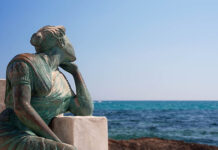
We’re Obsessed with Labelling Suffering, But Our Power to Think about it Matters More
I needed Kierkegaard and Freud; my psychiatrist prescribed cereal bars. My despair was an imbalance to be corrected, rather than a relationship with the world.
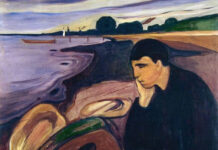
Remembering Fernando Freitas in Brazil
Psychiatrist Paulo Amarante writes of Fernando Freitas and his fight against psychiatry's pathologization of life.

Critical Psychiatry Textbook, Chapter 3: Are Psychiatric Disorders Detectable in a Brain Scan?
Peter Gøtzsche discusses how textbooks portray brain imaging data for psychiatric diagnoses and the flaws with that body of research.

Summer Mad Camp 2023
Mad Camp, as a work in progress, is a five-day summer camp for mad people, July 20-24, at a forested retreat center in Northern California.