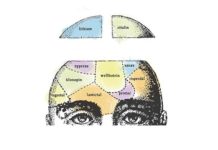
The Psychiatry Sandcastle Continues to Crumble
Psychiatry would long since have gone the way of phrenology and mesmerism but for the financial support it receives from the pharmaceutical industry. But the truth has a way of trickling out. Here are five recent stories that buck the psychiatry-friendly stance that has characterized the mainstream media for at least the past 50 years.
My Response to the FDA’s ECT Rule Change
I lived through forced ECT from 2005-2006 at the Institute of Living in Hartford, Connecticut. My experience with ECT was the impetus for me to become involved in the antipsychiatry and Mad Pride movements, although I am not entirely opposed to voluntary mental health treatment. The following is the comment I submitted to the FDA on its proposal to down-classify the ECT shock device.
Science-Based Service User Input, PLEASE?
Even projects and people that have the best intentions of listening still block people out. Basically, coalitions are based on mainstream funding sources and mainstream moderators, and that tend to override the ability to hear challenges to the status quo. If the funding source and the project management is mainstream, the project will draft back to the status quo no matter how well people intend to follow good service user input processes.
Dear Self-Proclaimed Progressives, Liberals and Humanitarians: You’ve Really Messed This One Up
When it comes to psychiatric diagnosis, I can be almost certain that anyone outside of my immediate field of work just won’t ‘get it,’ no matter where they stand on anything else. And not only won’t they get it; they will often actively be one of the unwitting oppressive masses, either through their inaction or worse.
MIA Continuing Education Moves into its Next Phase
The roll-out for Mad in America Continuing Education courses is moving into its next phase —improved presentation of courses and a more aggressive marketing of what we believe are unique CME and CEU resources for professionals and advocates alike. If I needed any reminder of why our continuing education project is so necessary, all I need to do is continue to read through my Psychiatric Times email.
Limits to Medicine: Re-visiting Ivan Illich
We have come to believe that technology can eradicate all human suffering and provide unblemished and everlasting happiness. We have paid for this irrational expectation with our autonomy, our dignity and our ability to endure.
My Journey of Recovery
I was never anti-recovery. I will admit, however, that when the recovery movement first came to my attention in the 1990s, I was not drawn in. In recent years, this is another area in which I have needed to re-examine my assumptions.

Beneath the Fog
The medication left me emotionally numb, making it impossible to connect with people or sense the aliveness of the world around me. But after two years on antidepressants, I found something that gave me jolt of feeling strong enough to wake me up for a moment. I then spent the next seven years giving myself daily doses of horror to induce an emotional reaction.
Finding Clarity Through Clutter
For the last three years, I have been working with people, labeled "hoarders," who have become overwhelmed by their possessions in their homes. This has been some of the most interesting, challenging and thought-provoking work I have ever done. It is also an area that, I think, highlights all of the issues that challenge us in helping people who feel overwhelmed, for whatever reason.

ACES Connection – Or Disease Mongering, Round 2?
This blog post is in response to the most recent blog post in MIA saying, "We need to spread the gospel on ACE scores." Well, a bunch of ACES connection people are doing that already and it may not be so awesome after all. Or at least we need to shape our own conversation on this. Here's my story and here's the science I see as relevant. Please feel free to join the national ACES forum and tell them what YOU think.
Victim Blaming: Childhood Trauma, Mental Illness & Diagnostic Distractions?
Why, despite the fact that the vast majority of people diagnosed with a mental illness have suffered from some form of childhood trauma, is it still so difficult to talk about? Why, despite the enormous amount of research about the impact of trauma on the brain and subsequent effect on behaviour, does there seem to be such an extraordinary refusal for the implication of this research to change attitudes towards those who are mentally ill? Why, when our program and others like it have shown people can heal from the effects of trauma, are so many people left with the self-blame and the feeling they will never get better that my colleague writes about below?
Dismissing the Patriarchal Prescriptions
I realized something after a recent occurrence that made me aware of how close any of us are to psychiatric lockup. What I realized is that I can protect myself now; I have tools that I didn't have at age 18. And that protecting myself doesn't mean obeying the patriarchal prescriptions for how to behave.

Our Day in Mental Health Court
For weeks I had been trying to get released from the psychiatric ward, and none of my arguments, compliance, or attempted air of normality had made an impression on the barely-visible ward psychiatrist. I had, I was told, made a very serious suicide attempt and this was a predictor of future attempts. They would let me know when they thought I was sufficiently remorseful and stabilized to be released.
Update: Massachusetts Benzodiazepine Bill Hearing
The hearing for Bill H4062: Informed Consent for Benzodiazepines and Non-benzodiazepine Hypnotics took place on Monday – in the middle of an April snowstorm! The discussion clarified some important points in the legislation and gave survivors an opportunity to tell their stories. I was so proud to be there and witness the courage, camaraderie, resilience, advocacy, and vulnerability of fellow survivors. This legislation is our chance to be heard. As one survivor said, through tears, to the committee, “Do not let my suffering be in vain. I beg you to pass this bill.”
Study 329: Response to Keller & Colleagues
The best protection against bias is rigorous adherence to predetermined protocols and making data freely available. We, like everyone, are subject to the unwitting influence of our bias. The question is whether the Keller et al publication of 2001 manifests unconscious bias or deliberate misrepresentation.
Psychiatric Diagnosis is a Fraud: The Destructive and Damaging Fiction of Biological ‘Diseases’
Everywhere you turn, you see “OCD, ASD, MDD, ADD, ADHD, BPD, GAD, PD, SAD, PTSD, NPD," etc. The problem is not limited to this acronym soup, but the pseudo diagnoses they represent. Patients today get stained by the specious medical diagnoses of biological psychiatry. And furthermore they are brainwashed to believe that these fictitious brain ‘diseases’ are genetic. Biological psychiatry treats people like they are mechanical objects, renaming them almost as they are re-branding products. The one I like the best is the renaming of ‘manic-depressive’ to ‘bipolar.’ Instead of a name which accurately describes the states of suffering, it was turned into something mechanical — a battery with two poles. We’ve gone from something human to something Frankensteinian.
Comments by Shock Survivors and Their Loved Ones
The #FDAStopTheShockDevice petition has received over 2,200 signatures and 800+ comments. A more thorough analysis of those comments is forthcoming, however, we wanted to offer a glimpse of what people shared. The sixth, seventh, and eighth most common words used in the comments submitted through the petition were "damage," "barbaric" and "torture." We must continue the fight to make sure that the FDA hears the people who will be adversely affected by the proposed rule if it becomes an order. There is still a small window of time for you to sign the petition and leave a comment to the FDA.

Simple Things
Sometimes it's the simple things that keep us going, especially when the complicated ones seem so overwhelming; when there's too much chaos, too many emotions, too many possibilities and impending disasters. No one can give you a reason to live. You have to find it for yourself. Until you do, try simple things. For me, it was a turtle.
A New Mental Health System? Interview with Jim van Os
Dr. Jim van Os presents something unlike any other psychiatrist I have come across: a clear vision, and a pathway, for dismantling the existing mental health system and replacing it with something new that actually works. And he is doing it with all the status and prestige not only of a psychiatry insider, but as one of the world's leading scientists. Along with changes in the definitions of health and psychosis, van Os describes pilot programs now underway in The Netherlands to establish small, human-scale services — inspired by Open Dialogue — that engage the social network of people in distress. And, inspired by the best of the US "peer" movement, by involving people who have themselves recovered from madness in a treatment role.
Congress Proposes Research on the Link Between Psychiatric Drugs and Suicide
The meaning of veterans’ reactions to war is quite simple; they are trying to find a way to integrate the incredible horrors they’ve witnessed and to find a way to come back into a society that cannot possibly fully understand them. Drugging them into a stupor is not the answer. Congressman David Jolly (FL-13) has recently introduced the Veteran Suicide Prevention Act (H.R. 4640). The bill calls for the VA to study veteran suicides over the past five years and to determine what extent psychiatric drugs are implicated in those suicides. I encourage everyone to support Mr. Jolly’s bill by writing or calling your congressional representatives and encouraging them to cosponsor the bill.
The Experiential Democracy Project: A Depth Approach to the Legislative Process
The basic idea of the experiential democracy project is to supplement conventional legislative or other forms of diplomatic and moral deliberation with person-centered (“I-Thou”) principles of encounter. These principles, which derive from existential-humanistic psychology and person-centered therapy, stress the attempt to engage participants to more intimately understand each other, and through this context to more intimately understand each other’s often conflicting positions on issues of moral import.
Call to Action: Massachusetts Benzodiazepine Bill is Going to Committee
The Massachusetts Benzo Bill H4062: Informed consent for benzodiazepines and non-benzodiazepine hypnotics was just scheduled to be heard by the Joint Committee on Mental Health and Substance Abuse on Monday, April 4th. Less than a week away! The committee will decide whether the bill moves forward to the house and senate, goes to study, or is denied.
In Search of an Evidence-based Role for Psychiatry
A dilemma for all of us who are struggling to broaden our understanding of human distress beyond simplistic, pessimistic, bio-genetic ideology, and to improve our mental health services accordingly, is whether or not to soften our criticisms of psychiatry in the hope of reaching those psychiatrists whose minds are not totally closed. But doing so rests on the assumption that change can come from within the profession. For the last few decades examples of that are few and far between.
My Shock Survivor Story
I don't usually talk about this much because it's still somewhat traumatizing. I don't really do advocacy around shock treatment because it still triggers too much stuff. But this is a modern day advanced story of medical harms and misinformation, and you should comment on the FDA ruling.

Doctor O’s Adventures in Wonderland
I am a female physician who survived my own suicide attempt. I had managed to fly under the radar as a very progressive family MD for twenty years. And when I stumbled and bled, the sharks were there ready to devour the carcass. Do I believe that racism and sexism influenced charges being filed against me? I certainly do.