
Tag: lived experience

First-Person Knowledge and the Meanings of Madness: An Interview with Gail...
Psychologist Gail Hornstein discusses her search for the meanings of madness, from asylum artifacts and memoirs to the contemporary peer-support groups reshaping how people understand voices and visions.

Mad Studies Is More Than Lived Experience: An Interview with Merrick...
Pilling explains how Mad Studies moves from first-person knowledge to questions of sanism, psychiatric authority, mutual aid, and collective resistance.

The West Doesn’t Have All the Answers: An Interview with Dinesh...
In this wide-ranging conversation on public mental health, psychiatrization, and community care, Dinesh Bhugra explains why meaningful lives, not symptom reduction alone, should guide mental healthcare today.

Go/No-Go—How Mental Health Research Took a Wrong Turn: An Interview with...
Marianne Apostolides discusses how Go/No-Go grew from her search for new eating-disorder treatments into a critique of the metaphors, experiments, and technologies shaping contemporary neuroscience and psychiatry. She argues that efforts to reduce distress to circuits, algorithms, and biomarkers often overlook subjectivity, agency, and the human relationships that meaningful care requires.

“Every Time I Took a Pill, I Felt I Was No...
A new study published online by the Journal of Humanistic Psychology examines young adults’ experience of taking and discontinuing antipsychotic drugs after completing a...

Faith, Culture, and Coercion: An Interview with Cultural Psychiatrist G. Eric...
Cultural psychiatrist G. Eric Jarvis discusses religion and mental health, the social determinants of psychosis, and how coercive treatment can deepen mistrust in psychiatric care.

Fighting Psychiatric Subjectivation and Helping Others Along the Way: An Interview...
Prateeksha Sharma reflects on her own experience of recovery from psychosis with the help of music, family, and dogs, sheds lights on the treatment harms that often go unnamed and thus unnoticed, and discusses how to claim narrative, dignity, and voice.

Examining Psychiatric Medication Tapering and Withdrawal: The Evolving Role of Pharmacists...
Agnes Higgins and Cathal Cadogan join us to discuss their work on understanding the experiences of people tapering from psychiatric medication and the role that pharmacists could potentially play when people are considering stopping their psychiatric drugs.

Spiritual Emergency and the Collective Work of Staying Alive: An Interview...
Nisha Gupta reflects on spiritual emergency, wounded healing, and why staying alive in times of profound pain is not only an individual task but a collective one.
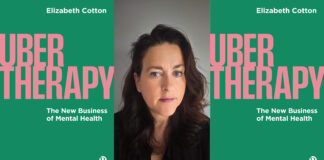
UberTherapy and the Enshittification of our Relational Lives: Part 2 of...
Elizabeth Cotton traces how digital therapy can block the very thing people come for: a stable, human relationship that can hold fear, dependency, and ambivalence.

Olga Runciman – Has Lived Experience Outlived Itself?
From Olga Runciman's YouTube channel: "This talk was originally prepared for the WAPR 2025 conference in Vancouver. In it, I explore the role of...

The Poetics and Politics of Our Mental Health Metaphors: An Interview...
Ayurdhi Dhar interviews influential cultural psychiatrist Laurence Kirmayer on how metaphors, histories, and social structures contour our experiences of suffering and healing.

“All Real Living Is Meeting”: Brent Robbins on Love, Death, and...
Psychologist and existential thinker Brent Robbins reflects on a lifetime of work, the limits of psychiatric diagnosis, and what facing mortality has taught him about joy and human connection.

Peer Support and Resistance: Becky Brasfield’s Vision for Mental Health Justice
In this interview with Ayurdhi Dhar, Becky Brasfield calls for radical truth-telling in the mental health system.

My Lived Experience Helps Others Heal: Working with Families on the Path...
If one person is struggling, everyone in the family is struggling. Families need support.

Escaping The Shackles of Psychiatry: What I’ve Seen and Survived, as...
"The only thing necessary for the triumph of evil is for good men to do nothing,” said Edmund Burke. This is as true on...

Sharon Lambert and Naoise Ó Caoilte—Mental Health Podcasts: A Force for...
Researchers from University College Cork discuss their research on the benefits of listening to mental health related podcasts which indicates that podcasts improve mental health literacy, and reduce stigma.

Break Down. Wake Up. podcast – Introduction
What do depression, loss, frustration, and conflict have to do with global transformation? You can find the answers in this introduction episode to the Break Down. Wake Up podcast

“I Found My Lion’s Roar”: Ro Speight on Combining Peer Support...
MIA's Ana Florence interviews recovery advocate Ro Speight about her journey from receiving Peer Support to working as a facilitator in Peer Partnered Open Dialogue.

Psychiatrist Offers Ecological Model for Psychotherapy
Insights from phenomenological philosophy can assist in understanding psychotherapy and psychopathology as ecological rather than individualistic.

What is it Like to Experience a First Crisis in Psychosis?
Study explores the emotional and embodied experience of individuals undergoing a first crisis in psychosis.

‘Do Antidepressants Work?’ is the Wrong Question
“This research points to the inadequacy of asking the simple question: ‘Do antidepressants work?’ Instead, the value or otherwise of antidepressants needs to be understood in the context of the diversity of experience and the particular meaning they hold in people’s lives.”
Centering Lived Experience
Lately, after a number of discussions, we have been changing our practices around the issue of labels. No longer do we give a diagnosis at presentations. We place the young person’s story, as told to us, front and center. People listening rarely ask, “What is their diagnosis?” now that lived experiences are central. We are providing a sense of their struggles. We are trying.
Challenging the Ongoing ICD 10 Revision: How You Can Help
Mental health policy does not sound exciting. It is - you’ll just have to take my word for it-, but even if you don’t, you might agree with me that it’s crucial. Mental health policy shapes mental health legislation, and mental health legislation shapes issues such as consent, access, equal opportunities and de-institutionalisation, to name but a few. Influencing policy is key to reframing the debate around mental health, and changing the reality on the ground for people with lived experience. With this in mind, here is an introduction to Mental Health Europe’s work on the revisions to ICD 10, and a call to action, for you to get directly involved in this international debate.
Defining Recovery
Yesterday, Dr. Daniel Fisher emailed and asked my thoughts with regard to “recovery”. Even before I walked away from prescription-pad-only psychiatric work, others asked me about this. Other treatment providers, designated patients and family members asked what I thought they could expect to happen next and what they should do to make things better. I told them that chemical interventions are not the only, or even the essential, tool for recovery.