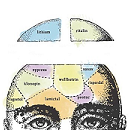
Antidepressant drug use by expectant mothers is a controversial issue within psychiatry. While medical societies such as the APA emphasize the risks of unmedicated depression in pregnant women, experts warn of the significant risks these drugs pose to both the mother and fetus. A new study published in Neuropsychopharmacology finds that prenatal exposure to SRI antidepressants is linked to abnormal brain development. These drugs were additionally linked to increased placental volume which may provide some protection against the observed abnormal fetal brain development. This research, Led by Yao Wu from the Children’s National Hospital in Washington D.C., also reports brain development abnormalities, to a lesser extent, in fetuses with mothers that had high depression scores and were not taking antidepressants.
The authors write:
“These findings suggest that prenatal SRI exposure may be associated with altered fetal hippocampal volumes, cerebral cortical maturation, and placental volume and microstructural diffusion … Among unexposed [to antidepressants] subgroups, fetuses exposed to high maternal EPDS [depression] scores had smaller hippocampal volumes compared to those with low scores.”

Harms Linked to Antidepressant Use During Pregnancy
Past research has linked numerous adverse effects to antidepressant use during pregnancy. Expectant mothers that use antidepressants are at increased risk of preeclampsia and postpartum hemorrhage. Studies have linked these drugs to increased risk of miscarriage, birth defects, premature birth, low birth weight, fetal death, and abnormal fetal brain development. Research has found that infants born to mothers that were using antidepressants are at increased risk of respiratory distress and can suffer from antidepressant withdrawal, with one study reporting that antidepressants were just as likely as methadone to lead to withdrawal for infants. Infants born to mothers taking antidepressants are also more likely to require immediate medical care. Some studies have also found that these adverse effects may follow children throughout their lives, with in utero exposure to antidepressants linked to reduced motor skills, speech disorders, altered brain development through adolescence, higher rates of anxiety and depression, and increased risk of psychiatric diagnosis.
Study Details
The goal of this research was to examine the effects of both unmedicated depression and in utero exposure to SSRIs and SNRIs on fetal brain and placenta development. The authors recruited 182 pregnant women to participate in this study. Participants were excluded if their fetuses had known or suspected congenital infection, abnormal body development, tissue abnormalities, or documented genetic or chromosomal abnormalities. Sixty-two participants were taking an SSRI or SNRI antidepressant. The remaining 120 participants were not taking any antidepressants and had no history of psychiatric diagnosis.
The authors measured depression severity using the Edinburgh Postnatal Depression Scale (EPDS), a 10-item self-report survey. Scores range between 0 (no depressive symptoms) to 30 (extremely severe depressive symptoms). A score of 10 or higher is a positive screen for depression, scores between five and nine represent moderate levels of depressive symptoms, and scores of four or less represent low depressive symptom levels. Each participant was given an MRI between their 20th and 40th weeks of pregnancy. The authors used AI driven software to map and examine the placenta and fetal brain structures.
Maternal depression scores were higher on average in the group taking antidepressants compared to the unexposed group (EPDS mean score of 6.55 versus 4.75). Thirty percent of women taking antidepressants scored 10 or higher on the EPDS compared to 13% in the control group.
Prenatal exposure to SSRI and SNRI antidepressants was linked to significantly smaller left and right hippocampal volumes. The hippocampus is an area of the brain highly involved in learning, memory, and emotion. These drugs were also linked to reduced folds, curvedness, and surface area in the cerebral cortex. This area of the brain is critical for higher order cognition, including conscious thought, perception, memory, language, and reasoning. It is also highly involved in motor control and sensory processing.
A score of 10 or higher on the EPDS was also linked to reduced left and right hippocampal volumes in both the group exposed and unexposed to antidepressants. The reduced hippocampal volume associated with a high EPDS score was roughly half of the reduced volume linked to antidepressant exposure.
Antidepressant exposure was associated with larger placenta volumes. Within the group exposed to antidepressants, this larger placenta volume was linked to larger brain area. This included more folds and increased area in the cerebral cortex. While this increase in placenta was linked to higher brain volume in the antidepressant exposed group, this group still showed lower folding, curvedness, and cerebral cortex surface area compared to the group not exposed to antidepressants. The authors hypothesize that the increased placenta volume may happen as a reaction to antidepressant exposure and/or maternal depression, buffering against some of the possible negative outcomes.
This study had several limitations. The authors were not able to assess the effect of the amount, timing, and duration of antidepressant exposure on fetal brain and placenta development. The EPDS was only administered once. This means the authors were unaware of changes to depressive symptoms throught the participants’ pregnancies. The observational design means this data cannot speak to causes, only associations. This means the authors cannot definitively say that antidepressants caused reduced hippocampal and cerebral cortex volume.
This research only looked at prenatal MRI scans. While the observed brain differences were significant, this study cannot tell if these differences would translate to actual cognitive, emotional, or behavioral issues as the child develops. The sample size was too small for robust sub-group comparisons. This research cannot speak to differences between antidepressant drugs and the observed differences based on depression severity have limited validity.
Mad in America has published numerous reports, studies, and interviews with experts concerning prenatal exposure to antidepressants and the refusal of medical associations to acknowledge the risks.
Medical Associations Largely Ignore the Risks of Using Antidepressants During Pregnancy
Joanna Moncrieff and Adam Urato have stated that medical organizations turn a blind eye to the harms of maternal antidepressants and that “virtually none of the available studies in almost four decades of research show improved pregnancy outcomes in women taking antidepressants.” In an interview with Mad in America, Urato said “professional medical associations, by and large, currently in our society function more as a branch of the pharmaceutical industry than they do in their actual role to protect and defend and inform the public.”
In July 2025 an FDA expert panel on SSRIs and pregnancy, including Urato, Moncrieff, and David Healy, presented evidence of the harms associated with antidepressant use by expectant mothers, such as abnormal fetal brain development and increased risk of psychiatric disorders. Medical associations, including the American Psychiatric Association, the American College of Obstetricians and Gynecologists, the Society for Maternal-Fetal Medicine, and the National Curriculum in Reproductive Psychiatry, largely dismissed these risks as overblown and accused the panel members of bias. Media reports followed that uncritically echoed the medical associations’ assertions.
In a 2025 investigative report, Robert Whitaker detailed the evidence of harm linked to antidepressant use during pregnancy and addressed the baseless claims made against the FDA expert panel. Whitaker concludes:
“The professional organizations misled the media, and the media in turn misled the public. And from a moral perspective, here is how to judge the statements from the professional organizations: they were putting their guild interests—e.g. protecting their prescribing practices and societal belief in the efficacy of antidepressants—ahead of their duty to provide informed consent. And who is most harmed by this betrayal of the public’s right to know? Pregnant women, and their unborn children.”











There was an article, published a couple years ago, that touched on the issue of harm in psychiatric settings and discussed it at length.
It figured that the public at large is actually completely ok with drugs and treatments being unsafe as long as 1. the primary targets of those interventions are undesired groups like the mentally ill, the developmentally disabled or the poor. 2. the public regards the measure as necessary to prevent the undesired groups from “acting out” or otherwise disturbing the established social order. 3. the measures enable single individuals to use those unsafe drugs and treatments as tools and threats to emotionally pressure and manipulate others.
The first point basically boils down to acknowledging that our society, far from being empathic, actually regards the weak, the elderly, the disabled as nuisances which are better avoided which should explain why sedative drugs like anti-psychotics or anti-depressants primarily function as first choices. Obviously, they’re completely useless outside of sedating people.
The second point implies that psychiatry is situated within a specific socio-political framework and serves specific interest groups within. For example, the expansion of psychiatric practice into childhood is also reflective of surging interest in eugenics, although firmly denied it’s still seen in such things as cost-volume-profit maximation measures (which is, for example, what schooling intends to achieve by e.g. eliminating truancy).
The third point is just the continuation of patterns of social behavior which has also given, at various times and under various conditions, rise to exorcism, puritanism, sex-centered regulations seen in Islam or Judaism and various other “religious” or “cultural” practices which resulted in extremely strict codes that you had to abide by for no other reason than you simply had to.
Report comment