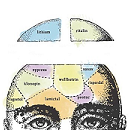

Psychiatric Drug Withdrawal in Spain
My study, in which I slowly withdrew people from prescribed antipsychotics and antidepressants, found that it is possible to decrease both spending on psychiatric drugs and patients' chronic exposure to them. In general, the drug-reduction process was well-tolerated and well-accepted among those treated.
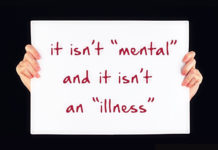
The Problem Lies in the Term ‘Mental Illness’
Shouting out “I am mentally ill and I am not dangerous” creates the same incomprehension as blaming ‘mental illness’ in the first place. This would be a perfect opportunity for all those people diagnosed with ‘mental illness’ to stand up and say loud and clear: “It isn’t mental and it isn’t an illness.”
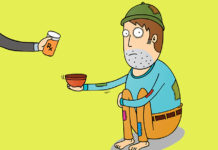
Poverty: The Newest Medically Treatable Brain Disease
If your hunger/worries are so severe and persistent that they lead to abnormal, dysfunctional behaviors, then you have clinical poverty. Like any illness, you can’t just snap out of it on your own. You need help, and it’s now here — ask your doctor about exciting new treatments for poverty today!

Monarch eTNS Inspires “Stop the Psychiatric Abuse of Children!” (SPAC!)
The FDA approval of the Monarch eTNS device is the latest form of psychiatric-inspired child abuse. If not stopped, it will afflict millions of children in unimaginably damaging ways. It has inspired us to form Stop the Psychiatric Abuse of Children (SPAC!) a new international advocacy organization.
Creating Our Mental Health
We wanted to challenge the conventional assumption that mental health is a static condition or attribute by suggesting that it’s more useful to think of it as an activity that people do together, rather than a thing that individuals have or don’t have. This distinction matters because we can change what we do — what we are, not so much.

The Mystic of Ireland: An Homage to Ivor Browne
Ivor Browne fearlessly challenged what he saw as a dehumanizing system, liberating many from institutional care and pioneering new experimental therapies. He developed innovative community models and most of his groundbreaking work took place outside of, and in spite of, orthodox thinking.

Collaborative Strategies for Re-Visioning the Public Mental Health System
The beauty of sticking around for a while is that we’re living to see some of our “outsider” ideas beginning to challenge modern psychiatric doctrine in the public arena, and our “radical” mental health stance is slowly re-visioning important conversations and practices.

In Defense of Anger
The therapy industry has aided and abetted the rejection of anger our society is hell-bent on, and made it astoundingly difficult to know what healthy anger looks like. I clawed myself apart trying to “heal” from all this anger, which compounded with every failure to dispel the anger until I was basically a human-shaped sack of rage.

No Graphic Detail: The Injustice of Being Silenced
They tell us we’re too fragile to speak our own truth, and that those around us are too fragile to hear it. If you must name what happened to you, at least slap a “trigger warning” on yourself, and don’t “paint a picture.” Fuck that. The truth is that graphic detail can make some of us stronger in a way that silence never could.

We Must Hear Marianne Williamson’s Message About the Overuse of Antidepressants
Although some of Marianne Williamson's rhetoric on the subject of the overuse of prescription medications may be over the top, the topic deserves much more public attention and debate, since it is a crisis as real as the opioid epidemic.

Brave New Apps: The Arrival of Surveillance Psychiatry
Large, centralized, digital social networks and data-gathering platforms have come to dominate our economy and our culture. In the domain of mental health, huge pools of data are being used to train algorithms to identify signs of mental illness. I call this practice surveillance psychiatry.
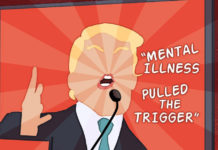
Blaming the “Mentally Ill”: This is Hate Speech
As could be expected, in the wake of the mass murders in El Paso and Dayton, we have politicians such as President Trump and others such as E. Fuller Torrey blaming the killings on the “mentally ill.” We have heard this over and over again, and I think it is time to call this out for what it is: Hate Speech.
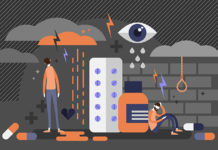
Antidepressants and the National Suicide Epidemic
We encourage young people to see themselves as fragile creatures whose brains can go haywire for any reason, or no reason at all. Then we tell them they have the “disease” of depression and ply them with drugs with a known link to worsening depression and suicidality going back for decades. How many more will have to die before this changes?

How “Safe Messaging” Gaslights Suicidal People
Suicide prevention constructs a reality in which the problems of suicide lie within suicidal people. Sanity is constructed around wanting to live, insanity around wanting to die. Within this paradigm, the suicidal person can never be trusted. They are fragile, vulnerable, demanding protection, surveillance, and management.

Helping People Come Off Medication—Bad for Business?
The message in journal editorials, comments and opinion articles, is that 'this new study shows great promise' and that 'we need further research'. My interpretation is: 'give us the money and we will be happy to carry this out'. With the implied promise that, once this new research has been done, we will get a better world. Sadly this is rarely ever the case.

Psychiatric Eugenics Then and Now—You Betcha It’s Still Happening
Most are oblivious to the fact that psychiatric eugenics initiatives continued to exist—and beyond that, to flourish—long after the end of what is normally thought of as “the eugenics era” (roughly, late nineteen century to 1945). Sadly, we are not learning from history what we direly need to learn.

Rock Bottom: When You Are in Your Darkest Moment
The one big lie that your mind will tell you when you are in that dark night: I am never going to feel okay again. This is the lie that drives people to self-destruction. It’s also the lie that keeps dynamic, complicated individuals captive in a system that says: your struggle is a permanent and defining feature of your brokenness.

We’ve Been Too Patient: Voices from Radical Mental Health
LD Green and Kelechi Ubozoh are co-editors of We’ve Been Too Patient: Voices from Radical Mental Health, published by North Atlantic Books, distributed by Penguin Random House, and released July 9, 2019. In a brief interview by email, we asked them about their creation of this work.
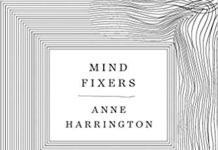
An “Even-Handed” History of Psychiatry as Damning as the “Polemics”?
Where Professor Harrington's book seems to differ from books that others might call polemics is that she does not attribute nefarious motives to the psychiatric establishment. I worry that she underplays the ways in which the current model causes harm, but I support her suggestion for a retraction of psychiatry's scope.

We Lost a Giant Today: A Tribute to Janet Foner
Janet Foner, a longtime mental health liberation activist, passed away on July 24, 2019. Many people do not know that Janet helped form the very early Alternatives Conferences in the U.S. and she co-founded MindFreedom International and continued serving on its board to this day. Here we honor her wisdom, tenacity and courage.

Responding to “The Case Against AOT”—Next Steps for Change
Many will direct their efforts toward repealing involuntary outpatient commitment statutes in their states—an extremely challenging and uphill battle—or reforming abuses. Their arguments will be strengthened immensely by the findings in MIA's report. What follows are suggestions about what kinds of interventions to consider.

The Chemical Imbalance Theory: Dr. Pies Returns, Again
Psychiatrist Ronald Pies published a recent piece in the Psychiatric Times titled "Debunking the Two Chemical Imbalance Myths, Again." The subtitle: "A little learning is a dangerous thing." And indeed it is. But not nearly as dangerous as a psychiatrist with a head full of spurious diagnoses and a ready prescription pad.

U.S. Politicians Now “Trauma Informed”—Should We Be Hopeful?
It is good that the general public is finally hearing about the ACE Study, but I do not count on U.S. politicians to address the core implications of the ACE findings—the need to re-make U.S. society so as to (1) prevent preventable adverse childhood experiences, and (2) create a society in which healing from trauma can more easily occur.
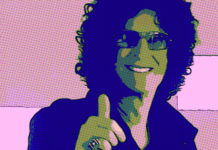
An Open Letter to Howard Stern, the “Poster Boy for Psychotherapy”
Dear Howard Stern: What may come as a surprise to you is that the quality of talk therapy that was available to you—time-intensive, in-depth sharing of feelings, exploring childhood traumas, examining and changing difficult personality traits—is steadily becoming unavailable to the average American.

End Kendra’s Law Now: Racist, Classist Practices in Involuntary Psychiatry Persist
In addition to involuntary outpatient commitment being an assault on and targeting people who are living in or near poverty, the statistics demonstrate racial disparities in the application of involuntary outpatient commitment.