
There Is No Such Thing as a Side Effect
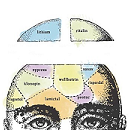
There is no such thing as a side effect. There are only the real effects — plain and simple. If you’ve been through what I’ve been through, shuffling through life in a drug-induced haze for eight years — well, you don’t want to hear about “side effects” anymore, or anything about how they’re “secondary.”

Building a Culture of Mental Well-Being
We used to turn to family, community, and religious/philosophical teachings to ease our despair. Now, one is expected to turn to psychiatrists and therapists. With depression rates rising throughout the world, modern society must find a way to enhance the individual’s capacity to build a meaningful, satisfying, and self-actualized life.

When Mad Voices Are Locked Out of Academia
The “inclusion” of the consumer/survivor voice in research has been gradually increasing, albeit with significant resistance, tokenism and co-option. Our recent experience of attempting to publish with Australasian Psychiatry highlights the barriers that still exist.

Hereditary Madness? The Genain Sisters’ Tragic Story
The story of the Genain quadruplets has long been cited as evidence proving something about the supposed hereditary nature of schizophrenia. But who wouldn’t fall apart after surviving a childhood like theirs? The doctors attributed their problems to menstrual difficulties or excessive masturbation — anything except abuse.

Peer Specialists in the Mental Health Workforce: A Critical Reassessment
It is time to seriously consider re-focusing our energy and resources away from placing peer staff in roles where they support the mental health system’s status quo, and toward the goal of making high-quality peer advocacy available to people faced with coercion by the mental health system.

The Sisyphus Cycle: How Everyday Stress Leads to Suicide
If you wanted to capture my mindset at the peak of suicidal longings — crushing odds, repeated failures, futility of existence, huge obstacles weighing me down — the story of Sisyphus would be it. After one too many trips around this block, enter suicide: the fail-safe tactic for escaping unbearable pain and suffering.

Dog Assisted Psychotherapy Most Effective With Children
Dog assisted psychotherapy is mostly used within the psychodynamic theory. It's especially useful in treatment with children and adolescents, where dogs seems to pass "under the radar" of children's logical defense.
Deep Brain Stimulation and Depression
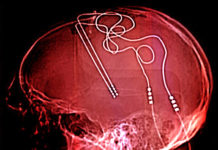
A new paper is touted as showing that deep brain stimulation "provides a robust antidepressant effect." Among the 28 patients in the study, 56 serious adverse events were reported, including infection, hemorrhage of the cortex and post-operative seizure. Yet the authors conclude that the results "support the long-term safety and sustained efficacy" of DBS.

UN Expert Calls for Major Shift in Suicide Prevention Efforts on World Mental Health...
On World Mental Health Day, UN expert Dainius Pūras calls for a shift away from medical solutions toward a rights-based approach to make life “more liveable.” He calls for states to address societal determinants of mental health, promoting autonomy and resilience.

Fighting Unjustified Commitment in Wisconsin: Leslie’s Story
Leslie was not experiencing any depression, psychosis, or suicidal or homicidal ideation. She was not a danger to herself or others. Yet she had been picked up by police, placed in handcuffs, and brought to the hospital, and her social worker intended to have her placed in a group home.

Countervailing Forces Against Ritalin Use in France
A new study in the journal Social Science and Medicine explores why French children take stimulants far less than children in the United States. The study looks at how particular forces in society, in concert with government agencies, became an effective check on stimulant marketing for kids in France.

Forced-Treatment Advocacy Group Cherry-Picks Data to Support Agenda (Again)
Did the Treatment Advocacy Center actually uncover research proving that poor psychiatric medication adherence plays a "significant" role in whether people diagnosed with schizophrenia become violent? If such research does exist, is it as compelling as TAC described?

A Doctor Cures His Bipolar Diagnosis Without Psychiatry: Review of ‘I’
I details what happened to Jeffrey Fidel when he quit psychiatric drugs and embraced an alternative, non-medical healing approach — a set of philosophical and spiritual teachings known as the Tao Te Ching and Hua Hu Ching.

Marci Webber Granted a Conditional Discharge
In 2010, Marci Webber killed her four-year-old daughter during a psychotic episode that erupted while she was on a cocktail of psychiatric drugs. She was found not guilty by reason of insanity. A judge has now ruled that she should be discharged from a mental hospital.

The Problems with the DSM Mask a Dark Reality We’re All Complicit In
It would be comforting to conclude that the people in charge of such projects as the DSM are perhaps a little sociopathic or deviously immoral. Unfortunately, it is not that simple. We are all inextricably bound to, and complicit in, the problem we are attacking.

10 Reasons Why Psychiatry Lives On—Obvious, Dark, and Darkest
No matter how clearly the scientific case is made that psychiatry is a pseudoscientific institution, it continues to retain power. When we recognize that scientific truths alone are not setting society free, we begin to shift our energy to different strategies.

Is Remaking Psychiatric Care Possible?
The failures of our current drug-based paradigm of psychiatric care tell of a pressing need for systemic changes in psychiatry. But as we discovered when marketing our new continuing education course on this topic, it's always difficult to promote radical change.
Lingering Side Effects of Quitting Antidepressants
Nobody told me what it would be like when I first stopped taking antidepressants. The worst is definitely over, but I’m still experiencing some lingering side effects. When the hyper-arousal to sights and sounds kicks in and my head starts buzzing, I’ve learned some ways to cope.

Trump and Cuomo: Red Flags Are Red Herrings
Curtailing the rights of people with psychiatric histories is nothing more than a red herring, a ploy to maintain social control. We need to disarm the “re-institutionalization” movement by holding it accountable to the actual science of modern psychiatry and the history of institutions.

How Psychological Injuries Cause Physical Illness—And How Therapy Can Heal It
How does experiencing physical abuse as an 8 year old shorten one's lifespan? How do insulting words turn into diabetes? Or sexual abuse trigger a heart attack 50 years in the future? Emotional wounds can damage DNA and produce a huge web of destructive effects, but therapy can turn the process around.

William James’s Letter to His Depressed Daughter
If you discover that your child has been experiencing a bout with depression, what wise words might you share? Brilliant psychologist William James was forced to address this issue himself when his 13-year-old daughter, Peg, began to struggle with melancholy. I present his long, thoughtful reply for your consideration.

Pies’ Polemic and the Question of Theories in Psychiatry, Again
If the "Chemical Imbalance Theory of Mental Disorder" is a mirage, if not a frank deception, then what theory are psychiatrists using to justify prescribing their drugs? What is the current accepted theory or model of mental disorder by which psychiatry justifies not just its extensive and unequalled powers, but its very existence?

A ‘Blueprint’ for Genetic Determinism
Robert Plomin's Blueprint: How DNA Makes Us Who We Are was seen as a "declaration of victory of nature over nurture." Plomin has a 40-year track record of unfulfilled gene discovery claims and predictions, and there is every reason to believe that his new polygenic score claims and predictions are merely a continuation of this trend.

How Healthcare Foundations Destroy Grassroots Advocates
We advocates are often told we're the key to progress in mental healthcare. Yet foundations continue to minimize our role and to damage us and our organizations every day. Here is how they do it, and what they need to do if we are ever to make real progress.

System Change Webinars: Promoting Radical Change
Starting on September 17, Mad in America will be offering a series of monthly webinars how to make changes in real-world programs that reflect the progressive reform agendas that embody a "green" revolution in mental health care. Enroll now!