Tag: hearing voices

Remembering Dory Previn: An Interview by Peter Sterling in 1974
Dory Previn was an American lyricist, singer-songwriter, and poet whose deeply personal work explored her struggles with mental health, including experiences of psychosis. In October 1974, she met with neuroscientist Peter Sterling for a candid conversation about her psychiatric treatment.

First-Person Knowledge and the Meanings of Madness: An Interview with Gail...
Psychologist Gail Hornstein discusses her search for the meanings of madness, from asylum artifacts and memoirs to the contemporary peer-support groups reshaping how people understand voices and visions.

How Can Soccer Coaching Help People Who Hear Voices?
Voice hearing might be conceptualised as reflecting disowned or dissociated aspects of self, often occurring as a result of life events.

Faith, Culture, and Coercion: An Interview with Cultural Psychiatrist G. Eric...
Cultural psychiatrist G. Eric Jarvis discusses religion and mental health, the social determinants of psychosis, and how coercive treatment can deepen mistrust in psychiatric care.

My Impressions of Psychiatry
People who are given the diagnosis of “schizophrenia” are the last social group not to be accepted by the public.

How We Started the Bay Area Hearing Voices Network
Voice hearers have created a community. Often, for the first time, they feel safe to talk about their experiences and reach out for support.

Engaging Voices, Part 2: Working Our Way Toward Connection
Sam Ruck shares his fourth excerpt from his book Healing Companions, which describes his life with, and love for, his wife and her “alters.”

Engaging Voices, Part 1: Validating The Arrival of My Wife’s First...
Sam Ruck shares his third excerpt from his book Healing Companions, which describes his life with, and love for, his wife and her “alters.”

Jim Flannery: Sorry It’s Not Funny – Comedy, Hip-Hop and Activism
Born and raised in suburban Weathersfield, Connecticut, Jim Flannery was committed at four mental hospitals across the United States. There he received the best care available in the modern world…torture.

The Transformational Qualities of Hearing Voices Groups
Results from a national study show the transformational qualities of Hearing Voices groups, including their egalitarian structure and the genuine connection they foster.

Insane Medicine, Chapter 8: Treatment Traps and How to Get Out...
Deconstructing diagnosis, the nature of psychological injury, and how identifying a problem can become a self-fulfilling prophecy.

How Culture Influences Voice Hearing: An Interview with Stanford Anthropologist Tanya...
Ayurdhi Dhar interviews Tanya Luhrmann about cultural differences in voice-hearing, diagnosis and damaged identities, and conflicts in psychiatry.

Hearing Voices: Let the Community Lead
A collective knowledge of lived experience is a straightforward answer for improving millions of lives, but it has become clear that it will take an organized community of voice-hearers and their allies to take back credibility and authorship on the narrative of our own lives.

Do We All Need Tinfoil Hats? Considering Schizophrenia
If alien species wanted to intervene in human society without fully revealing themselves, how would they do it? Choose a select number of individuals who are easily discredited by others in the group. In other words: Turn people into schizophrenics.

Voicehearing, Reinaldo, and My Work as The Writer
The Writer has outlined a significant work through my hands, dictated by the voice of someone who lived at some point a long time ago, such as London in 1682 A.D.

Four Decades of Allying to Make Safe Spaces for All Voices:...
Please come join us for our discussion on June 5 with Caroline Mazel-Carlton, Cindy Marty Hadge, Ronda Speight, Rufus May, Paul Baker, and Chackupurackal Mathai. This “Dialogue in a Time of Crisis” Town Hall will explore how the Hearing Voices Movement, like Open Dialogue, has been building the resources the world needs at this pivotal moment of in our collective history.

Exploring Dialogical Responses in a Time of Crisis: Are We...
Mad in America is proud to introduce a new venture: a web series of virtual “Town Hall” conversations, “Exploring Dialogical Responses in a Time of Crisis,” on Fridays at noon, eastern standard time. The first live town hall will be held on Friday, April 17.
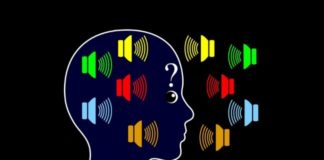
What Makes People Hear Voices?
Researchers treat voicehearing as the sign of a disease or a disorder or a dysfunction of the brain. That it might be something more—a relationship of some kind with God that developed in this way as part of our evolution over eons—does not seem to have occurred to anyone who has worked in the field of psychology.

Rethinking “Delusions”: Envisioning a Humanistic Approach to Troublesome Beliefs
A skilled approach to working with beliefs involves both toleration of differences in perspective and an awareness of a variety of possible things that can be tried when a belief is causing problems that do not seem to be tolerable, either to the person or to others with whom they must interact.

Researchers Propose “Metaphor Analysis” for Understanding the Experiences of People who...
A new study, published in the journal Psychosis: Psychological, Social and Integrative Approaches, explores ways that metaphor operates in the lived-experiences of individuals who...

Helping People to Constructively Engage with Voices
When voices are engaged with creativity and compassion, the result can be a positive change in the relationship with voices, leading to much greater peace of mind. But how can people learn how to facilitate this? A new video series by Charlie Heriot-Maitland, Rufus May and Elisabeth Svanholmer offers some practical ideas.
The Role of Context, Language, and Meaning in Hearing Voices
Sociocultural context, language, and sense-making process are among concepts that can help hearers and providers better understand the phenomenon of hearing voices

First-Person Accounts of Madness and Global Mental Health: An Interview with...
Dr. Gail Hornstein, author of Agnes’s Jacket: A Psychologist’s Search for the Meanings of Madness, discusses the importance of personal narratives and service-user activism in the context of the global mental health movement.

What is Contributory Injustice in Psychiatry?
An article on contributory injustice describes the clinical and ethical imperative that clinicians listen to service users experiences.
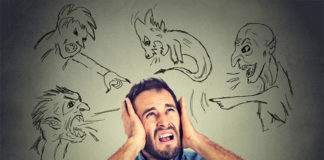
Hearing Voices: Where We Locate Them Shapes Our Experience
My experience began when I heard two people talking about me when I was home alone. I needed a reasonable explanation, and concluded that it had to be my upstairs neighbors. Then I began to hear the voices outside of my apartment — this new presentation meant that my explanation no longer made sense.