Exploiting The Placebo Effect: Deceiving People For Their Own Good?
There is an enormous irony in a psychiatrist using the epithet "thought police" to express censure, when it is psychiatry itself that routinely incarcerates and forcibly drugs and shocks people on the grounds that their thoughts and speech don't conform to psychiatry's standards of normality.
Future of Mental Health Interview Series: Interview with Joanna Moncrieff on The Myth of...
The Future of Mental Health interview series continued this past week with many interesting interviews: Claudia Gold on The Silenced Child; Bill D. on Alcoholics Anonymous; Jackee Holder on Life Coaching and Emotional Health; Rorie Hutter on Innisfree Village; Lori Sylvester on residential treatment for adolescent girls; Joanna Moncrieff on The Myth of the Chemical Cure; and Rosie Kuhn on Transformation Coaching. Below is the Joanna Moncrieff interview. Below that are links to the other interviews and a link to a roster of the whole series.
Doing It Alone Together: Core Issues In Dutch Self-Managed Residential Programs
For the last six years we, a group of researchers, social work students, peer experts, and social professionals associated with the Amsterdam University for Applied Sciences, have been studying and facilitating the development of self-managed programs in homelessness and mental health care in the Netherlands. With our research we want to contribute to the development of new and existing programs through critical reflection. With this blog, I hope to share some of our findings, to give back to the respites from which we learned so much.
Rethinking Public Safety – The Case for 100% Voluntary
It is time to create an entirely voluntary psychiatric system. International conscience is clear. The singling out of people with psychosocial disabilities is not worthy of a free society. There are better, safer ways to address legitimate public needs.
Supporting Resources: “The Case for 100% Voluntary”
Supporting Resources:
10th Annual Conference on Human Rights and Psychiatric Oppression (1982), Declaration of Principles (1982), (Toronto, Canada)
Minkowitz, T. (June 13, 2014) ‘Why Do We...
Feeling Good with Narcotics Now “Evidence” of Opioid Deficiency: The Chemical Imbalance Theory of...
We have lost our ability to tolerate distress, to find meaning in emotion, and purpose in experience. As the sociologist Nicolas Rose has noted, we have recoded our moods in terms of neurochemistry. Emotions no longer have context. They are aberrations in neurochemistry. I’m no longer hurting because I’m lonely, but because I’m running low on endorphins. Buprenorphine for depressive despair reinforces the belief that emotions should be obliterated, and can only be done so through modulating biochemistry.
Lost & Found: Drowning The Mermaid, and Our Collective Power
We spend a lot of time in this community complaining about our lack of voice and power. We blame the news outlets and their coverage; so blind that it ignores our stories, and research that’s been readily accessible for years. We blame people like Representative Tim Murphy and his fear-fueled political agenda. We blame ‘Big Pharma.’ We blame ‘the system.’ We blame anybody but ourselves.
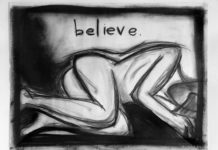
Bloodtime
Free flow had characterized my creative process — and now an art practice that had come naturally since my childhood was extinguished. Not only were my reproductive capabilities shut down on psychiatric drugs, my ability to create art had been effectively disabled.
Gender Wage Gap and Depression/Anxiety
When women receive less pay than men for the same work, they were about two and a half times more likely to "have major depressive disorder," and about four times more likely to "have generalized anxiety disorder" than their male counterparts. But when women were earning more than men, the odds were 1.2 and 1.5 respectively. The use of psychiatric terminology ("major depressive disorder" and "generalized anxiety disorder") constitutes something of a barrier to communication here, but the general message is clear: people (in this case women) who are routinely treated unfairly and discriminately are more likely to be depressed and anxious, than those not so treated.
Belief Systems, Nuance, and Productive Advocacy Ideas
For those with lived experience, do people believe your recovery story? What restrictions do people put on you when you tell your story? What one-liners have you found to defuse people's concerns so that they can hear you? How do you stay in the advocacy game instead of getting frustrated at being the only one who knows the data? This is my story of disclaimers, advocacy friends, respect for religious beliefs, and sustainable advocacy efforts.
Dr.s Leo & Lacasse Respond to Dr. Pies’ Response
In October of 2015, Jeffrey Lacasse and Jonathan Leo published an article in The Behavior Therapist about the Chemical Imbalance Theory of Depression. In the article we criticized Dr. Pies’ characterization of the theory. Dr. Pies was upset and immediately had Mad in America post a letter about our paper. The Behavioral Therapist recently published his letter, and Lacasse and Leo’s reply.
Baby Blues, Postpartum Depression & Psychosis: Countering the Danger of Antidepressants
I have a complicated response to the article Panel Calls for Depression Screenings During and After Pregnancy, by Pam Belluck, in the January 26th New York Times, which calls for depression screening before and after pregnancy. On the face of it this sounds like a great idea - a public health measure to prevent or deal with problematic postpartum responses – baby blues, postpartum depression, postpartum psychosis.
The Social Consequences of a Diagnosis on the Autism Spectrum
It’s time to change how we think about and relate to people whose makeup is or appears to be different from the norm. Currently, the dominant way in research, practice and the general public is to think of what’s different—let’s say a biological or neurological difference—as the source of disability and difficulty, and to relate to and treat (in various ways) that biological or neurological difference. But there’s another way to go, and more and more researchers and practitioners are taking it.
Allen Frances Seeks the “Middle Way”
On January 15, 2016, Allen Frances published an article on the Huffington Post titled Psychiatric Medicines Are Not All Good or All Bad. The article denounces both the "medication fanatics" who prescribe psychiatric drugs when they are not needed, and the "die-hard anti-medication crusaders who try to persuade everyone, including those who really need meds, that they are globally unhelpful and globally harmful." Dr. Frances advocates a middle ground in which people who need psychiatric drugs get them, and people who don't, don't. On the face of it, this would seem a fairly non-contentious matter, but Dr. Frances's path to this conclusion is fraught with problems which in my view warrant discussion.
The Future of Mental Health Interview Series, Part III
The Future of Mental Health interview series continues with interviews this past week with Claudia Gold on The Silenced Child, Robert Stolorow on emotional trauma and psychoanalysis, Gayle Flanigan on Rose Hill Center, Robert Salvit on Kabbalah and spiritual healing, Susan Raeburn on group psychotherapy, Robert Whitaker on Mad in America, and Isabel Clarke on psychosis and spiritual experiences.
Insight Forty Years Later: A Dream of Progress
In the 40 years since I was wrongly - and catastrophically - "diagnosed" and "treated," I've seen one after another announcement of supposed "progress" in the "science" of understanding and treating "mental illness" come and go — first trumpeted, then with nary a mention, failing to hold their ground and falling away to the mists of time along with the people and the lives they'd ruined. People will continue to suffer and die if the public do not wake up and have the courage to act as a caring community, and stop regarding human problems as "diseases" to be "cured," rather than as challenges that we share.
“Is It Her Hormones?” A Case of Psychiatry Missing the Mark
The case of “Beth” depicts, almost innocently, the trials and tribulations of a well-adjusted, talented 15-year-old who developed depression, paranoia, panic attacks, and self-injurious and homicidal behavior, and “bipolar disorder” after being prescribed antidepressants, and then antipsychotics. After Beth decided - on her own - to discontinue psychotropic medications in favor of hormone therapy, she remained free of psychiatric symptoms.
“Schizophrenia Breakthrough” – Or a Case of Ignoring the Most Important Evidence?
Last week, the headlines blared: "Schizophrenia breakthrough as genetic study reveals link to brain changes!" We heard that our best hope for treating “schizophrenia” is to understand it at a genetic level, and that this new breakthrough would get us really started on that mission, as it showed how a genetic variation could lead to the more intense pruning of brain connections, which is often seen in those diagnosed with schizophrenia. “For the first time, the origin of schizophrenia is no longer a complete black box,” said one (while admitting that "it's still early days"). The acting director of the National Institute of Mental Health (NIMH) described the study as “a crucial turning point in the fight against mental illness.” But is all this hype justified?
On Soul Loss and Mental Health Services at Yale
I experienced years of soul loss both during and after my experience with mental health services at Yale – especially the fragmentation, the blocked memory, the depression and loss of my vital self. I changed so much that I became a kind of shell of myself. My radicalism, my sharp intellectual capacity, aspects of my creativity, many of my charming eccentricities, healthy emotions such as anger, my fieriness, my gutsiness, did not feel accessible anymore and slowly faded.
And Now for Something Completely the Same: The Latest, Greatest Breakthrough in Understanding the...
Another scientific study that ostensibly identifies a biological cause of schizophrenia has appeared and is being widely reported. So, we finally have the elusive breakthrough to understanding the biological basis of schizophrenia. Or do we? A close look at the source of all this hyperbolic language raises serious questions about such enthusiasm.
We Need Your Help!
Mad in America, which was founded as a webzine in 2011, is now operating as a 501(c)(3) non-profit. This provides us with both a new challenge, and this is the exciting part, a chance to dream big. The challenge is to raise the money to pursue our bigger visions for the future.
A New York Times Debate: Is the ADHD Diagnosis Helpful or Harmful?
I urge parents, doctors, educators and everyone concerned with the well-being of children to take a look at the debate on ADHD presented in the Times. The series of articles makes it clear that the hard line separating ADHD-like behavior from normal childhood reactions to environmental stress or normal developmental phases is beginning to soften. The number of ADHD diagnoses in the United Sates has exploded by 300 percent since 1983.
The CHRUSP Call to Action, and Its Significance
Various instruments of the United Nations have commented on forced treatment, or involuntary confinement, or both (for details, see Burstow, 2015a), and a number of truly critical additions to international law have materialized. Arguably, the most significant of these is the Convention on the Rights of Persons with Disabilities. What makes it so significant? For one thing, it is because this landmark convention puts forward nothing less than a total ban on both involuntary treatment and the involuntary confinement of people who have broken no laws.
Breaking News! The Cause of Schizophrenia Finally Discovered!(?)
On January 27, 2016, a study1 was published online in the prestigious journal Nature that touted the possibility of discovering some potential biological origins of an "illness" called "schizophrenia" Subsequently, headlines across the world beamed excited proclamations of the latest breakthrough to occur in psychiatric research. The problem is, there is nothing profound about this study at all and, in fact, it is one of the least profound studies to emerge in the last few years on the topic of "schizophrenia." It ignores the robust support that has accumulated that undermines the genetic disease model of "mental illness" and the categorical understanding of experiences falling under the umbrella term "schizophrenia."
Hello World! An American Nut Challenges Trump About Status of “Bull Goose Loony.” We...
Europe is laughing at us. You, the whole world, laughs at us. With Trump and Sarah Palin dominating the news, and with gun-toting militants taking over an Oregon bird sanctuary, hell, we are laughing at ourselves! We do look crazy. The real question is, “What kind of nuts are we?”