
Tag: involuntary treatment

Mad Studies Is More Than Lived Experience: An Interview with Merrick...
Pilling explains how Mad Studies moves from first-person knowledge to questions of sanism, psychiatric authority, mutual aid, and collective resistance.

Unlearning Restraints: A Psychiatrist’s Journey from Patient to Practitioner
I had been the one whose fear was called dangerous, distorted into a label. Now I was on the other side, being asked to do it to someone else.

Faith, Culture, and Coercion: An Interview with Cultural Psychiatrist G. Eric...
Cultural psychiatrist G. Eric Jarvis discusses religion and mental health, the social determinants of psychosis, and how coercive treatment can deepen mistrust in psychiatric care.

Psychiatric Force and Coercion Undermine Recovery
Instead of creating a sustainable environment for recovery, traditional practices often create more distress and reluctance.

How Our Blindness to Context Harms Patients and Breaks Practitioners: A...
Kamaldeep Bhui joins us to challenge the myth of clinical neutrality, arguing that culture informs not only patients’ experiences of distress but also clinicians’ judgments about what counts as pathology. From voice-hearing to addiction, meaning depends on context, class, belief systems, and power relations.

What Do Psych Survivors Want Instead of Psychiatric Coercion?
One does not simply forget the dehumanization of coercion in psychiatric practices. It is traumatic. How is adding another distressing experience to an individual’s life therapeutic?
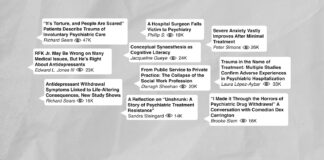
Mad in America’s 10 Most Popular Articles in 2025
A roundup of Mad in America's most read blogs and personal stories of 2025 as chosen by our readers.

Green Party of California: Forced Treatment Must Be Abolished
In a public statement, the Green Party of California endorsed the Abolish Forced Psychiatry statement.

Court-ordered Treatment for Serious Mental Illness is ‘Inconclusive,’ Says Federal Report
From STAT (paid subscription required): "In the last decade, the federal government has provided $146 million to organizations that provide outpatient care to people...

Searching for the “Psychiatric Yeti”: Schizophrenia Is Not Genetic
After decades of study, billions of dollars spent, and thousands of studies conducted, the failure to identify any genes for schizophrenia should definitively put to rest the notion that schizophrenia is a genetic disorder, according to E. Fuller Torrey.

In Andrew’s Honor: Attorney Elizabeth Rich’s Fight Against Unjust Commitments
Anyone detained and then formally committed under Wisconsin’s civil mental health laws can initially be held and forcibly drugged for six long months. Yet, for years, not a single person has been able to appeal the six-month commitments in court.

Catherine’s Story: A Child Lost to Psychiatry
A year ago today, our youngest child died, thanks to the adversarial actions and toxic treatments foisted on her by medical-model psychiatry. By telling her story, we hope to promote systemic change.

Mental Health Care Must Support Consent and Basic Human Rights
Despite the UN’s strong stance against involuntary treatment, many countries continue to uphold legislation that encourages it.

The Great Triumph of Roxanne Stewart-Johnson: Psychiatric Refugee
Roxanne fled to Canada, and received formal refugee status, as a psychiatric refugee after being threatened with psychiatric imprisonment and forced drugging in Jamaica.

The Case of Joshua Spriestersbach: If This Is a Horror Story,...
Spriestersbach was imprisoned in a psychiatric hospital for almost three years. The more he told the doctors that he was not Thomas Castleberry, the more they believed that he was psychotic.

Britney: In the Name of Health
So many of us young women believed the people who told us we needed them to make us healthy, who told us that without them, we’d be at the mercy of untameable "disease."

Britney Speaks: Are We Ready to Listen?
Comparing her circumstances to sex trafficking, Britney Spears told the judge she wished to sue her conservators and be allowed to tell reporters “what they did to me.”

Mental Health Survival Kit, Chapter 4: Withdrawing from Psychiatric Drugs (Part...
Peter Gøtzsche gives advice on what withdrawal symptoms may look like and explains the dangers of—and alternatives to—forced treatment.

Kendra’s Law Must Be a Beginning, Not an End
I believe that, as things are right now, forced treatment can be justifiable. But we need to move studies and research forward, move mental health treatment forward into an era where forced treatment is obsolete.

Psychiatric Oppression Under Victoria’s Mental Health Laws
Public mental health authorities continue to oppress persons with psychosocial conditions through a combination of punitive and discriminatory laws that are constructed with a "best interests" paradigm in mind and a medical model that pathologises difference and dissent.

An Obituary for My Colonizer: Reflections on the Legacy of DJ...
When I heard this morning that DJ Jaffe was dead my face went through its own mutation; a moment of surprise and wonderment followed by swift elation, and then, very quickly and now for so many hours afterward, an enraged, frustrated, quick-breathed grimace.

Reporting the COVID Crisis at Psychiatric Hospitals: A Missed Opportunity
In its coverage of the impact of COVID on psychiatric hospitals, the media missed opportunities to challenge stereotypes and interrogate problems with current carceral approaches to mental health treatment.

Kerry O’Malley: A Personal Struggle Against Forced Medication
Neglect for personal autonomy is a pervasive attitude in the mental health system. No human being should be stripped of their dignity and autonomy, much less a vulnerable 74-year-old woman.

Canadian Mental Health Legislation and the CRPD
Psychiatric survivors in Canada tell the UN that Canada is not complying with the United Nations Convention on the Rights of Persons with Disabilities (CRPD).

Jinxed: The Persecution of Evan Durst Kreeger
I am very concerned that Evan is about to be devoured by psychiatry's maw. Things could be different if Evan were able to hire an attorney or attorneys to deal with all of these different legal actions coming at him and otherwise protect his interests such as sue the trustees for their unconscionable actions, but as I have indicated, his trustees have cut off his money so he can't hire such an attorney or attorneys.