
Antidepressants During Pregnancy Increase Risk of Psychiatric Diagnosis in Children
New research, based on data from almost a million children in Denmark, suggests that children of mothers who use antidepressants during pregnancy are more likely to be diagnosed with autism and psychiatric disorders.

International Study Examines Environmental Factors Associated with Psychosis
Study finds the incidence of “psychosis” to vary by person and place, corresponding to factors such as race, ethnicity, age, and environment.

Launch of Online Forum for Young People Who Hear Voices
I am very excited to announce that Voice Collective, a UK-based project supporting children and young people who see, hear or sense things others don’t, has launched the first-ever online forum dedicated to supporting young people who hear voices, as well as their parents, carers and supporters.

Freud: The First Anti-Psychiatrist
Freud showed disdain for psychiatrists — he saw their untruthfulness and harmfulness. An antidote for the medical model’s infestation of our culture would be to reintroduce some of Freud’s theories to the public. After all, wouldn’t the medical model’s opposite be the best means of counteracting it?

The Three Most Important Facts About Psychiatric Drugs
Psychologist and educator Michael Corrigan was a guest on my radio show and brought up some questions about how to communicate with people about psychiatric drugs. Specifically, he asked, “What are the three most important things for anyone to know about psychiatric drugs?” Here is my answer.

Intergenerational Impact of Adverse Childhood Experiences
The daughters of children evacuated from Finland during World War II show an increased number of psychiatric hospitalizations.
How Would We Know If We Really Reformed the Mental Health System?
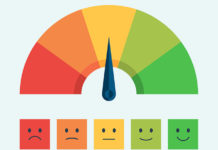
It is true that there are many great programs and initiatives out there, but when a system leaves so many without recovery-oriented supports it's like swimming upstream. Here are 20 indicators that if fully implemented would represent a complete system reform.
New Research on Prenatal SSRI Exposure and Autism
Does maternal SSRI exposure increase the chances that a child will develop characteristics associated with Autism Spectrum Disorder (ASD)?

Cognitive-Behavioral Therapy Halves the Risk of Repeated Suicide Attempts
A new study suggests that cognitive-behavioral therapy (CBT) may halve the likelihood of re-attempting suicide, for those who have attempted in the past.

My Daughter’s Story
I am now haunted by guilt that my daughter never really had a chance for anything like a normal life, because of the choices that were made for her. Choices made with the 'best' medical advice of the day, which I had never quite accepted as correct, but in the end largely complied with for lack of any clear alternative.

Study Examines the Difficulty of Withdrawing from Antidepressant Drugs
Correcting unnecessary long-term antidepressant use is difficult and met with apprehension by providers and service-users.
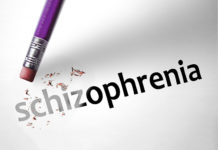
APA: Drop the Stigmatizing Term “Schizophrenia”
I believe that the American Psychiatric Association and the World Health Organization should follow the lead of several countries that have already retired the term "schizophrenia" from their vocabularies. The time is now to drop this stigmatizing, hope-disabling, scientifically controversial term.
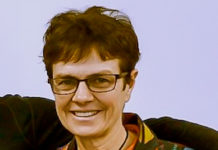
Chris Hansen: Making Connections Through Intentional Peer Support
This week on MIA Radio, we interview Chris Hansen. Chris works as Director for Intentional Peer Support and in this interview, we talk about Chris’s personal experiences of the mental health system and how Intentional Peer Support approaches contrast with mainstream psychiatry.

Reexamining Schizophrenia as a Brain Disease
Schizophrenia has occupied, and continues to occupy, a position of great import in psychiatry, and it is frequently used to assert the supposed biological nature of the field. What evidence is there to suggest that what we call schizophrenia is a disease of the brain? Surprisingly, very little.

The Need to Address Suicide in Prisons
Rates of suicide in prison are significantly higher than in the general population.
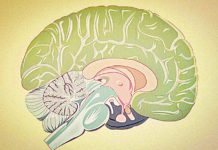
Psychotherapy is THE Biological Treatment
Psychotherapy addresses the brain in the way it actually develops, matures and operates. The process for brain change involves deactivation — disuse, not utilizing the old brain map; and then creating a new one. Psychotherapy can deactivate maladaptive brain mappings and foster new and constructive pathways.

Police Violence Victims at Increased Risk of Psychotic Symptoms
Researchers examine links between police victimization and psychotic symptoms in a topical new study.
New Book Takes Aim at the Mental Health Industrial Complex
I’ve been around the block a few times, so I was not shocked by the revelations in Art Levine’s absorbing and well-researched new book, Mental Health, Inc.: How Corruption, Lax Oversight and Failed Reforms Endanger Our Most Vulnerable Citizens. But I was certainly appalled.

Scientists Clarify Risks of Augmenting with Antipsychotic Medications for Depression
The researchers found that while antipsychotic drugs may be slightly more effective than alternative antidepressants, they come with a much higher side effect burden.

A Massachusetts Benzo Bill That Mandates Informed Consent
H. 3594 would require pharmacists to distribute pamphlets containing information on benzodiazepine misuse and abuse, risk of dependency and addiction, handling and addiction treatment resources. This would be a major legislative response to the prescribing patterns for these drugs today.

The Disillusioned Psychiatrist
Many of us have become disillusioned with our profession. We have experienced a loss of meaning, purpose, connection, and hope. As the field has moved away from the wonder and pathos of human existence, and taken on a model that reduces life to tick boxes and pill dispensing, we have lost touch with what makes us human.

Dr. George Atwood: Shattered Worlds, the Experience of Personal Annihilation
Dr. George Atwood has devoted a substantial part of his life to the study and treatment of what he refers to as ‘so-called psychosis’ and has authored or coauthored several books, including The Abyss of Madness published in 2011 and more than one hundred articles.

Stop Shock Now: Psychiatry’s War Against Women and the Elderly
As a movement strategy, electroshock must be clearly framed and understood as a blatant human rights violation — a profound and devastating crime against people’s health and lives. Here are three possible action proposals in our continuing struggle to abolish electroshock.

AVATAR Therapy Shows Some Positive Outcomes, Now What?
In a commentary piece, Ben Alderson-Day and Nev Jones discuss the AVATAR therapy research for psychosis and propose further questions.

A Call for Obligatory Diagnostic Reporting and Appeals Mechanisms
Psychiatric diagnoses are ballooning in scope and in numbers, many have dramatic and life-changing consequences, reliability levels are poor, co-morbidity levels are high, and the validity of many are doubtful. Despite all this, they have escaped any kind of regulation. It's time for that to change.