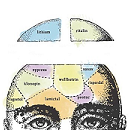
New research finds that mental health symptoms may be too interconnected for any diagnostic system to separate people into distinct categories.
Scientists analyzed over 10,000 personal stories from people with mental health diagnoses using artificial intelligence (AI) and found that symptoms overlap so extensively that distinguishing between different conditions becomes nearly impossible. The findings suggest the problem isn’t just with how the DSM was created, but with the concept of sorting complex human experiences into neat diagnostic boxes.
“We infer that whether humans attempt to categorise mental illnesses or an AI, the result is that the categories of mental disorders will not be unique enough to be able to distinguish one service seeker from another,” write the researchers, led by Chandril Chandan Ghosh from the School of Psychology at Queen’s University Belfast.
The study strikes at the core of debates over psychiatric diagnosis. For decades, the DSM and ICD have divided mental health into hundreds of categories, even as evidence shows symptoms often overlap and no biological markers clearly separate one disorder from another. Alternatives such as HiTOP and RDoC propose dimensional models that track traits across continua rather than fixed categories. The new analysis suggests the difficulty runs deeper. Whether designed by expert committees or by algorithms, attempts to sort human distress into distinct boxes fail to capture the complexity of lived experience. Drawn from more than 10,000 patient accounts, the findings underscore how people’s actual symptoms rarely match the tidy boundaries of diagnostic systems.














Do you have a sense of the metabolism rate of Ai in comparison to human? For the challenge to be healthy and attempt to give your best in the daily experience of “competitive employment” may ignore structural issues in the socio-technologies apart from being human. How to really understand and integrate the complexities with Ai and without? For many may not even have access to the e-world within the culture of being in an economy? We could be undervalued or not even valued in the traditional analytics.
Report comment
This is, of course, completely to be expected and validates what Szaz and others have been saying for decades. Wanna take bets on whether this has the slightest impact on the use of the DSM to “diagnose” people with mental “diseases?”
Report comment
I am not sure if anything is “completely exected” being the thermodynamics of being hit by another human being with words that sting or physical force. The amount of energy or the degree of curiosity to keep unpacking the structure of matter is not exactly absolute, since the verb in motion can become clearer in a contextual sense. The whole betting industry may be fluffing up less than informed leadership, duly purchased. What are the bets, the prevailing political platforms either run from the challenge to truth the truthing process or must we continue to be ensnarled with media “diseaseds?” If MAD is starting the betting window, can the pool direct the revenue in a way leading to our healthier economies? See Joseph Coughlin of MIT AGElab and Dina Katabi of MIT. Wonderful story! And insights into how the machine can monitor??? impacts into shaping realities?
Report comment
All has been confirmed for years yet it still goes on. Why ?
Report comment
Maybe these researchers will do a study on whether the terms weirdo, idiot, imbecile (which used to be a valid psychiatric term), jerk or various homophobic words have any consistency regarding what are they going on about? “that mental health symptoms may be too interconnected for any diagnostic system to separate people into distinct categories” it doesn’t even say whether all these people done in the study at first been told they had said condition or any condition. And I don’t believe it looked at the difference when someone didn’t believe the diagnosis or simply didn’t go to hear some blah blah blah about themselves, and whether they showed more signs of recovery or whatever and thus simply using any diagnosis has what kind of effect. You would also have to look at a society that doesn’t label such normal responses to life and trauma as diseases and the difference there also. That various forms of labeling are used as mind control to tell the person we know what’s going on with you or we know there’s something wrong with you or you have to follow our rules because we know there’s something wrong with you otherwise we’ll lock you up. To start studying whether all of that has any consistency this is like studying whether all the different forms of labeling somebody a dissident against a fascist system whether all those forms of labeling end up being consistent regarding who knows what. This would mean if they are consistent then they’re valid? What if they still wouldn’t be valid if they were consistent? But yeah okay, they’re mostly inconsistent. And?
Report comment
Can’t “improve” psychiatry without breaking a few… hundred… thousand… human lives waiting for the improvement
Report comment