
Citizens Petition Calls for Sexual Side Effect Warnings
Researchers take action after study exposes enduring sexual dysfunction as a potential side effect of serotonin reuptake inhibiting antidepressants, 5α-reductase inhibitors, and isotretinoin.

Reappropriating Bipolar Beyond Pathology
It’s still not easy for me to say, “I’m bipolar.” Know that I’m bipolar for good reason, reappropriating a painful word, so those in pain can find me—so you can find me. This is how I reappropriate a term used to strip me of my humanity, a term used to sell me counterfeit versions of reality. I refuse to let go of a label that helps me find my people, no matter how painful it is to retain.

Questioning the Philosophical Assumptions of Neuroscience Research
Are philosophical misunderstandings behind the failure of neuroscience to provide useful clinical research?

Psychological Research Suggests Systemic Interventions to Tackle Racism
A new special edition positions psychological science as offering valuable contributions to the study of contemporary racism.

Still Seeking a Chemical Cure After All These Years: Lauren Slater’s Blue Dreams
Blue Dreams offers a history of the development of psychiatric drugs, but is partly a memoir of the demise of the author's health during the decades she spent on psychiatric drugs. At the time of writing her memoir, Slater is not yet at the point of realizing that the mental health system is not a productive place to go for answers to depression.

Hospitalized and Heading Toward Homelessness
Upon my release I was dumped at a motel with no ID, no money or method of payment, and not even a cell phone to call friends or family for help. My belongings were still locked in a safe back at the hospital. Where are the real advocates for more low-income housing, and where the hell have they been for those who are incarcerated, whether it be in jails and prisons or mental facilities?

Using the Power Threat Meaning Framework in Mental Health Nurse Education
Scholars call for international mental health nurse curriculum to shift to a rights-based approach and teach the Power Threat Meaning Framework.

Researcher Critiques Misleading Media Coverage of Lancet Antidepressant Meta-Analysis
The BMJ’s clinical editor takes issue with uncritical media coverage of antidepressant network meta-analysis, outlining reporting missteps.

The “Essential Principles” of Psychiatric Practice: More Psychiatric Cheerleading
In the May 2018 issue of Current Psychiatry, renowned psychiatrist and editor in chief Dr. Henry Nasrallah provides a list of 27 "principles of psychiatric practice," most of them self-serving platitudes. There's one principle he has omitted, if we are to consider his own career to be exemplary: Cultivate mutually beneficial relationships with pharmaceutical companies.

Psychotherapists Reflect on Lack of Improvement in Therapy
Qualitative research examines the experiences of psychoanalytic therapists in their work with patients whose symptoms either failed to improve or worsened.

Busting 7 Myths About the Practice of Psychotherapy
All in all, it is not enough that public policy pundits push for greater access to mental health services. Alongside improving access, there needs to be renewed focus on the quantity and quality of psychotherapy the average American currently receives. Health insurers need to reexamine their false assumptions about the effectiveness of short-term, quick-fix therapies.

Despite the Evidence, Overprescription of Stimulants Continues
A new study finds that stimulant prescribing rates to children continue to rise despite the well-established evidence documenting overdiagnosis of ADHD and overprescription of stimulants.

Massive Reforms for Pharmaceutical System Proposed
The US/Canadian Pharmaceutical Policy Reform Working Group proposes universal drug coverage and ambitious reforms to the pharmaceutical system.

Is Psychosis Natural?
Much of the wild world is now a garden: a rational, controlled space. Yet if we step out of the garden and back into the old growth, I believe the process of psychosis belongs as part of Earth’s “will,” of her wild. The physiological process of psychosis—that of amplified senses—is ecologically purposeful. Not good nor bad, but part of what Nature does trying to grow. Here I share a talk I gave in Boulder, Colorado exploring these themes.

Learning to Speak Psychotic
One of the biggest barriers that people who are “psychotic” face is one of communication: other people often have trouble understanding what they’re talking about. The way they describe their experience and their ideas are simply foreign to most people. This lack of clear communication is what gets them labelled as “psychotic” in the first place, and thus it leads to a breakdown between the “psychotic” and the rest of society. This is a loss to both groups.

Randomized Controlled Trials of Psychiatric Drugs Tell of Harm Done
The most important data in an RCT is not whether the drug provides a statistically significant benefit over placebo. The most important data is the “number needed to treat” calculation (NNT). For the person considering taking an antidepressant or an antipsychotic, the NNT data provides the “math” needed to weigh the potential benefit of taking the drug against the potential harm of doing so.

Suicide in a Culture of Mandated Happiness – Who’s to Blame?
We live in a culture of mandated positivity and compulsory happiness, which somehow remains untouched by the current political, social, ecological and economic realities of the world. If you’re distressed, it must either be your bad attitude (which is a choice) or your broken brain (which is not a choice); god forbid we look anywhere outside the self.
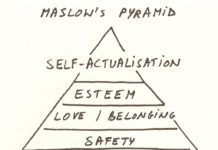
Psychologist Debunks Common Misconceptions of Maslow’s Hierarchy
Utilizing Maslow’s published books and essays, psychologist William Compton delineates common myths and attempts to respond to them.

Are Students Benefiting From the Growth Mindset Model?
Results from two meta-analyses reveal shortcomings with the growth mindset theory as applied in schools.

Spotlight on Institutional Psychiatry
Spotlight on Institutional Psychiatry is a response by psychiatric survivors and allies to Operating in Darkness, a scathing 2017 report on British Columbia’s Mental Health Act Detention System. We hope that professionals will take note of the devastating effects of forced psychiatric treatment and be moved to speak out, and, above all, that survivors will feel encouraged and inspired by our efforts.

Antidepressants Are Not More Effective for Severe Depression, Study Finds
A new study, published in Acta Psychiatrica Scandinavica, found that antidepressant efficacy was not dependent on severity.
Researchers Explore Sexuality and Gender in the Context of Psychosis
Nev Jones and a team of researchers examine how sex, sexuality, and gender-related content are underexplored in contemporary research on psychosis.

TED Betrays Its Own Brand By Flagging Nutrition Talk
Four years after Rucklidge gave her talk on using micronutrients for psychiatric disorders, why did TED suddenly decide to flag it as falling “outside TEDx’s curatorial guidelines?” And why did it do so when her talk—a review of published science, by a researcher who has conducted placebo-controlled studies on this topic—obviously met TED guidelines? Our guess is that they caved to outside pressure.

Rising Rates of Suicide: When Do We Acknowledge That Something Isn’t Working?!
Scapegoating a purported unseen "illness" may provide temporary comfort from acknowledging the horrors and injustice of the world, but it is a delusion — and one with fatal consequences for many. When 45,000 people a year would rather die than live in this world any longer, it might behoove us all to consider what is happening in the world to cause this.
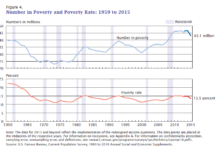
Psychotherapy is Less Effective and Less Accessible for Those in Poverty
A special issue explores the connection between poverty, mental health, and psychotherapy.