
My APA protest speech: May 23, 2013
If you haven’t been labeled mentally ill by the American Psychiatric Association, you have to ask yourself what’s wrong. Perhaps you were ahead of the game: you knew not to reveal yourself to them, you knew how to avoid them, you found other social support, and if so, a big congratulations. If not, what’s wrong? Why have you conformed?
Full Article
Categorized in: Anxiety, Bipolar, Blogs, Coercion, Community, Depression, Featured Blogs, Medication Tapering/Withdrawal, Mind/Body, Psychiatric Drugs, Recovery/Empowerment, Rethinking Psychiatry/Medical Model, Schizophrenia/Psychotic Disorders
Depression Screening Lacks Strong Evidence, Say CanadiansMay 17, 2013
The Canadian Task Force on Preventive Health Care has reversed its 2005 recommendations, finding methodological flaws, possible bias, and uncertain generalizability in a review of the literature. “In the absence of a demonstrated benefit of screening, and in consideration of the potential harms, we recommend not routinely screening for depression in primary care settings, either in adults at average risk or in those with characteristics that may increase their risk of depression,” the task force writes in a forthcoming edition of the Canadian Medical Association Journal.
Categorized in: Adult, Antidepressants, Depression, Disorders, Featured News, In the News, Psychiatric Drugs, Research
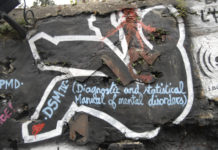
Does DSM-5 Matter? Yes; but not for PsychiatristsMay 13, 2013
What makes the DSM so pernicious is that it is a cultural document whose influence transcends not only psychiatric practice but also the Western civilization from which it originates. Each revision of the DSM rescripts and reimagines how we make sense of our experiences, reinterprets what thoughts, feelings and behaviors are socially sanctioned, and ultimately what it means to be human.
Full Article
Categorized in: Bipolar, Blogs, Depression, DSM, Featured Blogs, Psychiatric Drugs, Rethinking Psychiatry/Medical Model, Schizophrenia/Psychotic Disorders
Classism in DisguiseMay 7, 2013
For everyone who goes on psychiatric drugs, the reason comes back to power imbalances in their personal life. Women who’s husbands “make all of the money” and have an unequal share of the power, kids who’s parents have power over them—frequently people who have less money and security, therefore less platform for authority than those around them. Mental illness is not in fact an illness but an unequal division of power and sense of security in a social group.
Full Article
Categorized in: Blogs, Community, Depression, Depression, Featured Blogs, Psychiatric Drugs, Recovery/Empowerment, Rethinking Psychiatry/Medical Model, Trauma/Distress
Inbetweenland with Jacks McNamaraMay 4, 2013
Jacks McNamara is a genderqueer artist, writer, organizer, and healer. Jacks co-founded The Icarus Project and is the subject of the poetic documentary Crooked Beauty. They are the author of Inbetweenland, released by Deviant Type Press, have self-published 5 zines, and are co-author …
Full Article
Categorized in: Addiction, Anxiety, Bipolar, Blogs, Community, Depression, ECT, Mind/Body, Non-Drug Approaches, Psychotherapy, Recovery/Empowerment, Suicide, Trauma/Distress | Tagged as: Asheville, Certified Peer Specialists, Death & Dying, distress, ECT, Icarus Project, Inbetweenland, Jacks Ashley McNamara, Jen Padron, Loss, Lovers, Mad in America, Mad Love, Mothers, peers, psychiatric survivors, Texas, Trauma, Wellness Centers
60% of Depression Diagnoses May 1, 2013
More than 60% of a sample of 5,639 participants with clinician-identified depression (drawn from the 2009-10 US National Survey of Drug Use and Health) did not actually meet criteria for major depression, a study from the Bloomberg School of Public Health and Johns Hopkins University found.
Categorized in: Adult, Depression, Disorders, Featured News, In the News
Autism Linked to Antidepressants During PregancyApril 22, 2013
A study of the Swedish medical birth registry, conducted by researchers from Sweden, the U.K., and the U.S.A., found a 3.3X greater risk of autism in the offspring of women reporting antidepressant use during pregnancy. The researchers, however, urge caution as the results explain only a small percentage of the prevalence of autism.
Categorized in: Adult, Antidepressants, Autism, Children and Adolescents, Depression, Disorders, Featured News, In the News, Pregnancy & Birth Defects, Psychiatric Drugs, Research
You May Be Suffering From Antidepressants (The Adbusters)April 22, 2013
You May Be Suffering From Antidepressants (The Adbusters)
Categorized in: Adult, Antidepressants, Depression, Disorders, Psychiatric Drugs, Videos
Dr. Oz Takes on Big PharmaApril 3, 2013
Dr. Oz looks at the research on antidepressants today, finding that they are over-prescribed, may be counter-productive or harmful, may not work at all, and that advertising them is only allowed in the USA and New Zealand.
Categorized in: Adult, Antidepressants, Depression, Disorders, Featured News, In the News, Psychiatric Drugs
Can a Profession Be any More Confused?March 28, 2013
Yesterday I attended psychiatry grand rounds, where Andy Miller presented his latest research. Andy has been a pioneer in the field of psychoneuroimmunology and an exponent for the view that major depression reflects systemic inflammation. (I have published a review of this literature recently in Frontiers in Psychology which is available for download).
Full Article
Categorized in: Adult, Antidepressants, Antipsychotics, Blogs, Depression, Disorders, Featured Blogs, Immune Response, Psychiatric Drugs
Inadequate Blinding Associated With Positive Treatment Findings, Industrial Sponsorship, and Schizophrenia DiagnosisMarch 26, 2013
Despite the integral importance of blinding and blinding assessment to randomized controlled trials (RCTs), they are rarely reported on or documented in trial reports according to this study published yesterday in Psychotherapy and Psychosomatics. The study of schizophrenia and affective disorder medication research in 2,467 publications from 2000 to 2010 found that an absence of blinding and blinding assessment was associated with an increased rate of positive findings of treatment success, industrial sponsorship, and diagnosis of schizophrenia.
Categorized in: Adult, Anxiety, Bipolar, Depression, Disorders, Featured News, In the News, Research, Schizophrenia/Psychotic Disorders
Whether Bullied or Bullying: Increased Psychiatric DisordersMarch 15, 2013
A North Carolina study of 1,420 participants finds higher rates of agoraphobia (4.6x), generalized anxiety disorder (2.7x), and panic disorder (3.1x) among victims of bullying. Among those who had been both bullies and victims, the study found higher rates of depression (4.8x), panic disorder (14.5x), agoraphobia (26.7x) and suicidality (18.5x) in both childhood and young adulthood. Results appeared in JAMA Psychiatry.
Categorized in: Addiction, Adult, Anxiety, Anxiety, Childhood Adversity/Trauma, Children and Adolescents, Depression, Depression, Disorders, Featured News, Non-Drug Approaches, Trauma/Distress, Violence
Antipsychotics for Depression: Added Risk for Little BenefitMarch 13, 2013
A review of research on antipsychotic medications as an adjunctive treatment for depression published this week in PLoS Medicine finds that the widespread practice produces either no benefit or a very small to moderate benefit on quality of life, while also being linked to adverse events such as akathisia, sedation, metabolic effects and weight gain. The authors urge that although clinicians may observe very small to moderate improvement of symptoms, “the lack of benefit with regards to quality of life or functional impairment, and the abundant evidence of potential treatment-related harm” suggest caution.
Categorized in: Adult, Antidepressants, Antipsychotics, Depression, Disorders, Featured News, In the News, Psychiatric Drugs
My Story of Recovery: Prayer, Community, and HealingMarch 5, 2013
In his book, Prayer is Good Medicine, physician and researcher Larry Dossey maintains that praying for one’s self or others can make a scientifically measurable difference in recovering from illness or trauma. It is one thing to understand such a healing intellectually; it is another to know it from experience. Such an experience came to me in the fall of 1996.
Full Article
Categorized in: Adult, Blogs, Community, Depression, Disorders, Featured Blogs, Mind/Body, Non-Drug Approaches, Recovery/Empowerment
Robot Bullies Rats into Depression to Test Antidepressant MedicationFebruary 19, 2013
Japanese engineers have devised a robotic rat that bullies laboratory rats into a state of depression, creating a model of human depression they deem suitable for testing antidepressants. The research, published this month in Advanced Robotics, reports that continuous attacks in young and intermittent attacks (in response to movement) in older rats is most effective.
Categorized in: Adult, Antidepressants, Children and Adolescents, Depression, Depression, Disorders, Featured News, In the News, Non-Drug Approaches, Psychiatric Drugs, Trauma/Distress
Violence, Depression in Parents Linked to Kids’ ADHD, DepressionFebruary 7, 2013
A prospective study of 2,422 children from 2004 to 2012 found that children whose parents reported Intimate Partner Violence (IPV) and depressive symptoms were 4x more likely to have a diagnosis of ADHD, even after adjusting for other variables. Children of parents who reported depressive symptoms alone were 2x more likely to have been prescribed medication.
Categorized in: ADHD, Adult, Children and Adolescents, Depression, Disorders, Featured News, In the News, Non-Drug Approaches, Psychiatric Drugs, Trauma/Distress, Violence
“Special K” as Antidepressant: Short-term Gain; Long-term ?February 7, 2013
Ketamine (known in social circles as “Special K”) has been touted as a rapid-acting and “profound” treatment for depression. The Journal of Psychosocial Nursing reviews the research, finding “although single doses of ketamine have rapid antidepressant effects that last for up to 1 week, the extent and duration of this antidepressant effect over longer periods has not been well-characterized under controlled conditions.”
Categorized in: Adult, Antidepressants, Bipolar, Depression, Disorders, Featured News, In the News, Psychiatric Drugs, Suicide
Exporting DepressionJanuary 12, 2013
When people ask me how I began working on my last book, Crazy Like Us, I tell them about meeting Dr. Laurence Kirmayer at McGill University back in 2005. He took time one afternoon to tell me a remarkable story about a personal encounter he had with the pharmaceutical giant GlaxoSmithKline and the remarkable resources that the company employed over the last decade to make their antidepressant pill Paxil a best seller in Japan.
Full Article
Categorized in: Adult, Blogs, Depression, Disorders, Featured Blogs | Tagged as: culture, Depression, exporting mental illness, Japan
Large Study Finds One Link Between Genes and DepressionJanuary 7, 2013
Despite being theorized as a genetic, heritable trait, studies of depression with large sample sizes and statistical power in this review and meta-analysis from a large list of collaborators around the world did not reach genome-wide satistical significance for any DNA loci. An overall meta-analysis combining discovery and replication studies, however, did reach significance for an association between depression and one single nucleotide polymorphism. The authors conclude that “only a large sample comprising more than 50,000 subjects may be sufficiently powered to detect genes for depressive symptoms.” Results were published online January 3, 2013 by Biological Psychiatry.
Categorized in: Adult, Depression, Disorders, Featured News, Genetics, In the News
“Last Plea To DSM-5: Save Grief From the Drug Companies”January 7, 2013
Allen Frances, writing in the Huffington Post, calls the decision in the forthcoming DSM-5 to call grief in the bereaved a disorder as soon as two weeks after the loss of a loved one ”a bonanza for drug companies, but a disaster for grievers.”
Categorized in: Adult, Antidepressants, Around The Web, Depression, DSM, Psychiatric Drugs, Rethinking Psychiatry/Medical Model
How 7 Historic Figures Overcame Depression without DoctorsNovember 29, 2012
While Sylvia Plath and Ernest Hemingway received extensive medical treatment for depression but tragically committed suicide, other famously depressed people—including Abraham Lincoln, William James, Georgia O’Keeffe, Sigmund Freud, William Tecumseh Sherman, Franz Kafka, and the Buddha—have taken different paths. Did those luminaries who took alternative paths and recovered really have the symptoms of major depression, and did their antidotes really work?
Full Article
Categorized in: Adult, Blogs, Depression, Disorders, Featured Blogs
Many Stroke Patients Treated for Depression Without DiagnosisOctober 2, 2012
According to research presented on October 1 at the Canadian Stroke Congress, many stroke patients are prescribed antidepressants without a diagnosis. “This study found that 40 percent of stroke patients were treated for depression, but most were not screened or diagnosed. Who are we treating?” asked the lead researcher. “No matter what the best practice recommendations say, if you’re on an antidepressant when you show up, you will not likely be screened or assessed, but you will be given more drugs.” The study looked at the medical charts of 294 patients given antidepressants over a six-month period, only three of which had been formally screened.
Categorized in: Adult, Depression, Disorders, Featured News, In the News
Depression as the Evolved Adaptation to StressOctober 2, 2012
Noting that more people die from suicide than car accidents in the U.S., and the majority of those suffer from depression, The Atlantic explores a theory put forth in a recent paper linking depression to immune system activation and associated behavioral responses. “The basic idea is that depression and the genes that promote it were very adaptive for helping people – especially young children – not die of infection in the ancestral environment,” the paper’s authors comment, by activating a set of protective behaviors – such as social withdrawal – in response to stressful events in the wild that may expose us to risk of infection.
Categorized in: Adult, Children and Adolescents, Depression, Depression, Disorders, Featured News, In the News, Uncategorized
Magic Mushrooms Head to Trial for Depression TherapyOctober 1, 2012
The U.K.’s Medical Research Foundation has awarded £500,000 (about $800,000) to test psylocibin (extracted from “Magic” mushrooms) as a treatment for depression to Prof. David Nutt, who has called for an “evidence-based” approach to the dangers and medicinal value of drugs such as LSD, cannabis, and MDMA. “One of the things to change in parallel with the trial is the law,” says Prof. Nutt, “otherwise the big problem is if it works, no one will be able to prescribe it.”
Categorized in: Adult, Depression, Disorders, Featured News, In the News
Type of Treatment for Depression is Less Important than EngagementAugust 16, 2012
An international team of researchers (including Irving Kirsch) found in a review “of 62 pivotal antidepressant trials consisting of data from 13,802 depressed patients” and “115 published trials evaluating efficacy of psychotherapies and alternative therapies for depression” consisting of data from 10,310 depressed patients that the “type of treatment offered is less important than getting depressed patients involved in an active therapeutic program.” The authors suggest, therefore, that treatment ‘should be based on patient preference.’ Results appear in PLoS Hubs Clinical Trials.
Categorized in: Adult, Antidepressants, Depression, Disorders, Featured News, In the News, Non-Drug Approaches, Psychiatric Drugs, Psychotherapy, Research, Uncategorized
Copyright © 2013 Mad In America Inc.